 ProMapRanker
DuckDuckGo Alternatives in 2026

Key takeaways
- Brave Search is the strongest free alternative with its own index, while Startpage suits users who want Google-quality results without Google tracking.
- Kagi is the best paid alternative for research-heavy users, with no ads and controls to boost or block domains.
- Mojeek, Swisscows, and SearXNG suit users who value independence, family filtering, or full self-hosting, though result depth varies.
- Private search limits profiling by the search provider, but it does not hide your activity from your internet provider or from sites you click through to.
Quick comparison
| Pick | Great for | Pricing starts at | Free tier | |
|---|---|---|---|---|
 Brave Search | Free independent index | Free | Yes | Visit |
 Startpage | Google results without tracking | Free | Yes | Visit |
 Kagi | Paid ad-free research search | $10 per month | Free trial | Visit |
 Mojeek | Fully independent UK index | Free | Yes | Visit |
 SearXNG | Self-hosted metasearch control | Free | Yes | Visit |
 Swisscows | Family-friendly private search | Free | Yes | Visit |
 Ecosia | Search that funds tree planting | Free | Yes | Visit |
 MetaGer | Nonprofit ad-free metasearch | Free | Yes | Visit |
 Perplexity | AI answers with cited sources | Free | Yes | Visit |
The best DuckDuckGo alternatives
We compared official privacy pages, pricing pages, and published 2026 comparisons for these engines. This list contains alternatives only. DuckDuckGo itself is not listed here, since this article is about what to use instead of it. Privacy claims below are what each vendor states in its own policy, and switching search engines is one layer of privacy, not full anonymity.
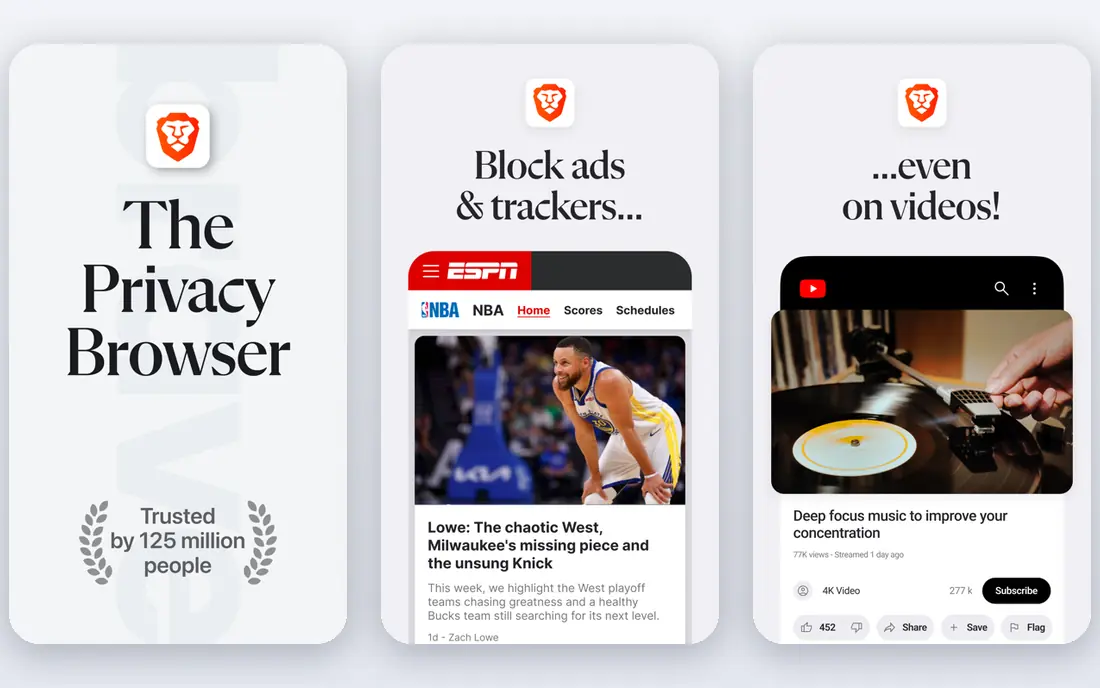
Brave Search is the closest free replacement for a privacy-first default. It runs its own index, so core results do not depend on Google or Bing, and it states that it does not profile users for advertising. The Goggles feature lets users create custom ranking rules, which is useful for filtering out low-quality domains.
The free tier covers everyday search well, with a paid ad-free option at $3 per month in published summaries. Result depth for very niche queries can still lag behind Google, so some users pair Brave Search with a second engine for rare topics. For a free, independent default, Brave Search is our first pick.
- Own independent index, not dependent on Google or Bing for core results
- No profiling for ads
- Goggles for custom ranking rules
- Long-tail results can trail larger engines
- Ad-free premium tier costs extra
- AI answers need checking like any AI output
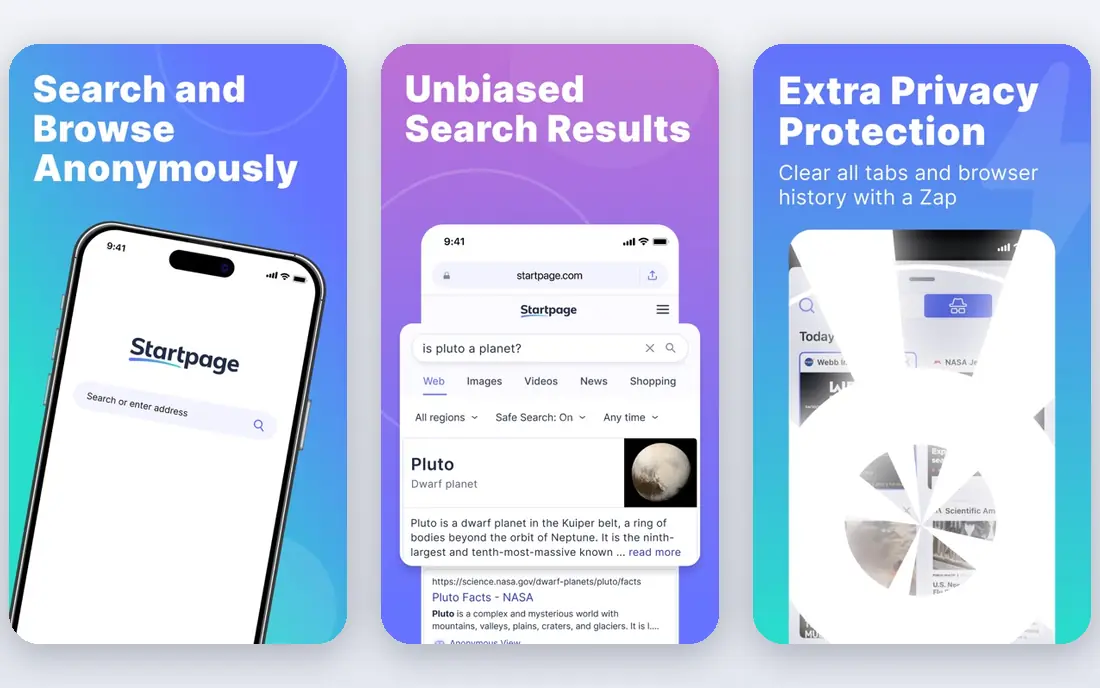
Startpage suits users who like Google results but do not want Google tracking. It queries Google on your behalf through its own servers, strips identifiers, and returns the results without a personal profile. That proxy model gives familiar relevance, especially for local and commercial queries where smaller indexes can struggle.
The trade is dependence. Startpage has no own index of the same scale, so if Google result quality changes, Startpage follows. It also offers fewer AI answer features than Perplexity or Brave Search. For users who want the least change from Google while cutting tracking, Startpage is the easiest switch.
- Proxies Google results without passing personal data to Google
- Familiar result quality
- Dutch operations with GDPR focus
- Depends on Google's index, so Google changes affect it
- No own index
- Fewer AI features than newer engines
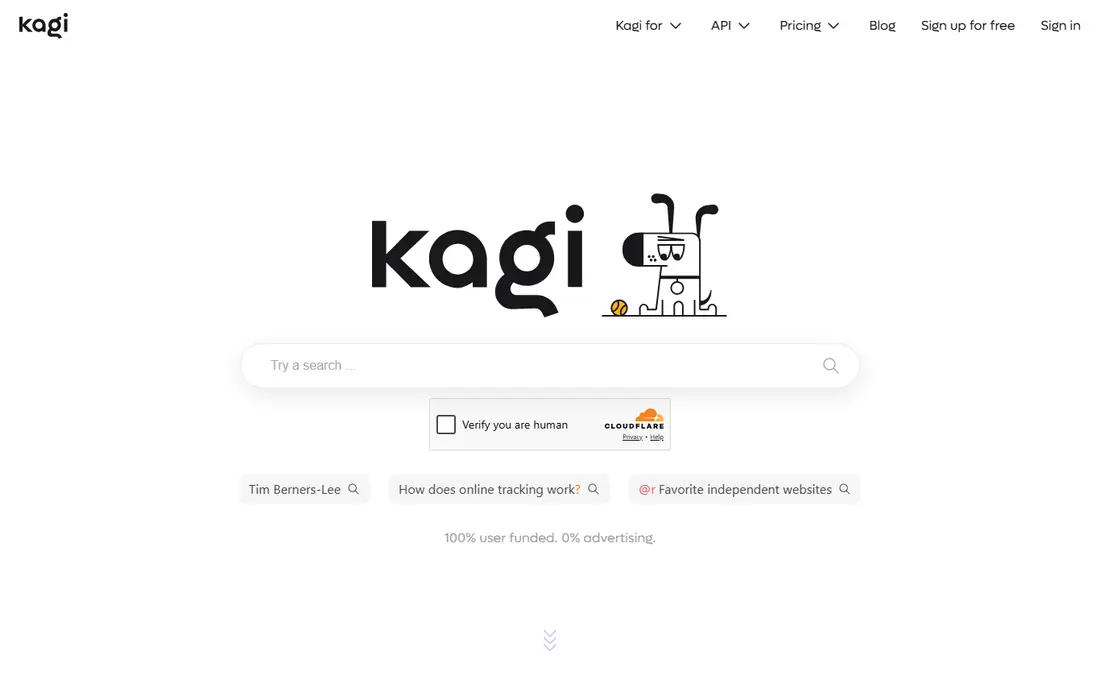
Kagi is the paid upgrade for users who search all day and want control. It charges $10 per user per month for unlimited searches on its Professional plan in published summaries, with lower and higher tiers also listed, and it shows no ads. Users can boost trusted domains, block clickbait, and filter results by quality, which helps research work.
The cost is the barrier. Casual searchers will do fine free on Brave Search or Startpage, and Kagi needs an account for full use. For professionals, writers, and researchers who value clean results and domain control, Kagi is the best paid alternative on this list.
- No ads
- Own crawl plus upstream sources
- Boost, block, and down-rank controls for domains
- Strong result quality for research
- Paid model with no ongoing free tier
- $10 per month is a real cost for casual search
- Account needed for full use
Mojeek is one of the few engines with a fully independent crawler and index, built in the UK. It states that it collects no personal data, and it does not rely on Google or Bing for its core results. That independence appeals to users who want a search engine with no upstream dependence at all.
The index is smaller than Brave, Google, or Bing, so long-tail and local queries can return thinner results. Mojeek suits a privacy-first user who values independence over maximum depth, and it works well as a second engine beside a larger index for hard queries.
- Own crawler and index from the UK
- No personal data collection stated
- No dependence on Google or Bing
- Smaller index, so niche results can be thinner
- Fewer features than larger engines
- Less local depth in some regions
SearXNG is not a single search index. It is open-source metasearch software that queries sources you configure and combines the results, with logging controlled by whoever runs the instance. Self-hosting gives the most control on this list, since you decide the sources, the retention, and the instance rules.
That control needs technical skill. You must run a server, keep it updated, and manage rate limits from upstream engines. Public SearXNG instances exist, but their reliability and privacy depend on the operator. For technical users who want full control, SearXNG is unmatched. For most users, a hosted engine is simpler.
- Free and open source
- You control sources and logging
- Aggregates many engines in one search
- Needs a server to self-host
- Setup and maintenance are technical
- Public instances vary in reliability
Swisscows suits households and schools that want private search with content filtering built in. It blocks adult content by design, uses semantic understanding to interpret queries, and states that it does not track users. That family-friendly stance makes it a good default for shared computers and younger users.
It builds on the Bing index with its own filtering and semantic layer, rather than a fully independent crawl. Result depth for niche topics can therefore trail Brave or Google-backed options. For a safe, private family default, Swisscows is a thoughtful pick.
- Privacy-focused search with family filtering
- Semantic search features
- No tracking stated in its policy
- Uses Bing index with added filtering, so not fully independent
- Result depth can trail larger engines
Ecosia is the choice for users who want their searches to fund something tangible. It is free, it publishes tree-planting reports, and it states a privacy-friendly approach with no sale of personal data. The search experience feels familiar, which makes switching easy.
Results rely on upstream partners, mainly Bing, so Ecosia is not an independent index. Privacy is solid for everyday use, but users with the strictest privacy needs may prefer Brave Search, Mojeek, or SearXNG. For users who value environmental impact beside privacy, Ecosia is a good default.
- Free search with profits used for tree planting
- Privacy-friendly policy
- Familiar search experience
- Results rely on upstream partners, mainly Bing
- Privacy is good but not as strict as Brave or Mojeek in some readings
MetaGer is a nonprofit metasearch engine from Germany that aggregates results from multiple sources without advertising. Its nonprofit status and privacy focus appeal to users who distrust ad-funded search models. It is free to use, with no account needed for basic search.
The interface is plain, and speed and depth depend on the sources it queries at the time. It lacks the polish and AI features of newer engines, and its team is smaller than commercial rivals. For a nonprofit, ad-free alternative with a clear privacy stance, MetaGer deserves a place on the shortlist.
- Nonprofit metasearch with no ads
- Aggregates multiple sources
- Privacy-focused German operation
- Interface feels dated
- Result speed and depth vary by source
- Smaller team than commercial rivals
Perplexity is different from the other engines here. Instead of only listing links, it answers questions directly and cites sources, with follow-up questions for deeper research. That format suits research, explanations, and step-by-step topics where a list of links would take longer to read.
AI answers need verification, since models can misstate facts even with citations, so open the sources for important claims. Privacy terms also differ from a pure no-tracking search engine, since AI processing and accounts play a larger role. For answer-first research beside a traditional engine, Perplexity is a useful alternative.
- Direct answers with source citations
- Follow-up questions for research
- Free tier for everyday questions
- AI answers can contain errors, so check sources
- Privacy model differs from a pure search engine
- Paid Pro tier for heavy use
How we picked these
We compared official privacy pages, pricing pages, and published 2026 comparisons, and we favoured engines that are live, usable as a daily default, and clearly different in index, privacy model, or price. We did not claim hands-on network testing, and we treated vendor privacy claims as stated claims, not audited facts. Where pricing varied across summaries, we used the most recent published figure and advised checking the vendor page.
How to choose a search alternative
Start with what you want from a switch. If you want the closest free replacement, Brave Search or Startpage will feel most familiar. If you want paid quality and control, Kagi is the step up. If you want independence, Mojeek or SearXNG fit, and if you want a specific value such as family filtering or tree planting, Swisscows or Ecosia fit.
Next, test the engine on your real queries, not just a home page search. Try local businesses, niche technical topics, news, and shopping queries, since smaller indexes differ most on those. Set the winner as your browser default for a week, and keep a second engine bookmarked for queries where the first falls short.
Finally, remember the limits of private search. It limits what the search provider records, but your internet provider can still see the domain, and sites you click apply their own cookies and tracking. Pair a private engine with a private browser, tracker blocking, and good password habits for a fuller privacy setup.
Frequently asked questions
What are the best alternatives to DuckDuckGo?
Brave Search is the strongest free alternative with its own index, Startpage is best for Google-quality results without tracking, and Kagi is the best paid alternative for research. Mojeek, SearXNG, and Swisscows suit users who value independence, control, or family filtering.
Is Brave Search better than Startpage?
It depends on your priority. Brave Search has its own index and no dependence on Google or Bing, while Startpage proxies Google results for familiar relevance. Choose Brave Search for independence and Startpage for Google-like results.
Is Kagi worth $10 per month?
For heavy researchers, writers, and professionals, Kagi's ad-free results and domain controls can justify $10 per month. For casual search, Brave Search or Startpage give a strong free experience without a subscription.
Does a private search engine make me anonymous?
No. Private search limits profiling by the search provider, but it does not hide your IP address fully, nor does it stop tracking by sites you visit after clicking. For stronger anonymity, consider Tor Browser or a trusted VPN beside private search.
Can I use more than one search engine?
Yes, and many privacy-focused users do. Set one engine as your default, bookmark a second for niche queries, and use Perplexity for answer-first research where citations help. That mix covers depth, privacy, and research needs together.
Sources
See where you really rank - block by block
ProMapRanker scans Google Maps across a grid of your service area. Simple monthly plans from $19, white-label on every plan.
Start freeKeep reading
 zoro.to alternatives
Best Zoro.to Alternatives in 2026
We compare the best zoro.to alternatives in 2026, listing only legal licensed anime streaming services, from Crunchyroll to free options for fans today.
Read → zip alternatives
Best Zip Alternatives in 2026
We compare the best zip alternatives for buy now, pay later in 2026, covering pay-in-4 plans, fees, spending limits, and credit reporting options today.
Read → yesware alternatives
Best Yesware Alternatives in 2026
Compare the best yesware alternatives for sales email tracking, templates, and sequences, with current pricing and honest tradeoffs for small sales teams.
Read →