 ProMapRanker
Best DNB Alternatives in 2026


Lender and supplier credit checks · Pricing starts at: See website
Key takeaways
- In this article, D and B means Dun and Bradstreet, the business data and credit bureau, and the tools here replace its business credit and company data uses.
- Business data and credit reports should be used only for lawful purposes, such as credit checks with proper permission, supplier vetting, and risk review.
- Experian Business, Equifax Business, and Creditsafe are the closest bureau peers, while Nav helps small businesses monitor several bureaus in one place.
- Scores differ by bureau and model, so a score from one provider does not translate directly to a score from another.
Quick comparison
| Pick | Great for | Pricing starts at | Free tier | |
|---|---|---|---|---|
| Experian Business | Lender and supplier credit checks | See website | No | Visit |
 Equifax Business | Small business risk assessment | See website | No | Visit |
 Creditsafe | Global company credit data | See website | No | Visit |
 Nav | Multi-bureau monitoring for small firms | Free | Yes | Visit |
 ZoomInfo | B2B company and contact data | See website | No | Visit |
 Crunchbase | Company profiles and funding data | See website | No | Visit |
 Apollo.io | Prospecting with company data | Free | Yes | Visit |
 TransUnion Business | Business credit and fraud checks | See website | No | Visit |
 Owler | Company news and competitor tracking | See website | No | Visit |
The best D and B alternatives
We use Dun and Bradstreet in this article to mean the business credit bureau, not any other company with similar initials. We compared these tools on data coverage, credit scores, monitoring, and pricing transparency, and we did not list Dun and Bradstreet itself, since this article covers replacements for it. Use business data only for lawful, authorized purposes, and follow applicable credit reporting rules when you check another business.
Experian Business is the most direct bureau replacement for Dun and Bradstreet credit checks. It provides business credit reports, scores such as Intelliscore Plus, payment history, public records, and monitoring alerts for suppliers and customers. Lenders and suppliers use it to judge credit risk, set terms, and spot changes in a company profile.
Pricing is the friction point, since reports and monitoring are often sold per report or by subscription, with rates that depend on volume and features. Buyers should also learn which score model they are seeing, since Intelliscore versions use different scales and should not be compared directly with other bureaus.
- Broad business credit data
- Intelliscore models
- Industry benchmarking
- Quote and per-report pricing
- Scores need context to interpret
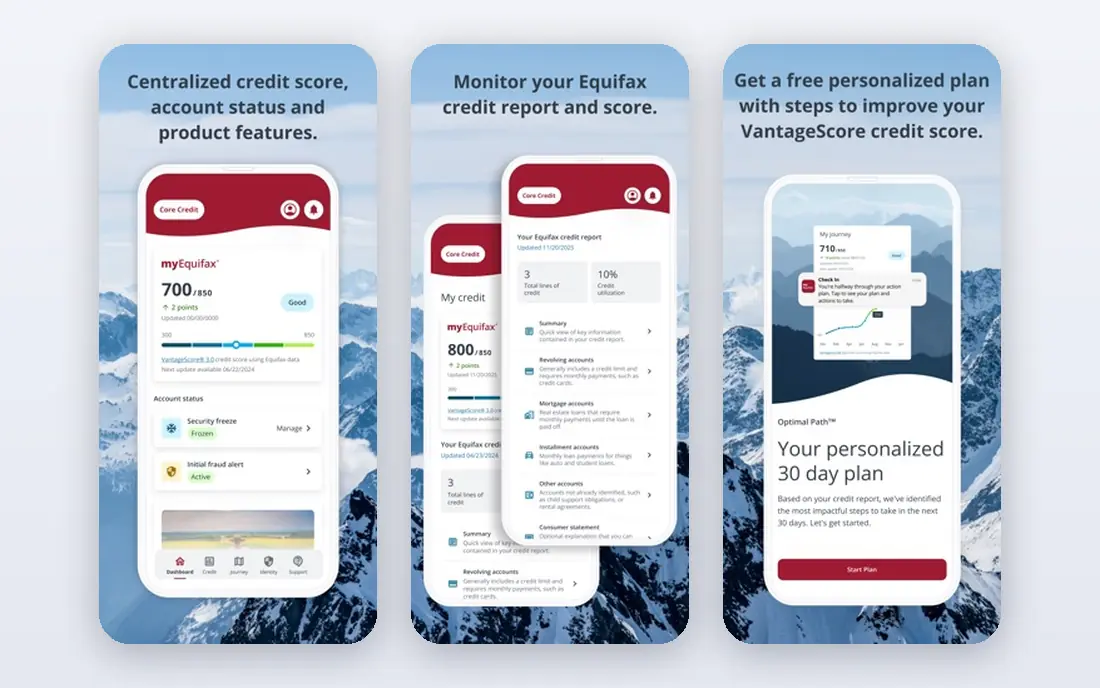
Equifax Business suits lenders and suppliers that need a second bureau view alongside Experian or Creditsafe. Its commercial reports cover payment behavior, trade data, and risk scores used for credit decisions, and its data often reflects small business lending and trade payment patterns. That makes it useful for checking newer or smaller firms.
Direct access is less simple than a consumer credit check. Equifax does not offer a free business report direct in the same way, so many small firms reach Equifax data through Nav or a partner. Pricing also varies by report, so confirm the exact report and scores included before ordering.
- Small business risk scores
- Trade and loan data
- Lender-focused reports
- No free business report direct
- Pricing varies by report type
Creditsafe is a strong pick for companies that vet suppliers or customers outside the United States. It operates as a commercial credit bureau with global company data, risk scores, suggested credit limits, and monitoring alerts. European coverage is a particular strength, which helps firms that trade across borders.
Pricing is quoted and often subscription-based, so small firms should check minimum terms and per-report costs. Data depth also varies by country, so test coverage for your main trading markets with sample companies before relying on it for all decisions.
- Strong international coverage
- Risk scores and credit limits
- Monitoring alerts
- Quote-based pricing
- Depth varies by country
Nav suits small business owners who want to see their own credit picture without buying separate reports from each bureau. A free plan shows basic grades and summaries, while paid Nav Prime plans add detailed reports and scores from multiple bureaus, including Experian, Equifax, and Creditsafe data in some tiers. Financing matches also help owners see loan and card options tied to their profile.
The limit is depth on the free tier. Detailed reports, full scores, and dispute help sit behind paid plans, so owners who need a formal report for a lender may still need a direct bureau report. Nav is also US-focused, so international firms may need Creditsafe or a local bureau instead.
- Free basic monitoring
- Several bureaus in one dashboard
- Financing matches
- Full bureau detail sits behind paid plans
- US focus
ZoomInfo fits sales and marketing teams that need company data for prospecting, rather than formal credit decisions. It covers firmographics, technographics, intent signals, and contact data, with CRM integrations that keep records current. Teams use it to build target lists, enrich accounts, and prioritize outreach by company signals.
It is not a credit bureau replacement for lending or supplier credit terms. Pricing is also quoted on annual contracts, with credits that teams must manage carefully, since unused credits may not roll over. Use ZoomInfo for go-to-market data, and use a bureau for credit risk decisions.
- Large company database
- Intent and firmographic data
- CRM integrations
- Quote-based annual contracts
- Credit-based pricing needs care
Crunchbase suits teams that research companies by funding, growth, leadership, and news, rather than by credit score. Its profiles cover startups and larger firms, with funding rounds, acquisitions, and people data that help with partnerships, sales, and investment research. Prospect lists and alerts help teams track companies over time.
Credit risk is not its strength. Crunchbase does not replace a bureau report for supplier terms or lending, so firms that need payment history and risk scores should pair it with Experian, Equifax, or Creditsafe. Full search and export features also sit behind paid tiers.
- Funding and company profiles
- Investor and news data
- Prospect lists
- Credit data is thin
- Paid tiers needed for full search and exports
Apollo.io suits small sales teams that want company and contact data with outreach in one tool. Its free tier lets teams search companies and contacts, build lists, and run basic sequences without an annual contract. That makes it a low-cost starting point for prospecting, especially for startups.
Accuracy varies, as with any large prospecting database, so teams should verify key records before outreach and follow consent and privacy rules for contacting people. Apollo.io also does not provide formal business credit reports, so it should not be used alone for credit or supplier risk decisions.
- Free starting tier
- Company and contact search
- Outreach tools
- Data accuracy varies
- Credit risk features are limited
TransUnion Business provides business credit reports, monitoring, and fraud-related tools for lenders, suppliers, and service providers. It helps teams check a company credit profile, watch for changes, and add fraud checks to onboarding or credit workflows. That combination suits firms that need both credit and identity risk signals.
Its business products are less prominent than its consumer credit brand, so buyers may need to speak with sales to map the right report and monitoring plan. Pricing is quoted, and score models differ from other bureaus, so compare reports on the same company before drawing firm conclusions.
- Business credit monitoring
- Fraud tools
- Lender and supplier data
- Quote-based pricing
- Business products less visible than consumer tools
Owler suits teams that track competitors and partners through news, funding updates, and company changes. Its alerts help sales, marketing, and strategy teams stay current on rivals and key accounts without reading dozens of news sources. Simple company profiles give a quick view of size, sector, and recent events.
Owler is not a credit bureau. It lacks the payment history, risk scores, and formal reports that Experian, Equifax, Creditsafe, and TransUnion provide, so it works best as a tracking complement, not as a credit check tool. Confirm which alert and tracking features are included in the plan you choose.
- Company news and alerts
- Competitor tracking
- Simple profiles
- Thin credit data
- Paid features for full tracking
How we picked these
We compared official bureau, data, and pricing pages, plus current business credit guides, for tools that are actively sold in October 2026 and that cover Dun and Bradstreet ground: business credit reports, company data, monitoring, and risk review. We included bureau peers, a multi-bureau monitor, and company data tools, and we wrote See website where vendors do not publish a price. Business data use must stay lawful and authorized, with proper permission where credit checks require it.
How to choose a business data tool
Start with the decision you need to make. Credit terms and lending need a bureau report with payment history and a risk score. Prospecting needs firmographic and contact data, while partner tracking needs news and company change alerts. Those are different jobs, and no single tool in this list does all three equally well.
Scores, coverage, and compliance
Compare reports on the same sample companies, since coverage and score models differ by bureau and country. Check monitoring alerts, dispute processes, and data update frequency, and confirm your lawful basis for each check. For consumer-linked data, follow credit reporting and privacy rules, and do not use business data for stalking, doxxing, or unauthorized tracking of individuals.
Frequently asked questions
Is D and B the same as Dun and Bradstreet?
Yes, in this article D and B means Dun and Bradstreet, the business data and credit bureau. It is not a different company with similar initials, and the tools here replace its business credit and company data uses.
Which Dun and Bradstreet alternative is best for small businesses?
Nav is the most accessible starting point for small firms, thanks to free basic monitoring and multi-bureau summaries. For a formal credit check, Experian Business or Equifax Business reports are more direct, while Creditsafe suits firms with international suppliers.
Can I check my own business credit for free?
Nav offers free basic grades and summaries, and some bureaus offer free checks or trial access depending on the product. Full detailed reports and scores usually sit behind paid plans or per-report fees.
Do scores from different bureaus match?
No. Each bureau uses its own data and scoring model, with different ranges and inputs, so a score from Experian does not equal a score from Equifax or Creditsafe. Compare the underlying payment and risk data, not just the headline score.
Can I use these tools to look up any company?
You can look up company data for lawful business purposes, such as vetting a supplier or customer, with proper permission where a credit check requires it. Do not use these tools to stalk, harass, or expose private personal information about individuals.
Should I use one bureau or several?
Several bureaus give a fuller picture, since each bureau may hold different trade and payment data for the same company. Many firms check two bureaus for larger credit decisions and use Nav to monitor changes between checks.
Sources
- https://www.experian.com/business
- https://www.equifax.com/business
- https://www.creditsafe.com
- https://www.nav.com
- https://www.zoominfo.com
- https://www.crunchbase.com
- https://www.apollo.io
- https://www.transunion.com/business
- https://www.owler.com
- https://www.nav.com/business-credit/how-to-check-business-credit/
- https://ramp.com/blog/business-credit-bureaus
See where you really rank - block by block
ProMapRanker scans Google Maps across a grid of your service area. Simple monthly plans from $19, white-label on every plan.
Start freeKeep reading
 zyte alternatives
Best Zyte Alternatives in 2026
These zyte alternatives cover managed scraping APIs, proxy networks and no code tools for lawful collection from your own or consented sources only in 2026.
Read → zerto alternatives
Best Zerto Alternatives in 2026
Compare the best zerto alternatives for disaster recovery and replication, with recovery targets, cloud options and honest trade-offs for teams in 2026.
Read → zerofox alternatives
Best ZeroFox Alternatives in 2026
We compared 9 zerofox alternatives for brand protection, phishing takedowns, dark web monitoring, and social impersonation, with clear coverage notes.
Read →