 ProMapRanker
Best Cortex Alternatives in 2026

Key takeaways
- This article uses one reading of Cortex plainly: Cortex.io, the internal developer portal for service catalogs, scorecards, and production readiness, not Palo Alto Cortex security tools.
- Port is the fastest SaaS starting point for most mid sized teams, while Backstage suits teams that can staff an open source portal.
- OpsLevel and Configure8 suit governance led teams that need scorecards and standards tracking from day one.
- Humanitec, Qovery, Northflank, and Cycloid add provisioning and deployment, so choose them when tickets for environments are the main pain.
Quick comparison
| Pick | Great for | Pricing starts at | Free tier | |
|---|---|---|---|---|
 Backstage | Open source custom portals | Free | Yes | Visit |
 Port | Fast SaaS developer portal | Free | Yes | Visit |
 OpsLevel | Governance and scorecards | See website | No | Visit |
 Humanitec | Platform orchestration | See website | No | Visit |
 Configure8 | Catalog and scorecards | $19 per user per month | Free trial | Visit |
 Qovery | Cloud deployment platform | See website | Free trial | Visit |
 Northflank | Cloud native delivery | See website | Free trial | Visit |
 Cycloid | Platform engineering and delivery | See website | Free trial | Visit |
The best cortex alternatives
Cortex.io, in this reading, is an internal developer portal that gives engineering teams a service catalog, scorecards for production readiness, scaffolding, and workflows. The tools below sit in that same internal developer portal and platform category. We compared published features and pricing signals, and we did not mix in security products that share the Cortex name.
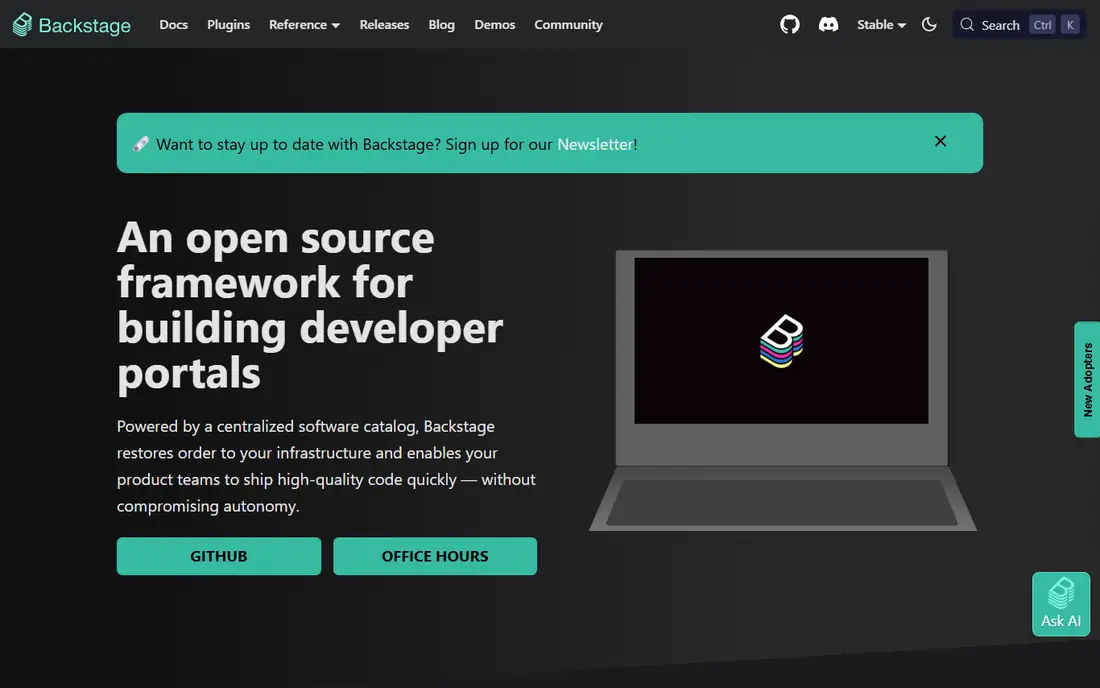
Backstage is the open source foundation for many developer portals, originally built at Spotify. It offers a software catalog, software templates for new services, documentation as code, and search, with a large plugin ecosystem for integrations. Teams that need total control over data models and workflows will find it the most flexible option.
The cost is staffing. Backstage itself is free, but building, hosting, upgrading, and supporting it commonly needs one or two dedicated platform engineers. Without that staffing, a Backstage portal can stall and become shelfware. For a team with platform engineering capacity, it is the most customisable choice. For a team without it, a managed SaaS portal will be faster.
- Free open source software under CNCF
- Large plugin ecosystem
- Service catalog, scaffolding, and TechDocs
- Needs platform engineers to build and maintain
- Total cost comes from staffing, not licences
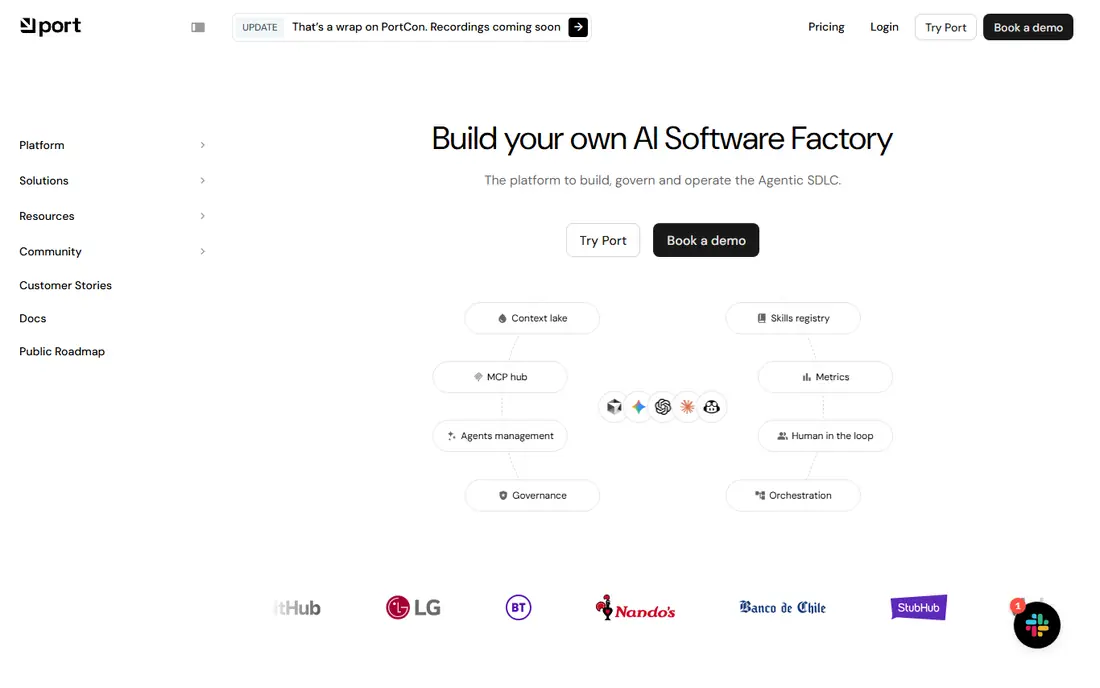
Port is the most practical SaaS starting point for a mid sized team that wants a portal live in days rather than months. The free tier covers a small team, and paid plans add scorecards, workflows, and self service actions for developers. Custom data models let a team describe services, APIs, and resources in its own terms, rather than forcing a fixed schema.
The limit is per seat pricing at scale. A large engineering org will pay more than it would for open source software, though it saves platform engineering time. Port also needs clear ownership and standards to be useful, since a catalog without owners quickly goes stale. For most teams that want speed and low maintenance, Port is the default shortlist pick.
- Free tier up to 15 seats
- Custom data models and scorecards
- Self service actions
- Paid plans are per seat and grow with team size
- Complex customisation still needs planning
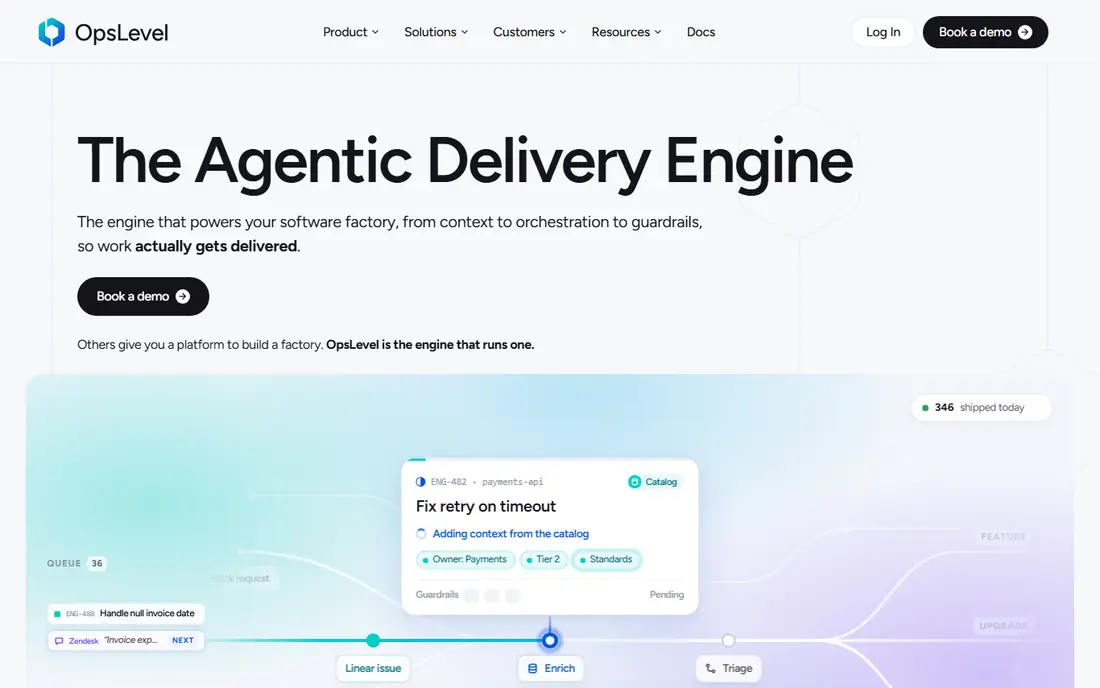
OpsLevel suits engineering leaders whose main deliverable is standards, reliability, and audit readiness. It automates catalog creation from existing tools, tracks service maturity with checks, and helps teams drive migrations and reliability work. The opinionated approach means a team gets useful scorecards on day one, rather than building them from scratch.
The drawback is pricing clarity and scope. OpsLevel is quote only, so budgeting needs a sales conversation, and it is a portal rather than a provisioning platform. Teams that need to create environments and databases on demand will still need an orchestration tool alongside it. For governance led teams, OpsLevel is a strong and focused choice.
- Opinionated governance and production readiness checks
- Automated catalog maintenance
- AI assisted metadata
- Pricing is quote only
- Less focused on provisioning environments
Humanitec is different from a pure portal, because it also provisions infrastructure. Its platform orchestrator lets developers request environments, databases, and cloud resources through a consistent workload model, rather than filing tickets. The newer portal view sits on top of that orchestration, so teams get visibility and delivery in one system.
That power comes with complexity and cost. Humanitec suits enterprise platform teams with Kubernetes and cloud estates, not a small team that only needs a catalog. Pricing is quote based, and implementation needs platform expertise. For a team whose main pain is slow environment provisioning, Humanitec is worth the investment. For a team that only needs visibility, Port or OpsLevel will be simpler.
- Provisions environments and infrastructure
- Workload specification for consistency
- Portal plus orchestrator
- Pricing is quote only
- More complex than a catalog only portal
Configure8 offers a universal catalog that organises services, teams, environments, and resources, with scorecards and self service actions on top. Its large library of pre built checks helps a team score services against standards without writing every check by hand. Self service actions use dynamic forms, which reduce the cognitive load of day two operations.
The limit is vendor size and plan detail. Configure8 is smaller than Port and far smaller than the Backstage ecosystem, so buyers should check integrations, support, and roadmap carefully. Pricing starts at $19 per user per month in published listings, but enterprise needs may cost more. For a governance focused team that wants a clear catalog and scorecard library, Configure8 is a credible option.
- Universal catalog across teams and resources
- Large scorecard check library
- Self service actions
- Smaller vendor than Port or Backstage
- Enterprise features may need a higher plan
Qovery suits teams that want developers to deploy without waiting on platform tickets. It deploys into AWS, GCP, Azure, Scaleway, or an existing Kubernetes cluster, gives preview environments for pull requests, and presents services in a catalog. That delivery focus makes it a good complement to a portal, or a replacement when provisioning is the main problem.
The trade off is that Qovery is not a pure catalog and governance tool in the same way as OpsLevel. Scorecards and maturity tracking are less central than deployment. Pricing for larger teams is quote based. For a cloud native team that needs fast, self service delivery, Qovery is a strong pick. For a team that only needs visibility, a portal alone will be cheaper.
- Deploys into your own cloud account or cluster
- Preview environments per pull request
- Service catalog views
- More delivery platform than pure portal
- Pricing needs a quote for larger teams
Northflank is aimed at smaller cloud native teams that want a platform for building, deploying, and running workloads without a large platform team. It supports preview environments, pipelines, and service management, with a focus on Kubernetes based delivery. That makes it a practical choice for startups and scaleups that have outgrown manual deploys.
The limits are ecosystem size and pricing clarity. Northflank is smaller than the large portal vendors, and larger plans are quote based. It also leans toward delivery rather than governance scorecards. For a team that wants delivery speed with a manageable platform, Northflank is worth testing. For a team that needs strict scorecard governance, OpsLevel or Configure8 fits better.
- Cloud native workload delivery
- Preview environments
- GitOps friendly workflows
- Pricing is quote led for many teams
- Smaller ecosystem than Backstage
Cycloid combines continuous integration, continuous delivery, and platform engineering features, with catalog views for services and infrastructure. It suits teams that want pipelines and platform governance in one product, rather than buying a portal and a delivery tool separately. Infrastructure as code support helps teams keep environments consistent.
The drawback is portal depth. Cycloid is broader than a dedicated portal, so its catalog and scorecard features are less deep than Port, OpsLevel, or Configure8. Pricing is also quote based. For a team that wants an integrated delivery and platform product, Cycloid is a useful option. For a team that needs the deepest scorecard governance, a dedicated portal will be stronger.
- Combines CI and CD with platform features
- Service catalog views
- Infrastructure as code friendly
- Pricing is quote led
- Portal depth is less than dedicated portal vendors
How we picked these
We compared official product pages and public platform guides, and we kept only tools that are live in October 2026 and that fit the internal developer portal or platform category. We did not claim hands on testing. We weighed published features, pricing clarity, catalog depth, scorecard support, and whether the tool mainly reads service data or also provisions infrastructure.
What to check before you choose
Start with the pain. If nobody knows what services exist or who owns them, a portal such as Port or OpsLevel solves it. If developers wait days for environments, an orchestration or delivery platform such as Humanitec, Qovery, or Northflank solves it. Buying a portal when the pain is provisioning, or vice versa, wastes money and trust.
Next, check integrations and ownership. A portal is only as good as its data, so confirm connections to Git, CI and CD, cloud, monitoring, and incident tools. Assign an owner for every service before launch, and agree on the standards that scorecards will measure. Without owners and standards, even the best catalog goes stale within months.
Finally, run a proof of concept with real services. Import a representative set, build one scorecard, and run one self service action with real developers. Watch whether developers actually use it day to day, and whether platform engineers can maintain it. A four week pilot with real workflows reveals more than any demo.
Frequently asked questions
Which Cortex does this article mean?
This article means Cortex.io, the internal developer portal for service catalogs, scorecards, scaffolding, and production readiness. It does not cover Palo Alto Cortex security products, which are a different category with different buyers and features. If you searched for security operations tools, compare XDR and SIEM products instead.
Is Cortex itself still available?
Cortex.io remains a live developer portal vendor in 2026 comparison guides, focused on catalogs, scorecards, and workflows. Pricing is quote based in many listings, so teams compare it with Port and OpsLevel for clearer entry points or different governance models. Confirm the current plan with Cortex directly if you are still considering it.
What is the best free Cortex alternative?
Backstage is the best free option in licence terms, since the software is open source, and Port offers a free tier for small teams. Backstage costs platform engineering time, while Port's free tier is limited by seats and entities. For a small team, Port's free tier is the fastest test. For a team with platform staff, Backstage offers more control.
Do I need a portal or a full platform?
You need a portal if the main problem is visibility, ownership, and standards. You need a full platform if the main problem is provisioning, deploying, and running workloads. Many organisations use both, with a portal on top of a delivery platform. Start with the pain that blocks developers most often.
How long does a developer portal take to set up?
A SaaS portal such as Port can be live in days for a basic catalog, while a full Backstage build can take weeks to months. Governance scorecards, integrations, and migration of existing services add time in both cases. Ask each vendor for a written rollout plan with the first usable catalog and scorecard dates.
Can a portal replace Jira or GitHub?
No, a portal organises services, ownership, docs, and standards, but it does not replace issue tracking or source control. It connects to those tools and surfaces their data in one place. Keep Jira for work tracking and GitHub for code, and use the portal to answer who owns a service and whether it meets standards.
Sources
- https://en.ai-pedias.com/blog/ai-developer-experience-internal-developer-platform-2026
- https://wetheflywheel.com/en/comparisons/backstage-vs-port-vs-cortex/
- https://www.qovery.com/blog/backstage-alternatives-developer-portals-buyers-guide
- https://backstage.io
- https://getport.io
- https://opslevel.com
- https://humanitec.com
- https://www.configure8.io
- https://www.qovery.com
- https://northflank.com
- https://www.cycloid.io
See where you really rank - block by block
ProMapRanker scans Google Maps across a grid of your service area. Simple monthly plans from $19, white-label on every plan.
Start freeKeep reading
 zyte alternatives
Best Zyte Alternatives in 2026
These zyte alternatives cover managed scraping APIs, proxy networks and no code tools for lawful collection from your own or consented sources only in 2026.
Read → zerto alternatives
Best Zerto Alternatives in 2026
Compare the best zerto alternatives for disaster recovery and replication, with recovery targets, cloud options and honest trade-offs for teams in 2026.
Read → zerofox alternatives
Best ZeroFox Alternatives in 2026
We compared 9 zerofox alternatives for brand protection, phishing takedowns, dark web monitoring, and social impersonation, with clear coverage notes.
Read →