 ProMapRanker
Best CoreSignal Alternatives in 2026

Key takeaways
- Apollo.io is our pick for most sales teams that want prospecting, contact data, and outreach in one tool.
- ZoomInfo and Cognism suit larger teams that need deep coverage and verified phone data.
- Crunchbase suits research and funding tracking more than contact prospecting.
- Clay suits data teams that want to enrich lists from many providers in one workflow.
- People Data Labs, Hunter.io, and LeadIQ suit narrower enrichment and email finding tasks.
Quick comparison
| Pick | Great for | Pricing starts at | Free tier | |
|---|---|---|---|---|
 Apollo.io | All-round prospecting | $49 per user per month | Yes | Visit |
 ZoomInfo | Enterprise sales intelligence | See website | No | Visit |
 Crunchbase | Company and funding research | See website | Yes | Visit |
 Cognism | Verified EMEA and US contacts | See website | No | Visit |
 Clay | Data enrichment workflows | $149 per month | Yes | Visit |
 Lusha | Quick LinkedIn contact reveal | See website | Yes | Visit |
 LeadIQ | LinkedIn prospecting for SDRs | $75 per month | Free trial | Visit |
 People Data Labs | API enrichment | See website | Yes | Visit |
 Hunter.io | Email finding and verification | $49 per month | Yes | Visit |
The best coresignal alternatives
CoreSignal is an API-first provider of company, employee, and job posting data, built for data teams that can query raw data and pipe it into a warehouse or CRM. Many teams do not need that raw model. They need a search interface, verified contacts, or a simple API for enrichment. The tools below cover those needs, from full sales platforms to narrow data APIs.
A note on lawful use: company and contact data must be used lawfully. Respect opt-out requests, follow the terms of each provider, and check privacy rules in the regions where your prospects live, including the EU and US state laws. Do not use these tools to scrape private data, bypass provider terms, or contact people who have asked not to be contacted. Data quality also varies, so verify key contacts before a high value outreach.

Apollo.io is the most complete replacement for teams that want prospecting without an engineering project. You can search companies and contacts, filter by role, industry, and size, enrich records, and run email sequences from the same platform. The Basic plan is $49 per user per month when billed annually, with a free plan for basic use, which makes it easy for a small sales team to start.
The credit model needs attention. Email and phone reveals cost credits, and phone data costs more than email, so a team that reveals many phones can hit limits fast. Data quality also varies, especially for smaller companies and niche roles. For most sales teams, though, Apollo offers the best mix of coverage, workflow, and self-serve price on this list.
- Large contact database
- Search plus sequences in one tool
- Self-serve pricing
- Credit limits can surprise larger teams
- Data quality varies by segment
- Phone data costs more credits
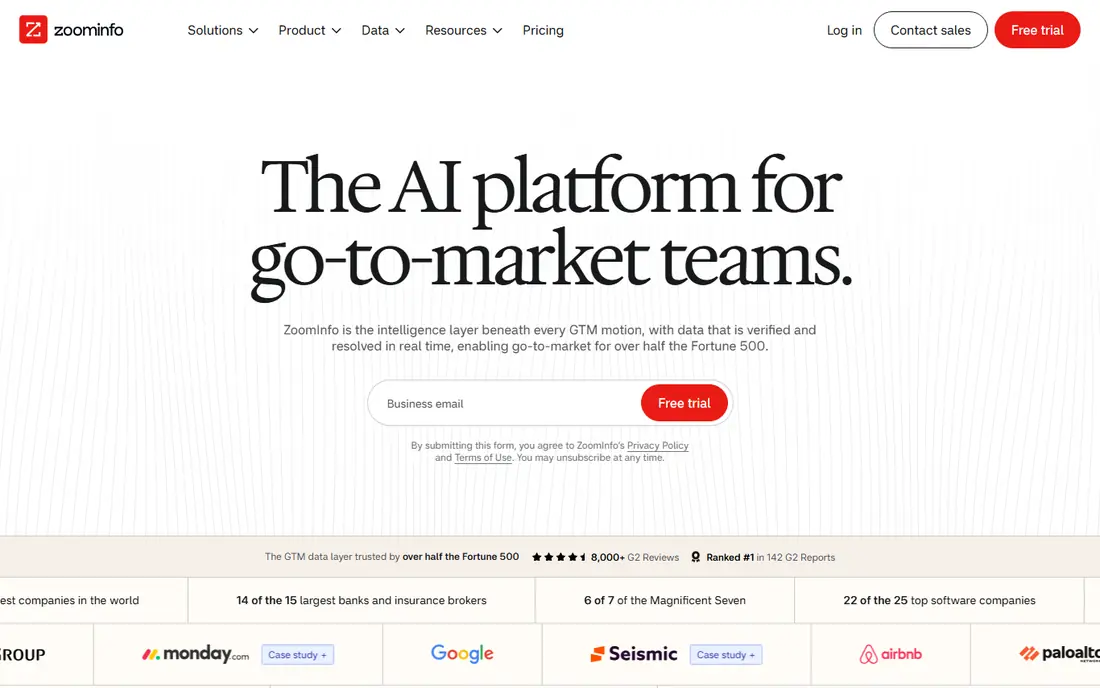
ZoomInfo is the enterprise sales intelligence platform, with deep company and contact coverage, org charts, technographics, and buying intent signals. Large sales teams use it to build target account lists, find decision makers, and push data into a CRM with workflow rules. Integrations with Salesforce, HubSpot, and outreach tools make it a central part of many enterprise stacks.
Pricing is quote based and typically runs to five figures per year for larger teams, so it is not a small-team tool. Implementation also takes planning around credits, seats, and modules. For enterprises that need depth, intent, and scale, ZoomInfo remains the benchmark. For smaller teams, Apollo or Lusha will deliver most of the value at a far lower cost.
- Deep US company and contact coverage
- Buying intent signals
- Strong CRM integrations
- Enterprise pricing
- Quote based plans
- Overkill for small teams

Crunchbase suits research, not cold outreach. It tracks funding rounds, founders, investors, acquisitions, and company news, which helps investors, founders, and partnerships teams map a market. A free tier covers basic profiles and alerts, while paid plans add advanced search, filters, and exports for research work.
Crunchbase is not a contact database in the ZoomInfo sense. Email and phone coverage is limited, so sales teams will need a second tool for outreach. For company research, competitor tracking, and deal sourcing, it is a strong, focused pick. Use it to understand a company, then use Apollo, Lusha, or Hunter.io to find the right contact.
- Strong funding, founder, and company profiles
- Useful for research and deal sourcing
- Free tier for basic use
- Contact data is limited
- Advanced search needs a paid plan
- Data can lag for private companies
Cognism suits sales teams that need verified phone numbers, especially in Europe, the Middle East, and Africa, plus US coverage. Its Diamond data set focuses on phone-verified mobile numbers, which helps teams that call prospects rather than only emailing them. Compliance features, including opt-out handling and regional data controls, are a core part of its pitch.
Pricing is quote based, with annual contracts common, and entry costs are well above Apollo for a small team. There is no simple self-serve plan for most buyers. For mid-size and enterprise teams that rely on phone outreach and need EMEA depth, Cognism is a strong alternative. For email-first small teams, Apollo or Lusha will be cheaper.
- Phone-verified mobile numbers
- Strong EMEA coverage
- Compliance focused positioning
- Quote based pricing
- Annual contracts common
- Less self-serve than Apollo
Clay is a data workbench for teams that build enriched lead lists. You start with a list of companies or people, then enrich it through many data providers, AI research, and web sources, in a waterfall that tries providers in order and pays only for matches in many cases. That model improves match rates compared with a single database, and it suits RevOps and growth teams that care about list quality.
Clay is not a simple search tool. Setup takes time, credit costs vary by provider, and total spend can be hard to predict until you run real lists. The entry plan is $149 per month, with a free tier for testing. For teams that already have a source list and want the best enrichment for it, Clay is a powerful pick. For teams that need to discover prospects from scratch, Apollo or ZoomInfo may be simpler.
- Enrichment from many providers in one workflow
- AI research for lists
- Waterfall enrichment pays only for matches
- Setup takes time
- Cost can be hard to predict
- Not a simple search and export tool
Lusha suits individual reps and small teams that find prospects on LinkedIn and need a contact quickly. A browser extension reveals email and phone details from a profile, and credits control how many reveals you can make each month. The free tier covers a small monthly credit allowance, which is enough to test the workflow.
Coverage varies by region, industry, and role, so some profiles will return no match. Larger teams may also hit credit limits and need a higher plan. Lusha works best as a prospecting aid alongside a CRM, not as a full company research platform. For quick LinkedIn-based outreach, it is simple, fast, and easy to justify.
- One-click reveal from LinkedIn profiles
- Simple credit model
- Free tier for basic use
- Coverage varies by region and role
- Credit limits on lower tiers
- Less depth than enterprise tools
LeadIQ is built for sales development reps who prospect on LinkedIn every day. It captures contact details in real time, tracks job changes, and syncs prospects to a CRM or sequencer, which cuts manual data entry. That workflow suits outbound teams that live in LinkedIn and need a steady flow of fresh prospects.
LeadIQ is LinkedIn centred, so it is less useful for company research or bulk API enrichment. Pricing starts at $75 per month, with higher tiers for teams, so model cost by rep count. For SDR teams that prospect mainly on LinkedIn, LeadIQ is a focused, productive tool. For broader research, pair it with Crunchbase or Apollo.
- Real-time capture from LinkedIn
- Job change alerts
- CRM sync for sales teams
- LinkedIn centred workflow
- Price rises with seats and features
- Less company research depth
People Data Labs suits data teams that need to enrich records they already hold. Its APIs match and enrich person and company records with professional details, which helps CRM cleanup, lead scoring, and data product work. That API-first model is the closest in spirit to CoreSignal on this list, but with a focus on person enrichment rather than bulk company datasets.
You need engineering skill to use it well, since there is no full prospecting interface for reps. Credit costs vary by endpoint and record completeness, so test with your real data and model cost by volume. For teams building enrichment pipelines, People Data Labs is a credible, developer-friendly alternative.
- API-first enrichment for existing records
- Person and company endpoints
- Free testing tier
- Needs engineering skill
- Credit costs vary by record type
- Not a prospecting interface
Hunter.io suits small teams that mainly need to find and verify business emails. Domain search returns email patterns and addresses for a company, and verification checks whether an address is likely deliverable before you send. Pricing starts at $49 per month, with a free tier for a small monthly allowance, which makes it easy to test.
Hunter.io is email focused, so teams that need phone numbers or deep company data will need another tool. Coverage is thinner for very small companies and some regions. For email-first outreach, newsletter research, and partnership contact finding, Hunter.io is a simple, low cost pick that does one job well.
- Domain search for company emails
- Email verification included
- Simple self-serve pricing
- Email only, no phone focus
- Coverage varies for small companies
- Larger lists need higher plans
How we picked these
We compared official feature pages, pricing pages, and public reviews for company and contact data tools live in October 2026. We kept tools with real company or contact data, lawful access models, and a usable search, API, or enrichment workflow. We left out scrapers and tools that bypass provider terms, since they create legal and deliverability risk. Where pricing is quote based, we marked it as See website rather than guessing a figure.
What to check before you switch
Start with your workflow. If reps need to search and send, shortlist Apollo, ZoomInfo, and Lusha. If you need research, shortlist Crunchbase. If you need to enrich lists, shortlist Clay and People Data Labs. If you need email only, shortlist Hunter.io. A tool that excels at one workflow may be weak at another, so test the exact job you will do each day.
Next, check coverage for your market. Test your target industries, company sizes, and regions with real searches during a trial, and check match rates for email and phone separately. A large global database total does not guarantee coverage for your niche. Also check data freshness, opt-out handling, and whether the provider documents its sources and compliance controls.
Finally, model total cost. Seats, credits, phone reveals, and enrichment providers can each add cost beyond the headline plan price. Run a trial with your real list size and reveal volume, then compare the monthly total, not just the entry price. A cheaper plan with high credit costs can end up more costly than a higher plan with a larger allowance.
Frequently asked questions
What is the closest API alternative to CoreSignal?
People Data Labs is the closest API-first enrichment option on this list, while Clay suits teams that want enrichment from many providers in one workflow. Both need more setup than a search tool. If you need bulk company datasets rather than record enrichment, request a quote from an API provider and test its endpoints with your real data.
Which CoreSignal alternative is best for small sales teams?
Apollo.io is best for most small sales teams, since it combines search, contact data, and sequences at a self-serve price. Lusha and Hunter.io suit even smaller budgets for LinkedIn and email work. Start with a free tier or trial, test coverage for your market, and check credit costs before you commit.
Is ZoomInfo worth the price for a small team?
Usually not. ZoomInfo suits larger teams that need deep coverage, intent data, and enterprise integrations, and its quote based pricing reflects that. Small teams will get most of the value from Apollo, Lusha, or Clay at a far lower cost. Revisit ZoomInfo when team size and deal size justify enterprise pricing.
How accurate is B2B contact data?
Accuracy varies by provider, region, role, and company size, and no provider is perfect. Verify key contacts with email verification, check job changes, and clean your CRM regularly. A provider that documents its refresh cycle and opt-out handling is a safer choice than one that only quotes a database total.
Can I use these tools for cold email outreach?
You can, but you must follow anti-spam law, provider terms, and opt-out requests in each region you contact. Use verified emails, keep lists targeted, and stop contacting people who opt out. Cold outreach also works best when the message is relevant to the recipient, so use company research, not just a bulk list, to shape it.
Sources
See where you really rank - block by block
ProMapRanker scans Google Maps across a grid of your service area. Simple monthly plans from $19, white-label on every plan.
Start freeKeep reading
 zscaler alternatives
Best Zscaler Alternatives in 2026
Looking for zscaler alternatives? We compare 9 SASE and zero trust platforms on architecture, data protection, pricing, and fit for your network and team.
Read → zapier alternatives free
Best Zapier Alternatives Free in 2026
Nine automation tools for zapier alternatives free in 2026, all with genuinely free tiers, plus free plan limits, starting prices and upgrade paths explained.
Read → which platform is best for online reputation
Which Platform Is Best for Online Reputation in 2026
Wondering which platform is best for online reputation? We compare 8 review, listing, and response tools for small and multi-location businesses and agencies.
Read →