 ProMapRanker
Best Control-M Alternatives in 2026

Key takeaways
- Redwood RunMyJobs, Stonebranch and Tidal are closest to a like-for-like enterprise replacement for Control-M.
- IBM Workload Automation, Automic and AutoSys suit large IT estates with mainframe or complex hybrid needs.
- Apache Airflow and Prefect suit engineering teams that prefer code-first data workflows.
- ActiveBatch and JAMS give mid-size IT teams broad scheduling with less enterprise overhead.
Quick comparison
| Pick | Great for | Pricing starts at | Free tier | |
|---|---|---|---|---|
 Redwood RunMyJobs | SAP and ERP operations | See website | No | Visit |
 Stonebranch | Event-driven hybrid automation | See website | No | Visit |
 IBM Workload Automation | Mainframe and hybrid scheduling | See website | No | Visit |
 Broadcom Automic Automation | Enterprise governance | See website | No | Visit |
 ActiveBatch | Broad IT workload automation | See website | No | Visit |
 JAMS Scheduler | Microsoft-centric scheduling | $833 per month | No | Visit |
 Tidal Workload Automation | Cross-application scheduling | See website | No | Visit |
 Apache Airflow | Code-first data workflows | Free | Yes | Visit |
 Prefect | Modern Python workflows | $100 per month | Yes | Visit |
 Broadcom AutoSys | Stable enterprise scheduling | See website | No | Visit |
The best control-m alternatives
These ten tools cover enterprise workload automation, Microsoft-centric scheduling and modern code-first orchestration, so the right pick depends on your existing systems and team skills.
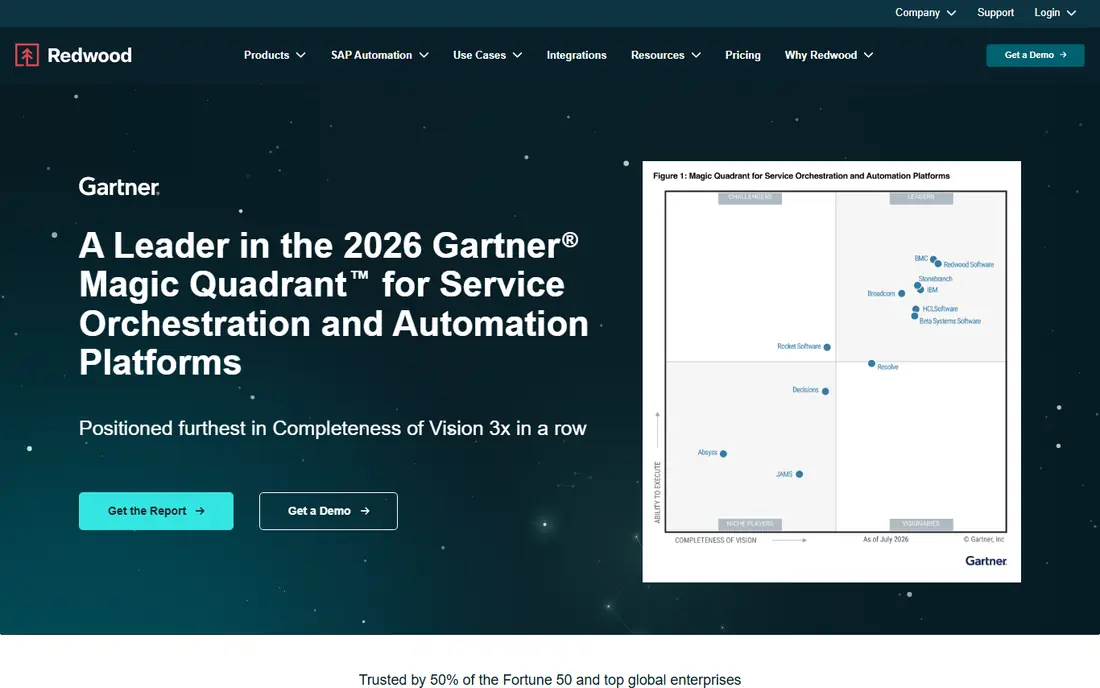
Redwood RunMyJobs is a cloud-native workload automation platform with particular strength in SAP and ERP-heavy operations. It handles business process scheduling across systems, with audit trails and controls that suit finance and supply chain work. Teams that run SAP jobs alongside other applications often pick it for that process depth.
Pricing is quote-based, so budgeting needs a sales conversation, and the SAP focus means a team without SAP may pay for depth it does not use. For an SAP-centric estate, RunMyJobs is one of the closest enterprise replacements for Control-M, with a modern SaaS delivery model.
- Cloud-native SaaS model
- Deep SAP and ERP process coverage
- Strong reliability for business-critical jobs
- Quote-only pricing
- SAP depth may be more than a non-SAP team needs
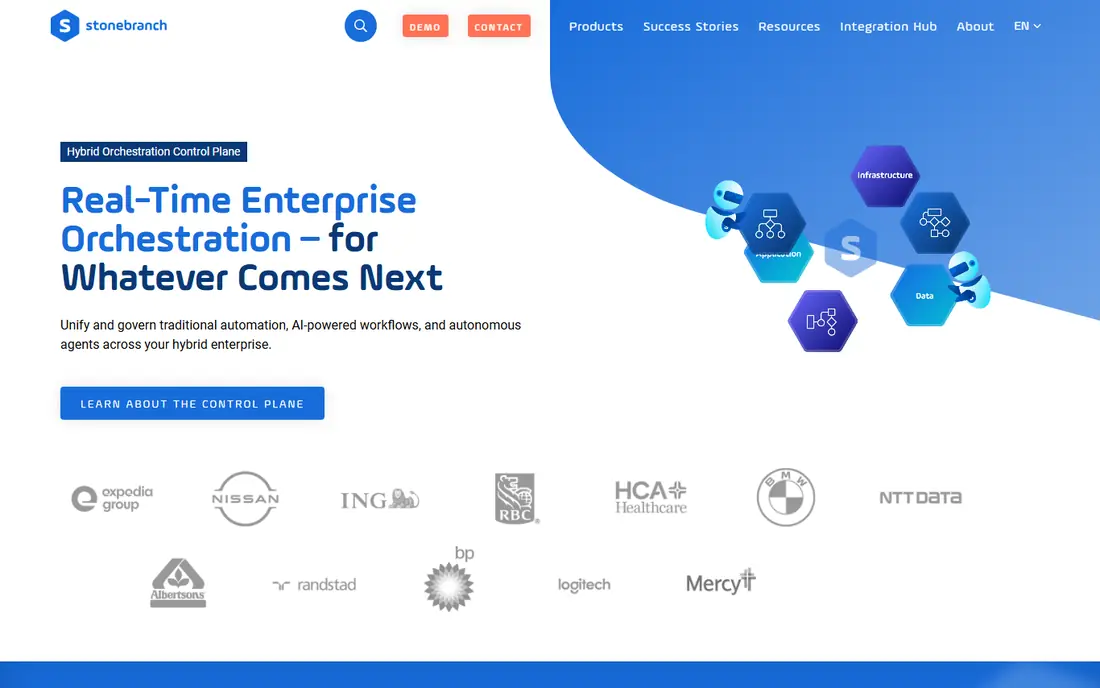
Stonebranch Universal Automation Center is built for event-driven automation across on-premises and cloud systems. Universal agents let it run jobs on many platforms from one console, and real-time triggers replace fixed schedules where work should start when an event happens, not at a set time. That flexibility suits hybrid estates with many different systems.
The product is enterprise-grade, so smaller teams may find the scope and implementation effort larger than a simpler scheduler. Pricing is also quote-based. For a hybrid estate that needs one control point across cloud and on-premises jobs, Stonebranch is a strong candidate.
- Universal agents across platforms
- Real-time event triggers
- Strong hybrid cloud support
- Quote-only pricing
- Enterprise scope needs planning for smaller teams
IBM Workload Automation covers mainframe and distributed scheduling from one platform, which matters for organisations that still run critical work on z/OS alongside cloud systems. It offers graphical scheduling, REST APIs and AI anomaly detection to flag unusual job behaviour early. That mix suits large IT teams with long-standing IBM estates.
Pricing is quote-based and the product carries enterprise complexity, so it is not a light tool for a small team. Teams already using IBM systems will find integration easier, while others may prefer a cloud-native rival. For mainframe-plus-cloud scheduling, IBM remains a credible alternative.
- Strong z/OS and hybrid control
- AI anomaly detection in recent releases
- Broad enterprise integration
- Quote-only pricing
- Interface and setup reflect enterprise heritage
Broadcom Automic Automation is an enterprise automation platform with strong governance, audit trails and role-based access, which suits regulated organisations that need to prove who ran what and when. It covers end-to-end orchestration across applications and platforms, with recent releases adding AI-assisted orchestration. That control is its main selling point.
The drawback is complexity and cost, both of which reflect the enterprise focus. Smaller teams may find the setup and licensing heavier than they need, and pricing requires a quote. For a large estate where governance is non-negotiable, Automic is a solid Control-M rival.
- Strong governance, audit and role controls
- Agentic AI orchestration in recent releases
- Broad platform coverage
- Quote-only pricing
- Enterprise complexity for smaller estates
ActiveBatch is a workload automation tool for IT teams that need broad integration without writing code for every job. Its low-code designer and prebuilt job steps cover many common tasks, from file transfers to database jobs, and SLA monitoring helps teams spot late jobs before they affect the business. That breadth suits mid-size to large IT operations.
Pricing is quote-based, and the interface is more functional than fashionable, which may deter teams that expect a modern SaaS look. For IT operations that value job-step coverage and SLA control over visual polish, ActiveBatch is a dependable choice.
- Low-code design
- Large prebuilt job-step library
- Cross-platform scheduling with SLA monitoring
- Quote-only pricing
- Interface feels enterprise rather than modern SaaS
JAMS Scheduler is the best fit for Microsoft-centric environments, with native support for Windows, SQL Server and PowerShell jobs. It centralises scheduling, dependencies and alerts, so IT teams can manage jobs across servers without separate schedulers per system. Recent listings point to pricing from 833 dollars per month, which gives a clearer starting point than many rivals.
Linux-heavy estates will find the Microsoft focus less useful, and some advanced features sit on higher tiers. For a Windows-based IT team that needs reliable, centralised scheduling, JAMS offers a focused and well-priced alternative to a larger enterprise platform.
- Strong Windows, SQL Server and PowerShell coverage
- Pricing from 833 dollars per month in recent listings
- Centralised job control
- Microsoft focus limits appeal for Linux-heavy estates
- Enterprise features may need higher tiers
Tidal Workload Automation gives IT teams centralised scheduling across applications, with dependencies, SLA management and reporting in one console. Its integration range covers many common enterprise applications, which helps teams that run jobs across ERP, database and cloud systems. That central view reduces the need for separate schedulers.
Pricing is quote-based, and buyers should check the current vendor roadmap, since Tidal has changed ownership over time. For a team that needs cross-application control and SLA tracking, Tidal remains a strong enterprise option, provided the roadmap fits long-term plans.
- Centralised cross-platform control
- SLA management
- More than 40 integrations in recent listings
- Quote-only pricing
- Now part of a larger vendor portfolio, so roadmap checks matter
Apache Airflow is the open source standard for data workflows, where pipelines are defined as code in directed acyclic graphs, known as DAGs. Data teams use it to schedule extracts, transforms and loads, with retries, dependencies and monitoring built in. The ecosystem is large, with many operators for common data tools, and there is no licence fee.
The cost is operational. You host, upgrade and monitor Airflow yourself, or pay a managed provider, and the code-first model suits engineers more than business users. For a data team that already works in Python, Airflow is a powerful and low-cost alternative to enterprise schedulers for data work.
- Free and open source
- Large ecosystem and community
- DAG-based scheduling for data pipelines
- You host and operate it
- Code-first model needs engineering skills
Prefect is a modern orchestration tool for Python data and machine learning workflows, with a developer-friendly design and flexible deployment. Teams can run flows locally, in the cloud or in their own infrastructure, and the dashboard gives clear visibility into runs, failures and retries. The free tier helps small teams start, and paid plans start at 100 dollars per month in recent listings.
Prefect is less focused on general enterprise batch jobs such as mainframe or ERP scheduling, so it is not a direct replacement for every Control-M use case. For data and ML teams that want a modern, Python-native tool, it is an excellent fit and a natural complement to Airflow.
- Free tier for small use
- Paid plans from 100 dollars per month in recent listings
- Developer-friendly Python workflows
- Data and ML focus, less suited to general enterprise batch scheduling
- Costs rise with usage
Broadcom AutoSys Workload Automation is a long-standing enterprise scheduler known for stability and centralised management. It handles job scheduling, dependencies and alerts across platforms, and reviewer feedback often notes easier configuration and onboarding than some larger rivals. That stability matters for teams that run business-critical batch work every night.
The interface reflects its heritage, and pricing is quote-based, so it will not appeal to teams that want a modern SaaS trial in an afternoon. For an enterprise team that values proven stability over new design, AutoSys is a credible and often more cost-effective Control-M alternative.
- Long track record and stability
- Centralised management
- Easier onboarding in reviewer feedback than some rivals
- Quote-only pricing
- Older interface compared with cloud-native tools
How we picked these
We compared official product pages, pricing pages and public reviews for workload automation tools live in October 2026, and we kept only tools that schedule, monitor and manage batch jobs with dependencies. We favoured a mix of enterprise, Microsoft-centric and code-first tools, and we noted where pricing is quote-based. Prices that could not be verified on a vendor page are shown as See website.
How to choose by estate type
Enterprise estates with SAP, mainframe or hybrid systems should shortlist Redwood, Stonebranch, IBM, Automic, Tidal and AutoSys, and run a proof of concept with real jobs and failure cases. Microsoft-centric teams should trial JAMS and ActiveBatch first. Data teams should trial Airflow and Prefect with a real pipeline, and check hosting costs as well as licence costs.
Migration risks to test
Test failure recovery, reruns and SLA alerts during the trial, since those are the moments when a scheduler earns its cost. Check audit trails and role controls if you work in a regulated sector, and confirm agent support for every platform you run. Keep the old scheduler running in parallel until the new one has handled a full monthly cycle.
Frequently asked questions
What are the best control m alternatives for enterprise use?
Redwood RunMyJobs, Stonebranch, IBM Workload Automation, Broadcom Automic, Tidal and AutoSys are the closest enterprise replacements, with central control, dependencies and audit features. The best pick depends on whether your estate is SAP, mainframe or hybrid.
Is there a free Control-M alternative?
Apache Airflow is free and open source, though you host and operate it yourself. Prefect also offers a free tier for small use, with paid plans from 100 dollars per month in recent listings.
Which alternative is best for Microsoft environments?
JAMS Scheduler is built for Windows, SQL Server and PowerShell, with pricing from 833 dollars per month in recent listings. ActiveBatch also covers Microsoft systems well, with broader cross-platform support.
Which tool is best for data pipelines?
Apache Airflow and Prefect are the strongest data workflow options, since both use code-first Python workflows with retries and dependencies. Airflow suits larger data teams, while Prefect suits teams that want a more modern developer experience.
How hard is it to migrate from Control-M?
Migration effort depends on job count, dependencies and custom scripts. Run both schedulers in parallel for a full cycle, test failure recovery and reruns, and confirm agent coverage before you switch off the old system.
Sources
- https://www.redwood.com
- https://www.stonebranch.com
- https://www.ibm.com/products/workload-automation
- https://www.broadcom.com/products/software/automation
- https://www.advsyscon.com
- https://www.jamsscheduler.com
- https://www.tidal.com
- https://airflow.apache.org
- https://www.prefect.io/pricing
- https://www.broadcom.com/products/software/automation/autosys
See where you really rank - block by block
ProMapRanker scans Google Maps across a grid of your service area. Simple monthly plans from $19, white-label on every plan.
Start freeKeep reading
 zscaler alternatives
Best Zscaler Alternatives in 2026
Looking for zscaler alternatives? We compare 9 SASE and zero trust platforms on architecture, data protection, pricing, and fit for your network and team.
Read → zapier alternatives free
Best Zapier Alternatives Free in 2026
Nine automation tools for zapier alternatives free in 2026, all with genuinely free tiers, plus free plan limits, starting prices and upgrade paths explained.
Read → which platform is best for online reputation
Which Platform Is Best for Online Reputation in 2026
Wondering which platform is best for online reputation? We compare 8 review, listing, and response tools for small and multi-location businesses and agencies.
Read →