 ProMapRanker
Best Contentful Alternatives in 2026

Key takeaways
- Sanity is our top pick for flexible structured content, with real time collaboration and strong developer tools.
- Strapi is the best open source alternative for teams that want to self host and control their own data.
- Storyblok suits marketing teams that want a visual editor with component based pages.
- Hygraph leads for GraphQL native projects and content federation across sources.
- Contentstack and Kontent.ai suit enterprises that need governance, workflows and localisation at scale.
Quick comparison
| Pick | Great for | Pricing starts at | Free tier | |
|---|---|---|---|---|
 Sanity | Flexible structured content | Free | Yes | Visit |
 Strapi | Open source self hosting | Free | Yes | Visit |
 Storyblok | Visual editing for marketers | Free | Yes | Visit |
 Hygraph | GraphQL native content | Free | Yes | Visit |
 Contentstack | Enterprise governance | See website | Free trial | Visit |
 Prismic | Slice based editorial workflow | Free | Yes | Visit |
 Directus | CMS layer on an existing database | Free | Yes | Visit |
 Payload | Code first TypeScript CMS | Free | Yes | Visit |
The best contentful alternatives
Contentful defined the headless CMS category: content managed in one place, delivered by API to websites, apps and other channels. Teams look for alternatives when pricing scales with API calls and records, when editors want visual editing, or when developers want self hosting. The eight platforms below cover those needs in different ways.
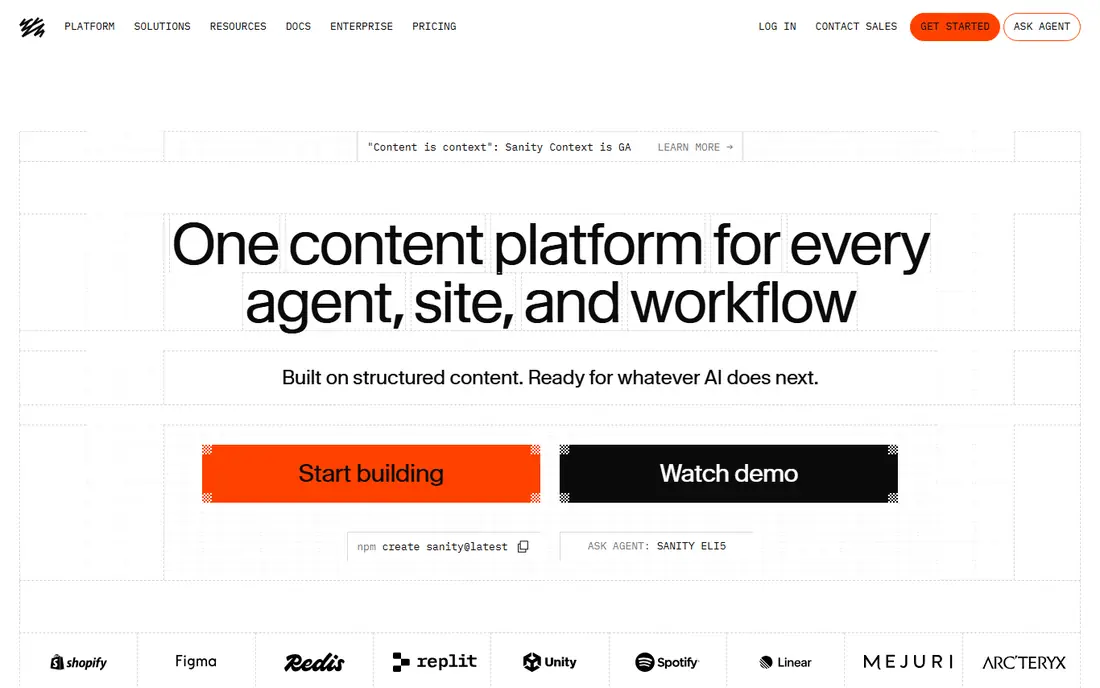
Sanity treats content as structured data rather than fixed pages, so the same content can feed a website, an app, a kiosk and a newsletter without duplication. Editors work in a customisable studio with real time collaboration, while developers query content with GROQ or GraphQL. The free tier covers small teams, and paid plans are priced per seat.
The catch is setup. Sanity rewards teams that invest in content modelling up front, and it can feel open ended for teams that want a ready made page builder. For product and content teams that need flexibility and plan to reuse content across channels, Sanity is our top pick.
- Highly customisable content models
- Real time collaboration
- GROQ, REST and GraphQL APIs
- Structured content approach needs developer setup
- Paid seats add cost as teams grow
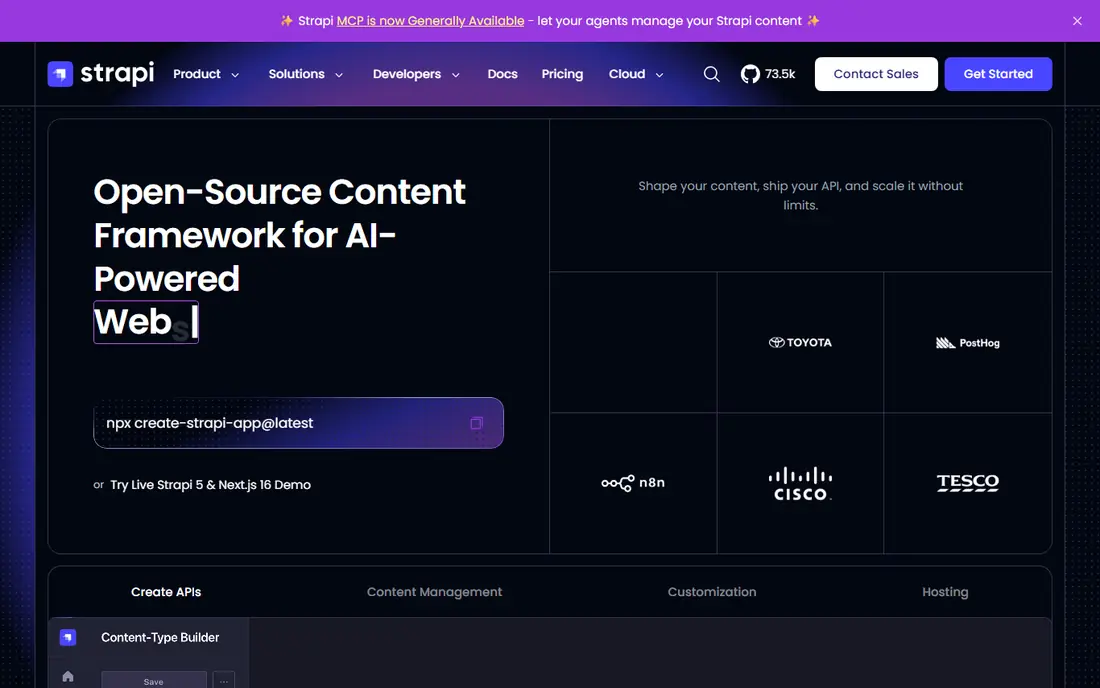
Strapi is the closest open source replacement for Contentful. It is free to self host, gives teams full control over data and infrastructure, and includes a visual builder for content types, roles and permissions. Managed Strapi Cloud removes the hosting burden for teams that prefer a hosted option.
Self hosting is the honest trade-off: updates, backups and scaling become your team's job. For teams that value data ownership, predictable infrastructure costs and open source code, Strapi is the strongest alternative on this list.
- Fully open source
- Self hosting or managed cloud
- Visual content type builder with REST and GraphQL APIs
- Self hosting needs DevOps upkeep
- Some enterprise features need paid plans
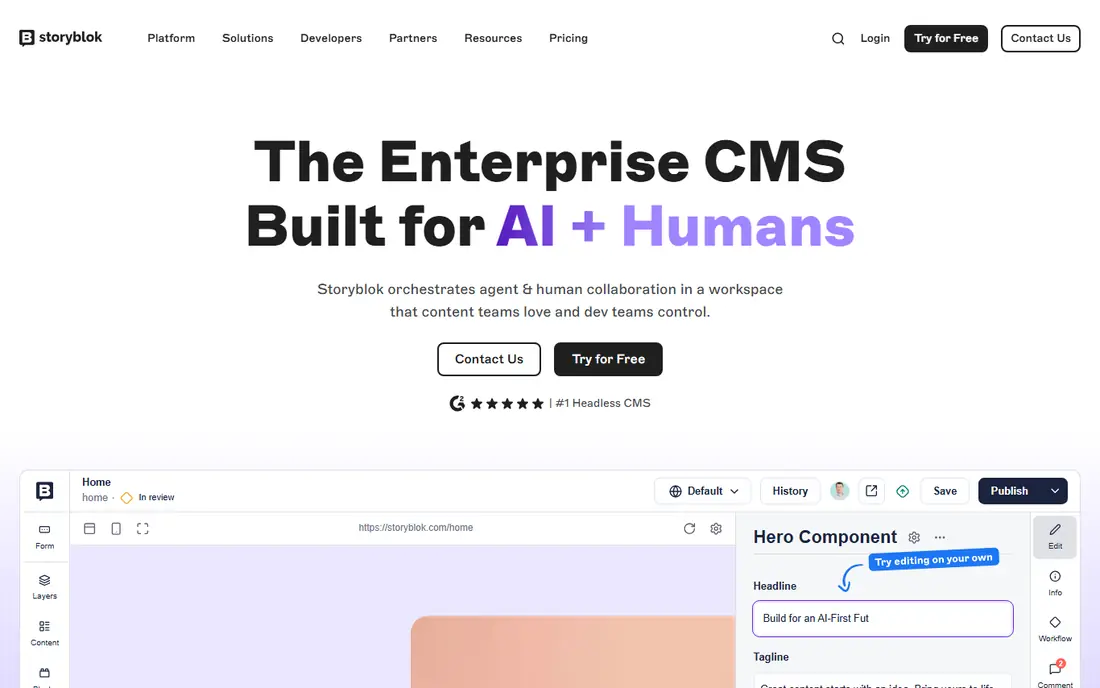
Storyblok is built for marketers who want to see the page as they edit it. Its visual editor lets editors assemble pages from reusable components, preview changes live, and publish without waiting on developers for every layout tweak. Localisation and workflow tools support teams publishing in many languages.
The limit is planning. A messy component library creates messy pages, so teams need design discipline up front. For marketing led teams that publish landing pages and campaign sites often, Storyblok offers the friendliest editor experience on this list.
- Visual editor with live preview
- Component based pages marketers can build
- Strong localisation tools
- Component model needs planning
- Higher tiers needed for advanced workflows
Hygraph, formerly GraphCMS, is built around GraphQL from the ground up. Developers query content with a single GraphQL endpoint, federate content from other sources, and model complex relationships cleanly. That makes it a natural fit for teams already building GraphQL front ends.
Editors get a solid studio, but visual page building is less central than in Storyblok. For GraphQL native projects, or teams that need to combine content from several systems into one API, Hygraph is the most focused choice.
- GraphQL first API design
- Content federation across sources
- Strong developer experience
- Less visual editing than Storyblok
- Pricing scales with usage on higher tiers
Contentstack is an enterprise headless CMS built for governance: granular roles, custom workflows, audit trails and multi site management. Large organisations use it to run many brands, languages and channels from one platform, with automation to keep content operations moving.
The drawback is scale and price. Contentstack is priced for enterprises, and small teams will find it more platform than they need. For organisations where governance, compliance and scale are non negotiable, it is one of the safest enterprise picks.
- Strong enterprise governance and workflows
- Automation and AI assisted content tools
- Proven at large scale
- Enterprise pricing requires a sales conversation
- More than small teams need
Prismic uses slices, reusable page sections that editors combine to build pages, which makes it easy for non technical editors to create varied layouts without developer help. The editorial workflow is approachable, previews are clear, and Next.js integration is strong for modern web teams.
Complex data modelling is the limit. Teams with deeply structured, multi channel content may find Sanity or Hygraph more flexible. For marketing sites and product pages where editors need freedom within a clean design system, Prismic is a friendly and practical choice.
- Slice based page building editors understand
- Friendly editorial workflow
- Good Next.js integration
- Less flexible for complex data models than Sanity
- Higher tiers needed for advanced features
Directus takes a different approach: instead of asking you to move content into its system, it wraps your existing SQL database with a CMS interface, APIs and permissions. Teams with data already in Postgres, MySQL or another SQL database can add editing, roles and delivery without migrating everything.
That is also the constraint. Teams starting from scratch may prefer a hosted CMS with content modelling built in. For organisations with valuable existing data that cannot easily move, Directus avoids the migration that kills many CMS projects.
- Works on top of an existing SQL database
- Open source
- No forced data migration
- Needs a database to start with
- Less of a ready made content platform than hosted rivals
Payload is a code first headless CMS for TypeScript developers. Content models are defined in code, which suits teams that version control everything and want type safety from database to front end. Native Next.js integration makes it a natural fit for modern React teams.
The trade-off is accessibility. Non developers will find Payload less approachable than Storyblok or Prismic, since schema changes live in code. For TypeScript teams that want full control and a modern stack, Payload is a strong and growing alternative.
- Code first schema in TypeScript
- Native Next.js integration
- Open source with self hosting option
- Code first approach needs developer skills
- Smaller ecosystem than Strapi
How we picked these
We compared official feature pages, pricing pages and vendor documentation, plus public reviews from developer and content teams. We kept only headless or hybrid CMS platforms that are live in October 2026 and that deliver content by API to multiple channels. We left out traditional page based CMS tools with no headless API, and website builders that cannot serve apps and other channels. Pricing was checked on vendor pages where published, and marked as quote based where a vendor does not publish a price.
Choosing a headless CMS without regret
Start with who edits and who builds. If marketers build pages daily, prioritise the visual editor and preview. If developers model complex content, prioritise API design, schema control and SDK quality. Next, check localisation, workflows and permissions against your real team size, not a future headcount.
Then test migration honestly. Export a sample of your current content, model it in two shortlisted tools, and build one real page or app screen in each. That exercise reveals modelling gaps, editor friction and API quirks faster than any feature list. Finally, model cost at your real scale: records, API calls, locales and seats, not just the free tier.
Self hosted versus managed
Self hosting with Strapi, Directus or Payload gives control and can lower licence costs, but it adds DevOps work. Managed platforms cost more per month but remove hosting, updates and scaling from your team's plate. Choose based on the skills you actually have, not the skills you wish you had. A small team with no DevOps cover will usually be happier on a managed plan, even if the monthly fee looks higher at first glance.
Frequently asked questions
What are the best alternatives to contentful?
Sanity leads for flexible structured content, Strapi leads for open source self hosting, and Storyblok leads for visual editing. Hygraph suits GraphQL projects, Contentstack suits enterprises, and Prismic suits slice based editorial workflows.
Is there a free Contentful alternative?
Yes. Sanity, Strapi, Storyblok, Hygraph, Prismic, Directus and Payload all offer free tiers or free self hosting. Free tiers usually limit users, API usage or features, so check those limits against your content volume before committing.
Which alternative is best for developers?
Sanity, Strapi and Payload are the strongest developer picks. Sanity offers flexible modelling and GROQ, Strapi offers open source control and a visual builder, and Payload offers code first TypeScript modelling with Next.js integration.
Which alternative is best for marketers?
Storyblok and Prismic are the strongest marketer picks, thanks to visual editing and slice based page building. Both let editors preview pages live and publish without developer help for routine layout changes.
Can I migrate content from Contentful to another CMS?
Yes, in most cases. Contentful content can be exported via its APIs and remodelled in the new CMS, though field types and references need mapping. Migration tools and vendor help vary, so scope a sample migration before committing to a timeline.
Sources
See where you really rank - block by block
ProMapRanker scans Google Maps across a grid of your service area. Simple monthly plans from $19, white-label on every plan.
Start freeKeep reading
 zoro.to alternatives
Best Zoro.to Alternatives in 2026
We compare the best zoro.to alternatives in 2026, listing only legal licensed anime streaming services, from Crunchyroll to free options for fans today.
Read → zip alternatives
Best Zip Alternatives in 2026
We compare the best zip alternatives for buy now, pay later in 2026, covering pay-in-4 plans, fees, spending limits, and credit reporting options today.
Read → yesware alternatives
Best Yesware Alternatives in 2026
Compare the best yesware alternatives for sales email tracking, templates, and sequences, with current pricing and honest tradeoffs for small sales teams.
Read →