 ProMapRanker
Companies With Best Retirement Plans in 2026


Broad plan support and tools · Pricing starts at: See website
Key takeaways
- The best retirement plan provider depends on plan size, payroll setup and the investment menu your team will actually use.
- Fidelity, Vanguard and Schwab are strong starting points for low-cost index options and broad plan support.
- Small employers should weigh bundled payroll and administration help against the cost of a larger, full-service provider.
- Fees vary by plan, so get a written fee schedule before signing, and do not judge a plan by fund choice alone.
Quick comparison
| Pick | Great for | Pricing starts at | Free tier | |
|---|---|---|---|---|
| Fidelity Investments | Broad plan support and tools | See website | No | Visit |
 Vanguard | Low-cost index focus | See website | No | Visit |
 Charles Schwab | Flexible plans and service | See website | No | Visit |
 TIAA | Education and nonprofit plans | See website | No | Visit |
 Empower | Large employer plans | See website | No | Visit |
 Principal Financial Group | Mid-size employer plans | See website | No | Visit |
 T. Rowe Price | Active and target-date options | See website | No | Visit |
 Voya Financial | Workplace plans and guidance | See website | No | Visit |
 Nationwide | Small and mid-size plans | See website | No | Visit |
The best companies with best retirement plans
This is not financial advice. Retirement plan fees, investment options and employer matches vary by plan, and a provider that fits one employer may not fit another. We compared public provider pages, plan descriptions and widely reported provider comparisons, and we focus on the provider, not on any single employer's match.
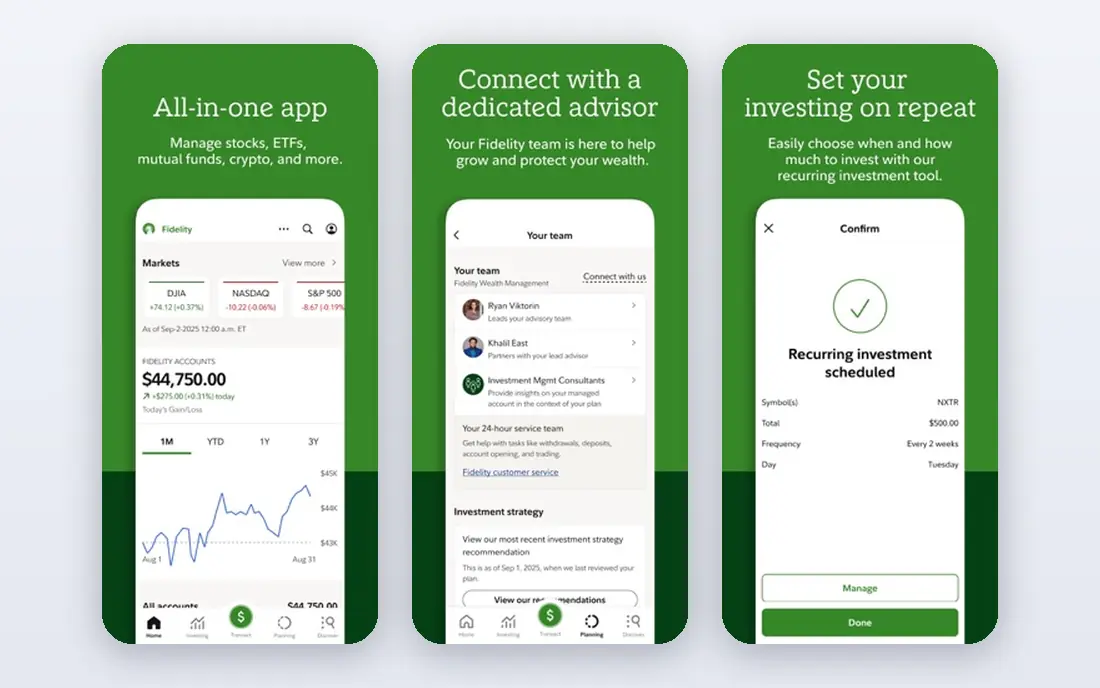
Fidelity is one of the largest workplace retirement providers in the United States, and that scale shows in its tools. Employers can offer a wide fund menu, and employees get planning calculators, educational material and account views that cover more than one account type. For a larger employer, that breadth can reduce the need for separate tools.
The limit is that breadth does not mean every plan is cheap. Fees depend on plan size, services chosen and fund selection, so two Fidelity plans can look quite different. Ask for the full fee disclosure and the fund expense list, and check whether advice or managed account services are included or billed separately.
- Very broad investment menu
- Strong planning tools
- Large workplace plan business
- Plan fees vary by employer
- Menu can feel large for new savers
- Some advice services cost extra
Vanguard built its name on low-cost index funds, and that focus carries into its retirement plans. A saver who wants a simple, low-cost core, with a target-date fund as a default, will find that approach easy to follow here. Target-date funds adjust their mix over time, which can help savers who do not want to rebalance by hand.
The trade-off is service style. Vanguard plans can feel more self-directed than a provider that assigns a large local team, especially for a small employer that wants payroll help at every step. Check who handles compliance testing, notices and employee questions before you judge the headline fund costs alone.
- Known for low-cost index funds
- Clear target-date options
- Investor-owned structure in its fund business
- Plan design may be simpler than some rivals
- Service model varies by plan size
- Some employers want more hands-on help
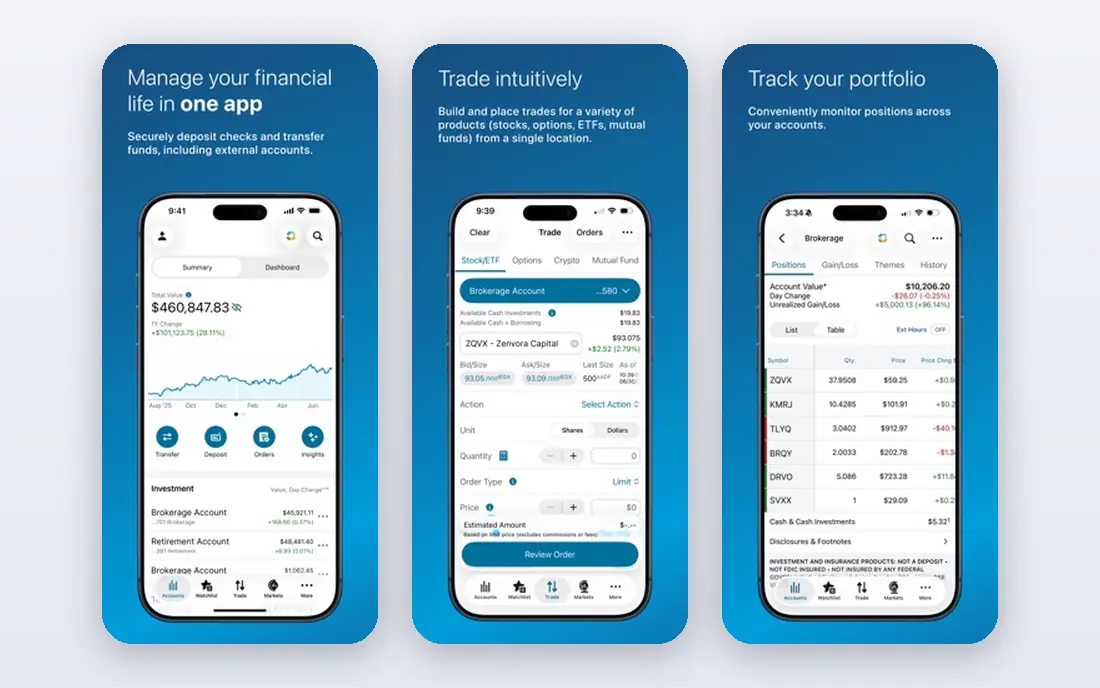
Schwab offers retirement plans for a range of employer sizes, with a fund menu that covers index, active and target-date options. Its brokerage background also helps employees who hold other accounts, because they can view retirement savings alongside other investments in one place. That single view can make planning conversations simpler.
The catch is that flexibility requires choices. An employer must still pick a default fund, decide on auto-enrolment and set the match rules, and those choices shape outcomes more than the provider logo. Get the plan design in writing, and check how Schwab handles payroll integration for your payroll system.
- Broad fund and account options
- Strong service reputation in public comparisons
- Flexible plan design
- Fees vary by plan
- Investment menu needs review
- Some features depend on plan tier
TIAA has long served colleges, universities, hospitals and nonprofits, and its 403(b) experience is a clear reason many such employers choose it. It offers retirement income options that matter to workers who want a predictable income stream after they stop working, not just an account balance. That focus can be valuable for staff who stay in one sector for a long career.
For a private company seeking a standard 401(k), TIAA may not be the first name to check, because its strength sits in the nonprofit and education market. Employers in that market should still compare fund costs and service levels, because a specialist provider is not automatically the cheapest option for every plan size.
- Deep experience with 403(b) plans
- Strong presence in education and nonprofits
- Lifetime income options
- Less central for private 401(k) plans
- Product range can feel specialist
- Fees vary by plan
Empower is a major recordkeeper for large workplace plans, and its platform covers administration, compliance support and employee tools in one place. Large employers often value that single recordkeeper model, because it reduces the number of vendors they must coordinate. Its planning tools also let employees model income in retirement, which can make abstract savings goals more concrete.
The limit for smaller employers is fit. A platform built for large plans can carry services, and costs, that a ten-person firm does not need. Ask which services are bundled, which are optional, and what happens to fees if headcount changes, before comparing Empower with a small-business specialist.
- Large workplace plan scale
- Broad recordkeeping
- Planning and managed account tools
- Fees vary widely by plan
- Managed services cost extra
- Small plans may find simpler providers easier
Principal serves many mid-size employers, and its plans often bundle recordkeeping, compliance help and employee education. That bundle can suit an employer that does not have a dedicated benefits team, because fewer tasks fall to internal staff. Its fund menu covers the usual core options, including target-date funds.
The point to check is total cost. Bundled services are convenient, but they can hide fund expenses or recordkeeping fees inside a single charge. Ask for a line-by-line fee breakdown, and compare the same services, not just the headline plan charge, with other providers.
- Broad mid-market plan experience
- Bundled administration
- Employee education material
- Fund costs vary
- Smaller employers may face minimums
- Advice services are separate
T. Rowe Price is known for its target-date funds and active management, and many employers pick it when they want a managed default option with a research-driven glide path. Its retirement research and employee material explain how a target-date fund changes over time, which can help savers who do not want to manage asset mix themselves.
The honest trade-off is cost. Active funds usually charge more than index funds, and that gap compounds over decades. If low cost is your main goal, compare T. Rowe Price target-date expenses with an index target-date option from another provider, and decide whether the active approach is worth the extra charge for your team.
- Strong target-date fund range
- Active management depth
- Clear retirement research
- Active fund costs can exceed index funds
- Plan services vary
- Not the cheapest index-only option
Voya provides workplace retirement plans with recordkeeping, education and guidance tools that help employees set savings rates and check progress. Its platform also links retirement with other workplace benefits in some plans, which can give employees a fuller picture of their finances. For employers that want guidance as part of the plan, that emphasis can be useful.
The limit is that guidance is not the same as personal advice, and managed services may cost extra. Check what is included in the base plan, what counts as advice, and how employees reach a human adviser when they need one. Fund expenses still matter, even when the guidance tools look strong.
- Workplace plan experience
- Guidance tools
- Health and wealth account links in some plans
- Fees vary by plan
- Fund menu needs review
- Smaller plans may prefer a simpler setup
Nationwide serves small and mid-size retirement plans, and its administration support can help employers that lack a benefits department. Its fund menu covers core asset classes, and it offers target-date and managed options for savers who want a single default choice. That range makes it a practical option to include in a shortlist for a growing firm.
The check to run is the same as with any provider: total fees, fund expenses and service scope. A plan that looks simple on a sales page can still carry recordkeeping, advice or managed account charges. Ask for the fee disclosure, the default fund expense, and the cost of adding payroll integration.
- Experience with smaller plans
- Broad fund menu
- Plan administration support
- Fees vary by plan size
- Investment menu can be large
- Compare target-date costs carefully
How we picked these
We compared official provider pages and widely reported provider lists, and we chose large, established recordkeepers and plan providers that serve US employers in 2026. We did not review any single employer's match, vesting schedule or fund lineup, because those terms are set by the employer, not the provider alone. Fees are listed as See website because they vary by plan size and services.
How to compare retirement plan providers
Start with plan size and payroll. A provider that integrates cleanly with your payroll system will save more staff time than a provider with a slightly cheaper fund menu but a manual process. Ask how enrolment, contributions and loan or hardship requests are handled, and who employees call with questions.
Compare total cost, not one fee
Add recordkeeping, administration, fund expenses and any advice or managed account charges together. A low fund cost can be offset by a high administration fee, and a bundled price can hide either. Request the fee disclosure in writing, and compare it at your current headcount and at a larger headcount, so growth does not surprise you.
Check the default and the employee experience
Most employees will end up in the default fund, so review its cost, glide path and risk level first. Then test the employee portal: can a new hire enrol in minutes, change a contribution rate, and see a retirement income estimate without help. A plan that employees can use is worth more than a plan with a long fund list that nobody reads.
Review service and compliance support
Ask who handles annual testing, tax filings, notices and audits, and what happens when rules change. Small employers benefit most from a provider that takes on compliance work, while larger employers may prefer to keep an external adviser in the loop. Put service levels, response times and fee changes in the contract.
Frequently asked questions
Which companies have the best retirement plans?
The answer depends on whether you mean the provider or the employer. As providers, Fidelity, Vanguard, Schwab and the other names here are widely used, but the best plan for a worker also depends on the employer match, vesting and fund costs in that specific plan. Compare the full plan terms, not just the provider name.
What is the best company retirement plan for a small business?
Small businesses often benefit from a bundled plan with payroll integration and compliance help, even if the fund menu is simpler. Compare total fees at your headcount, check the default fund cost, and ask how much work falls to your own staff each month.
Do retirement plan providers charge employees or employers?
Both can pay, depending on the plan. Employers often pay administration costs, while employees pay fund expenses inside their investments. Some plans pass recordkeeping fees to participants, so read the fee disclosure to see who pays each charge.
What is a target-date fund, and is it a good default?
A target-date fund picks a mix of stocks and bonds based on an expected retirement year and adjusts that mix over time. It can be a sensible default for savers who do not want to manage investments, but its cost and risk level vary by provider, so compare expenses and the glide path.
Can I change retirement plan providers later?
Yes, but a change takes planning. You need to transfer records, map funds to the new menu, notify employees and handle compliance filings. Many employers change providers when fees rise or service falls, but they plan the move months ahead to avoid disruption.
Sources
See where you really rank - block by block
ProMapRanker scans Google Maps across a grid of your service area. Simple monthly plans from $19, white-label on every plan.
Start freeKeep reading
 zscaler alternatives
Best Zscaler Alternatives in 2026
Looking for zscaler alternatives? We compare 9 SASE and zero trust platforms on architecture, data protection, pricing, and fit for your network and team.
Read → zapier alternatives free
Best Zapier Alternatives Free in 2026
Nine automation tools for zapier alternatives free in 2026, all with genuinely free tiers, plus free plan limits, starting prices and upgrade paths explained.
Read → which platform is best for online reputation
Which Platform Is Best for Online Reputation in 2026
Wondering which platform is best for online reputation? We compare 8 review, listing, and response tools for small and multi-location businesses and agencies.
Read →