 ProMapRanker
Best Codility Alternatives in 2026

Key takeaways
- HackerRank is our pick for broad screening, because it pairs a large question library with structured tests and interview tools.
- CodeSignal suits teams that want modern assessments with AI proctoring and a clear entry price.
- CoderPad and Karat suit live interviews, with CoderPad for collaborative coding and Karat for interviewer-led sessions.
- TestGorilla suits broader skills screening beyond coding, while CodinGame suits engaging, game-style challenges for developers.
- Pricing models differ sharply, so compare per-attempt, per-month, and quoted enterprise costs against your hiring volume.
Quick comparison
| Pick | Great for | Pricing starts at | Free tier | |
|---|---|---|---|---|
 HackerRank | Broad technical screening | $165 per month | Free trial | Visit |
 CodeSignal | Modern assessments and interviews | $79 per month | Free trial | Visit |
 HackerEarth | Structured assessments at scale | See website | Free trial | Visit |
 CodinGame | Engaging developer challenges | See website | Yes | Visit |
 TestGorilla | Broader skills screening | $215 per month | Yes | Visit |
 CoderPad | Live collaborative interviews | $80 per month | Free trial | Visit |
 DevSkiller | Real-world coding tasks | $499 per month | Free trial | Visit |
 Karat | Interviewer-led technical interviews | See website | Free trial | Visit |
 iMocha | Role-based skills assessments | $699 per year | Free trial | Visit |
The best codility alternatives
Codility is known for coding tests and technical screening. The tools below cover the same hiring job in different ways, from auto-scored tests to live interviews, and they suit different team sizes and hiring volumes.
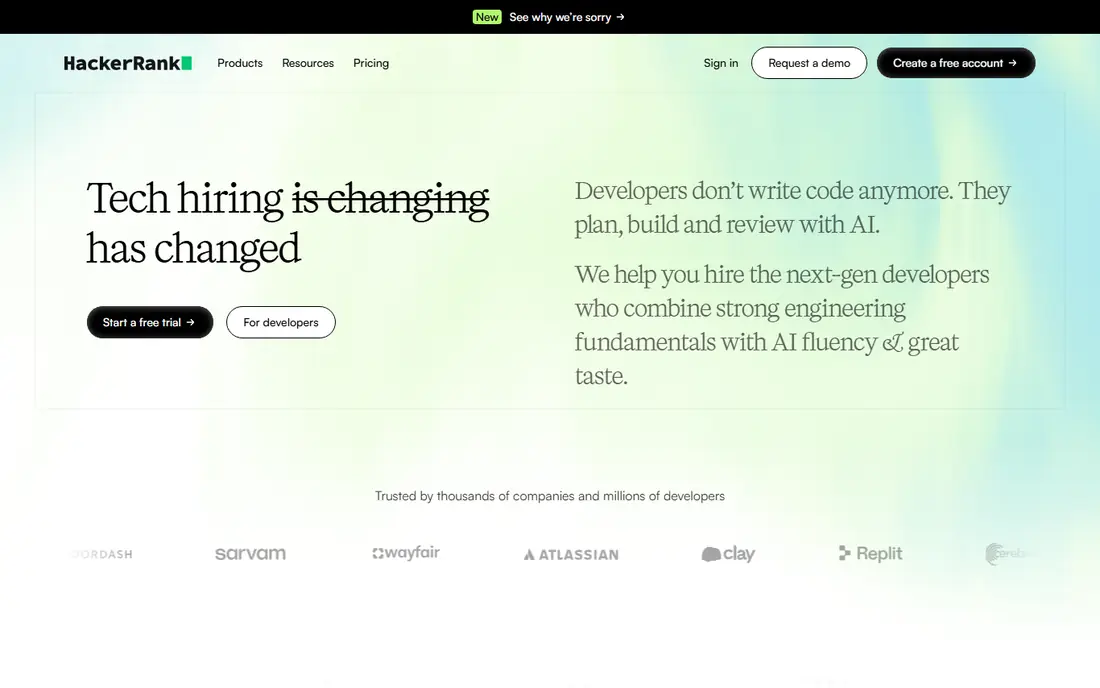
HackerRank gives hiring teams a familiar path from screening to interview. Screen lets you send structured coding tests, while Interview supports live coding sessions, and both draw on a large library of questions across languages and roles. Plagiarism detection and detailed reports help reviewers focus on how a candidate solved a problem, not just whether the final answer passed. That breadth makes HackerRank a safe default when you hire across several engineering roles.
The Starter price covers a limited number of attempts per month, with extra attempts billed separately, so high-volume hiring needs a larger plan. The interface can also feel like a full platform rather than a light test tool, which is fine for a dedicated recruiting team but heavier for a hiring manager who only runs a few tests a year. For steady technical hiring, HackerRank offers a coherent screening and interview workflow.
- Large question library
- Screen and Interview tools in one platform
- Plagiarism detection
- Starter plan limits attempts
- Higher tiers are needed for larger hiring volumes
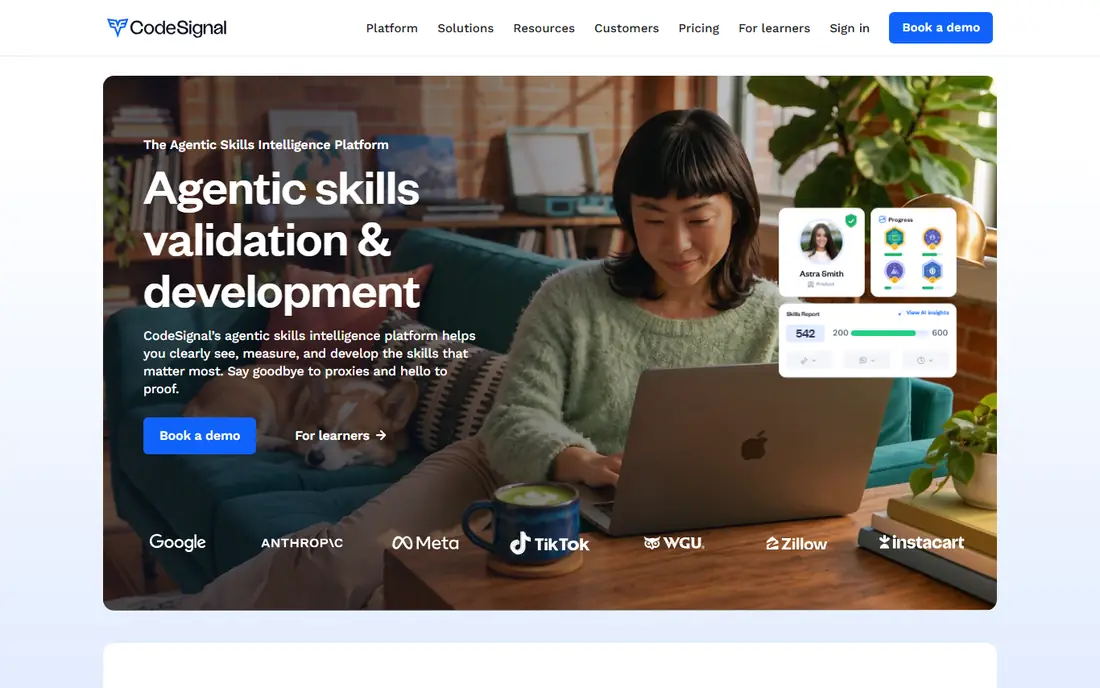
CodeSignal positions its Build plan for both assessments and interviews, which helps teams that want one vendor for the early and later stages of technical hiring. The platform offers a large question library, coding environments that feel close to real work, and proctoring tools that aim to keep tests fair. Reports focus on skills and performance patterns, which helps hiring managers compare candidates without reading every line of code in detail.
As with most assessment platforms, the entry price does not include every feature, so check which proctoring, interview, and reporting tools sit on your chosen tier. Teams that hire in bursts may also need to check how unused capacity carries over. CodeSignal is a strong pick for teams that want a modern, well-documented assessment experience and a published starting price.
- Large question library
- AI proctoring and identity checks
- Assessments and interviews in one plan family
- Entry plan limits and features need checking
- Some advanced tools sit on higher tiers
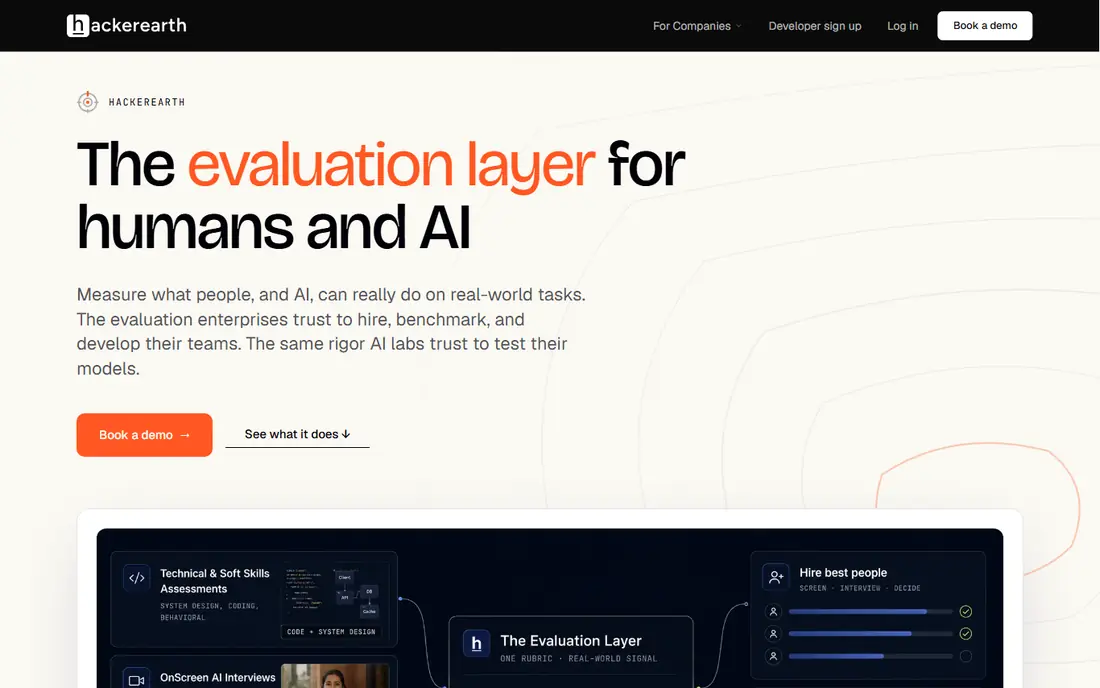
HackerEarth Assessments provides structured coding tests, a real-time coding environment, and analytics that help teams compare candidates on the same tasks. The platform supports a wide range of technical skills, which helps when a role needs more than one language or framework. Recruiters can build custom tests, use library questions, and review performance in a central dashboard, which keeps screening consistent across hiring managers.
Pricing should be confirmed with the vendor, because published figures vary by plan and invite volume. Some candidates may also find strict time limits and a focused test interface less comfortable than a take-home task. For teams that run many assessments and want consistent, comparable results, HackerEarth remains a practical alternative with a long track record in technical hiring.
- Structured tests across many skills
- Real-time coding environment
- Detailed analytics for reviewers
- Pricing is not always published in full
- Strict time limits can feel restrictive for some candidates
CodinGame stands out because its challenges feel like games and puzzles rather than exam papers. Developers solve coding problems in a visual, interactive setting, which can improve completion rates and give employers a more engaging way to spot talent. The public platform also lets developers practise, so candidates may arrive already familiar with the format. For hiring, CodinGame offers assessment and sourcing tools built around that same challenge style.
CodinGame alone may not replace a full screening suite for every enterprise role, because its strength is engagement and coding puzzles rather than broad skills testing or live interview management. Check assessment pricing on the vendor site, because public and business offerings differ. If candidate experience matters and you want challenges that developers actually enjoy, CodinGame is worth a place on your shortlist.
- Game-style challenges that developers enjoy
- Coding puzzles across languages
- Employer branding through challenges
- Less suited to strict enterprise screening alone
- Assessment pricing should be checked on the vendor site
TestGorilla suits teams that screen for more than coding alone. Its library covers cognitive ability, personality traits, language, and job-specific skills, alongside coding tests, so a hiring manager can build one assessment that checks several parts of a role. Video questions, qualifying questions, and custom questions add flexibility, and the free tier offers limited credits to test the format. That breadth helps small teams that hire across technical and non-technical roles.
The assessment starting price is higher than some coding-only tools, so a team that only needs coding tests may pay for breadth it does not use. Coding depth also differs from a specialist platform, so check whether the coding tests match the languages and difficulty your roles require. For mixed hiring, TestGorilla offers a single screening tool that reduces the need for several separate vendors.
- Large test library beyond coding
- Video and custom questions
- Resume scoring tools
- Higher starting price for assessments
- Coding depth is less specialised than a coding-only tool
CoderPad is built for the live interview itself. Interviewer and candidate share a coding environment in real time, write and run code together, and discuss decisions as they work. Playback lets reviewers revisit how a candidate approached a problem, which is often more useful than a final score alone. Team plans add take-home assessments and auto-scored screens, which help teams that want both live and asynchronous options from one vendor.
CoderPad is not the best first choice for mass pre-screening, because its core strength is the interview room rather than sending hundreds of auto-scored tests. Starter limits also matter, so check interview counts and overage terms for your hiring volume. For teams that value collaborative, realistic interviews over pure test scores, CoderPad is a clear and focused alternative.
- Real-time collaborative coding
- Playback of interview sessions
- Take-home assessments on Team
- Less suited to large-scale pre-screening alone
- Screening features sit on higher plans
DevSkiller focuses on real-world coding tasks that mirror daily developer work, rather than short algorithm puzzles alone. Candidates work on tasks that resemble a real codebase, which helps hiring managers judge practical skills and problem solving. Dashboards and analytics show performance across candidates and tasks, and the platform supports a range of languages and frameworks. That practical focus appeals to teams that distrust puzzle-only screening.
Price is the main barrier. At $499 per month as a starting point in published comparisons, DevSkiller suits mid-size and larger teams with steady hiring rather than occasional use. Building high-quality custom tasks also takes time, so teams should budget setup effort, not just subscription cost. If practical coding ability is your main hiring signal, DevSkiller earns its premium.
- Real-life coding scenarios
- Detailed dashboards and analytics
- Focus on practical developer skills
- Higher starting price
- Custom tests can take time to set up well
Karat provides interviews conducted by trained interview engineers, rather than only self-serve tests. That model helps companies that lack enough senior engineers to run every first-round interview, or that need consistent scoring across many candidates. Interviews follow a structured format, and reports give hiring teams a clear view of strengths and gaps. For high-volume hiring, Karat can remove a major bottleneck in the interview pipeline.
The trade-off is cost and control. Karat pricing is quoted, and interviewer-led sessions cost more per interview than an auto-scored test. Some teams also prefer their own engineers to meet candidates early, and Karat sessions do not fully replace that step. If interview capacity is your constraint and you want consistent, human-led technical interviews, Karat is a strong option to compare against self-serve tools.
- Trained interview engineers
- Structured interviews with consistent scoring
- Useful for scaling interview capacity
- Quoted pricing only
- Higher cost than self-serve tools
- Less control over who interviews than an in-house panel
iMocha offers skills assessments built around specific roles, with automated scoring and performance reports that help reviewers compare candidates quickly. The platform covers technical and non-technical skills, and remote proctoring tools aim to keep assessments fair for remote candidates. A starting price of $699 per year in published listings makes iMocha accessible for mid-size teams that want role-based testing without an enterprise quote.
iMocha is less widely known than HackerRank or CodeSignal, so hiring managers may need to check question quality for their exact roles during a trial. Advanced features also vary by plan, so confirm which proctoring and reporting tools are included before committing. For teams that want role-based assessments at a lower annual starting point, iMocha is a practical alternative.
- Role-based assessments for many jobs
- Automated scoring and reports
- Remote proctoring support
- Brand recognition is smaller than HackerRank or CodeSignal
- Advanced features vary by plan
How we picked these
We compared official pricing pages, feature pages, and published pricing guides for platforms that offer coding tests, live interviews, or skills screening for technical hiring. We favoured tools that are live in October 2026, that publish a clear assessment or interview workflow, and that cover a distinct hiring need. We did not claim hands-on testing. Where a vendor did not publish a full price, we wrote See website rather than inventing a figure.
How to choose for your hiring volume
Start with volume and stage. If you screen hundreds of candidates a month, auto-scored tests from HackerRank, CodeSignal, HackerEarth, or iMocha will matter more than a beautiful interview room. If you interview a smaller number of strong candidates, CoderPad or Karat will have a bigger effect on quality, because the live conversation reveals communication and problem solving that a test alone cannot show. TestGorilla fits when the same tool must screen non-coding skills as well.
Next, run a real test with a real role. Ask two engineers to take the candidate test, check whether the questions match the job, and review the report as a hiring manager would. Check plagiarism and proctoring tools, ATS integration, and how candidates experience time limits and instructions. Finally, compare total cost for your actual volume, including attempts, overages, and interview counts, rather than the headline monthly price alone.
Frequently asked questions
Which Codility alternative is best for small teams?
HackerRank and CodeSignal are strong small-team picks, because both offer published starting prices and a mix of screening and interview tools. CoderPad suits a small team that mainly needs live interviews, while iMocha can be cheaper per year for role-based tests. Choose based on whether you need mass screening or live interviews more.
Do these tools replace technical interviews?
No, in most cases they support interviews rather than replacing them. Auto-scored tests filter candidates, while live interviews with CoderPad or Karat reveal communication, reasoning, and collaboration. Most hiring teams use a test first, then a live interview, then a team conversation before making an offer.
How do I keep coding tests fair for candidates?
Use consistent tasks, clear instructions, and reasonable time limits, and tell candidates what skills the test measures. Check proctoring and plagiarism tools on the platform you choose, and review flagged results by hand before rejecting a candidate. A fair process also includes an accessible environment and a way for candidates to ask for help if the tool fails.
Can candidates practise before a Codility-style test?
Yes, on several platforms here. CodinGame, HackerRank, and CodeSignal offer public practice or sample problems, and many vendors publish example tasks. Share practice links with candidates before a real assessment, so the test measures coding skill rather than familiarity with the tool interface.
What integrations should I check?
Check ATS integration with your hiring system, such as Greenhouse, Lever, or SmartRecruiters, and check how reports flow back to hiring managers. Also check single sign-on, data retention, and candidate data controls, because assessment data includes personal information. Confirm these details during a trial, not after you sign a contract.
Sources
See where you really rank - block by block
ProMapRanker scans Google Maps across a grid of your service area. Simple monthly plans from $19, white-label on every plan.
Start freeKeep reading
 zoro.to alternatives
Best Zoro.to Alternatives in 2026
We compare the best zoro.to alternatives in 2026, listing only legal licensed anime streaming services, from Crunchyroll to free options for fans today.
Read → zip alternatives
Best Zip Alternatives in 2026
We compare the best zip alternatives for buy now, pay later in 2026, covering pay-in-4 plans, fees, spending limits, and credit reporting options today.
Read → yesware alternatives
Best Yesware Alternatives in 2026
Compare the best yesware alternatives for sales email tracking, templates, and sequences, with current pricing and honest tradeoffs for small sales teams.
Read →