 ProMapRanker
Best Cobalt Alternatives in 2026

Key takeaways
- HackerOne and Bugcrowd suit broad crowdsourced testing and bug bounty programs with large researcher pools.
- Synack and NetSPI suit larger or regulated teams that want vetted testers and compliance ready reporting.
- Intruder, Pentera, Astra Security and BreachLock suit continuous or scoped testing with faster start times.
- Intigriti suits teams that want a European based researcher pool and triage support.
- All testing on this list is framed only for lawful, authorised testing on in-scope targets, with written permission and clear rules of engagement.
Quick comparison
| Pick | Great for | Pricing starts at | Free tier | |
|---|---|---|---|---|
 HackerOne | Large scale bug bounties | See website | No | Visit |
 Bugcrowd | Crowdsourced pentesting | See website | No | Visit |
 Synack | Vetted red team testing | See website | No | Visit |
 Intruder | Continuous vulnerability scanning | See website | No | Visit |
 Pentera | Automated security validation | See website | No | Visit |
 Astra Security | Web and API pentesting | See website | No | Visit |
 BreachLock | Continuous pentest as a service | See website | No | Visit |
 NetSPI | Enterprise pentest programs | See website | No | Visit |
 Intigriti | European crowdsourced testing | See website | No | Visit |
The best Cobalt alternatives
This article covers Cobalt pentesting platform alternatives, meaning platforms and firms that provide penetration testing as a service, bug bounty programs or continuous security validation. It is framed only for lawful, authorised testing on in-scope targets. Do not test a system you do not own or do not have written permission to test, and agree the scope, methods and reporting rules before any engagement starts.
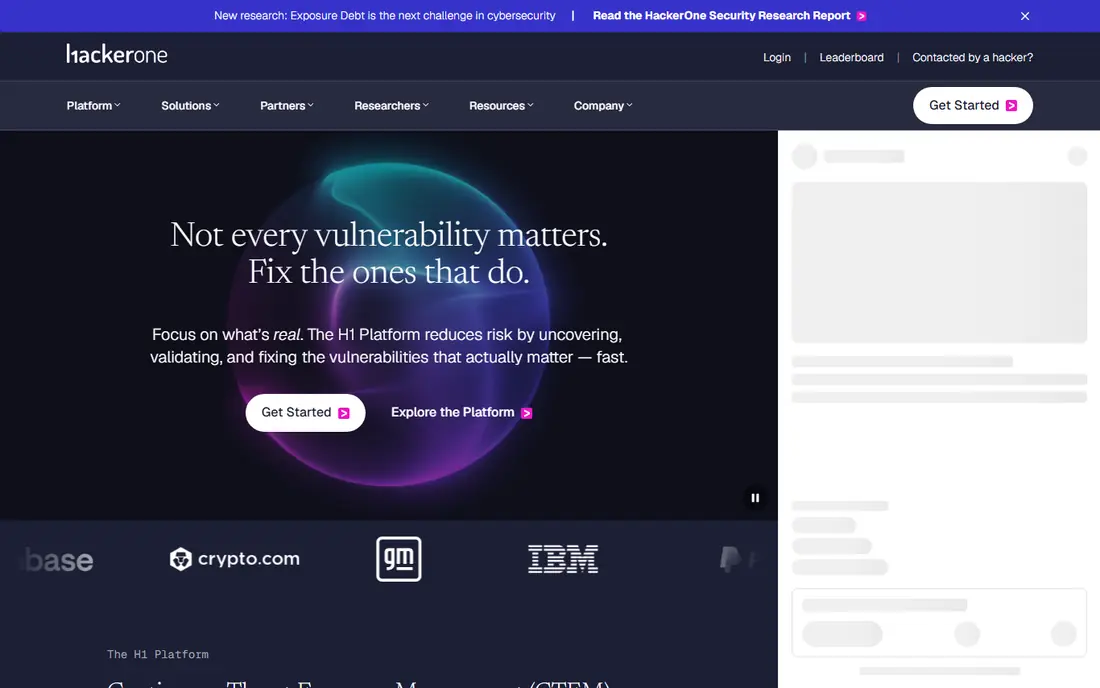
HackerOne is the largest known crowdsourced security platform, and that scale is its main draw. A public or private bounty program can attract many researchers, which helps cover a wide attack surface, from web apps to APIs and mobile apps. Its triage, disclosure and remediation workflows are mature, which matters when findings arrive at volume.
Scale also brings management work. A large program needs clear scope, fair bounty tables and staff to validate and fix findings, or the queue can grow faster than the team can handle. Pricing is quote based, so budget depends on program type and bounty spend. For a team ready to run a serious bounty program, HackerOne is the default comparison point.
- Very large researcher community
- Mature triage and disclosure workflows
- Strong program management tools
- Pricing is quote based
- Large programs need internal triage capacity
- Bounty costs vary by severity

Bugcrowd combines bug bounties with penetration testing as a service, so a team can start with a scoped pentest and grow into a bounty program on the same platform. Its researcher matching aims to pair each program with testers who fit the target technology, which can improve finding quality over a purely open call. Triage support helps smaller security teams handle incoming reports.
The result still depends on how well you define scope and rewards. A vague scope or low bounties will attract weaker reports, while a clear scope and fair rewards tend to produce better findings. Bugcrowd suits teams that want crowdsourced coverage with more guidance than a fully self managed program.
- Curated researcher matching
- Bounty and pentest options in one platform
- Strong triage support
- Pricing is quote based
- Program quality depends on scope and bounty design
- Smaller teams may need help with setup
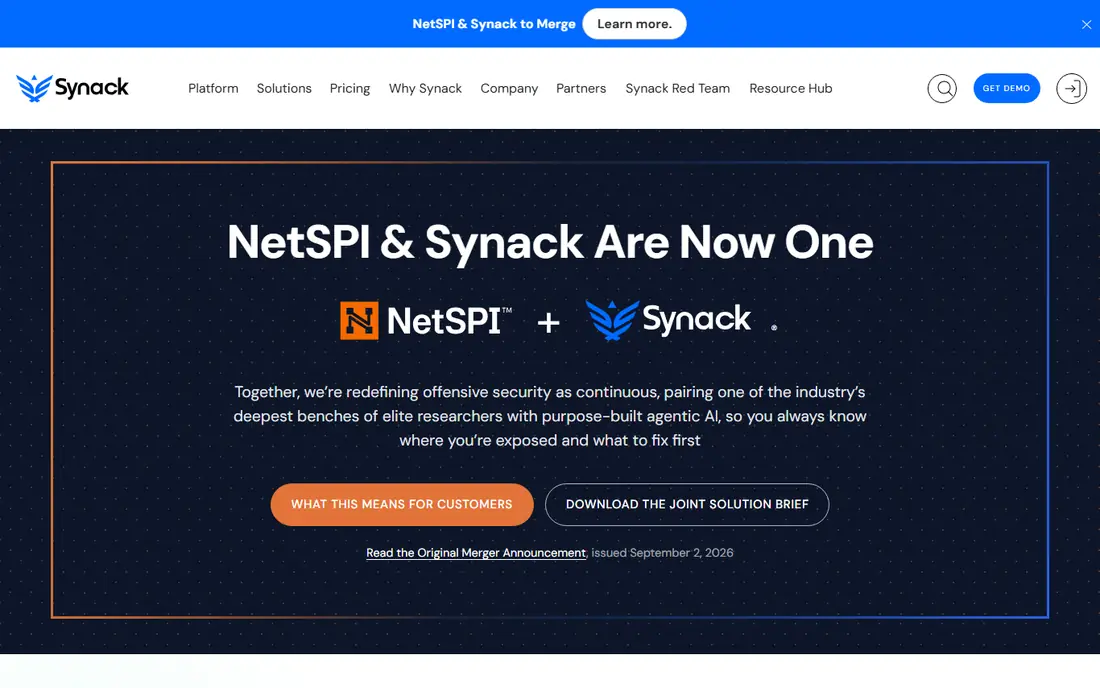
Synack uses a vetted red team rather than a fully open crowd, which appeals to larger and regulated organisations. Testers are screened, testing is managed through the platform, and reporting is designed to support compliance needs. Its continuous model also gives ongoing coverage between annual point in time tests.
That assurance comes at enterprise cost and with a longer sales and onboarding process. A small startup with one web app may find Synack more than it needs, while a bank, healthcare provider or government supplier may value the vetting and compliance support. If trust and audit readiness are central, Synack belongs on the shortlist.
- Vetted researcher team
- Strong compliance credentials
- Continuous testing model with analytics
- Enterprise focused pricing
- Onboarding can be slower than smaller tools
- May be more than a small team needs
Intruder is a continuous vulnerability management platform, not a direct copy of a manual pentest. It scans your external and internal assets, checks for new threats, and gives remediation steps that a small team can follow. That makes it useful between manual tests, when you want to know quickly if a new vulnerability affects you.
The limit is important: automated scanning finds known issues and misconfigurations, but it does not chain exploits or test business logic the way a human tester does. Use Intruder for ongoing hygiene and coverage, and pair it with a manual pentest for high risk systems. For teams that need a fast start, it is a practical first step.
- Continuous scanning and emerging threat checks
- Clear remediation guidance
- Faster setup than a full pentest
- Scanning is not a full manual pentest
- Deeper manual testing needs a separate service
- Pricing depends on assets
Pentera focuses on validating whether a vulnerability can actually be exploited in your environment, by safely testing attack paths. That helps security teams prioritise fixes based on real risk rather than a long list of scan findings. It is useful for organisations that want continuous proof of exposure, not just a yearly report.
Pentera is enterprise oriented, so pricing and deployment need a sales conversation and careful scoping. It also does not replace every kind of manual testing, such as logic flaws in a new feature. Use it to validate controls continuously, and keep manual testing for complex applications and major releases.
- Automated attack path validation
- Tests real exploitability, not just scan results
- Useful for continuous assurance
- Enterprise pricing and deployment
- Needs scope planning
- Not a substitute for all manual testing
Astra Security combines manual penetration testing with continuous scanning, which suits web apps, APIs and cloud hosted products. The platform gives a dashboard for findings, retesting and progress, so a product team can track fixes without juggling spreadsheets. That mix of human testing and ongoing scanning is close to the Cobalt model many buyers want.
Engagement depth varies, so read the scope carefully. A standard pentest may cover common vulnerabilities well, while a complex app with custom logic may need a deeper, custom engagement. For small and mid sized product teams that want a clear, managed pentest, Astra is a strong option.
- Pentest plus continuous scanning in one platform
- Clear dashboard and remediation help
- Good for web and API targets
- Pricing is quote based
- Depth varies by engagement type
- Smaller scope may need add-on manual testing
BreachLock positions itself as a fast, continuous pentest as a service platform, with human testers, AI assisted workflows and retesting included. That suits teams that release often and do not want to wait for an annual test to find a flaw introduced last month. Compliance reporting is also a stated strength, which helps regulated buyers.
A continuous model only helps if your team can fix findings at a similar pace. If remediation is slow, a stream of findings can pile up and create noise. Set a clear scope, agree retesting rules, and staff the fix queue before you start. For teams that can keep up, BreachLock offers a modern Cobalt style workflow.
- Fast start for continuous pentesting
- Certified testers
- Compliance focused reporting and retesting
- Pricing is quote based
- Scope must be defined carefully
- Continuous model needs internal fix capacity
NetSPI is a managed pentest provider for larger organisations with complex estates, from web and mobile apps to networks and cloud environments. It combines expert testers with a platform for scheduling, reporting and remediation tracking, which helps security leaders run a program across many assets. Its compliance support suits regulated industries.
Lead time and cost reflect that depth. A small team with one app may find NetSPI more process than it needs, while a large enterprise with many targets will value the consistency. If your program spans many systems and needs audit ready reports, NetSPI is a serious contender.
- Deep enterprise pentesting experience
- Managed platform plus expert testers
- Strong compliance support
- Enterprise pricing
- Lead times can be longer than smaller platforms
- May be heavy for a single small app
Intigriti is a European crowdsourced security platform offering bug bounties, vulnerability disclosure and penetration testing. Its European base can help teams with data residency, language or compliance preferences, while still giving access to a vetted researcher community. Triage support helps teams that do not have a large internal security staff.
The pool is smaller than HackerOne or Bugcrowd, so coverage for very niche technologies may be thinner. Program design still matters: scope, rewards and response times shape finding quality. For European teams, or teams that want a European option alongside a global platform, Intigriti is a solid choice.
- European researcher base and triage
- Bounty and pentest options
- Good for EU data and compliance needs
- Researcher pool is smaller than global leaders
- Pricing is quote based
- Program design still needs internal effort
How we picked these
We compared official platform pages, service descriptions and public program notes for pentest as a service, bug bounty and continuous validation providers that are live in October 2026. We kept only providers that offer a clear Cobalt style alternative: managed human testing, crowdsourced testing or continuous validation, with reporting and retesting. We used See website for pricing because most enterprise pentest pricing is quote based and depends on scope.
We did not claim hands-on testing or run any security tests. Our judgement comes from published service models, compliance notes and platform features, not from testing any target. Always confirm scope, tester vetting, data handling and reporting format before signing an engagement.
How to choose a pentest partner without wasting the engagement
Start with scope, not price. List the systems, APIs, mobile apps and cloud assets that are in scope, and list what is out of scope, including production data and third party systems. A vague scope produces vague findings, while a clear scope lets you compare proposals fairly. Agree rules of engagement in writing, including testing windows, methods that are not allowed, and how to handle a critical finding.
Next, match the model to your release pace. A yearly point in time test suits a stable system, while continuous testing suits a team that ships weekly. Check retesting: a good provider retests fixes without charging a full new engagement. Finally, check who will actually test, how findings are validated, and what the report looks like for auditors. A cheap test that produces unvalidated findings can cost more in wasted fix time than a pricier, well triaged engagement.
Frequently asked questions
What is the closest Cobalt alternative?
Bugcrowd and BreachLock are close in model, because both combine managed pentesting with platform workflows and retesting. HackerOne is closer if you want a large bounty program, while Synack and NetSPI are closer if you want vetted enterprise testing. The best match depends on whether you need a bounty, a scoped pentest or continuous coverage.
Do I need a bug bounty program, or is a pentest enough?
A scoped pentest is often enough for a small product or a compliance deadline, because it gives a defined test and a report. A bounty program adds ongoing coverage from many researchers, but it needs scope design, bounty budget and triage capacity. Many teams start with a pentest, fix the findings, then add a bounty or continuous testing.
How much does penetration testing cost?
Most providers on this list price by scope, so a single web app costs far less than a large enterprise estate. Published ranges vary widely, and final pricing depends on assets, methods, tester seniority and retesting. Get at least two scoped quotes with the same asset list, so you compare like with like.
Can I legally test a website I do not own?
No, not without written permission from the owner and a clear scope. Testing without permission can be unlawful and can cause harm, even if your intent is good. Use a formal engagement, a bug bounty program with published scope, or a test environment you control. When in doubt, ask for written authorisation first.
How often should we run penetration tests?
At least once a year for most systems, and after major changes, new features that handle sensitive data, or a security incident. Teams that release often benefit from continuous testing or more frequent scoped tests. Compliance frameworks may also set a minimum frequency, so check your obligations before setting a schedule.
Sources
See where you really rank - block by block
ProMapRanker scans Google Maps across a grid of your service area. Simple monthly plans from $19, white-label on every plan.
Start freeKeep reading
 zoro.to alternatives
Best Zoro.to Alternatives in 2026
We compare the best zoro.to alternatives in 2026, listing only legal licensed anime streaming services, from Crunchyroll to free options for fans today.
Read → zip alternatives
Best Zip Alternatives in 2026
We compare the best zip alternatives for buy now, pay later in 2026, covering pay-in-4 plans, fees, spending limits, and credit reporting options today.
Read → yesware alternatives
Best Yesware Alternatives in 2026
Compare the best yesware alternatives for sales email tracking, templates, and sequences, with current pricing and honest tradeoffs for small sales teams.
Read →