 ProMapRanker
CloudHealth Alternatives in 2026

Key takeaways
- This list reads CloudHealth as VMware CloudHealth, now CloudHealth by Broadcom, a multi-cloud cost management platform, and compares tools that do the same FinOps job.
- CloudHealth is still marketed by Broadcom in 2026, but teams often compare alternatives because of contract terms, channel changes, and a need to cover cloud, SaaS, and AI spend in one model.
- Finout, CloudZero, and Apptio Cloudability suit teams that want allocation depth, while Kubecost and nOps suit Kubernetes and AWS focused teams.
- Our pick for most multi-cloud teams is Finout, because it pairs allocation depth with a focus on cloud and AI spend in one view.
- Check allocation, anomaly detection, and commitment management before you buy, because a cost dashboard alone will not change spending behaviour.
Quick comparison
| Pick | Great for | Pricing starts at | Free tier | |
|---|---|---|---|---|
 Finout | Multi-cloud and AI spend allocation | See website | Free trial | Visit |
 CloudZero | Cost per customer and product | See website | Free trial | Visit |
 Apptio Cloudability | Enterprise FinOps at scale | See website | Free trial | Visit |
 Flexera One | IT asset and cloud cost control | See website | Free trial | Visit |
 Datadog Cloud Cost Management | Teams already on Datadog | See website | Free trial | Visit |
 Kubecost | Kubernetes cost visibility | Free | Yes | Visit |
 Harness Cloud Cost Management | Engineering teams with Harness | See website | Free trial | Visit |
 nOps | AWS cost optimisation | See website | Free trial | Visit |
 Vantage | Clear cloud billing views | See website | Yes | Visit |
The best CloudHealth alternatives
CloudHealth by Broadcom brings billing and usage data from public clouds into one place, groups spend for reporting and chargeback, surfaces rightsizing and commitment advice, and enforces cost policies. The alternatives below do that FinOps work with different strengths, from deep allocation for finance teams to Kubernetes native views for engineering teams. None of them is a copy of CloudHealth, so the right pick depends on which clouds you run, who owns cost decisions, and how much automation you want.
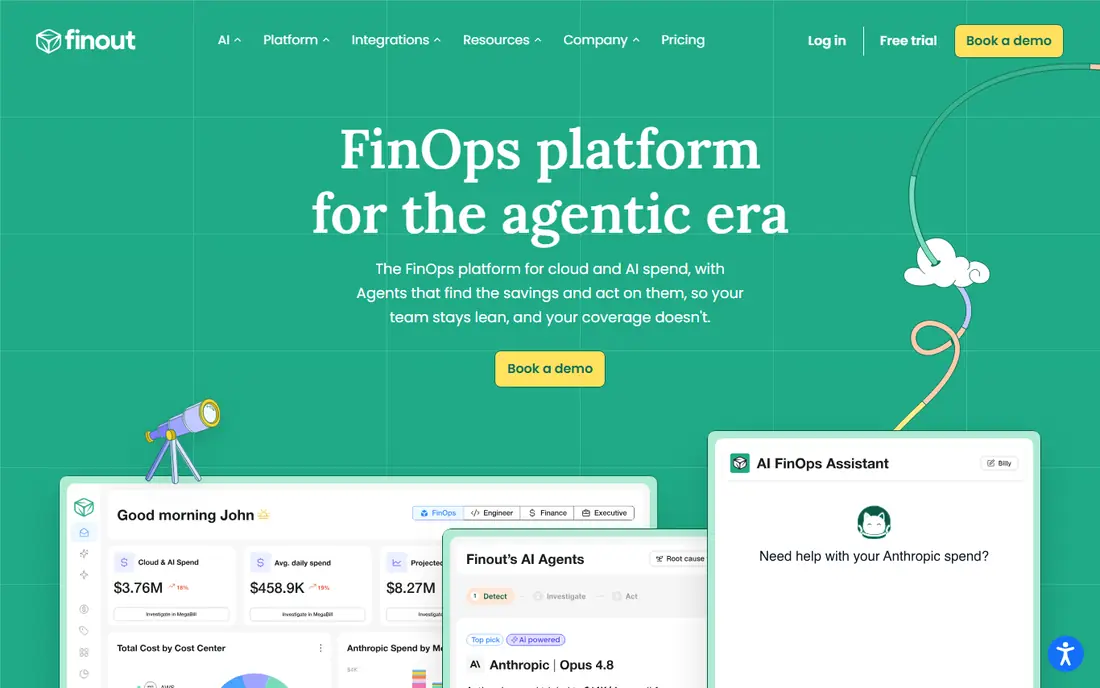
Finout is built for FinOps teams that need to explain spend in business terms, not just show a total bill. It allocates cloud and AI costs to teams, products, and customers, which helps finance and engineering agree on who spent what and why. That allocation depth is useful when spend crosses clouds, SaaS, and AI services, and a single cloud dashboard would leave gaps.
The trade-off is that Finout is an enterprise FinOps platform, so pricing is quoted and the full value depends on having owners who act on the data. A team without a FinOps owner may get reports but not savings. Choose Finout when allocation, chargeback, and AI spend visibility are the main gaps in your current setup.
- Deep allocation for cloud and AI spend
- Clear chargeback views
- Enterprise FinOps focus
- Pricing is quoted
- Best value for teams with real FinOps ownership

CloudZero stands out for unit economics. It helps teams answer how much a customer, feature, or product costs to serve, which is more useful than a monthly total when pricing, margins, or growth decisions are on the table. That focus suits SaaS companies, product teams, and engineering leaders who need to link cloud spend to business outcomes.
The limit is implementation. Getting clean cost per customer views requires good tagging, dimension design, and data hygiene, so plan time for setup and ownership. Pricing is also quoted, which makes it harder to compare on price alone. Pick CloudZero when unit cost is the question you need answered every month.
- Strong cost per customer and unit cost views
- Good for SaaS and product teams
- Clear anomaly alerts
- Pricing is quoted
- Setup for custom dimensions needs planning
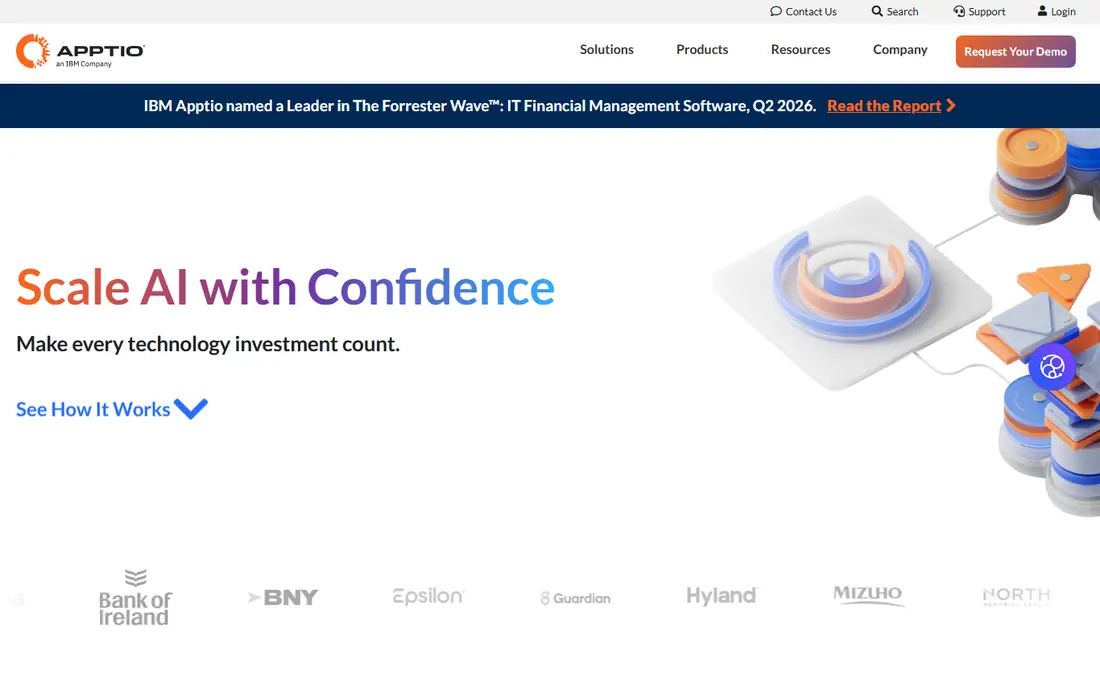
Apptio Cloudability, part of IBM, is a long standing FinOps platform for large organisations. It covers multi-cloud cost visibility, budgeting, forecasting, and rightsizing, with reporting that finance teams can use for planning and chargeback. Its maturity helps in complex estates where several clouds, accounts, and business units must be reconciled.
The downside is scale and complexity. Cloudability is built for enterprise use, so smaller teams may find the setup, governance, and quoted pricing heavier than needed. It also works best when finance and engineering share ownership of the data. Choose it when enterprise reporting, budgeting, and scale are the main requirements.
- Mature enterprise FinOps features
- Strong reporting and budgeting
- Broad cloud coverage
- Enterprise pricing and complexity
- Smaller teams may find it heavy
Flexera One appeals to teams that want cloud cost in the same view as software and IT assets. That combination helps organisations that manage licences, on-premise assets, and cloud spend together, and need governance across all three. It suits IT and finance teams that already think in asset terms, not only in cloud bills.
The trade-off is breadth. A platform that covers so much can feel complex to set up, and teams that only need cloud cost may pay for scope they do not use. Pricing is quoted, so confirm what is included for your cloud estate. Pick Flexera One when asset governance and cloud cost must be managed together.
- Combines cloud cost with IT asset views
- Useful for licence and asset governance
- Broad enterprise coverage
- Broad platform can feel complex
- Pricing is quoted
Datadog Cloud Cost Management makes sense for teams that already use Datadog for monitoring. Cost data sits next to performance, logs, and traces, so engineers can see whether a cost spike links to a deployment, a traffic change, or a resource problem. That context helps engineering teams act on cost without switching to a separate finance tool for every question.
The limit is ecosystem fit. Teams that do not use Datadog may find a dedicated FinOps tool gives deeper finance reporting, budgeting, and chargeback features. Pricing also sits inside the wider Datadog billing model, so confirm cost management pricing separately. Choose it when observability and cost context in one place will drive faster action.
- Cost data alongside observability data
- Useful for engineering teams
- Good anomaly and allocation features
- Best value inside Datadog
- Standalone FinOps depth varies by use case
Kubecost is the clearest choice for Kubernetes cost questions. It allocates cluster costs to namespaces, workloads, teams, and applications, which is hard to do well from a general cloud bill alone. An open source version exists, and a free tier helps small teams start, while paid enterprise features add governance, forecasting, and support.
The limit is scope. Kubecost does not replace a full FinOps platform for non-Kubernetes cloud spend, SaaS costs, or enterprise budgeting. Teams with a mixed estate will likely pair it with a broader tool. Pick Kubecost when Kubernetes is your main cost problem and you need workload level clarity that a cloud bill cannot provide.
- Kubernetes native cost allocation
- Open source option
- Clear namespace and workload views
- Focused on Kubernetes, not full multi-cloud FinOps
- Enterprise features are paid
Harness Cloud Cost Management links cost data to delivery work, which helps engineering teams see the cost impact of services, clusters, and deployments. That link matters when teams want to act on cost during development, not only in a monthly finance review. Anomaly detection and optimisation advice support that engineering led approach.
The trade-off is ecosystem fit and pricing. Teams already using Harness for delivery will get more value than teams buying cost management alone, and pricing is quoted for larger use. Choose Harness when delivery and cost ownership sit with the same engineering teams and you want cost data close to pipelines.
- Cost views tied to delivery and pipelines
- Anomaly detection
- Useful for engineering led FinOps
- Best value inside Harness
- Quoted pricing for larger use
nOps focuses on AWS, and that focus gives it depth in commitment management, rightsizing, and automated optimisation. It surfaces savings opportunities, helps teams manage reservations and savings plans, and tracks whether optimisation actions actually delivered savings. For AWS heavy teams, that depth can be more useful than a broad multi-cloud dashboard with thinner AWS advice.
The limit is coverage. Teams running Azure, Google Cloud, and AWS together may need a broader tool, or a second tool for non-AWS spend. nOps also requires trust in automated actions, so start with recommendations and review before enabling full automation. Pick nOps when AWS is your main cloud and optimisation, not just reporting, is the goal.
- Strong AWS optimisation focus
- Automated commitment and rightsizing advice
- Clear savings views
- AWS centred, not a full multi-cloud FinOps suite
- Savings claims need checking on your own estate
Vantage suits teams that want clear cloud billing without enterprise complexity. It presents costs by service, account, and team in a clean interface, with reports that are easy to share with finance and engineering. A free tier helps small teams start, and paid plans add deeper reporting and automation.
The trade-off is depth. Vantage is not the strongest choice for complex enterprise chargeback, advanced forecasting, or large multi-cloud governance, where Finout or Cloudability may fit better. It is, however, a good starting point for teams moving from raw cloud bills to structured cost views. Choose Vantage when clarity and speed matter more than enterprise FinOps depth.
- Clean billing views and cost reports
- Easy to start
- Useful for small and mid-size teams
- Less enterprise depth than Cloudability or Finout
- Advanced FinOps features vary by plan
How we picked these
We compared official product pages, pricing pages, and documentation for FinOps and cloud cost tools available in October 2026. We kept tools that cover multi-cloud or Kubernetes cost management in a way comparable to CloudHealth, and we excluded general monitoring tools that do not provide cost allocation. We weighed allocation depth, cloud coverage, anomaly detection, commitment management, pricing transparency, and whether the tool suits finance, engineering, or both.
What to check before you pay
Start with allocation, not dashboards. Confirm that the tool can map your accounts, tags, and Kubernetes labels to the teams, products, and customers you actually charge back. Test that mapping on a real month of data, because a tool that cannot allocate cleanly will produce reports that finance cannot use. Also check anomaly detection, because a late warning on a cost spike can cost more than a year of tool fees.
Then check commitment and rightsizing advice on your own estate. Compare recommendations with your actual usage, reservations, and savings plans, and confirm whether actions are manual, suggested, or automated. Finally, confirm pricing at your cloud spend level, because some FinOps tools price by spend, seats, or features, and the total can change as cloud use grows.
Frequently asked questions
Is CloudHealth still sold?
Yes, in the form of CloudHealth by Broadcom, formerly VMware CloudHealth. Teams compare alternatives for reasons that include contract terms, channel changes, and a need to cover cloud, SaaS, and AI spend in one allocation model, not only because the product stopped existing.
Which CloudHealth alternative is best for Kubernetes?
Kubecost is the strongest Kubernetes focused pick because it allocates cluster costs to namespaces and workloads. Pair it with a broader FinOps tool if you also need full multi-cloud budgeting and chargeback.
Which tool is best for cost per customer?
CloudZero is the strongest pick for cost per customer and unit cost views, especially for SaaS and product teams. It needs good tagging and dimension design to deliver clean results.
Do I need a FinOps tool if my cloud bill is small?
Not always. A small team can start with native cloud billing views and Vantage style reports, then move to a dedicated FinOps tool when allocation, forecasting, or commitment management becomes a regular job.
How is FinOps pricing usually charged?
Pricing varies by vendor. Some tools quote by cloud spend, some by seats or features, and some offer a free tier for limited use. Confirm the billing unit and any spend based tiers before signing, because costs can rise with cloud growth.
What is the first step after choosing a tool?
Fix tagging and ownership first. Assign owners to accounts, services, and cost centres, clean up untagged spend, and agree on a monthly review cadence. Without owners, even a good tool produces reports that no one acts on.
Sources
See where you really rank - block by block
ProMapRanker scans Google Maps across a grid of your service area. Simple monthly plans from $19, white-label on every plan.
Start freeKeep reading
 zyte alternatives
Best Zyte Alternatives in 2026
These zyte alternatives cover managed scraping APIs, proxy networks and no code tools for lawful collection from your own or consented sources only in 2026.
Read → zerto alternatives
Best Zerto Alternatives in 2026
Compare the best zerto alternatives for disaster recovery and replication, with recovery targets, cloud options and honest trade-offs for teams in 2026.
Read → zerofox alternatives
Best ZeroFox Alternatives in 2026
We compared 9 zerofox alternatives for brand protection, phishing takedowns, dark web monitoring, and social impersonation, with clear coverage notes.
Read →