 ProMapRanker
Best ClearSale Alternatives in 2026

Key takeaways
- A chargeback guarantee shifts fraud cost to the vendor, while a scoring tool leaves the final call and the liability with your team.
- Stores that want a hands-off setup should shortlist Signifyd, Riskified, Forter, and NoFraud first.
- Teams that want to write and tune their own rules should look at SEON, Sift, and Kount before they pay for a guarantee.
- Small stores on a tight budget get the most value from FraudLabs Pro and Stripe Radar, but both need more manual review than a guarantee product.
- This article is general information, not financial advice, and guarantee terms change, so confirm the current terms before you sign.
Quick comparison
| Pick | Great for | Pricing starts at | Free tier | |
|---|---|---|---|---|
 Signifyd | Guaranteed order decisions | See website | No | Visit |
 Riskified | Large global merchants | See website | No | Visit |
 Forter | Identity-based decisions at scale | See website | No | Visit |
 Sift | Platforms with their own fraud team | See website | No | Visit |
 SEON | Rule-based control and data signals | $699 per month | Free trial | Visit |
 Kount | Identity data and scoring | See website | No | Visit |
 NoFraud | Small and mid-size stores | See website | Yes | Visit |
 Stripe Radar | Stores already on Stripe | $10 per month | Yes | Visit |
 FraudLabs Pro | Very small stores on a budget | $29.95 per month | Yes | Visit |
The best ClearSale alternatives
ClearSale pairs machine scoring with human review and, on some plans, covers fraud chargebacks on approved orders. The tools below cover the same job in different ways, so the right pick depends on how much risk you want to keep and how much control you want to hold. We compared official feature pages, pricing pages, and public documentation, and we focused on products that are still sold and supported in October 2026.
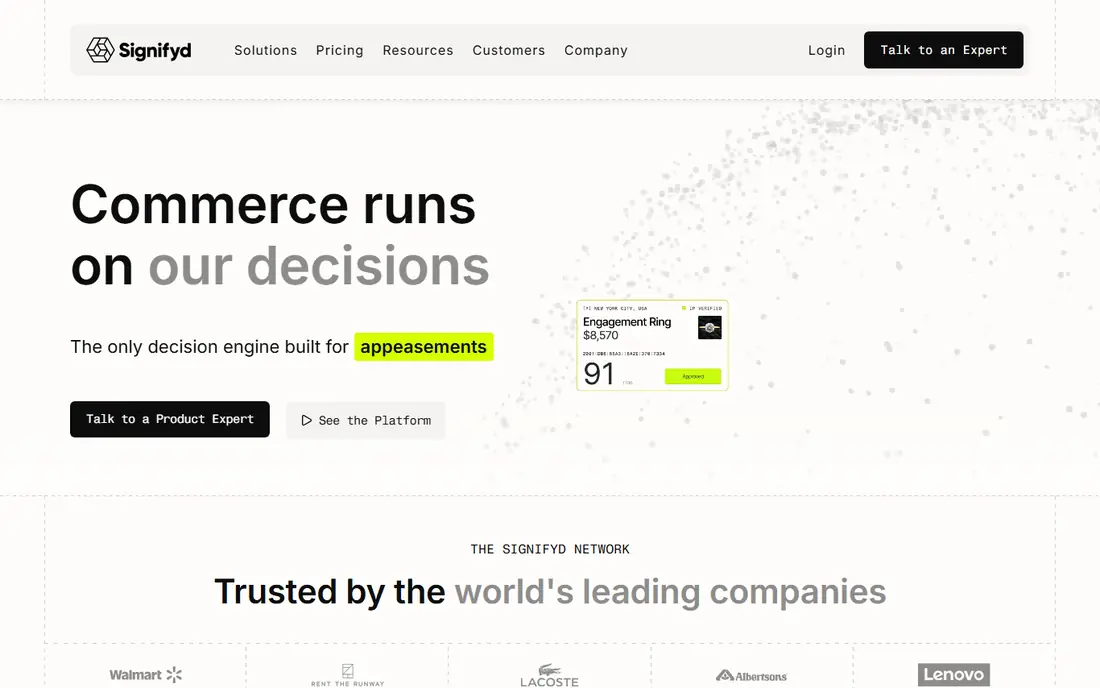
Signifyd suits a store that wants fraud handled in the background rather than reviewed order by order. Its model approves or declines orders and can guarantee approved orders against eligible chargebacks, which turns an uncertain fraud cost into a vendor commitment. That structure appeals to mid-size and larger stores where manual review eats staff time and slows shipping.
The trade-off is transparency at the start. Pricing is quoted rather than published, so a small store cannot easily compare the cost before a sales conversation. A team that values a published price list or a self-serve trial may prefer a more open option below. Still, for a growing store with real chargeback pain, the guarantee is the clearest reason to start here.
- Financial guarantee on approved orders
- Automated decisions
- Broad ecommerce platform support
- Pricing is not published
- Smaller stores may find the sales process heavy
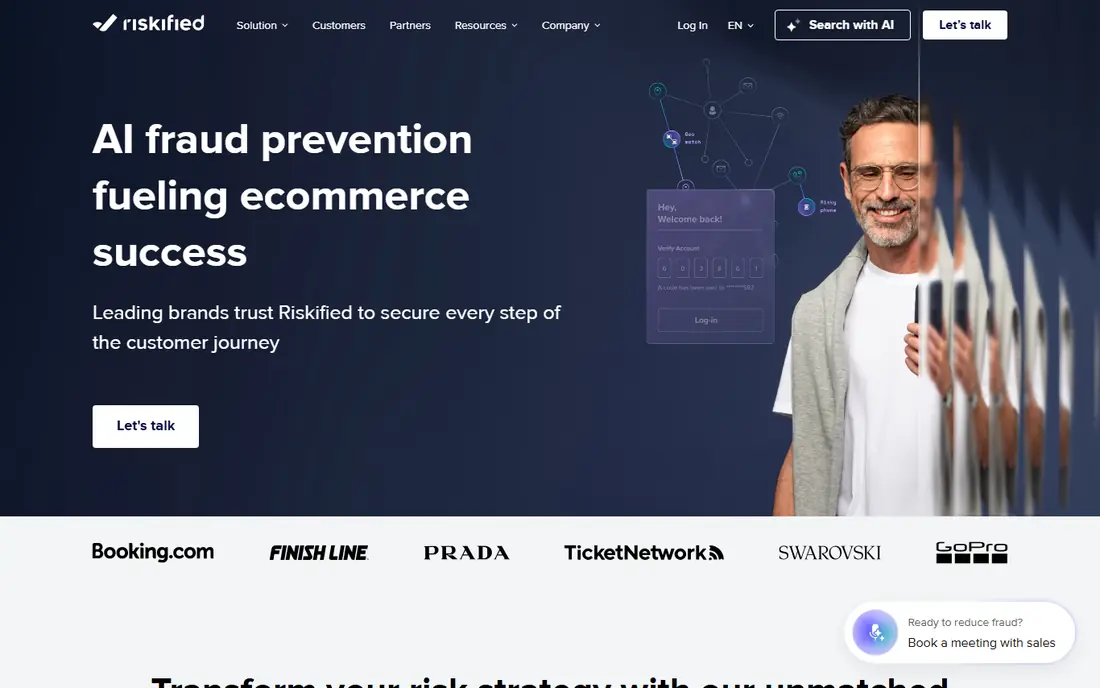
Riskified is built for merchants selling across many countries and payment methods, and that breadth shows in its decisioning. It scores orders in real time and can guarantee approved orders, which helps a large store approve more legitimate orders without adding a review queue. Its policy abuse tools also matter for stores that lose money to returns abuse and promo misuse, not just stolen cards.
The catch is fit. Riskified is an enterprise-leaning product, and its quoted pricing and onboarding will feel heavy for a one-person shop. A smaller store should not force this choice just because the name is well known. For a larger brand with cross-border volume, though, the combination of guarantee and abuse controls is hard to match.
- Chargeback guarantee
- Policy abuse protection
- Strong international coverage
- Enterprise focus
- Pricing is quoted, not published
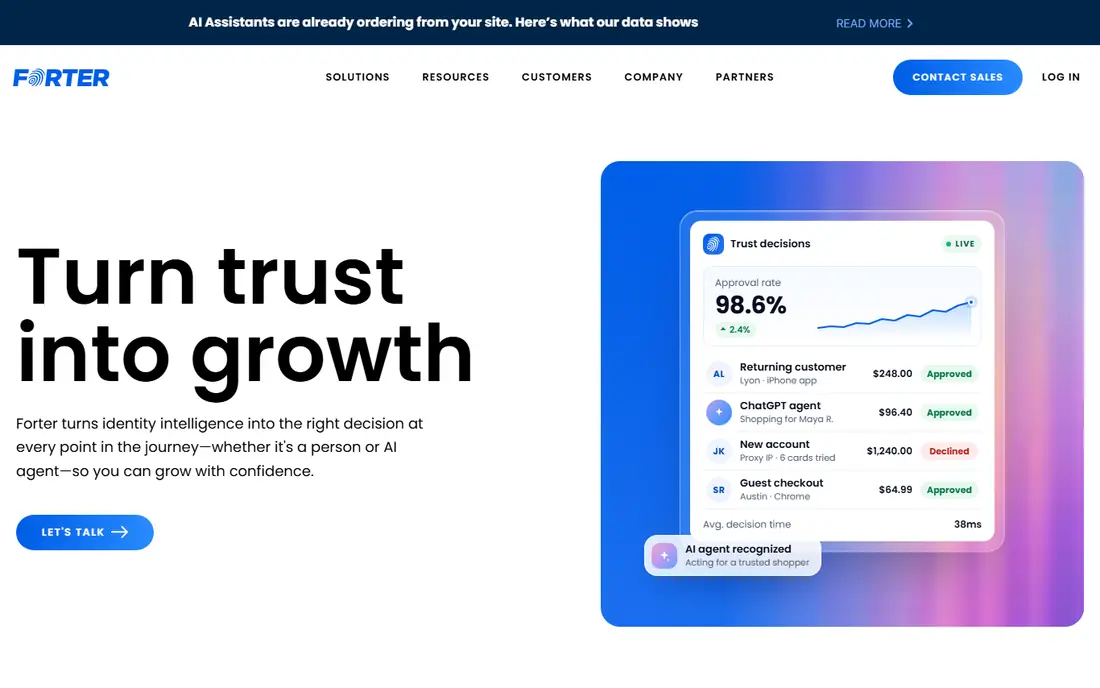
Forter takes an identity-first approach, using its network data to judge whether the person behind an order looks genuine. That angle helps beyond checkout, since the same identity signals can flag account takeover and fake accounts. For a high-volume retailer, the appeal is speed and automation, with decisions made in real time and little manual review.
Smaller merchants face the same barrier as with other enterprise tools here, namely quoted pricing and a sales-led process. Forter also asks a store to trust a largely automated model, which suits teams that want decisions made for them. Teams that want to inspect and tune every rule will feel constrained, and they should look at the rule-based options in this list instead.
- Real-time identity decisions
- Account and abuse protection
- Automated approvals
- Quoted pricing only
- Best suited to high-volume merchants
Sift gives a team scores and signals and lets that team decide what to block, review, or allow. That control suits marketplaces, travel sites, and digital platforms where fraud shows up at signup and login as well as at checkout. A fraud team can build workflows around account abuse, payment fraud, and dispute handling in one place, rather than buying separate point tools.
The honest weakness is that control comes with work. Sift does not, in its standard pricing, take the chargeback cost off your books the way a guarantee product does. A store without someone who owns fraud rules may end up with scores it never acts on. If you have that owner, Sift is a strong, flexible pick.
- Flexible risk scoring
- Coverage across payment and account fraud
- Strong for marketplaces
- No standard guarantee
- Needs internal fraud expertise to get full value
SEON stands out in this group because its entry price is published, which makes budgeting far easier. It builds a risk picture from email, phone, IP, and device signals, then lets a team write rules without engineering help. A merchant can flag VPN use, a brand-new email address, or a missing digital footprint and test the rule before it goes live.
That transparency has a cost in effort. SEON is not a set-and-forget guarantee product, and a team that never revisits its rules will miss new fraud patterns. The $699 per month Starter plan also puts it out of reach for a very small store. For a mid-size team that wants to understand why an order was flagged, that trade is often worth it.
- Published starting price
- Digital footprint and device signals
- No-code rule builder
- Higher entry price for small stores
- Rules need active management
Kount, now part of Equifax, leans on identity and device data to score transactions and accounts. That data depth helps a merchant spot linked accounts and repeat abuse that a single-order score would miss. Its integrations with major ecommerce and payment platforms also shorten the setup for teams already on those stacks.
Pricing is the main friction. Kount does not publish a simple starting price, so comparison shopping takes a sales call. Teams should also ask directly what, if anything, is guaranteed under their specific deal, since guarantee language varies. For a store that values data depth over a headline guarantee, Kount remains a serious option.
- Identity and device data from Equifax
- Flexible scoring
- Broad integrations
- Pricing is quoted
- Guarantee terms vary by arrangement
NoFraud keeps the merchant experience simple, with clear pass-or-fail screening and human review behind the scenes. That simplicity is the point for a small team that cannot staff a fraud desk. A free starter plan for smaller stores lowers the barrier further, letting a new store add screening before chargebacks become a crisis.
Growth brings a question mark. Pricing above the starter tier is custom, so a store should model costs at its real order volume before committing. NoFraud also lacks the deep rule-building of SEON or the platform breadth of Sift. For straightforward ecommerce fraud screening, though, its ease of use is a genuine advantage.
- Simple pass-or-fail decisions
- Human review options
- Free starter plan for smaller stores
- Pricing above the starter tier is custom
- Less suited to complex enterprise workflows
Stripe Radar makes sense first for stores that already process payments through Stripe, since it sits inside that payment flow. Radar Lite is included on standard Stripe pricing, and paid Radar adds custom rules, blocklists, and richer risk controls. A Stripe merchant can turn on basic protection without adding a new vendor, a new integration, or a new dashboard.
The limit is obvious. If you do not use Stripe, Radar does not help you, and even Stripe merchants may outgrow it. It scores and blocks, but it does not offer the same chargeback guarantee structure as the dedicated guarantee vendors. Treat it as a strong starting layer, and add a guarantee product later if chargebacks stay high.
- Built into Stripe payments
- Radar Lite included on standard pricing
- Rules and blocklists
- Only useful for Stripe merchants
- Advanced features sit on paid tiers
FraudLabs Pro is the budget pick in this list, with a free Micro plan for very small volumes and a Mini plan at $29.95 per month. It scores orders using its fraud validation rules and gives a small store a structured way to review risky orders. For a new shop that cannot justify a guarantee product, that structure beats guessing from order notes alone.
Expect more manual work here. FraudLabs Pro does not remove fraud cost the way a guarantee does, and its scoring is simpler than the identity networks above. A store that grows past a few hundred risky orders a month will likely want to move up. As a first step on a tight budget, it is a practical and honest choice.
- Low entry price
- Free Micro plan
- Simple fraud scoring
- Less automation than guarantee products
- Merchant still owns review decisions
How we picked these
We compared official feature pages, pricing pages, and public documentation for fraud tools that serve online stores and digital platforms in October 2026. We kept only products that are still sold, that screen orders or accounts before or at payment, and that fit a ClearSale buyer, meaning ecommerce fraud screening, chargeback handling, or both. We left out tools that only identify devices without deciding, and tools that only fight chargebacks after they happen, since neither replaces order screening on its own.
What to check before you switch
Start with your chargeback history, not the vendor demo. Pull your last six months of fraud chargebacks, your false decline rate if you track it, and the hours your team spends on manual review. A guarantee product pays for itself fastest when chargebacks are high and review is slow, while a scoring product fits better when your team already reviews well and wants finer control.
Next, check integration and decision timing. Confirm the tool works with your store platform and payment provider, and ask how fast decisions arrive at checkout. A slow or poorly integrated check can cost legitimate sales, which defeats the purpose. Finally, read the guarantee wording in full. Ask which chargeback types are covered, what evidence you must keep, and how payouts work, since those details vary more than the marketing pages suggest.
Frequently asked questions
What is the closest alternative to ClearSale?
Signifyd and Riskified are the closest on the guarantee model, since both can cover eligible fraud chargebacks on approved orders. NoFraud is closer on simplicity and human review for smaller stores. The best match depends on your order volume and whether you want a guarantee or a scoring tool.
Do these tools replace manual order review completely?
Guarantee tools come closest, since they make and stand behind the decision on approved orders. Scoring tools such as Sift, SEON, and Kount still need a team to set rules and review edge cases. Even with a guarantee product, keep a process for unusual orders and customer disputes.
How much does fraud prevention software cost?
Costs range from free starter tiers to custom enterprise contracts. In this list, FraudLabs Pro starts at $29.95 per month, SEON starts at $699 per month, and Stripe Radar paid plans start at $10 per month. Guarantee vendors usually price by order volume or order value, so ask for a quote at your real volume.
Can a small store use an enterprise fraud tool?
A small store can, but the sales process and minimums may not fit. Start with NoFraud, Stripe Radar if you use Stripe, or FraudLabs Pro, then move to a guarantee vendor when volume and chargebacks justify it. A tool that is too heavy for your team often goes unused.
What is the difference between a guarantee and a risk score?
A guarantee means the vendor covers eligible chargebacks on orders it approves, within its terms. A risk score only tells you how risky an order looks, and your team decides what to do. Scores give control, while guarantees shift cost, and many stores choose based on which of those matters more.
Should I use more than one fraud tool?
Most stores should start with one main screening tool and add layers only for a clear gap, such as device identification or post-payment dispute handling. Running two order screeners at once can create conflicting decisions and double costs. Fix the biggest fraud loss first, then measure before adding more.
Sources
- https://ecommerceparadise.com/clearsale-alternatives/
- https://rankite.com/blog/top-software-to-block-online-fraud-attempts
- https://www.ringly.io/blog/riskified-alternatives
- https://www.ringly.io/blog/signifyd-alternatives
- https://beverified.org/providers/seon/
- https://whop.com/blog/ecommerce-fraud-prevention-tools/
See where you really rank - block by block
ProMapRanker scans Google Maps across a grid of your service area. Simple monthly plans from $19, white-label on every plan.
Start freeKeep reading
 zyte alternatives
Best Zyte Alternatives in 2026
These zyte alternatives cover managed scraping APIs, proxy networks and no code tools for lawful collection from your own or consented sources only in 2026.
Read → zerto alternatives
Best Zerto Alternatives in 2026
Compare the best zerto alternatives for disaster recovery and replication, with recovery targets, cloud options and honest trade-offs for teams in 2026.
Read → zerofox alternatives
Best ZeroFox Alternatives in 2026
We compared 9 zerofox alternatives for brand protection, phishing takedowns, dark web monitoring, and social impersonation, with clear coverage notes.
Read →