 ProMapRanker
Best Canny Alternatives in 2026


Full product management · Pricing starts at: $19 per maker per month
Key takeaways
- Productboard is the closest full replacement for a team that wants feedback, prioritization and roadmaps in one place.
- Frill, Featurebase and Nolt are the simplest public boards for small teams that mainly need voting and a changelog.
- Aha Ideas and UserVoice suit larger companies that need deeper planning, permissions and enterprise controls.
- Price models differ sharply, so check whether you pay per team member, per month, or per tracked user before you commit.
Quick comparison
| Pick | Great for | Pricing starts at | Free tier | |
|---|---|---|---|---|
| Productboard | Full product management | $19 per maker per month | Yes | Visit |
 Aha Ideas | Enterprise product planning | See website | Free trial | Visit |
 UserVoice | Large-scale feedback programs | See website | Free trial | Visit |
 Frill | Simple public boards | $25 per month | Free trial | Visit |
 Featurebase | Feedback plus changelog | $29 per seat per month | Yes | Visit |
 Nolt | Clean voting boards | $29 per month | Free trial | Visit |
 Upvoty | Affordable voting boards | See website | Free trial | Visit |
 Savio | Central feedback inbox | See website | Free trial | Visit |
 Hellonext | Budget boards and roadmaps | See website | Yes | Visit |
The best canny alternatives
Canny made feedback boards simple: customers post ideas, vote, and see what ships next. These alternatives cover the same job, with different trade-offs on price, depth and control.

Productboard is our pick for a team that has outgrown a plain voting board. It collects feedback from many channels, links each note to a feature, and lets you score and rank work against your goals. The public portal still gives customers a familiar place to vote and follow progress, but the value sits behind the scenes in planning.
The catch is scope and price. A small team that only wants a board may find the structure heavy, and every extra maker adds to the monthly bill. If your roadmap decisions involve several stakeholders and you need a clear link from a customer request to a shipped feature, that extra structure earns its keep.
- Feedback, prioritization and roadmaps in one place
- Unlimited contributors and viewers
- Strong integrations with development tools
- Paid per maker, so costs grow with team size
- More setup than a simple voting board
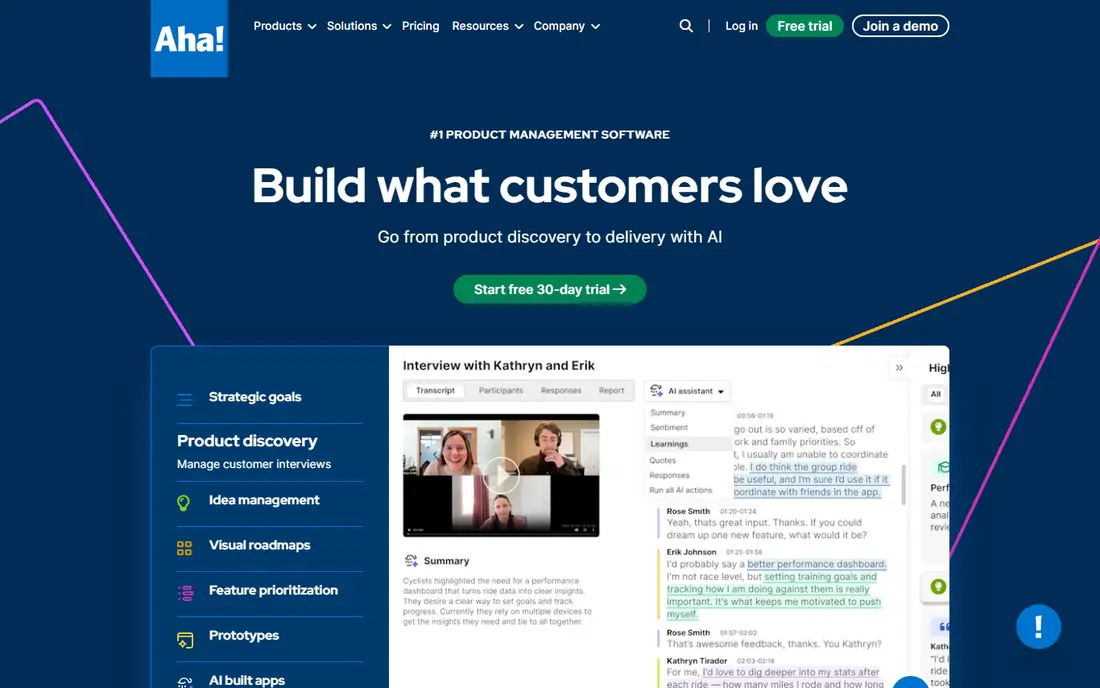
Aha Ideas fits companies that plan products across many teams and need formal workflows. Ideas can move through review stages, link to features and releases, and feed into detailed roadmaps that executives can read without extra explanation. It is built for process, not just for collecting votes.
That formality is also the drawback. A two-person startup will spend more time configuring Aha than collecting feedback, and the cost model rewards a committed, larger deployment. Choose it when product planning is a core job for several people, not a side task.
- Deep roadmapping and idea management
- Strong reporting and permissions
- Part of a wider product suite
- Steep learning curve for new users
- Pricing is not simple to compare at a glance
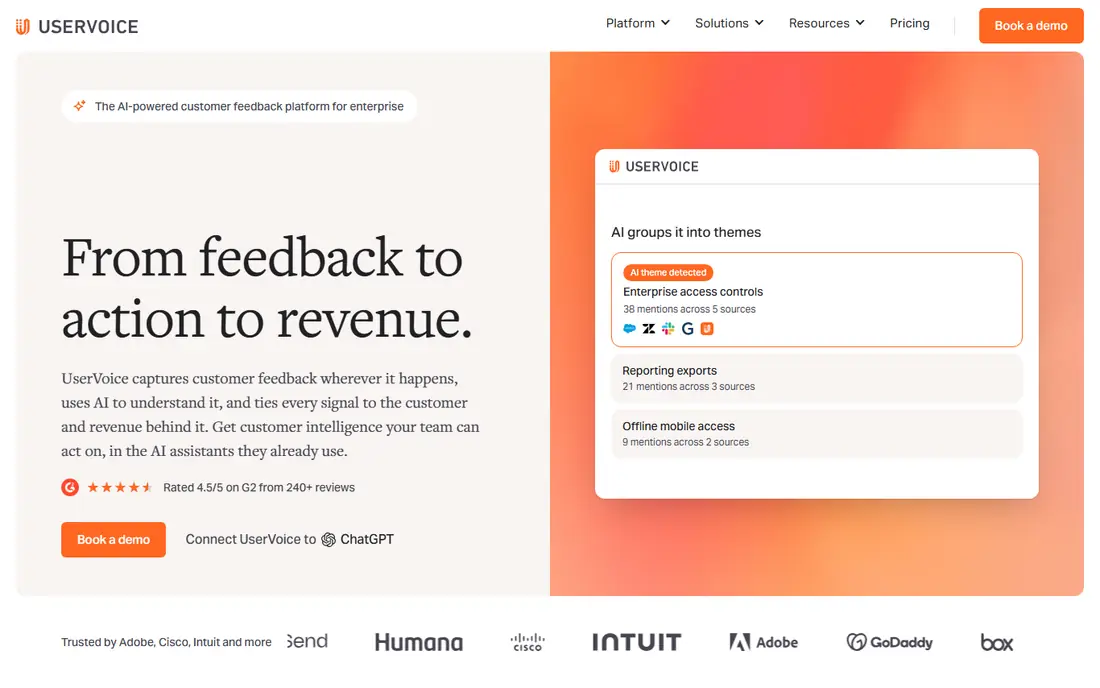
UserVoice is one of the older names in this space, and that history shows in its handling of scale. It supports multiple forums, smart voting rules and moderation tools that matter when thousands of customers submit ideas. Support and product teams can triage feedback without losing the thread.
The trade-off is freshness. Newer tools look cleaner and move faster on small features, while UserVoice leans on its enterprise strengths. It makes most sense for a company with a large, active user base that needs proven controls rather than the newest design.
- Long track record with large companies
- Flexible feedback forums and voting
- Admin controls for big user bases
- Interface feels dated next to newer boards
- Pricing requires a sales conversation
Frill keeps the Canny experience close: a board where users suggest ideas, vote, and comment, plus a roadmap and announcements to close the loop. Setup is fast, the design is tidy, and customers need no training to take part. For many small software teams, that is the whole job.
Limits appear as volume grows. Lower plans cap active ideas, so a popular product may need a higher tier sooner than expected. Frill is best when you want a polished public board without buying a full product management suite.
- Clean boards, roadmaps and announcements
- Quick setup
- Easy for customers to use
- Idea caps on lower plans
- Fewer deep prioritization tools than Productboard
Featurebase is a strong middle option. It covers feedback collection, prioritization, a public roadmap and a changelog, so customers can follow an idea from suggestion to release in one place. The free tier lets a small team test the real workflow before paying.
Seat-based pricing means a growing team should model the cost at its real headcount, not at one seat. If you want one tidy tool that handles the full feedback loop and you like its design, Featurebase is easy to recommend for small and mid-size teams.
- Voting, roadmaps and changelog in one tool
- Free tier for getting started
- Modern interface
- Paid cost scales with seats
- Some advanced features sit on higher plans
Nolt strips feedback down to the essentials. Users post requests, vote, and comment, and the team replies and updates status. There is little to learn and little to configure, which is a real advantage for a team that wants a board live this week.
The simplicity has a ceiling. Nolt does not replace a planning tool, and teams that need scoring models, deep integrations or detailed roadmaps will look elsewhere. Pick Nolt when clarity and low effort matter more than depth.
- Very simple boards and voting
- Predictable monthly price
- Fast to launch
- No full product planning suite
- Board limits vary by plan
Upvoty appeals to teams that want a focused voting tool at a fair price. Unlimited boards and users remove one common worry, and custom domains plus segmentation help agencies and multi-product teams keep feedback separate. The interface stays out of the way.
You will need another place for changelogs or detailed roadmaps if those matter to you. Upvoty is a good fit when voting is the main job and the rest of your planning already lives elsewhere.
- Unlimited boards and users on plans
- Custom domains
- User segmentation
- No built-in changelog or standalone roadmap tool
- Smaller ecosystem than larger rivals
Savio takes a different angle from a public board. It gathers feedback from support tickets, calls, surveys and other channels into one place, then helps you find patterns and link requests to features. That suits teams whose best feedback never arrives as a public vote.
The weakness is visibility for customers. Savio is stronger as an internal research tool than as a public forum where users rally around an idea. Use it when your feedback is scattered and you need to make sense of it before you promise a roadmap.
- Pulls feedback from many sources into one inbox
- Helps spot repeated requests
- Good for research-minded teams
- Less of a public voting destination
- Setup takes thought about sources and tags
Hellonext gives small teams the core Canny-style package without a large bill: a feedback board, a roadmap and a changelog. It is straightforward to set up, and the free tier is enough to test whether customers will actually use a board.
Larger teams may miss deeper integrations and advanced permissions. For a startup or indie product that needs a public board quickly and cheaply, Hellonext is a sensible starting point that can be replaced later if needs grow.
- Boards, roadmaps and changelog at a low entry cost
- Simple setup
- Free tier available
- Fewer integrations than larger tools
- Less suited to complex enterprise workflows
How we picked these
We compared official feature pages, pricing pages and public documentation for tools that offer public feedback boards, voting, roadmaps or feedback analysis. We kept only tools that are live in October 2026 and that match the core Canny job of collecting and acting on customer ideas. We weighed ease of setup, voting and roadmap features, pricing transparency and fit for small versus large teams.
What to check before you switch
Start with how your customers actually give feedback today. If most ideas arrive by email and support tickets, a central inbox like Savio may help more than a public board. If customers already vote in public, a board with a roadmap and changelog will keep them engaged.
Check the pricing unit carefully. Some tools charge per team member, others per month, and others per tracked user, so the same headline price can mean very different totals. Run a short trial with real feedback, test the voting flow as a customer, and confirm that status updates and announcements reach the people who voted.
Frequently asked questions
What are the best canny alternatives for small teams?
Frill, Featurebase, Nolt and Hellonext are strong small-team picks because they launch fast and focus on voting, roadmaps and changelogs. Productboard is better when planning and prioritization become a regular team job.
Is there a good productboard alternative with a free plan?
Yes. Productboard itself has a free Starter tier, and Featurebase and Hellonext also offer free tiers. Free plans usually limit seats, tracked users or features, so check those limits against your team size.
Do these tools replace a full product management suite?
Some do, and some do not. Productboard and Aha Ideas cover planning in depth, while Nolt, Upvoty and Frill focus on the feedback board itself. Choose depth only if your team will use it week to week.
Can I migrate ideas and votes from Canny?
Migration depends on the tool and on export options from your current board. Most alternatives support imports or manual setup, but vote counts and comments may not transfer cleanly, so plan a short overlap period.
Which alternative is best for a public roadmap?
Productboard, Featurebase, Frill and Hellonext all publish roadmaps alongside feedback boards. Pick the one whose roadmap style matches how much detail you want to share with customers.
Sources
See where you really rank - block by block
ProMapRanker scans Google Maps across a grid of your service area. Simple monthly plans from $19, white-label on every plan.
Start freeKeep reading
 zscaler alternatives
Best Zscaler Alternatives in 2026
Looking for zscaler alternatives? We compare 9 SASE and zero trust platforms on architecture, data protection, pricing, and fit for your network and team.
Read → zapier alternatives free
Best Zapier Alternatives Free in 2026
Nine automation tools for zapier alternatives free in 2026, all with genuinely free tiers, plus free plan limits, starting prices and upgrade paths explained.
Read → which platform is best for online reputation
Which Platform Is Best for Online Reputation in 2026
Wondering which platform is best for online reputation? We compare 8 review, listing, and response tools for small and multi-location businesses and agencies.
Read →