 ProMapRanker
Best CallRail Alternatives in 2026


Agencies and multi-location brands · Pricing starts at: $79 per month
Key takeaways
- CallTrackingMetrics is the closest agency-grade match, starting at $79 per month plus usage.
- WhatConverts suits lead-focused teams, with call tracking from $30 per month.
- Invoca and Marchex fit large, regulated teams that need deep conversation analysis.
- Nimbata and CallScaler offer lower entry prices for small teams and agencies.
- Budget for numbers and minutes on top of the base price, because usage is where the bill grows.
Quick comparison
| Pick | Great for | Pricing starts at | Free tier | |
|---|---|---|---|---|
| CallTrackingMetrics | Agencies and multi-location brands | $79 per month | Free trial (14 days) | Visit |
 WhatConverts | Lead attribution for agencies | $30 per month | Free trial (14 days) | Visit |
 Invoca | Enterprise conversation intelligence | See website | No | Visit |
 Nimbata | Budget call attribution | $39 per month | Free trial (14 days) | Visit |
 Marchex | Enterprise conversation analytics | See website | No | Visit |
 Ringba | Pay-per-call marketing | $147 per month | Free trial | Visit |
 Phonexa | All-in-one performance marketing | See website | No | Visit |
 CallScaler | Lead generators and agencies | $65 per month | Free trial | Visit |
 Twilio | Developer-built tracking | See website | Free trial | Visit |
The best CallRail alternatives
CallRail is popular for keyword-level call attribution, recording and integrations with ad platforms. The tools below cover the same core job, from simple tracking for one business to enterprise conversation intelligence. We compared official pricing pages, feature lists and recent independent comparisons to build this list.
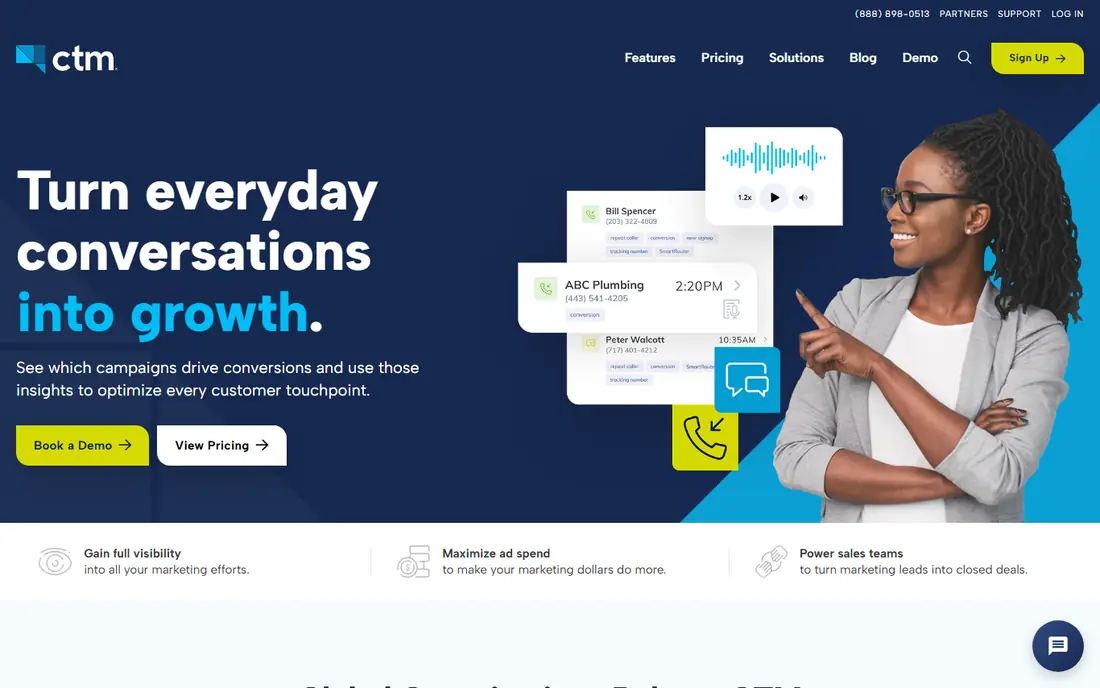
CallTrackingMetrics, often shortened to CTM, is the most direct agency rival to CallRail. Its Marketing Lite plan starts at $79 per month, or $65 per month billed annually, and covers marketing attribution, call routing and conversation tools. Larger plans add sales engagement and enterprise controls, so the platform can grow with an agency.
The catch is usage pricing. Local numbers and per-minute charges sit on top of the base fee, so a high-volume account will pay more than the headline price. CTM still earns its place for teams that manage many clients or locations and need clean reporting across channels in one dashboard.
- Call, text and form tracking in one place
- Strong routing and reporting
- Contact center tools
- Numbers and minutes cost extra
- Higher plans climb fast for large teams
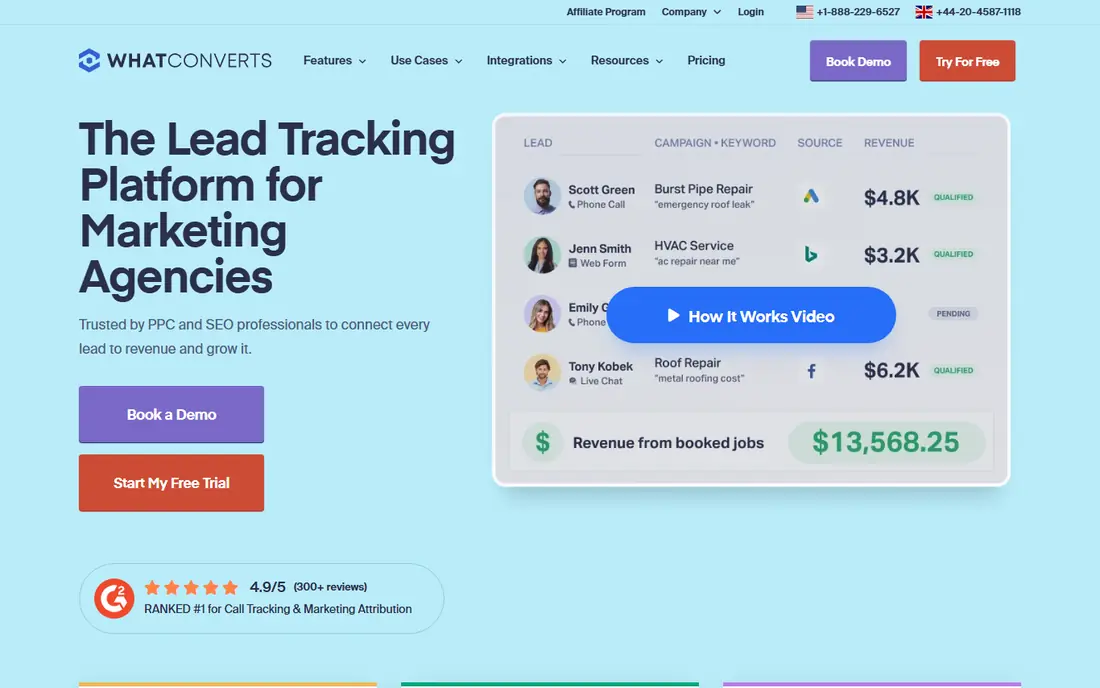
WhatConverts takes a lead-first view. Instead of only counting calls, it ties calls, forms and chats back to the campaign that produced them and scores them as leads. That framing helps agencies that report on qualified leads rather than raw call counts, and it makes client reporting easier to explain.
Entry pricing starts at $30 per month, with higher plans adding more leads and features. Recent comparisons list a Plus plan at $60 per month with a usage credit included, so check which plan matches your lead volume. The platform is less suited to teams that need a full contact center phone system, but it is strong for marketing attribution.
- Tracks calls, forms and chats as leads
- Clear lead reporting
- Lower entry price
- AI analysis is an add-on on some plans
- Usage credit model needs careful reading
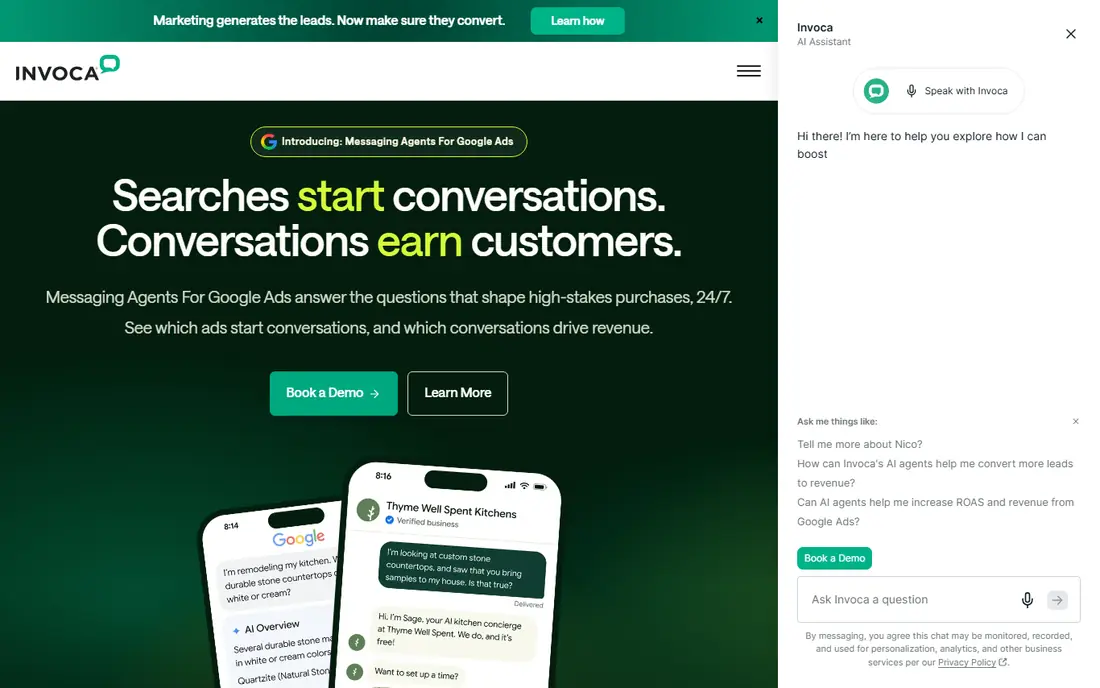
Invoca is the enterprise pick when the content of calls matters as much as the count. Its AI tools score calls for intent, outcome and quality at high volume, and its controls suit regulated industries where recording and handling rules are strict. That depth helps large marketing and sales teams link phone conversations to revenue.
Pricing is quote-based, and independent comparisons place real deployments well above small-business budgets, often with long-term terms. Small teams should not shortlist Invoca on price alone. It fits when call volume is high, compliance is central and the team will use the analysis daily.
- Deep AI call analysis and scoring
- Strong compliance controls
- Large-scale attribution
- Quote-only enterprise pricing
- Far more than a small business needs
Nimbata is a strong budget option for small businesses, marketers and agencies. Its Pro plan is listed at $39 per month in recent comparisons, with local numbers and answered-call charges on top. That structure keeps the base bill low for light-volume accounts, which is where many small teams land.
The watch point is toll-free pricing, which can be higher than local rates depending on the plan. Nimbata still offers a good balance of attribution, recording and reporting for the price. Teams that mainly need to know which ads drive calls, without enterprise analysis, will find it covers the essentials.
- Low entry price
- Call attribution and intelligence
- Agency-friendly pricing
- Toll-free call costs can rise
- Smaller integration set than larger rivals
Marchex focuses on turning large volumes of phone conversations into usable insight. Its tools analyze calls, surface trends and help large brands understand why customers call and what happens next. That scale suits multi-location businesses, franchises and national advertisers.
As with Invoca, pricing is quote-based and the platform is built for enterprise use. A small business with a handful of lines will find simpler tools cheaper and faster to set up. Marchex earns its place for teams where call analytics drive staffing, messaging and budget decisions across many locations.
- Conversation analytics at scale
- AI scoring and insights
- Suited to large brands
- Quote-only pricing
- Setup and onboarding take time
Ringba serves performance marketers who buy and sell calls. It tracks pay-per-call campaigns in real time, routes calls to buyers and gives publishers and advertisers clear payout and performance data. That focus is different from a general marketing tracker, and it matters for lead generation businesses.
Pricing starts at $147 per month in recent comparisons, plus usage, so it is not a budget pick for a single local business. For pay-per-call teams, however, the routing, reporting and buyer management tools are the point. A general tracker would need extra work to cover the same workflow.
- Built for pay-per-call campaigns
- Real-time routing and tracking
- Publisher tools
- Higher entry price
- Usage charges on top
- Overkill for simple tracking
Phonexa bundles call tracking with lead management, distribution and email tools for performance marketers. That suite approach suits teams that run lead generation at scale and want calls, leads and payouts in one system, rather than stitching several tools together.
Pricing is quote-based, with independent listings placing entry costs around $250 per month plus setup in some comparisons, so confirm the current offer before budgeting. The breadth is a strength for larger operations and a drawback for a small team that only needs basic tracking. Shortlist Phonexa when lead distribution is as central as call attribution.
- Call tracking plus lead distribution and email
- Suite approach
- AI call analysis
- Quote-based and higher entry cost
- Suite depth adds setup time
CallScaler pairs call tracking with tools for managing agency clients. Its call tracking plan is listed at $65 per month in recent comparisons, with low per-number and per-minute usage charges. That pricing shape suits agencies that pass tracking costs through to clients and need a clear per-client view.
The platform is less known than CTM or Invoca, and its conversation analysis is lighter than enterprise tools. For lead generators and small agencies, that trade is often fine. The value is in clean tracking, client separation and a bill that stays predictable at modest volume.
- Call tracking with client management
- Agency-friendly layout
- Clear per-number pricing
- Smaller brand presence
- Fewer enterprise analysis features
Twilio is the build-it-yourself option. It sells phone numbers, voice and messaging on a pay-as-you-go basis, so a developer team can build custom call tracking, routing and recording into its own product. That control suits software teams that want tracking inside an app they already run.
The drawback is effort. Twilio does not ship a polished marketing attribution dashboard like CallRail or CTM, so the team must build reports, number swapping and integrations itself. For teams with developers and unusual routing needs, that freedom is worth it. For a marketing team with no developer time, a ready-made tracker is the better buy.
- Pay-as-you-go phone numbers and voice
- Full control over routing and data
- Huge ecosystem
- Requires developer time
- No ready-made attribution dashboard out of the box
How we picked these
We compared official pricing pages, feature lists and recent independent comparisons for call tracking tools that cover dynamic number insertion, attribution and recording. We kept only products live in October 2026 and that fit marketing attribution, pay-per-call or enterprise conversation analysis. We did not include CallRail itself, and we favored tools with clear pricing or a clear enterprise case where pricing is quote-based.
What to check before you switch
Count your numbers and minutes before you compare base prices. A $30 plan with high usage charges can cost more than a $79 plan with included minutes, depending on call volume. List how many local and toll-free numbers you need, how many minutes you use in a typical month and if you need text and form tracking too.
Also check consent and recording rules for your state and industry, and confirm how recordings and transcripts are stored. Test dynamic number insertion on your real site, not just in a demo, and confirm that Google Ads and your CRM receive the data cleanly. A short trial with live traffic will show whether attribution matches your ad data before you move every number.
Frequently asked questions
What is the closest alternative to CallRail?
CallTrackingMetrics is the closest match for agencies and multi-location brands, with a similar mix of tracking, routing and reporting. WhatConverts is closer for teams that report on qualified leads across calls, forms and chats.
Which call tracking tool is cheapest?
WhatConverts starts at $30 per month and Nimbata at $39 per month in recent listings, before usage. The cheapest total depends on how many numbers and minutes you use each month.
Do I need AI call analysis?
Small teams often do not. Keyword attribution, recording and basic reporting cover most needs. AI scoring helps when call volume is high and the team needs to sort intent and outcomes without listening to every call.
Can I port my existing tracking numbers?
Most providers support number porting, but timing and rules vary by carrier and number type. Ask the new provider to confirm porting for each number before you cancel the old account.
Is call recording legal?
Recording rules vary by state, and some states require all parties to consent. Check the rules for every state you call in, use clear consent prompts where required, and confirm how the provider stores recordings.
Which tool suits agencies best?
CallTrackingMetrics and WhatConverts both suit agencies, with client reporting and lead views. CallScaler is a lower-cost agency option, while Invoca and Marchex suit large agency clients with enterprise needs.
Sources
- https://www.calltrackingmetrics.com
- https://www.whatconverts.com
- https://www.invoca.com
- https://www.nimbata.com
- https://www.marchex.com
- https://www.ringba.com
- https://www.phonexa.com
- https://www.callscaler.com
- https://www.twilio.com
- https://ppc.io/blog/call-tracking-software
- https://www.nimbata.com/blog/calltrackingmetrics-alternatives
See where you really rank - block by block
ProMapRanker scans Google Maps across a grid of your service area. Simple monthly plans from $19, white-label on every plan.
Start freeKeep reading
 zoro.to alternatives
Best Zoro.to Alternatives in 2026
We compare the best zoro.to alternatives in 2026, listing only legal licensed anime streaming services, from Crunchyroll to free options for fans today.
Read → zip alternatives
Best Zip Alternatives in 2026
We compare the best zip alternatives for buy now, pay later in 2026, covering pay-in-4 plans, fees, spending limits, and credit reporting options today.
Read → yesware alternatives
Best Yesware Alternatives in 2026
Compare the best yesware alternatives for sales email tracking, templates, and sequences, with current pricing and honest tradeoffs for small sales teams.
Read →