 ProMapRanker
Best Bybit Alternatives in 2026

Key takeaways
- US readers have a shorter shortlist, since Bybit does not serve US customers and several global exchanges are also restricted in the US.
- Kraken and Coinbase are the clearest picks for US-based traders who want regulated, well established platforms.
- OKX and Binance offer the deepest markets for traders outside the US, but fee schedules and available coins still differ by country.
- Crypto trading carries risk and prices can move fast, so this article is not financial advice and no exchange here guarantees a profit.
- Check the fee schedule and the list of supported states or countries on the exchange site before you deposit any money.
Quick comparison
| Pick | Great for | Pricing starts at | Free tier | |
|---|---|---|---|---|
 OKX | Low-fee trading outside the US | Free | Yes | Visit |
 Kraken | Security-focused US trading | Free | Yes | Visit |
 Binance | Deepest coin and market choice | Free | Yes | Visit |
 Coinbase | Beginners in the US | Free | Yes | Visit |
 KuCoin | Wide altcoin selection | Free | Yes | Visit |
 Bitget | Copy trading | Free | Yes | Visit |
 Crypto.com | Mobile trading and card spending | Free | Yes | Visit |
 Gemini | Regulated US trading | Free | Yes | Visit |
 MEXC | Low fees and many listings | Free | Yes | Visit |
The best Bybit alternatives
These exchanges cover the main reasons people leave Bybit: a move to the US, a wish for lower fees, a simpler app, or a wider set of coins. Crypto trading carries risk, this is not financial advice, and availability varies by jurisdiction, so confirm that an exchange serves your state or country before signing up.
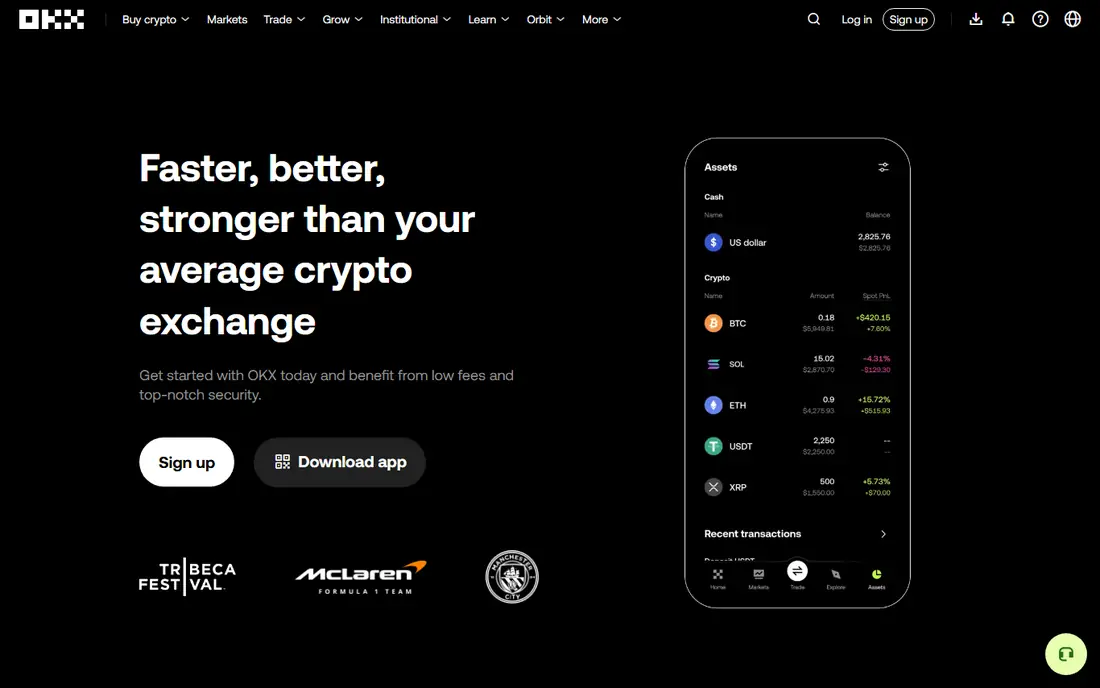
OKX is the closest all-round match for a Bybit trader who wants low fees and active derivatives markets. Its published base spot fees are low, and it supports a wide set of trading pairs, bots and Web3 features in markets where it operates. For a trader who already knows how order books work, the depth here is the main draw.
The catch is geography. OKX does not serve every US customer in the same way it serves customers elsewhere, so US readers should check the current US offering first. The interface also packs in a lot, and a new trader may need time to find the simple buy and sell screens.
- Low published spot fees
- Broad spot and derivatives markets
- Proof of reserves reporting
- US availability is limited
- The full feature set can feel busy for beginners
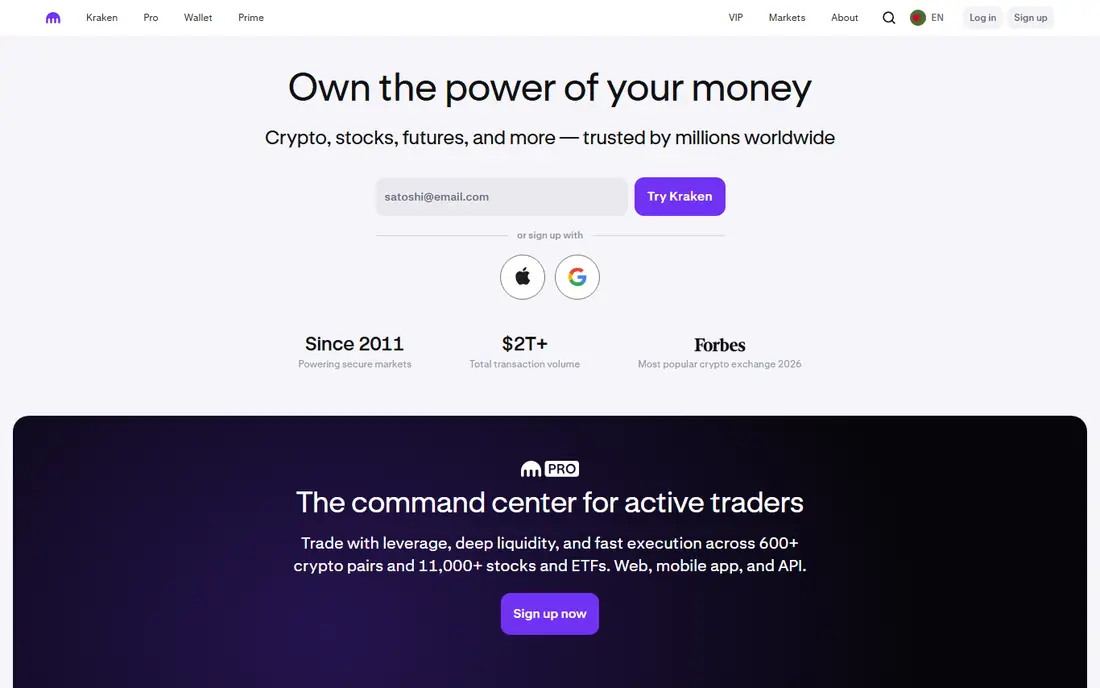
Kraken suits traders who put safety and regulatory standing ahead of the lowest possible fee. It has operated since the early years of crypto trading, publishes proof of reserves material, and serves customers in the US, the EU and the UK, with some state exceptions to check. Its Pro platform covers spot, margin and futures trading for more active users.
The trade-off is cost at low volume. Base fees on the advanced platform run higher than the cheapest global exchanges, so frequent small traders should compare the fee schedule with their expected volume. The basic buy screen is simple, but the Pro tools reward a bit of patience.
- Long operating history
- Strong security reputation
- Available in most US states
- Higher base fees than some global rivals
- The advanced platform takes time to learn

Binance remains the largest exchange by trading volume, and that size shows up in tight markets and a long list of coins. Outside the US, it covers spot, derivatives, staking-style products and a large ecosystem of related services. For a trader chasing a specific altcoin pair, Binance is often the first place it appears.
US readers need care here. The global Binance platform is not the US platform, and Binance.US lists fewer coins and products. The main app also throws a lot of features at new users, so it helps to start with spot trading and ignore the rest until you need it.
- Very deep liquidity
- Huge coin selection
- Low base spot fees
- US customers must use Binance.US, a separate platform
- The main app can feel crowded
Coinbase is our pick for a first exchange in the US. Sign-up, identity checks and the basic buy screen are straightforward, and the company is listed on Nasdaq, which gives US users a familiar layer of public reporting. Coinbase Advanced offers lower fees and more order types for traders who outgrow the simple screen.
Fees are the honest weakness. Simple card or instant buys cost more than trading on an advanced order book, so regular buyers should learn the Advanced screen early. US derivatives access is also narrower than on global platforms, which matters for former Bybit futures traders.
- Simple onboarding
- US regulated and publicly listed company
- Strong custody story
- Higher fees on simple buys
- Fewer derivatives options for US users
KuCoin appeals to traders who hunt for smaller coins before they reach larger exchanges. Its listing count is high, its base spot fees are competitive, and its built-in bots cover common strategies without extra software. For altcoin discovery, few platforms match its breadth.
The limits are regulatory. KuCoin is not licensed in the US or the UK, so readers in those markets should not plan around it as a primary exchange. It also suffered a major security breach in 2020, and although funds handling changed after that event, cautious traders weigh that history when deciding how much to hold on the platform.
- Hundreds of listed coins
- Built-in trading bots
- Competitive base fees
- Not licensed in the US or the UK
- Past security incident in 2020 still comes up in reviews
Bitget stands out for copy trading, where users can follow the trades of other traders on the platform. That feature, plus a broad derivatives offering and competitive fees, makes it a natural stop for Bybit derivatives traders who live outside the US. The app is polished, and the range of pairs covers most active strategies.
Copy trading deserves a plain warning. Following another trader does not remove risk, and past results on the platform do not predict future results. US customers also cannot use Bitget as a main exchange, so it fits only readers in supported countries.
- Large copy trading community
- Competitive derivatives fees
- Wide coin list
- Not available to US customers
- Copy trading still carries real losses
Crypto.com works well for people who trade mostly on a phone and want spending products in the same account. It serves US customers, offers a wide coin list, and pairs its exchange with a Visa card program and an app-first experience. For casual traders, that convenience matters more than shaving a fraction off each fee.
The fee schedule is less attractive than OKX or Binance at base tiers, and card reward terms have changed in the past, so readers should not choose it for rewards alone. Active traders should compare its US exchange fees with Kraken and Coinbase before settling.
- Strong mobile app
- Serves US customers
- Card and rewards products
- Higher base spot fees than the cheapest rivals
- Rewards terms change over time
Gemini fits US traders who want a regulated, conservative exchange and are willing to pay more for that stance. It operates as a New York regulated trust company, puts compliance front and center, and keeps its interface calm and simple. ActiveTrader offers lower fees than the basic buy screen for users who trade more often.
Coin choice is the limit. Gemini lists fewer assets than Binance, KuCoin or MEXC, so traders chasing new listings will feel constrained. Fees also run high at base tiers, which makes it a better fit for occasional buyers than for high-frequency trading.
- New York regulated trust company
- Strong compliance focus
- Simple interface
- Higher fees
- Smaller coin list than global rivals
MEXC is the fee cutter of this list. Its published spot maker fees are zero, taker fees are low, and its listing count runs into the thousands, which suits traders who want early access to new tokens. For a cost-focused trader outside the US, the savings add up over many trades.
The platform is not a US option, and its derivatives liquidity does not match Bybit or Binance on major pairs. Support and platform polish also draw mixed comments in public reviews, so traders should start small, test withdrawals, and keep only trading funds on the exchange.
- Zero maker fees on spot in published schedules
- Very large listing count
- Low taker fees
- Not available to US customers
- Derivatives liquidity is thinner than Bybit or Binance
How we picked these
We compared official fee schedules, supported countries and states, coin listings, security and regulatory records, and public reviews for each exchange. We left Bybit itself off the list, since this article covers alternatives, and we treated US availability as a first filter rather than a footnote. Prices and fees change, so we point readers to each exchange fee page for the current schedule.
What to check before you switch exchanges
Start with geography, then fees, then custody. Confirm the exchange serves your state or country, supports the coins you actually trade, and offers the order types you use, whether that is simple spot buys or futures. Read the fee schedule for your volume tier, since headline rates often assume maker orders or high monthly volume.
Security habits matter as much as the platform choice. Turn on two-factor authentication with an authenticator app, use a unique password, and consider moving long-term holdings to a wallet you control rather than leaving large balances on any exchange. Test a small deposit and withdrawal before moving a larger amount, and keep records for tax reporting, since exchanges report differently by country.
Frequently asked questions
Is Bybit available in the US?
No. Bybit does not serve US customers, which is one of the main reasons US traders look for alternatives. Kraken, Coinbase, Crypto.com and Gemini are the US-friendly options in this list, with Binance.US serving US customers separately from global Binance.
Which Bybit alternative has the lowest fees?
MEXC and OKX post the lowest base spot fees in this list, with MEXC offering zero maker fees on spot in its published schedule. Fee tiers, discounts for holding a platform token, and maker versus taker status all change the real cost, so compare the schedule for your trading style.
Which alternative is best for beginners?
Coinbase is the simplest starting point for US beginners, thanks to its plain buy screen and regulated standing. Outside the US, OKX and Binance both offer simple buy screens, but their full apps are busier, so new traders should stick to spot trading at first.
Can I trade futures on these alternatives?
Yes, on several of them, but US access is limited. OKX, Binance, Bitget, KuCoin and MEXC offer derivatives outside the US, while US traders face tighter rules and should check what each US platform actually offers in their state.
Is crypto trading safe on these exchanges?
No exchange removes market risk, and crypto prices can fall sharply. Choose exchanges with proof of reserves reporting, strong account security, and a clear regulatory record, use two-factor authentication, and never trade money you cannot afford to lose.
Sources
See where you really rank - block by block
ProMapRanker scans Google Maps across a grid of your service area. Simple monthly plans from $19, white-label on every plan.
Start freeKeep reading
 zyte alternatives
Best Zyte Alternatives in 2026
These zyte alternatives cover managed scraping APIs, proxy networks and no code tools for lawful collection from your own or consented sources only in 2026.
Read → zerto alternatives
Best Zerto Alternatives in 2026
Compare the best zerto alternatives for disaster recovery and replication, with recovery targets, cloud options and honest trade-offs for teams in 2026.
Read → zerofox alternatives
Best ZeroFox Alternatives in 2026
We compared 9 zerofox alternatives for brand protection, phishing takedowns, dark web monitoring, and social impersonation, with clear coverage notes.
Read →