 ProMapRanker
Best Brightpearl Alternatives in 2026

Key takeaways
- Cin7 Core is the closest multichannel match for Brightpearl, with inventory, orders, warehouse, and B2B tools in one system.
- Zoho Inventory and inFlow give smaller sellers a lower entry price, with free or low-cost plans for basic order and stock work.
- Katana and Fishbowl suit sellers who also manufacture, with bills of materials, batches, and shop floor control.
- Linnworks, Ordoro, and Finale Inventory focus on marketplace and order volume, which suits high-volume ecommerce brands.
- NetSuite and Odoo are broader ERP options for teams that need finance, CRM, and operations in one platform, at a higher implementation cost.
Quick comparison
| Pick | Great for | Pricing starts at | Free tier | |
|---|---|---|---|---|
 Cin7 Core | Multichannel retail operations | $349 per month | Free trial | Visit |
 Zoho Inventory | Small sellers on a budget | Free | Yes | Visit |
 Katana | Makers and manufacturers | See website | Yes | Visit |
 Linnworks | Marketplace order management | See website | No | Visit |
 NetSuite | Full ERP for growing firms | See website | No | Visit |
 Odoo | Modular ERP and inventory | See website | Yes | Visit |
 inFlow Inventory | B2B and wholesale orders | $99 per month | Free trial | Visit |
 Fishbowl | Manufacturing on QuickBooks | $229 per month | No | Visit |
 Ordoro | Ecommerce shipping and stock | $349 per month | Free trial | Visit |
The best brightpearl alternatives
These tools manage inventory, orders, purchasing, and fulfillment for product businesses. We compared them on channel support, warehouse work, manufacturing depth, accounting links, and price for different business sizes.
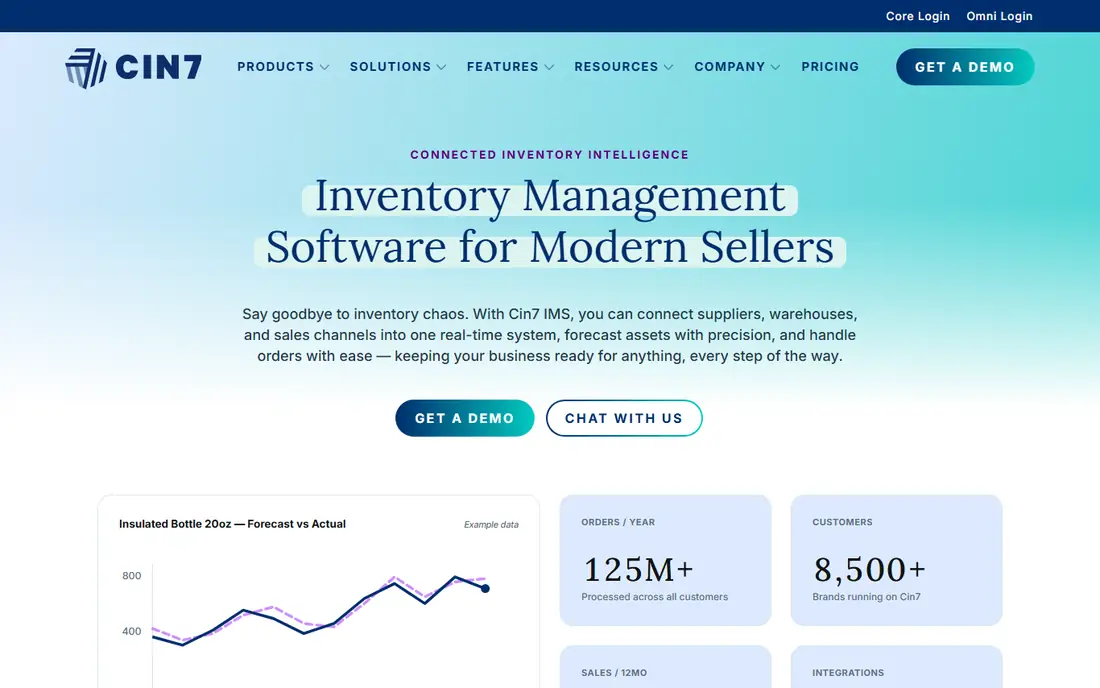
Cin7 Core is the most direct Brightpearl replacement for a multichannel brand. It covers inventory, orders, purchasing, warehouse management, and a B2B portal, with integrations for Shopify, Amazon, eBay, WooCommerce, QuickBooks Online, and Xero. That breadth suits retailers and wholesalers with established operations and complex channel mixes.
The Standard plan costs $349 per month in public listings, with 5 users and 6,000 orders per year, and a 14-day free trial. Pro and Advanced tiers add more users, orders, and warehouse features. Onboarding takes time, so teams without a dedicated operations lead should plan for implementation support.
- Over 700 integrations
- Inventory, purchasing, warehouse, and B2B portal
- EDI support on higher tiers
- Standard plan from $349 per month
- Onboarding can be complex for small teams
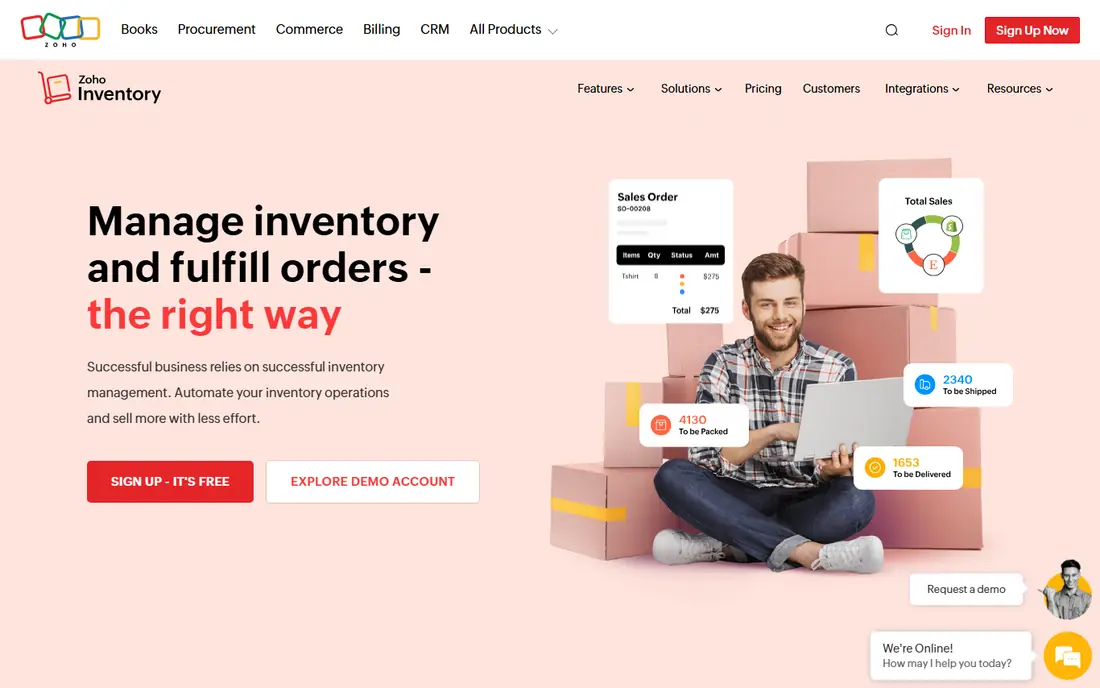
Zoho Inventory is the value pick for a new or small seller. The free plan covers a limited number of orders per month, and paid plans start at $29 per month in public listings, with more users, locations, and orders as you move up. It handles multichannel orders, purchase orders, and stock tracking without a large upfront cost.
The limit is scale. Lower tiers cap users, locations, and orders, so a fast-growing brand may need to upgrade sooner than expected. For a small team selling on Shopify, Amazon, or a website, with Zoho Books for accounting, it is a clean, low-cost starting point.
- Free plan for small volumes
- Paid Standard from $29 per month in public listings
- Native Zoho Books sync
- User and order caps on lower tiers
- Advanced warehouse features need higher plans
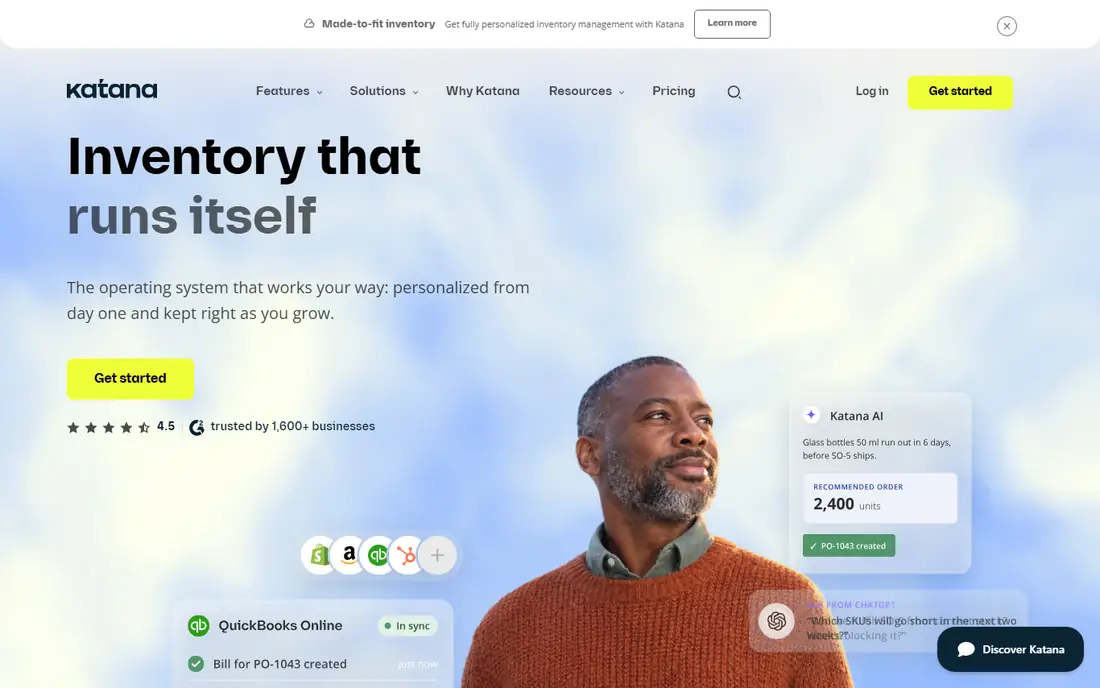
Katana suits product businesses that make what they sell. It tracks raw materials, batches, reorder points, and production orders, and it syncs with Shopify, WooCommerce, QuickBooks, and Xero. That production focus sets it apart from pure inventory tools that treat every product as a finished item.
Pricing is plan-based, with a free plan for starting and paid plans that add users and features, so check the current price page for your order volume. Katana is best for small manufacturers in food, apparel, coffee, and similar fields. Pure resellers with no production work may find a multichannel tool simpler.
- Bills of materials and production planning
- Raw material and batch tracking
- Shopify and accounting syncs
- Pricing varies by plan and order volume
- Reporting depth is lower than some ERP rivals
Linnworks is built for sellers who live on marketplaces. It keeps one inventory pool synced across Amazon, eBay, Shopify, Walmart, and other channels, so a sale on one channel reduces stock everywhere and helps prevent overselling. Order automation, shipping rules, and listing tools support high-volume marketplace work.
The downside is price clarity. Linnworks is quote-based, with a demo and sales process rather than a simple published rate. That suits established marketplace sellers with real volume. New sellers with one channel may find Zoho Inventory or Cin7 Core easier to price and start with.
- Strong marketplace connections
- One inventory pool across channels
- Order and shipping automation
- Pricing is quote-based
- Setup benefits from marketplace experience
NetSuite is the step up from a retail operations tool to a full ERP. It combines financials, inventory, order management, CRM, and reporting in one system, which suits mid-size firms that have outgrown separate tools for accounting, stock, and sales. Automation and audit trails are stronger than in a standalone inventory app.
The trade-off is cost and time. NetSuite is quote-based and needs implementation planning, training, and often a partner. Small sellers should not start here unless they already need full finance and ERP depth. Growing firms that need one system of record across departments will find the investment easier to justify.
- Finance, inventory, CRM, and operations in one ERP
- Strong automation
- Scales to large firms
- Pricing is quote-based
- Implementation is longer and costlier than a point inventory tool
Odoo offers a modular path to ERP. Teams can start with inventory and sales, then add accounting, CRM, manufacturing, or ecommerce as needed. The Community edition is free to self-host, while the hosted Enterprise version is priced by user and app, so teams can grow without replacing the system at each stage.
The catch is complexity. Choosing modules, setting up workflows, and customizing forms takes time, and costs rise as you add users and apps. For a team that wants flexibility and is comfortable with setup, Odoo is a strong, scalable alternative. For a team that wants a ready-made retail tool, Cin7 Core is simpler.
- Modular apps for inventory, sales, and accounting
- Open source Community edition
- Broad app range
- Module pricing can add up
- Setup and customization need time or a partner
inFlow Inventory suits wholesalers and B2B sellers who need structure around orders, pricing, and customers. It supports B2B showrooms, invoicing, purchase orders, and stock tracking, with a 14-day free trial on paid plans. Public listings put the entry plan at $99 per month billed annually, with higher monthly pricing on some listings.
The limit is marketplace breadth. inFlow is strong for B2B and wholesale, but marketplace-heavy sellers may prefer Linnworks or Cin7 Core for channel sync depth. For a distributor or wholesaler with repeat B2B customers, inFlow gives a clear, focused workflow.
- B2B showrooms and invoicing
- Strong order and purchase workflows
- QuickBooks Online integration
- Billed annually from $99 per month in public listings
- Marketplace depth is lower than Linnworks
Fishbowl is a long-standing choice for manufacturers and distributors that run on QuickBooks. It tracks assemblies, work orders, and warehouse stock in real time, and it syncs with QuickBooks and Xero for accounting. That combination suits firms that make, assemble, or distribute products with many components.
The price is mid-market, with Essentials from $229 per month billed annually in public listings and a demo rather than a free trial. Setup also takes time, especially for complex bills of materials. For a QuickBooks-based manufacturer, Fishbowl is a proven pick. For a pure ecommerce reseller, a multichannel tool will be simpler.
- Real-time assembly and warehouse tracking
- QuickBooks and Xero integrations
- Manufacturing depth
- Essentials from $229 per month billed annually in public listings
- No free plan
Ordoro combines inventory and shipping for ecommerce brands. It syncs stock across channels, automates order forwarding, and helps with forecasting, so a team can manage orders and shipments without switching between a stock tool and a shipping tool. That combined workflow suits brands that ship their own orders at volume.
The entry price is $349 per month for the inventory app in public listings, with a 15-day free trial. That puts Ordoro in the mid-market range, similar to Cin7 Core. Brands that use a third-party logistics provider may still benefit from its stock visibility, but self-fulfilling brands will get the most value from the shipping integration.
- Inventory plus shipping in one tool
- Order automation and forecasting
- Marketplace connections
- Inventory app from $349 per month in public listings
- Free trial is 15 days
How we picked these
We compared official product pages, pricing pages, and public documentation for retail operations tools that manage inventory, orders, or manufacturing. We kept tools that are live in October 2026 and that serve product businesses with more than one sales channel or with production work. We left out pure accounting tools, pure shipping tools with no inventory control, and tools that had retired.
What to check before you switch
Start with your channel and order count. List every sales channel, your monthly order volume, your SKU count, and your warehouse count. Those numbers settle pricing for most tools here, because plans are often capped by orders, users, or locations.
Next, test the accounting link. Sync a real product, a real order, and a real purchase order to QuickBooks, Xero, or Zoho Books, and check that costs, taxes, and stock movements match. Accounting errors are harder to fix after migration than a missed feature.
Then check manufacturing needs honestly. If you assemble or produce goods, test bills of materials, batch tracking, and work orders with a real product. If you only resell finished goods, do not pay for manufacturing depth you will not use.
Finally, run a parallel period. Keep your old system running while you process a small set of real orders in the new tool, and compare stock counts at the end of each day. A clean parallel run will catch sync errors, tax issues, and shipping gaps before they affect customers.
Frequently asked questions
What are the best brightpearl alternatives?
Cin7 Core is the closest multichannel match, Zoho Inventory is the best budget pick, and Katana and Fishbowl suit manufacturers. Linnworks and Ordoro suit marketplace and shipping-heavy brands, while NetSuite and Odoo suit teams that need full ERP depth.
Is there a free brightpearl alternative?
Zoho Inventory offers a free plan for small volumes, Katana offers a free starting plan, and Odoo Community is free to self-host. Most mid-market tools here offer a free trial or demo rather than a permanent free plan.
Which brightpearl alternative is best for small business?
Zoho Inventory is usually the best first pick for a small seller, because it is free to start and paid plans start at $29 per month in public listings. inFlow Inventory is a good next step for B2B sellers who need stronger order and invoicing workflows.
Do brightpearl alternatives support Shopify and Amazon?
Yes, most do. Cin7 Core, Linnworks, Ordoro, and Katana all support Shopify and major marketplaces, with varying depth. Check the exact channel list and sync frequency for your channels, because listing, stock, and order sync can differ by integration.
How much do brightpearl alternatives cost?
Entry costs range from free to $349 per month for mid-market tools. Zoho Inventory starts free, inFlow starts at $99 per month billed annually, Fishbowl starts at $229 per month billed annually, and Cin7 Core and Ordoro start at $349 per month. NetSuite, Linnworks, and Odoo Enterprise are priced by quote or by user and app.
Can I migrate data from Brightpearl?
Most tools support CSV import for products, customers, and stock, and some offer migration help. Export your product list, stock counts, open orders, and customer records first, clean duplicates, and test the import with a small batch before a full move.
Sources
See where you really rank - block by block
ProMapRanker scans Google Maps across a grid of your service area. Simple monthly plans from $19, white-label on every plan.
Start freeKeep reading
 zoro.to alternatives
Best Zoro.to Alternatives in 2026
We compare the best zoro.to alternatives in 2026, listing only legal licensed anime streaming services, from Crunchyroll to free options for fans today.
Read → zip alternatives
Best Zip Alternatives in 2026
We compare the best zip alternatives for buy now, pay later in 2026, covering pay-in-4 plans, fees, spending limits, and credit reporting options today.
Read → yesware alternatives
Best Yesware Alternatives in 2026
Compare the best yesware alternatives for sales email tracking, templates, and sequences, with current pricing and honest tradeoffs for small sales teams.
Read →