 ProMapRanker
Best BrandVerity Alternatives in 2026

Paid search and affiliate compliance · Pricing starts at: See website
Key takeaways
- The Search Monitor is our pick for most paid search teams because it focuses on trademark bidding, affiliate compliance, and ad monitoring.
- Red Points and BrandShield suit brands whose main problem is counterfeits, phishing, or impersonation rather than paid search alone.
- Corsearch and MarkMonitor fit legal and enterprise teams that need trademark work, domain portfolios, and enforcement in one place.
- Adthena and PerformLine add competitive intelligence and regulated-industry compliance, which BrandVerity does not try to cover in depth.
- Most of these tools are priced by quote, so request a demo with your own brand terms and check coverage in your markets before signing.
Quick comparison
| Pick | Great for | Pricing starts at | Free tier | |
|---|---|---|---|---|
| The Search Monitor | Paid search and affiliate compliance | See website | No | Visit |
 Red Points | Counterfeit and marketplace removal | See website | No | Visit |
 BrandShield | Phishing and impersonation takedowns | See website | No | Visit |
 Corsearch | Trademark and IP enforcement | See website | No | Visit |
 MarkMonitor | Domain portfolio protection | See website | No | Visit |
 AdPolice | Automated PPC monitoring | See website | No | Visit |
 Adthena | Competitive search intelligence | See website | No | Visit |
 PerformLine | Regulated industry compliance | See website | No | Visit |
The best brandverity alternatives
BrandVerity built its name on paid search and affiliate compliance, catching partners and resellers who bid on brand terms or break ad rules. That focus is useful, but it leaves gaps for brands that also face counterfeits, fake domains, phishing sites, or regulated marketing rules. The tools below cover those neighbouring problems, and we compared official product pages and pricing information for each one.
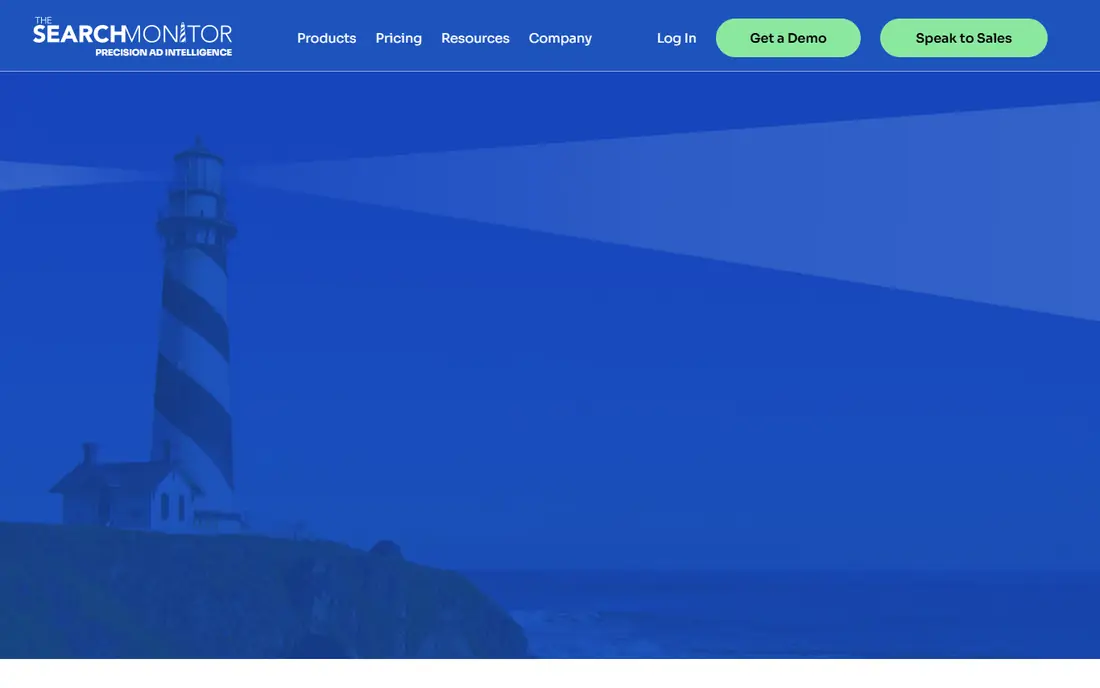
The Search Monitor is the closest direct match to BrandVerity for many teams, because it monitors paid search ads, landing pages, and affiliate activity for trademark misuse. It crawls search results across engines and regions, captures ad copy and screenshots as evidence, and flags affiliates who bid on restricted terms or use unauthorised coupon codes. That evidence trail matters when you need to warn a partner or remove an ad quickly.
Pricing is by quote, which reflects the way the service scales with keyword volume, geographies, and monitoring frequency. Smaller brands may find the entry point high, but a team with a large affiliate programme will use the coverage more fully. The catch is that it is a search-focused tool, not a full counterfeit removal service, so pair it with a marketplace tool if fake listings are also a problem. For paid search compliance alone, it is hard to beat.
- Deep paid search crawling
- Affiliate monitoring
- Global coverage
- Priced by quote
- Best for teams with real paid search volume
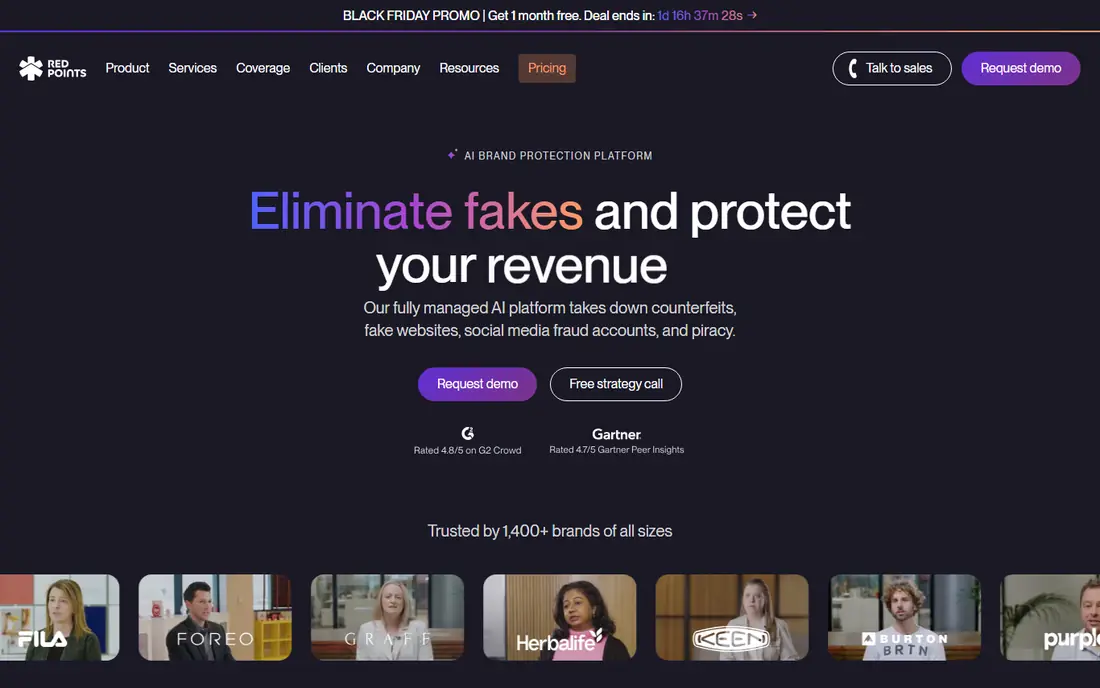
Red Points focuses on finding and removing counterfeits, pirated content, and impersonating listings across marketplaces, social platforms, and websites. Its system scans for infringing products, groups them into cases, and sends takedown requests, which saves a legal team from chasing each listing by hand. Brands with physical products or digital goods that are copied at scale tend to get the most value from this approach.
The service is priced by quote, based on coverage, volume, and the number of brands protected. You will need to supply brand assets, product details, and enforcement rules at setup, and that preparation takes time. The honest limit is that automated removal still needs human review for edge cases, especially where a listing is genuine but looks similar to a fake. For counterfeit-heavy brands, though, Red Points covers ground that paid search tools do not reach.
- Marketplace and social coverage
- Automated takedowns
- Broad brand protection
- Priced by quote
- Setup needs clear brand assets and rules

BrandShield is a digital risk protection platform that watches for phishing sites, fake domains, rogue apps, and social impersonation. It is aimed at security and brand teams that worry about customers being tricked by lookalike sites, rather than only about ad policy breaks. When it finds a threat, it can pursue takedown through registrars, hosts, and platforms, and it reports on what was removed.
Pricing is by quote, and the service is pitched at enterprises, so a small business may find the sales process heavier than a self-serve tool. The strength is breadth across the web, social, and app stores, plus a focus on threats that directly harm customers. The catch is that you still need internal ownership: someone must decide which threats matter most and approve enforcement steps. For phishing-led brand risk, BrandShield is a strong fit.
- Phishing and fake domain detection
- Social and app monitoring
- Fast takedowns
- Priced by quote
- Enterprise focus may suit larger teams best
Corsearch combines trademark services with online brand protection, which suits legal teams that handle both registration and enforcement. It can watch new trademark filings, monitor domains and marketplaces for infringement, and support disputes and takedowns. That combination means a legal team can move from a clearance search to an enforcement case without switching vendors for every step.
The platform is priced by quote, and its range of modules can feel large on a first demo. A team that only needs paid search monitoring may find it more than it needs, while a team with a large trademark portfolio will use more of it. The value shows in cases where a domain dispute, a marketplace listing, and a trademark filing are all part of the same problem. For IP-led brand protection, Corsearch is one of the most complete options here.
- Trademark clearance and watching
- Domain disputes
- Enforcement services
- Priced by quote
- Broad platform can feel complex at first
MarkMonitor is best known for domain portfolio management, and it remains a leading choice for enterprises with many domains to register, renew, and protect. It monitors for lookalike domains, tracks portfolio changes, and supports enforcement against abusive registrations. For a company with hundreds or thousands of domains, that central control is more useful than a set of separate registrar accounts.
Pricing is by quote and aimed at enterprises, so it is not a casual purchase for a small brand. The service also covers broader brand monitoring, but its core strength is domains, and buyers should judge it on that basis. The catch is that domain work needs clean internal records: who owns each domain, when it renews, and which ones can lapse. With that discipline in place, MarkMonitor gives a large portfolio a clear home.
- Large domain management
- Brand monitoring
- Established enterprise service
- Priced by quote
- Less suited to small brands
AdPolice, also known as AdPolice BrandProtect, monitors paid search ads for trademark misuse, affiliate violations, and ad hijacking. It checks ads across search engines, captures evidence, and produces reports that an affiliate manager can act on. That automation matters because manual checks of brand terms quickly fall behind, especially when affiliates operate across regions and device types.
Pricing is by quote, based on keywords, markets, and monitoring frequency. The service suits SEM-focused brands and agencies that need regular, documented checks rather than occasional spot checks. The limit to verify in a demo is coverage in your specific markets and engines, because no crawler covers every market equally. For teams that live in paid search, AdPolice is a direct, practical alternative.
- Automated ad monitoring
- Affiliate fraud detection
- Reporting
- Priced by quote
- Coverage varies by market
Adthena takes a different angle: instead of focusing only on rule breaks, it shows what competitors are doing in paid search. It tracks competitor ad copy, keywords, landing pages, and estimated share of search, which helps a brand see when a rival starts bidding on its terms or changes its message. That intelligence is useful before you escalate a case, because you can see whether a problem is a one-off ad or a sustained campaign.
Pricing is by quote, and Adthena is not a takedown or enforcement service, so it pairs best with a compliance tool rather than replacing one. The catch is that competitive data is an estimate based on observed ads, not a complete record of every auction. Used as intelligence, though, it helps a team prioritise: which competitors matter, which terms are under pressure, and where ad spend is moving. For search strategy, it adds a view BrandVerity does not offer.
- Competitor ad intelligence
- Search market share data
- Reporting
- Priced by quote
- Not a takedown service
PerformLine monitors marketing and sales content across web pages, calls, messages, and social channels for compliance with regulatory rules. It suits banks, insurers, lenders, and education providers, where a misleading claim or a missing disclosure can create regulatory risk, not just brand risk. The platform flags content against rule sets, keeps an audit trail, and helps compliance teams review and document fixes.
Pricing is by quote, and setup requires your compliance rules to be written clearly, which takes work from legal and marketing together. That effort pays off when a regulator asks how a claim was reviewed, because the trail is already there. The limit is that PerformLine is not a paid search bidding tool in the BrandVerity sense, so a team with both problems may need two tools. For regulated marketing, it is the strongest fit on this list.
- Web, call, and message monitoring
- Regulatory rule sets
- Audit trails
- Priced by quote
- Setup needs compliance rules defined in advance
How we picked these
We compared official product pages, feature lists, and pricing information for brand protection and compliance tools that are active in October 2026. We favoured tools with a clear focus, whether that is paid search, counterfeits, phishing, trademarks, domains, competitive intelligence, or regulated compliance, rather than listing general marketing platforms with a minor brand feature. We did not claim hands-on testing of live enforcement cases, and we wrote See website where pricing is by quote and not published as a fixed starting price.
What to check before you buy
Start by naming the problem in one sentence. If the problem is affiliates bidding on brand terms, shortlist paid search tools first. If it is fake listings, shortlist marketplace removal tools. If it is phishing, shortlist digital risk tools. A tool that covers everything on paper may cover your main problem thinly, so ask for a demo using your own brand terms, your own markets, and your own affiliate list.
Check evidence quality, not just detection counts. Screenshots, ad copy, URLs, and timestamps matter when you warn a partner or file a takedown. Ask how quickly alerts arrive, who can act on them, and whether the tool supports the engines, marketplaces, and platforms where your customers actually meet your brand. Finally, confirm contract terms: keyword limits, geography limits, and what happens to your data if you leave. A short paid trial or proof of concept, where offered, is worth more than a long feature list.
Frequently asked questions
What is the closest BrandVerity alternative for paid search?
The Search Monitor and AdPolice are the closest matches, because both focus on trademark bidding, affiliate compliance, and paid search ad monitoring with evidence capture. Choose between them on coverage in your markets, alert speed, and how their reporting fits your affiliate workflow. A demo with your own brand terms will show the difference faster than a feature sheet.
Is there a cheaper BrandVerity alternative for small brands?
Most specialised tools on this list are priced by quote and aimed at mid-market or enterprise teams, so a small brand may find them costly. In that case, start with a narrow scope, such as your top brand terms in one market, and ask vendors to quote that scope only. General SEO platforms also offer brand mention monitoring, but they are not a full substitute for paid search compliance.
Do these tools remove counterfeit listings?
Red Points and BrandShield focus on removal, including marketplace listings, phishing sites, and impersonating accounts, while Corsearch and MarkMonitor support enforcement and domain disputes. Paid search tools focus on ads and affiliates, not on removing fake products. Match the tool to the type of abuse you face most often.
Can one tool cover paid search, counterfeits, and phishing?
Some platforms cover several areas, but depth varies, and a single vendor rarely leads in all three. Many brands use a paid search tool for affiliates plus a separate removal tool for marketplaces and phishing. That split costs more in total, but it usually gives better coverage for each problem than one thin, broad tool.
How do I prove an affiliate broke the rules?
Use screenshots, ad copy, landing page URLs, and timestamps captured by the monitoring tool, and keep the affiliate agreement that states the rule. A clear evidence pack makes a warning or termination faster and fairer, and it helps if a partner disputes the finding. Check that your chosen tool captures the evidence in a form your team can share.
Sources
See where you really rank - block by block
ProMapRanker scans Google Maps across a grid of your service area. Simple monthly plans from $19, white-label on every plan.
Start freeKeep reading
 leg extension alternatives
Leg Extension Alternatives in 2026
Leg extension alternatives that build quad strength without a machine, from goblet squats to step-ups, with form tips for home and gym training in our guide.
Read → kemono alternatives
Kemono Alternatives in 2026
Find legal kemono alternatives for creators in 2026, from Patreon and Ko-fi to Substack and Ghost, with fees, features, safety notes, and honest limits.
Read → kafka alternatives
Kafka Alternatives in 2026
Compare the best Kafka alternative platform options for event streaming, queues and messaging, with trade-offs on scale, ops and cost for developers now.
Read →