 ProMapRanker
Best Bombora Alternatives in 2026

Key takeaways
- 6sense and Demandbase bundle intent into full ABM platforms, while ZoomInfo pairs intent with a large contact database.
- G2 Buyer Intent and TechTarget offer second-party signals from their own review and content sites, which are narrower but high in buying intent.
- Leadfeeder and Lusha suit smaller teams that need first-party visitor signals or affordable contact data with intent filters.
- Most enterprise intent pricing is custom, so ask about topics, volume, seats and contract length before comparing quotes.
- Bombora itself is not listed here, since this guide covers alternatives only.
Quick comparison
| Pick | Great for | Pricing starts at | Free tier | |
|---|---|---|---|---|
 6sense | Predictive ABM intent | See website | Yes | Visit |
 Demandbase | ABM intent and activation | See website | No | Visit |
 ZoomInfo | Intent plus contact data | See website | No | Visit |
 G2 Buyer Intent | Software comparison signals | See website | No | Visit |
 TechTarget Priority Engine | Tech buyer intent | See website | No | Visit |
 Cognism | EMEA intent and contacts | See website | No | Visit |
 RollWorks | Mid-market ABM intent | See website | No | Visit |
 Leadfeeder | Website visitor intent | Free | Yes | Visit |
 Lusha | Affordable intent filters | Free | Yes | Visit |
The best Bombora alternatives
We compared B2B intent data providers on signal type, coverage, topic depth, CRM integration, activation options and pricing transparency, using official product pages and public intent guides. Bombora itself is not listed here, since this guide covers alternatives only.
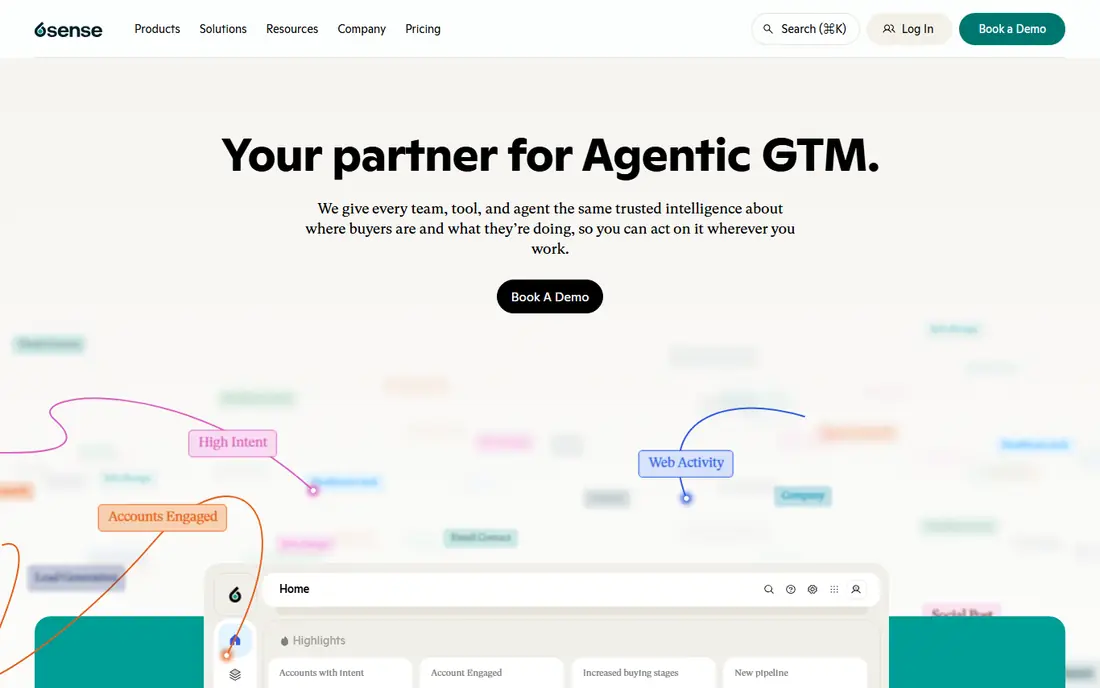
6sense is the leading platform alternative for teams that want intent plus prediction. The platform combines website activity, third-party signals and other buying signals into account scores and predicted buying stages, which helps sales teams focus on accounts showing real movement. That predictive layer goes beyond a simple surge list.
The free tier gives small teams basic sales intelligence, but full intent and orchestration sit in custom-priced plans. Scores also need a clean account list and CRM hygiene to be useful. For mid-market and enterprise ABM teams with enough target accounts, 6sense is a strong replacement for a standalone intent feed.
- Predictive buying-stage models from first and third-party signals
- Broad signal coverage
- Free sales intelligence tier for basic use
- Paid plans are custom and costly
- Setup and tuning take time
- Best value needs larger account volumes
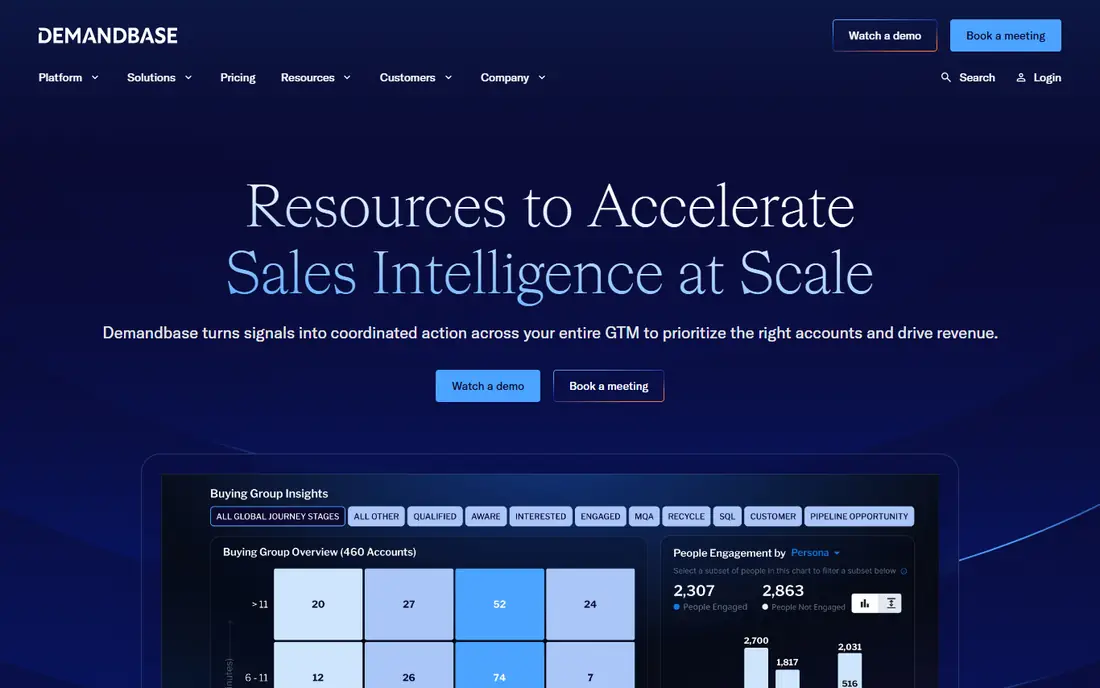
Demandbase pairs intent data with activation in one platform. Teams can identify in-market accounts, build audiences, run B2B advertising and measure engagement without exporting signals to a separate tool. That closed loop is the main reason enterprise ABM teams choose Demandbase over a pure data feed.
Cost and complexity are the limits. Pricing is quoted by sales at enterprise levels, and the platform needs dedicated operations support to get full value. Smaller teams may find the suite heavy for their needs. For large B2B teams that want intent and activation together, Demandbase is a leading pick.
- First and third-party intent in one ABM suite
- B2B advertising activation
- Strong CRM and marketing automation integration
- Pricing is custom and enterprise-level
- Implementation takes time
- Smaller teams may not use the full suite
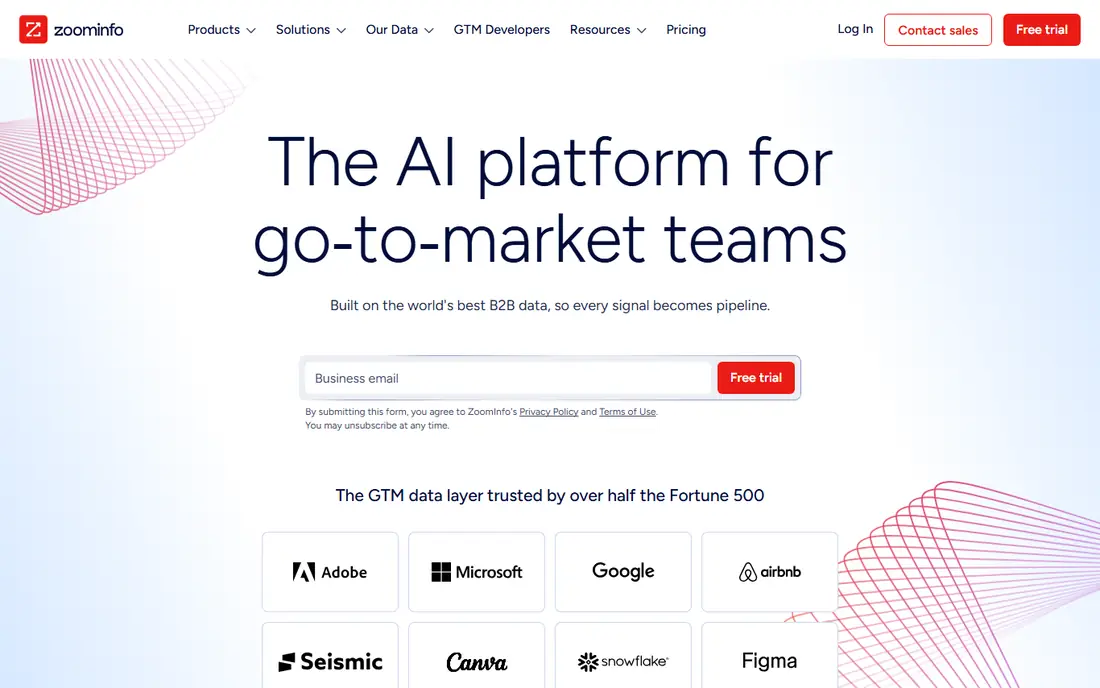
ZoomInfo solves the next step after intent, which is reaching the people at a surging account. The platform pairs intent signals with a large verified contact and company database, so a team can move from an account signal to buying committee contacts in one workflow. That pairing is valuable for sales-led teams.
Intent is often sold as an add-on, so the total cost depends on seats and modules. Data coverage also varies by industry and region, so teams should test their target segments before committing. For outbound and ABM teams that need contacts as well as signals, ZoomInfo is a practical alternative.
- Intent signals paired with a very large contact database
- Streaming intent add-on in many plans
- Strong CRM integration
- Pricing is custom and seat-based
- Intent is often an add-on
- Coverage varies by segment
G2 Buyer Intent offers a different signal type from broad web intent. It tracks which accounts research, compare and visit software categories and profiles on G2, which is a strong buying signal for software vendors. An account comparing your category on G2 is often further along than an account reading a general article.
The scope is also the limit. Signals cover G2 activity only, so they miss research elsewhere on the web. Pricing is custom and often sold as an add-on to a G2 presence. For software companies that already value G2, Buyer Intent adds a focused, high-intent layer that broad intent feeds may miss.
- Signals from real software comparison activity on G2
- Strong for software vendors
- Account and category reporting
- Signals are limited to G2 activity
- Pricing is custom and often an add-on
- Best for software and tech vendors
TechTarget Priority Engine suits enterprise technology vendors whose buyers research on TechTarget sites. The platform tracks content consumption, research activity and project signals across its network, then surfaces accounts and, in many plans, contacts showing active tech buying research. That tech focus gives depth that general intent feeds may lack for this audience.
The audience is the limit. Non-tech vendors will find less relevant signal here, and pricing is custom and annual. For tech vendors selling to IT buyers, Priority Engine is a focused alternative that pairs well with a broader ABM platform for activation.
- Intent from TechTarget content and research activity
- Strong for enterprise tech vendors
- Account and contact-level detail in many plans
- Pricing is custom
- Scope is tech-focused
- Best value needs a tech audience
Cognism suits teams selling in Europe, the Middle East and Africa, where US-focused databases often have thinner coverage. The platform pairs contact data, including phone-verified mobile numbers in Diamond plans, with intent signals for targeting. Its consent-based data approach also helps teams that need to show GDPR compliance.
US coverage is less deep than at ZoomInfo in some segments, and pricing is custom by plan. Intent features also vary by tier, so confirm what is included. For EMEA-focused outbound and ABM teams, Cognism is a strong alternative to a US-centric intent provider.
- Strong EMEA contact coverage with phone-verified numbers in many plans
- Intent signals for targeting
- GDPR-focused data practices
- Pricing is custom
- US coverage is thinner than ZoomInfo in some segments
- Intent depth varies by plan
RollWorks suits mid-market teams that want intent signals they can act on through advertising without a full enterprise suite. The platform uses intent and site signals to build account audiences, run display and retargeting campaigns, and report on account engagement. That direct link from signal to ad makes it easy to launch a first ABM program.
Intent depth is lighter than at 6sense or Demandbase, and reporting is more basic. Media spend is also separate from platform fees. For mid-market teams that want usable intent plus activation at a more accessible scale, RollWorks is a practical choice.
- Account intent signals tied to ABM advertising
- Audience building and engagement reporting
- HubSpot and Salesforce integration
- Intent depth is lighter than enterprise platforms
- Pricing is custom
- Media spend sits on top of platform fees
Leadfeeder, now part of Dealfront, covers first-party intent, which is who visits your own website. The tool identifies visiting companies from IP data, shows which pages they viewed, and syncs those leads to a CRM. A free plan lets small teams try visitor identification before paying.
The limit is scope. Leadfeeder shows on-site interest only, so it misses accounts researching your category elsewhere on the web. Identification rates also vary by traffic type and region. For small teams that want affordable, first-party intent to complement outbound, Leadfeeder is a useful starting point, often paired with a third-party intent source later.
- Identifies companies visiting your website
- Free plan for basic use
- CRM integration and lead scoring
- First-party signals only, so it misses off-site research
- Identification rates vary
- Advanced features sit in paid plans
Lusha suits budget-conscious reps and small teams that need contact data with intent filters, not a full intent platform. The free plan covers basic lookups, and paid plans add intent filters, including Bombora-powered intent in some plans, plus more credits and team features. A browser extension makes prospecting from LinkedIn and company sites quick.
Credit limits and lighter intent depth are the trade-offs. Lusha does not replace a dedicated intent platform for enterprise ABM, and data accuracy varies by segment. For small teams that want affordable intent-aware prospecting, Lusha is a sensible entry point.
- Free plan for basic contact lookup
- Intent filters in paid plans
- Browser extension for prospecting
- Intent depth is lighter than dedicated providers
- Credit limits apply
- Data accuracy varies by segment
How we picked these
We compared official product pages, pricing pages and public intent guides for providers that offer B2B intent signals and are open to new customers in October 2026. We kept only providers with a clear intent product, whether first-party, third-party or second-party. We left out Bombora itself, providers that only sell contact data without intent, and providers with no clear current intent offering.
We gave weight to signal type, coverage, topic depth, CRM integration, activation options and pricing transparency. We did not claim hands-on testing of enterprise intent contracts. Intent quality varies by industry and region, so request a trial or sample for your target accounts before signing a long contract.
How to choose an intent data provider
Know which signal type you need
First-party intent shows who visits your site, third-party intent shows who researches your category across the web, and second-party intent shows who researches on a specific site such as G2 or TechTarget. Most mature teams layer first-party and third-party signals, rather than relying on one source alone.
Test for unique signal, not just volume
Ask how much of a provider signal is unique versus what you already get from your CRM, website and current tools. Overlapping signals waste budget. A provider should show lift in meetings or pipeline from its accounts, not just a longer surge list.
Check the full contract cost
Ask about topics, account volume, seats, data credits, implementation and renewal terms. Enterprise intent contracts often run annually, and add-ons for contacts, advertising or integrations can raise the total well above the headline quote.
Frequently asked questions
What is B2B intent data?
B2B intent data is a signal that a company is researching a topic, product category or vendor, based on content consumption, website visits, search or comparison activity. Sales and marketing teams use it to prioritise accounts that show buying interest, rather than contacting every account in a list.
How is Bombora different from 6sense or Demandbase?
Bombora sells a pure third-party intent feed based on a publisher co-op, while 6sense and Demandbase bundle intent into ABM platforms with scoring, orchestration and advertising. A team that already has an activation stack may prefer a feed, while a team that wants one platform may prefer a suite.
Do small teams need intent data?
Not always at first. A small team can start with website visitor identification from Leadfeeder, CRM engagement and a clear target list, then add third-party intent when account volume and sales capacity justify the cost. Affordable options like Lusha can bridge the gap.
Is intent data company-level or person-level?
Most third-party intent is company-level, which means it shows that someone at a company is researching, but not always who. Person-level signals exist in some tools, such as website visitor identification and second-party platforms, but they are narrower and need careful privacy handling.
How do intent tools integrate with a CRM?
Most providers here integrate with Salesforce and HubSpot, syncing account signals, scores and lists to the CRM. Check sync frequency, field mapping and whether signals create tasks or alerts for sales reps, since a signal that sits in a dashboard rarely drives action.
Is intent data compliant with privacy rules?
Reputable providers use company-level signals, consent-based data practices and GDPR and CCPA compliance programs, but rules vary by region and data type. Ask each provider about its data sources, consent model and data processing terms, and review them with your legal team before use.
Sources
See where you really rank - block by block
ProMapRanker scans Google Maps across a grid of your service area. Simple monthly plans from $19, white-label on every plan.
Start freeKeep reading
 zyte alternatives
Best Zyte Alternatives in 2026
These zyte alternatives cover managed scraping APIs, proxy networks and no code tools for lawful collection from your own or consented sources only in 2026.
Read → zerto alternatives
Best Zerto Alternatives in 2026
Compare the best zerto alternatives for disaster recovery and replication, with recovery targets, cloud options and honest trade-offs for teams in 2026.
Read → zerofox alternatives
Best ZeroFox Alternatives in 2026
We compared 9 zerofox alternatives for brand protection, phishing takedowns, dark web monitoring, and social impersonation, with clear coverage notes.
Read →