 ProMapRanker
Best BlackLine Alternatives in 2026

Key takeaways
- FloQast is the most direct fit for teams that already run their close in spreadsheets and want structure without a long rebuild.
- Trintech Cadency and Adra cover high-volume reconciliation work, with Cadency aimed at large enterprises and Adra at mid-market teams.
- Workiva stands apart when the close feeds straight into external reporting, filings and disclosures.
- Numeric is the clearest priced option here, with a published Essentials plan, while most rivals require a sales quote.
- No single tool wins on every point, so match the choice to close volume, entity count and audit pressure before signing.
Quick comparison
| Pick | Great for | Pricing starts at | Free tier | |
|---|---|---|---|---|
 FloQast | Spreadsheet-based close teams | See website | No | Visit |
 Trintech Cadency | High-volume enterprise reconciliation | See website | No | Visit |
 Adra by Trintech | Mid-market close automation | See website | No | Visit |
 Workiva | Reporting-led closes and filings | See website | No | Visit |
 Numeric | AI-assisted close and flux analysis | $30 per user per month | No | Visit |
 SkyStem | Account reconciliation and close checklists | See website | No | Visit |
 Planful | Close plus planning and budgeting | See website | No | Visit |
 Vena Solutions | Excel-native planning and close support | See website | No | Visit |
 Prophix | Close, reporting and forecasting in one suite | See website | No | Visit |
The best BlackLine alternatives
BlackLine is strong on reconciliation and control, but its price, scope and implementation effort push many finance teams to look elsewhere. These nine options cover the same core job from different angles.
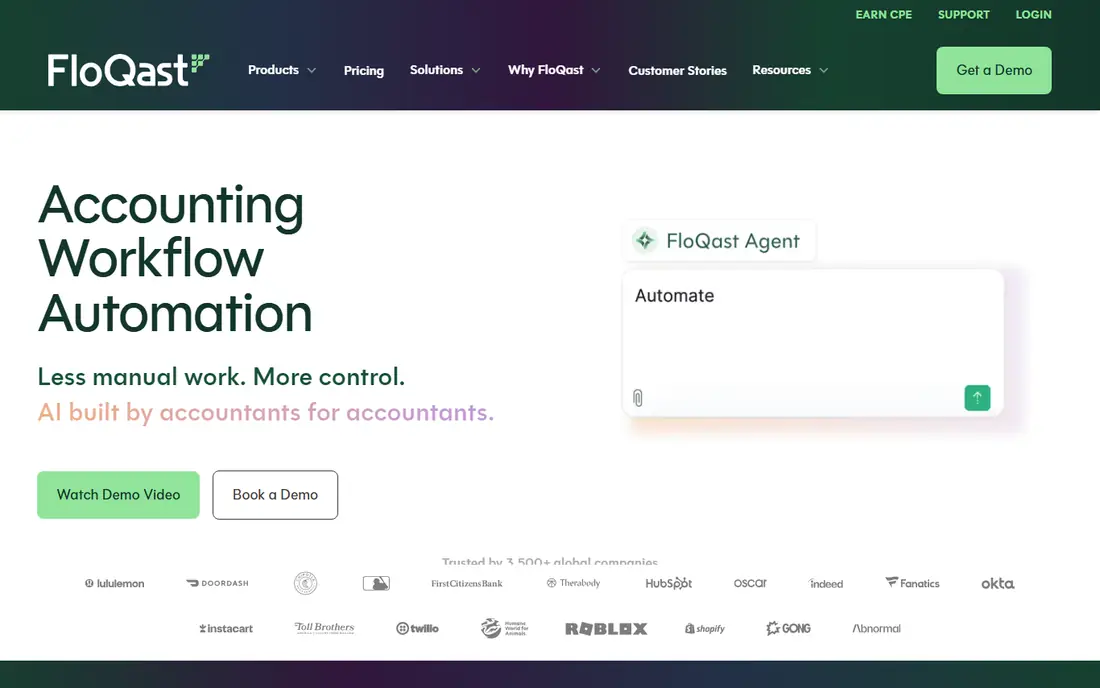
FloQast keeps accountants in the tools they already know. Close checklists, reconciliations and flux checks sit on top of existing spreadsheets and ERP balances, rather than forcing a new ledger or a new way of working. That familiarity is the main reason smaller and mid-sized teams pick it, and deployments are commonly reported in weeks rather than months.
The trade-off is depth. Core FloQast works at account balance level, so teams with heavy transaction matching need its separately licensed AutoRec module or a second tool. Pricing is also quote-based, so budget approval takes a sales conversation and a scoping call. For a coordination problem, meaning missed tasks and late sign-offs, FloQast is hard to beat. For a matching problem at very high volume, look at Trintech first.
- Close checklists tied to existing spreadsheets
- Fast deployment for this category
- Clear tie-out to source systems
- No published pricing
- Transaction-level matching needs a separate module

Cadency is built for finance teams where reconciliation volume is the bottleneck. It covers balance sheet reconciliations, transaction matching with exception handling, close task orchestration, journal entry workflow and intercompany reconciliation in one platform. Large, multi-entity groups with strict control requirements are its natural audience.
That power comes with weight. Cadency is sold through direct enterprise sales, priced by modules, users and volume, and third-party estimates put large deployments well into six figures a year before implementation. Configuration can feel rigid, and teams should plan for a careful rollout. If your close is genuinely high volume and control heavy, the cost can be justified. If it is not, Cadency is more platform than most teams need.
- Deep reconciliation and transaction matching
- Strong intercompany and journal controls
- Audit-ready trails
- No published pricing
- Implementation can be long and complex

Adra gives mid-market teams access to Trintech reconciliation and close tooling without Cadency scale or cost. Adra Matcher handles multi-way matching against bank, card and point-of-sale data, while Balancer and Task Manager cover reconciliations, variance thresholds and checklists with separation of duties. It is a coherent suite for teams outgrowing spreadsheets but not ready for an enterprise platform.
Buyers should still go in with eyes open. Pricing is quote-based, and Adra and Cadency are separate products, so growth into Cadency later means reimplementation work. For a team that expects to stay mid-market for several years, that matters less than day-to-day fit. Adra suits finance leaders who want control and matching depth at a more manageable scope.
- Trintech reconciliation technology at mid-market scale
- Built-in task management
- Audit-focused controls
- No published pricing
- Moving up to Cadency is a reimplementation, not a simple upgrade
Workiva earns its place here for a different reason from the rest. Its strength is what happens after the numbers close, when reports, filings and disclosures must tie back to source data without manual retyping. Linked documents, real-time multi-user editing and version control reduce the filing sprint scramble that follows many closes.
That focus also sets its limit. If you need only close checklists and deep reconciliation, Workiva close management is less mature than FloQast or Trintech. Pricing is module-based and quote-driven, so costs rise with reporting scope. Public and pre-IPO companies with external filing duties get the most value here. Private companies with no filing burden may pay for reporting strength they rarely use.
- Strong linked reporting and disclosure workflows
- Multi-user document collaboration
- Broad regulatory reporting support
- No published pricing
- Close management alone is less deep than specialist rivals
Numeric positions itself as a modern close platform with AI help where accountants spend the most time, explaining variances and tracking down transaction detail. Its Essentials plan is published at $30 per user per month, which makes early budgeting far easier than with quote-only rivals. Growth and Enterprise tiers add depth and are priced on request.
The honest catch is maturity and scale. Numeric is a younger company than Trintech or BlackLine, so very large, complex groups should test its controls, permissions and ERP coverage in a pilot before committing. For mid-sized teams that want flux automation and a clearer view from balance to transaction, Numeric is a strong, transparent starting point.
- Published Essentials pricing
- AI flux explanations and transaction-level visibility
- Flexible contract terms reported by buyers
- Growth and Enterprise plans require a quote
- Newer vendor than the enterprise incumbents
SkyStem, known for its ART reconciliation product, focuses on the unglamorous centre of the close: reconciling accounts, assigning tasks and proving the work was done. Teams that find enterprise suites bloated often prefer this narrower scope, because there is less to configure and less to train. It fits finance teams that want cleaner reconciliations without buying a full record-to-report platform.
Breadth is the compromise. SkyStem will not replace a planning tool or a disclosure platform, so groups with those needs will still run a second system. Pricing is quote-based, so ask for a scope tied to account and entity count. For a reconciliation-first buying decision, SkyStem deserves a shortlist place.
- Focused reconciliation workflow
- Close task tracking in one place
- Simpler scope than enterprise suites
- No published pricing
- Narrower planning and reporting range than broader suites
Planful appeals to teams that want the close and the plan in the same conversation. Close management sits beside consolidation, budgeting and forecasting, so actuals, forecasts and variance commentary can share one data model. That helps finance leaders who spend as much time explaining results as closing them.
Specialist depth is the question to test. Reconciliation and matching are not Planful's headline strength in the way they are for Trintech, so high-volume matching teams should run a detailed proof of concept. Pricing is quote-based and depends on modules and users. Planful fits best where planning and close are equally important and one vendor is preferred.
- Combines close, consolidation and planning
- Strong budgeting and forecasting
- Familiar spreadsheet-style modelling
- No published pricing
- Close depth varies by module and configuration
Vena keeps Excel at the front while adding control behind it. Accountants build models and reports in a familiar interface, with workflows, approvals and a central database reducing version chaos. That combination suits teams that refuse to abandon Excel but need audit trails and a single source of truth.
The flip side is cultural as much as technical. Teams that want a fully web-native close experience may find the Excel-first approach limiting, and pricing requires a quote. Vena is best for finance teams whose planning, budgeting and close work already lives in spreadsheets and needs governing rather than replacing.
- Works inside Excel with controlled workflows
- Strong planning, budgeting and reporting
- Central data model behind spreadsheets
- No published pricing
- Excel dependence can limit non-Excel users
Prophix rounds out this list as a corporate performance suite with close management, financial reporting and forecasting under one roof. Mid-market finance teams can automate close tasks, build management reports and run forecasts without stitching three vendors together. Dashboards and workflow automation help controllers see bottlenecks before month end slips.
Matching depth is again the point to verify. Prophix is broader than it is deep on transaction matching, so teams with heavy bank or intercompany matching should test that use case directly. Pricing is quote-based. For teams that want one suite for close, reporting and planning, Prophix is a practical alternative to a close-only purchase.
- Unified close, reporting and forecasting
- Automated workflows and dashboards
- Mid-market friendly scope
- No published pricing
- Very high-volume matching needs specialist checking
How we picked these
We compared official product pages, pricing pages where published, and public reviews and comparisons for close, reconciliation and reporting tools. We kept only products that are live in October 2026 and that cover a genuine part of BlackLine's job, whether reconciliation, close task management, reporting or planning. Quote-only pricing is stated as See website rather than guessed, and products with only a tangential link to the close were left out.
What to check before you buy a close tool
Start with volume, not features. Count reconciliations, entities, intercompany pairs and journal entries in a typical month, then ask each vendor to demo that exact workload. A tool that looks polished on ten accounts can struggle on ten thousand transactions, and a high-volume platform can feel heavy on a simple close.
Next, test the ERP connection and the audit trail. Ask how balances tie back to source, who approved each reconciliation, and how exceptions are tracked to resolution. Request a trial or pilot on one entity before rolling out company wide. Finally, get total cost in writing, including implementation, modules and renewal terms, since headline subscription prices rarely tell the full story for quote-based tools.
Frequently asked questions
Is FloQast a replacement for an ERP?
No. FloQast sits on top of an existing ERP and adds close management, reconciliation and workflow. It does not replace the general ledger or become the system of record for transactions.
Which BlackLine alternative is best for small finance teams?
FloQast, Adra and Numeric are the most natural starting points, depending on whether coordination, matching or flux analysis is the main pain. Small teams should favour faster deployment and published or simple pricing over enterprise breadth.
Why do most close tools not publish prices?
Pricing depends on entity count, user count, modules and transaction volume, so vendors quote after scoping. Numeric is an exception at the entry level, with a published Essentials plan, while larger tiers still require a quote.
Can Workiva replace a close tool entirely?
It can for reporting-led teams, especially public companies, but specialist close teams often find its reconciliation depth lighter than FloQast or Trintech. Many companies pair Workiva reporting with a dedicated close or reconciliation tool.
How long does implementation usually take?
It varies widely. FloQast deployments are often reported in weeks, while large Cadency or enterprise suite rollouts can take months. Ask for a phased plan with one entity live first, and treat any timeline without a scoping call as provisional.
Sources
- https://floqast.com
- https://www.trintech.com
- https://www.workiva.com
- https://www.numeric.io
- https://www.numeric.io/blog/floqast-pricing
- https://www.bluecopa.com/blog/month-end-close-software
- https://www.bluecopa.com/blog/trintech-review
- https://www.skystem.com
- https://www.planful.com
- https://www.venasolutions.com
- https://www.prophix.com
See where you really rank - block by block
ProMapRanker scans Google Maps across a grid of your service area. Simple monthly plans from $19, white-label on every plan.
Start freeKeep reading
 zyte alternatives
Best Zyte Alternatives in 2026
These zyte alternatives cover managed scraping APIs, proxy networks and no code tools for lawful collection from your own or consented sources only in 2026.
Read → zerto alternatives
Best Zerto Alternatives in 2026
Compare the best zerto alternatives for disaster recovery and replication, with recovery targets, cloud options and honest trade-offs for teams in 2026.
Read → zerofox alternatives
Best ZeroFox Alternatives in 2026
We compared 9 zerofox alternatives for brand protection, phishing takedowns, dark web monitoring, and social impersonation, with clear coverage notes.
Read →