 ProMapRanker
Best Workout Planner App in 2026

Key takeaways
- Fitbod builds each session around your equipment and recovery, while Strong and Hevy suit lifters who want fast, template-based logging.
- JEFIT adds deep analytics and a large exercise library, which helps lifters who want to see muscle balance and progress over months.
- Nike Training Club remains the best free guided option, while Boostcamp suits lifters who want expert-built programs for strength sports.
- A planner only works if logging is fast between sets, so test logging speed before paying for a yearly plan.
Quick comparison
| Pick | Great for | Pricing starts at | Free tier | |
|---|---|---|---|---|
 Fitbod | Sessions built for you | $12.99 per month | No | Visit |
 JEFIT | Detailed gym logs and analytics | Free | Yes | Visit |
 Strong | Fast minimalist logging | Free | Yes | Visit |
 Hevy | Social template-based training | Free | Yes | Visit |
 Nike Training Club | Free guided workouts | Free | Yes | Visit |
 Freeletics | Bodyweight and home training | See website | No | Visit |
 Boostcamp | Expert-built strength programs | Free | Yes | Visit |
 Caliber | Coach-designed strength plans | Free | Yes | Visit |
 Alpha Progression | Progressive barbell planning | See website | No | Visit |
The best workout planner app
We compared official app store listings, feature pages, and pricing pages for workout planners live in 2026. The list covers gym lifters, home trainers, and beginners, with a mix of automated planning, template logging, and coach-built programs, so readers can match the app to how they actually train.
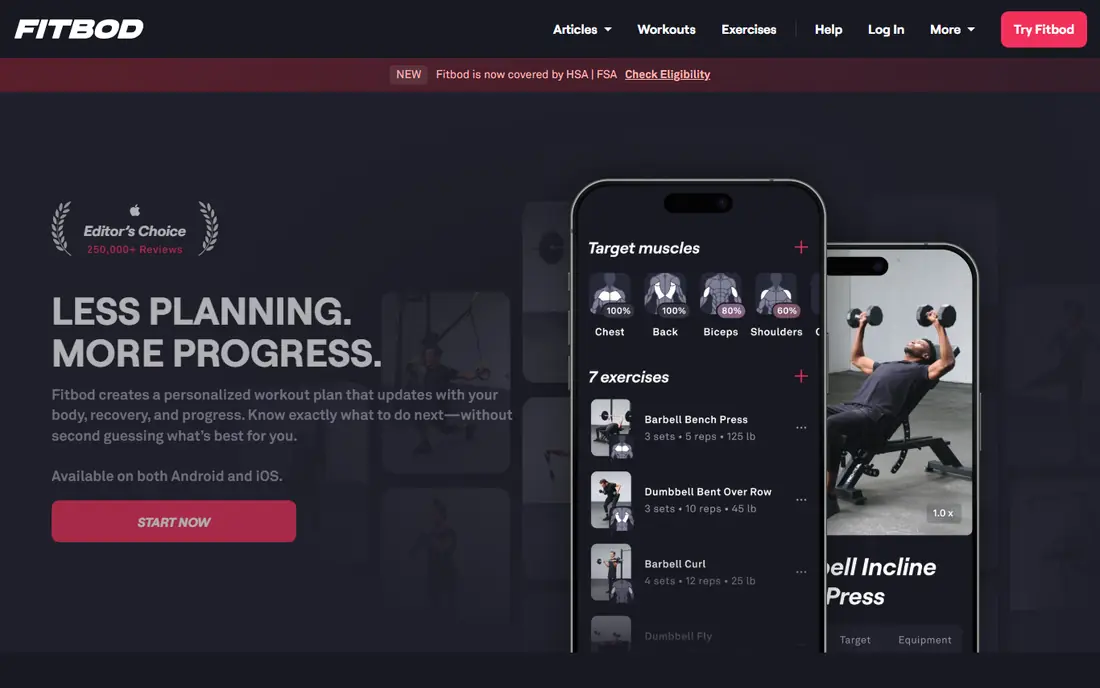
Fitbod is our pick for lifters who do not want to plan. Each session is built around available equipment, training goals, and recent muscle fatigue, so a lifter can open the app and start without writing a program. The exercise library covers gym and home equipment, with guidance for form and progression.
The price is the main barrier. Fitbod has no permanent free tier, only a trial, and full history and export need a paid plan. For lifters who value automated planning over manual templates, that cost is fair. For lifters who already know their program, Strong or Hevy will feel cheaper and faster.
- Sessions built around equipment, goals, and recovery
- Large exercise library with video guidance
- Progress tracking across muscle groups
- No free tier, only a trial
- Paid export and full history need a subscription
- Monthly price is higher than template loggers

JEFIT suits lifters who want data. The free plan covers core logging, while Elite adds a periodized plan, per-muscle analysis, and deeper progress views. The exercise library is large, with animated guides that help new lifters learn movements. Community programs also give beginners a starting plan without writing one from scratch.
The interface can feel busy at first, since analytics, programs, and social features share the screen. Ads on the free plan also distract some users. For lifters who check muscle balance and volume over months, JEFIT offers more insight than simpler loggers.
- Large exercise library with animated guides
- Detailed analytics by muscle group
- Community programs and 12-week plans on Elite
- Free plan includes ads
- Interface is busy for new users
- Advanced analytics need Elite
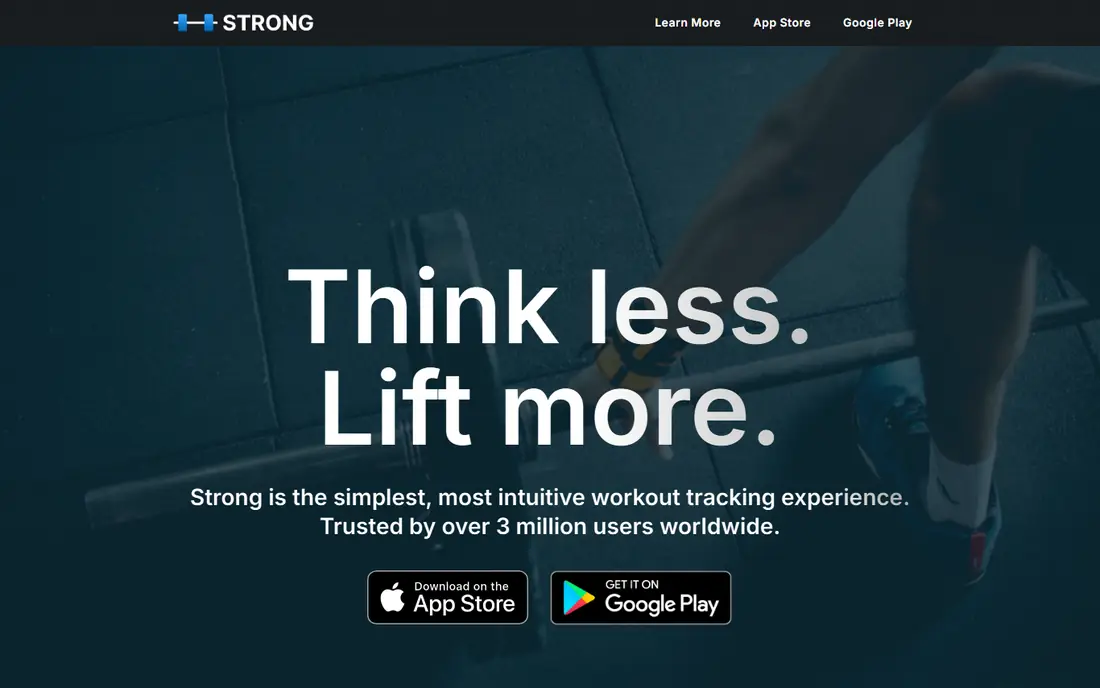
Strong is the minimalist pick, built for speed between sets. Logging a set takes a few taps, templates keep routines ready, and charts show personal records and volume over time. The free tier covers unlimited saved workouts and CSV export, which is generous compared with rivals that lock export behind paywalls.
The free plan caps the number of saved routines, so lifters with many programs will need Pro. Strong also does not build programs for the user, so beginners who need guidance may prefer Fitbod or Boostcamp. For experienced lifters who know their plan, Strong is hard to beat on speed.
- Fastest set logging in this list for many lifters
- Unlimited saved workouts and export on the free tier
- Clean interface
- Free plan caps saved routines
- Exercise library is smaller than JEFIT
- No automated program building
Hevy combines template logging with a social feed, which helps lifters who train with friends or enjoy accountability. Routines are easy to build and reuse, workouts log quickly, and the feed shows friends' sessions, comments, and progress. Pro adds more routines, advanced stats, and a trainer feature at a low price, with a lifetime option for committed users.
The free plan caps routines, like Strong, and the exercise library is smaller than JEFIT. Social features also suit some lifters more than others, since a feed can distract during a session. For lifters who want a friendly, low-cost logger with social motivation, Hevy is a strong value.
- Clean template logging
- Social feed with friends and leaderboards
- Low-cost Pro with lifetime option
- Free plan caps saved routines
- Exercise library is smaller than JEFIT
- Social features may distract some lifters
Nike Training Club is the best free guided option in this list, and it costs nothing for the full workout library. Guided sessions cover strength, cardio, yoga, and mobility, with programs that progress over weeks. Trainer guidance and clear cues help beginners who do not know where to start.
The limit is planning depth. Nike Training Club does not build a custom barbell program or track detailed sets like Strong, so serious lifters will likely pair it with a logger. For general fitness, home training, and guided motivation at no cost, it is an excellent first app.
- Fully free guided workouts
- Programs for strength, cardio, and mobility
- Workouts for all levels with trainer guidance
- No custom barbell program builder
- Tracking is lighter than Strong or JEFIT
- Focus is guided sessions, not detailed logging
Freeletics suits home trainers and busy lifters who want a coach to set the plan. The coach builds sessions around goals, equipment, and time, then adjusts based on feedback after each workout. Bodyweight training is a strength here, with sessions that need little or no equipment, though gym plans are also available.
The subscription cost and coaching style may not suit lifters who already follow a barbell program. Freeletics also works best for lifters who accept coach direction, rather than lifters who want full control over every set. For home training with structure, it is a practical choice.
- Coach-built plans for bodyweight and gym training
- Adaptive plans that adjust to feedback
- Short sessions for busy schedules
- No permanent free plan confirmed
- Coaching focus suits some lifters more than others
- Price varies by plan length
Boostcamp is the pick for lifters who want a proven strength program without paying a coach. Expert-built programs cover powerlifting, bodybuilding, and general strength, with progression built into the plan. The free tier covers core programs, while Pro adds more features and tracking depth.
The focus is strength sports, so general fitness users may prefer Nike Training Club. Customization is also less than a blank template logger, since programs follow a set structure. For lifters who want to follow a respected program and track progress, Boostcamp offers strong value.
- Free tier with expert-built programs
- Programs for powerlifting, bodybuilding, and general strength
- Progress tracking and community
- Program focus is strength sports
- Customization is less than a custom builder
- Pro needed for full features
Caliber offers coach-designed strength plans with a free starting point, which suits lifters who want expert structure without a high entry price. Plans cover home and gym training, with progression and tracking built in. Paid coaching adds personal guidance for lifters who want a coach in their corner.
Full coaching can be costly, so buyers should check current coaching prices before committing. The free plan also offers less detail than paid coaching, which is expected. For lifters who want a structured strength plan with a path to coaching, Caliber is a solid choice.
- Free plan with coach-designed plans
- Strength plans for home and gym
- Progress tracking and community support
- Coaching tiers can be costly
- Free plan is less detailed than paid coaching
- Focus is strength, not general cardio
Alpha Progression suits experienced barbell lifters who want progression handled with care. Plans focus on main lifts, track volume and intensity, and adjust as strength grows, which helps lifters avoid stalling on a fixed program. Analytics show trends over months, not just single sessions.
The app is less suited to general fitness or guided home workouts, and new lifters may find the focus narrow. Pricing should be confirmed on the official site, since plans vary. For barbell lifters who want a progression-first planner, Alpha Progression is worth a trial.
- Progression-focused planning for barbell lifts
- Detailed tracking and analytics
- Plans that adapt as strength grows
- No permanent free plan confirmed
- Best for barbell lifters, not general fitness
- Interface suits experienced lifters
How we picked these
We compared official app store listings, feature pages, and pricing pages for workout planners live in 2026, and we kept only apps with real planning or program features, not just step counters. We favored fast logging, clear progression, and a usable free tier or trial, since those factors decide whether a planner survives past the first month. Apps that only play workout videos with no planning were left out.
How to choose a workout planner that you will keep using
Match the planner to your training style
Automated planners suit lifters who do not want to write programs, template loggers suit lifters who know their routines, and coach-built programs suit lifters who want expert structure. Pick the style that matches how you already train, rather than the app with the longest feature list.
Test logging speed in a real session
Log three real workouts in your top two apps and time how long each set takes to record. A planner that slows you down between sets will be abandoned, no matter how good its analytics look. Also check that rest timers, personal records, and volume charts are easy to find after the session.
Check progression and export before paying
Confirm how the app raises weights over time, whether it tracks deloads, and whether you can export your history if you leave. A planner that locks your history behind a subscription deserves caution, while apps like Strong and Hevy that offer free export give you more control.
Frequently asked questions
What is the best workout planning app for beginners?
Nike Training Club suits beginners who want free guided workouts, while Fitbod suits beginners who want sessions built for them. Boostcamp also helps beginners who want an expert-built strength program to follow.
What are the best workout planner apps for the gym?
Fitbod, JEFIT, Strong, and Hevy all suit gym training, with different strengths. Fitbod builds sessions, JEFIT adds analytics, Strong logs fastest, and Hevy adds social motivation at a low price.
What is the best free workout planner app?
Nike Training Club is fully free for guided workouts, while Strong, Hevy, JEFIT, and Boostcamp all offer free tiers for logging and programs. The best free choice depends on whether you want guidance, logging speed, or analytics.
What is the best custom workout app?
Strong and Hevy suit custom routines, since both let lifters build and reuse templates with their own exercises, sets, and reps. JEFIT also supports custom programs, with a larger exercise library for detailed planning.
What is the best workout builder app for barbell training?
Strong and Alpha Progression suit barbell training best, with progression tracking and personal record charts. Boostcamp also offers barbell programs for strength sports, with expert-built progression.
Sources
See where you really rank - block by block
ProMapRanker scans Google Maps across a grid of your service area. Simple monthly plans from $19, white-label on every plan.
Start freeKeep reading
 zscaler alternatives
Best Zscaler Alternatives in 2026
Looking for zscaler alternatives? We compare 9 SASE and zero trust platforms on architecture, data protection, pricing, and fit for your network and team.
Read → zapier alternatives free
Best Zapier Alternatives Free in 2026
Nine automation tools for zapier alternatives free in 2026, all with genuinely free tiers, plus free plan limits, starting prices and upgrade paths explained.
Read → which platform is best for online reputation
Which Platform Is Best for Online Reputation in 2026
Wondering which platform is best for online reputation? We compare 8 review, listing, and response tools for small and multi-location businesses and agencies.
Read →