 ProMapRanker
Best Wireless Expense Management Software in 2026


Large teams needing telecom, mobile and IT spend in one view · Pricing starts at: See website
Key takeaways
- This article covers telecom and wireless expense management: carrier invoices, mobile and wireless usage, device inventory and cost allocation, not generic staff expense claims.
- Calero, Tangoe and Sakon suit large enterprises, while SutiWEM and Clearview fit smaller wireless estates that need control without an enterprise rollout.
- Almost every enterprise platform here is priced by quote, so a demo should include a sample of your own carrier invoices.
- No platform can fix dirty inventory on its own: clean device and contract records decide whether invoice checks are useful.
Quick comparison
| Pick | Great for | Pricing starts at | Free tier | |
|---|---|---|---|---|
| Calero | Large teams needing telecom, mobile and IT spend in one view | See website | No | Visit |
 Tangoe | Global enterprises with many carriers and currencies | See website | No | Visit |
 Sakon | Enterprises wanting invoice traceability to source bills | See website | No | Visit |
 Upland Cimpl | Mobility teams needing governed invoice validation | See website | No | Visit |
 Brightfin | ServiceNow shops wanting expense management inside ServiceNow | See website | No | Visit |
 Lightyear | Teams wanting modern invoice automation and procurement help | See website | No | Visit |
 Clearview by Valicom | Mid-size teams wanting a focused telecom expense tool | See website | No | Visit |
 SutiWEM | Wireless-focused teams wanting plan and device control | See website | No | Visit |
The best wireless expense management software
We read this topic narrowly, as telecom and wireless expense management: the software that takes carrier invoices for voice, data and wireless services, checks them against inventory and contracts, allocates costs and supports disputes. It is not a generic expense claim tool for meals and travel.
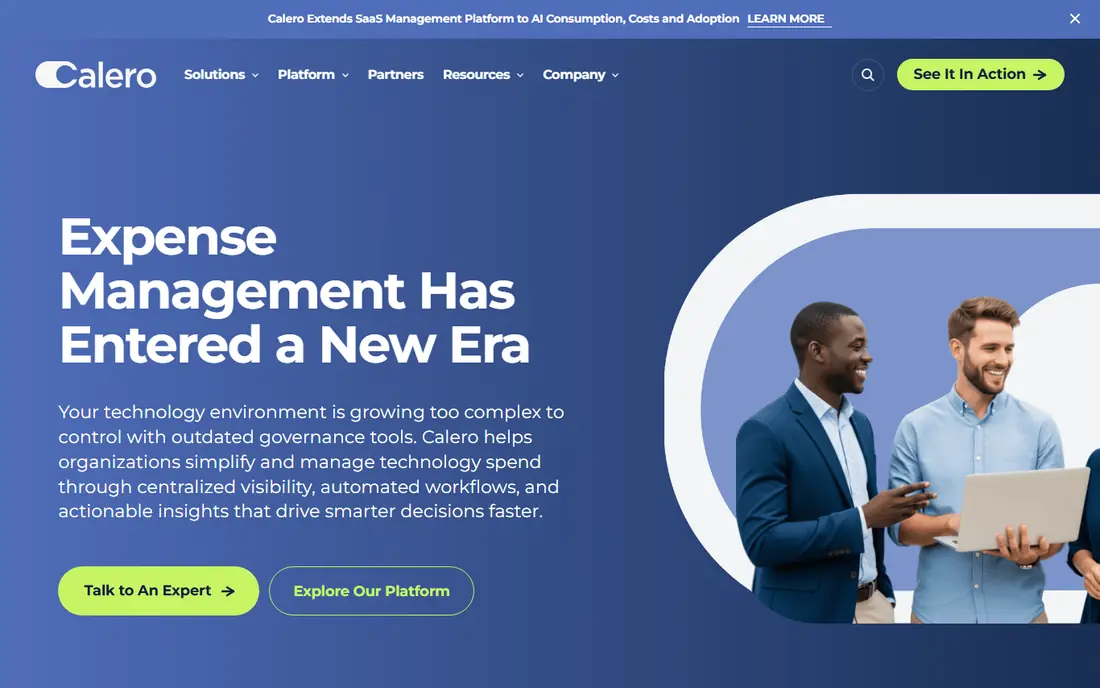
Calero is the broadest platform on this list, and that breadth is its pitch. Carrier invoices load in, are checked against the inventory and contract rates the team maintains, and costs are allocated to departments or cost centers for finance reporting. Dispute handling and savings reporting sit in the same workflow, so a finance team can follow a questioned charge from invoice line to resolution.
The catch is that the system is only as good as the inventory behind it. If device and service records are out of date, validation flags will be noisy and staff will spend time clearing false alarms. Calero also prices by quote, so budget planning needs a scoped conversation. It suits a large organization that wants one view of telecom, mobile and related technology spend and has staff to keep the underlying data clean.
- Covers telecom, mobility and software spend in one platform
- Invoice validation tied to inventory and contracts
- Cost allocation across teams
- Pricing is quote only
- Some users report confusing data views
- Support responsiveness is a common complaint
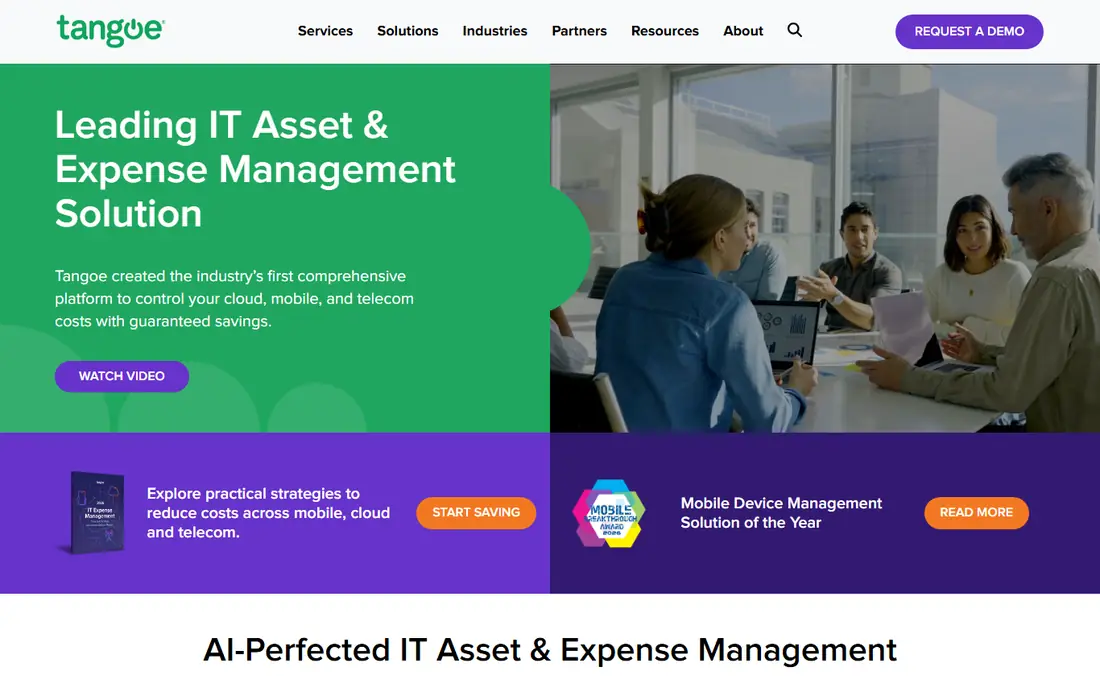
Tangoe has worked in telecom expense management for over two decades, and its strength is scale. It handles invoice capture and processing, links charges to contracts and usage data, supports cost allocation and credit recovery, and works across currencies and countries that smaller tools handle poorly. For a global company with carriers in many markets, that coverage is hard to replace.
That scale is also the drawback for a smaller buyer. Implementation and data onboarding take real effort, and a company with one carrier and a few hundred lines may pay for global depth it never uses. Tangoe fits best when the wireless estate spans countries, currencies and many carrier contracts, and when finance needs a single governed process across all of them.
- Long history in telecom expense management
- Global carrier and multi-currency coverage
- Inventory-anchored dispute workflows
- Pricing is quote only
- Setup can be heavy for smaller teams
- The platform can feel large for a single-country wireless estate
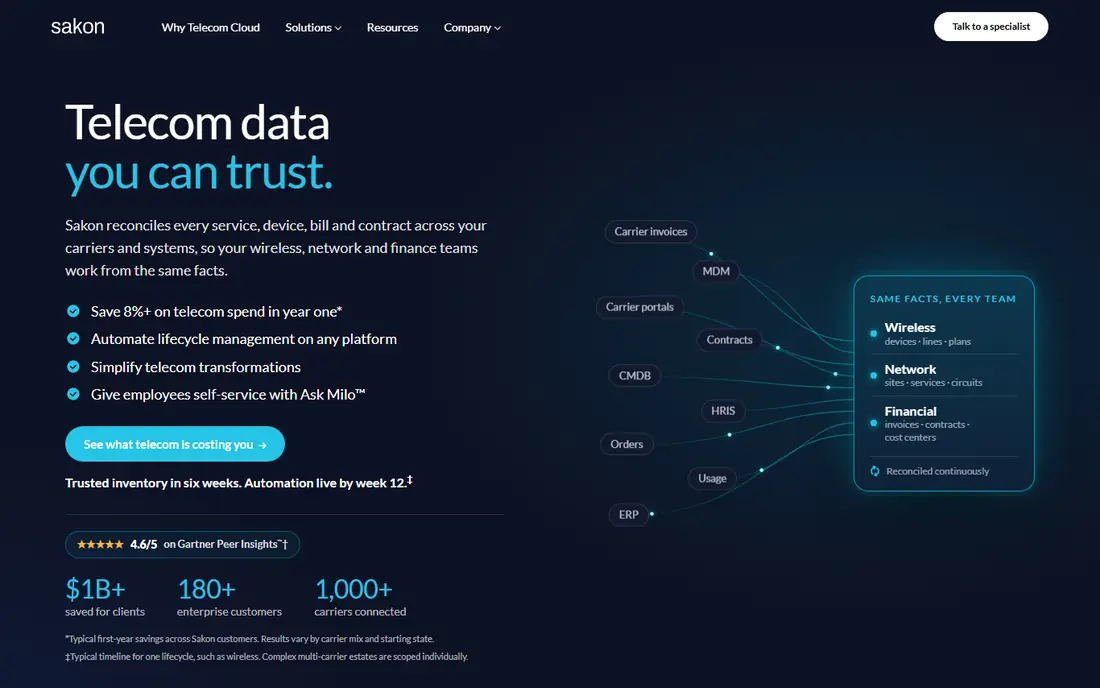
Sakon centers on traceability. Invoices are normalized into line items that stay linked to the source billing artifacts, so when a charge is disputed, the team can show exactly which line, contract and service it relates to rather than arguing from a summary total. That audit trail matters for finance teams that need to defend adjustments and track credits to closure.
The platform is aimed at enterprises, and its onboarding reflects that. Getting carrier data, contracts and inventory into a consistent shape takes time and ownership inside the buying company. Sakon suits an enterprise that treats dispute evidence and cost optimization as core finance work, not an occasional cleanup exercise.
- Dispute detail traces back to normalized invoice line items
- Strong cost optimization workflow
- Built for large telecom estates
- Pricing is quote only
- Data management effort is significant
- Smaller teams may find the platform more than they need
Upland Cimpl focuses on the mobility side of telecom expense: wireless lines, devices and plans, with invoice formats that vary by carrier. It standardizes invoice processing runs, applies validation rules, routes disputes in a controlled way and supports charge allocation across multiple accounts and cost centers. For a mobility team, that structure beats a spreadsheet that only totals each carrier bill.
Cimpl will not remove the need for someone to own the process. Carrier format changes, plan changes and device moves still need attention, and the platform pays off most when one team owns validation rules and dispute follow-up. It is a strong pick for a mid-size to large mobility operation that wants governed validation without buying the widest enterprise suite.
- Controlled invoice validation and dispute workflows
- Mobility-focused charge review across accounts and cost centers
- Strong admin controls
- Pricing is quote only
- Invoice handling can still need manual attention
- Best value comes with disciplined process ownership
Brightfin
Great for: ServiceNow shops wanting expense management inside ServiceNow
Brightfin takes a different route from the standalone platforms here: it runs inside ServiceNow rather than as a separate portal. Telecom invoices, inventory and costs connect to the configuration database a ServiceNow shop already maintains, so IT and finance work from the same service records. That native fit can shorten the gap between a billing question and the service it relates to.
The limit is obvious. If your company does not run ServiceNow, Brightfin is not a natural choice, and even ServiceNow customers should budget for setup. For a ServiceNow shop, though, keeping telecom expense inside the system of record is a real advantage, and it avoids asking staff to learn and maintain yet another standalone tool.
- Runs natively inside ServiceNow
- Syncs with the existing configuration database
- Invoice and cost workflows sit beside IT workflows
- Pricing is quote only
- Setup costs can be high
- Value drops sharply for companies not already using ServiceNow
Lightyear presents itself as the modern option in a category full of older enterprise tools. Invoices arrive by PDF, EDI, CSV, API or mail, are digitized and checked against validated inventory, and costs allocate to the services they belong to. Procurement support, including renewal handling and rebidding, sits beside the invoice workflow rather than in a separate buying tool.
That freshness cuts both ways. Teams that dislike the look and feel of older telecom platforms may prefer Lightyear, but buyers who want decades of enterprise references may lean toward Tangoe or Calero. Lightyear suits a team that wants automated invoice handling and procurement help in a current interface, and that is willing to test it against its own carrier formats before committing.
- Modern interface with automated invoice receipt and digitization
- Inventory-linked cost allocation
- Renewal and procurement support
- Pricing is on request
- Newer approach means less long enterprise history than Tangoe or Calero
- Accuracy still depends on clean inventory data
Clearview by Valicom
Great for: Mid-size teams wanting a focused telecom expense tool
Clearview by Valicom is a focused telecom expense management tool rather than a broad technology spend suite. It helps organizations track voice, wireless and data usage, manage inventory, review invoices and control costs, and it can integrate with accounts payable systems or pair with Valicom managed services. That focus keeps the buying decision simpler than a full enterprise suite.
The trade-off is scale and profile. A global enterprise with complex multi-country needs may outgrow Clearview, while a mid-size team may find it exactly right: enough invoice, inventory and reporting depth to replace spreadsheets, without an enterprise rollout. Teams should confirm carrier coverage and reporting fit for their own invoices during a demo.
- Focused on voice, wireless and data expense in one tool
- Integrates with accounts payable systems
- Works standalone or with managed services
- Pricing is quote only
- Smaller vendor profile than the enterprise leaders
- Very large global estates may need a bigger platform
SutiWEM is the most wireless-specific product on this list. It is a web-based tool for managing wireless expenses, with plan management, rate plan optimization, device oversight, usage reporting and notifications for voice, data and text consumption. For a team whose problem is mainly mobile lines and devices, that narrow focus is a strength, not a gap.
The limit is scope. A company that also needs deep wireline, circuit and global telecom management may need a broader suite such as Calero or Tangoe, or a second tool for that side. SutiWEM suits a wireless-heavy operation that wants to control plans, devices and usage without paying for a full enterprise telecom platform.
- Built specifically around wireless expense
- Plan management and rate plan optimization
- Device oversight and usage reporting
- Pricing is quote only
- Narrower than full telecom suites that also cover wireline
- Enterprise finance integrations need checking
How we picked these
We compared vendor feature pages, telecom expense guides and user review listings for tools that handle carrier invoices, wireless usage, inventory and cost allocation in October 2026. We favored products with real wireless or telecom expense depth over generic expense claim software, and we marked pricing as See website wherever the vendor prices by quote. We did not invent carrier savings figures, since those depend on each buyer's contracts and usage.
What to check before you buy wireless expense software
Start with your own invoices. Give each shortlisted vendor a sample set covering your carriers, formats and trickiest lines, and ask them to show validation, allocation and dispute handling on that data, not on a polished demo set. Check which carriers and invoice formats are supported natively, and what happens when a carrier changes a format.
Next, settle ownership. Someone inside your company must own inventory, contract rates and dispute follow-up, because no tool fixes stale device records by itself. Ask how the platform handles disconnected lines that keep billing, plan changes and cost center moves, and how credits are tracked to payment. Finally, confirm the commercial model in writing: what is included in the subscription, what is charged as a service, and how fees change as line counts grow or shrink.
Frequently asked questions
What is wireless expense management software?
It is software that manages the cost of wireless and telecom services: it collects carrier invoices, checks charges against inventory and contracts, allocates costs to teams or cost centers, and supports disputes and optimization. In this article we use it in that telecom sense, not for employee expense claims.
How is this different from generic expense software?
Generic expense software handles claims from staff, such as travel and meals, with approvals and reimbursement. Wireless expense software handles bills from carriers, with invoice validation, device inventory, plan optimization and contract checks. The two solve different problems and are rarely interchangeable.
How much does wireless expense management software cost?
Most enterprise platforms here price by quote, based on line counts, carriers, countries and services included. Smaller focused tools also tend to quote rather than publish prices, so expect a scoped proposal after a vendor reviews your carrier estate.
Can this software cut my wireless bill?
It can surface billing errors, unused lines, wrong plans and contract mismatches, which are the usual sources of savings. No vendor can promise a fixed saving before seeing your invoices, contracts and usage, so treat any percentage claim made without that review with caution.
Do I need this if I only have one carrier?
Possibly not. A single carrier and a small line count can often be managed with careful spreadsheet checks and regular plan reviews. The case for software grows with line counts, multiple carriers, many locations, or a history of billing errors that take hours to chase.
What data do I need before implementation?
You need a current inventory of lines, devices and services, contract rates and terms, cost center ownership, and recent invoices in their original formats. Gathering that list before signing shortens implementation and improves the accuracy of every invoice check that follows.
Sources
See where you really rank - block by block
ProMapRanker scans Google Maps across a grid of your service area. Simple monthly plans from $19, white-label on every plan.
Start freeKeep reading
 worlds best local seo company
8 Worlds Best Local SEO Companies for Map Pack Growth in 2026
Compare the worlds best local seo company options for Google Business Profile work, citations, reviews, and multi-location rankings and reporting in 2026.
Read → world's best web hosting company
World's Best Web Hosting Company in 2026
Searching for the world's best web hosting company? We compared 10 hosts on price, renewal rates, speed, and support to help you choose well today in 2026.
Read → who's got the best nanny tax services
Who's Got the Best Nanny Tax Services in 2026
We answer who's got the best nanny tax services, comparing full filing, back taxes, software, and pricing so families can handle nanny taxes correctly.
Read →