 ProMapRanker
Best Wi Fi Services in 2026

Key takeaways
- Fiber providers such as AT&T Fiber, Verizon Fios, and Google Fiber offer the most consistent speeds where available.
- Cable providers such as Xfinity and Spectrum cover far more addresses, but upload speeds and post-promo prices vary.
- T-Mobile Home Internet and Starlink suit homes where wired options are weak or absent.
- Availability varies by address and region, and no provider can guarantee Wi-Fi speeds inside your home.
Quick comparison
| Pick | Great for | Pricing starts at | Free tier | |
|---|---|---|---|---|
 Xfinity | Widest cable coverage | $19.99 per month | No | Visit |
 Spectrum | Cable without contracts in many areas | See website | No | Visit |
 AT&T Fiber | Symmetrical fiber speeds | $50 per month | No | Visit |
 Verizon Fios | Reliable fiber in the Northeast and Mid-Atlantic | $35 per month | No | Visit |
 Google Fiber | Simple fiber pricing | $70 per month | No | Visit |
 T-Mobile Home Internet | 5G home internet without a wired line | $50 per month | No | Visit |
 Frontier Fiber | Budget fiber in its footprint | $29.99 per month | No | Visit |
 Optimum | Cable and fiber in its regions | $30 per month | No | Visit |
 Starlink | Rural and remote homes | $140 per month | No | Visit |
The best wi fi services
In this article, Wi-Fi services means home internet service that powers your home Wi-Fi network, from fiber and cable providers to 5G and satellite options. Availability varies by address and region, and actual speeds depend on your plan, equipment, home layout, and network conditions. No provider can guarantee speeds over Wi-Fi. We compared provider pricing pages and public coverage for services that exist and work in October 2026.
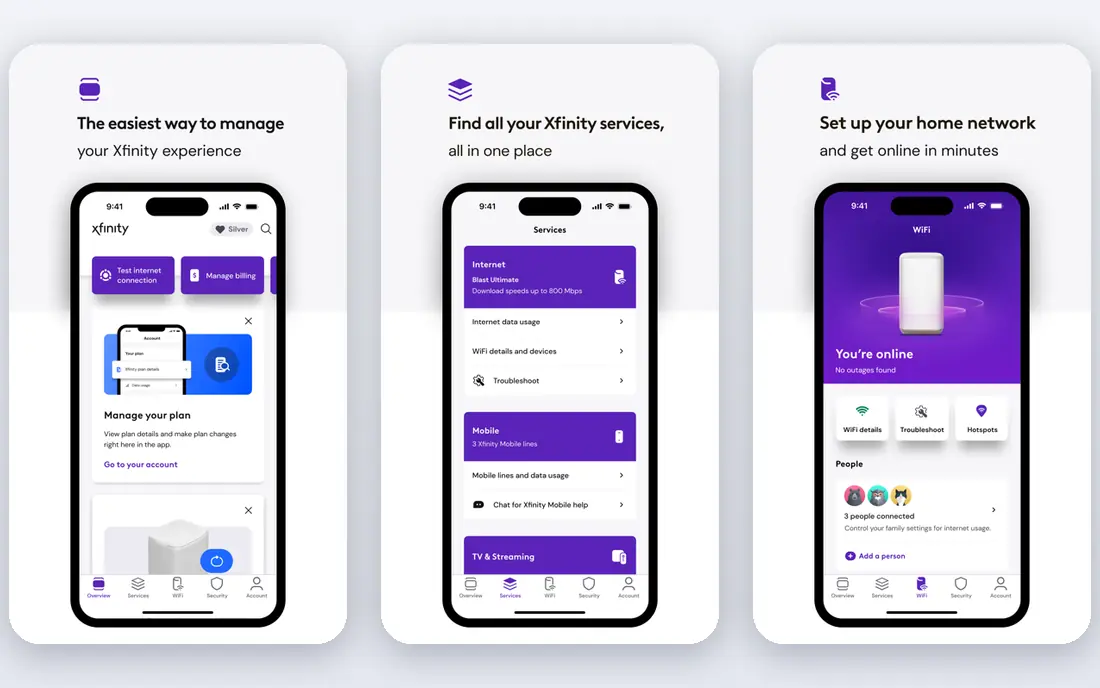
Xfinity is the easiest starting point for many households because its cable network reaches a large share of US addresses. Speed tiers range from basic plans for small homes to multi-gigabit options for busy households. Bundles with mobile and TV can cut the total bill for existing customers. The limits are upload speeds, which lag fiber, and a data cap on many plans, plus promo prices that rise after the first term. If fiber is not at your address, Xfinity is often the fastest wired option.
- Very wide US footprint
- Many speed tiers
- Bundle options with mobile and TV
- Upload speeds lag fiber
- Data cap applies on many plans
- Promo prices rise later
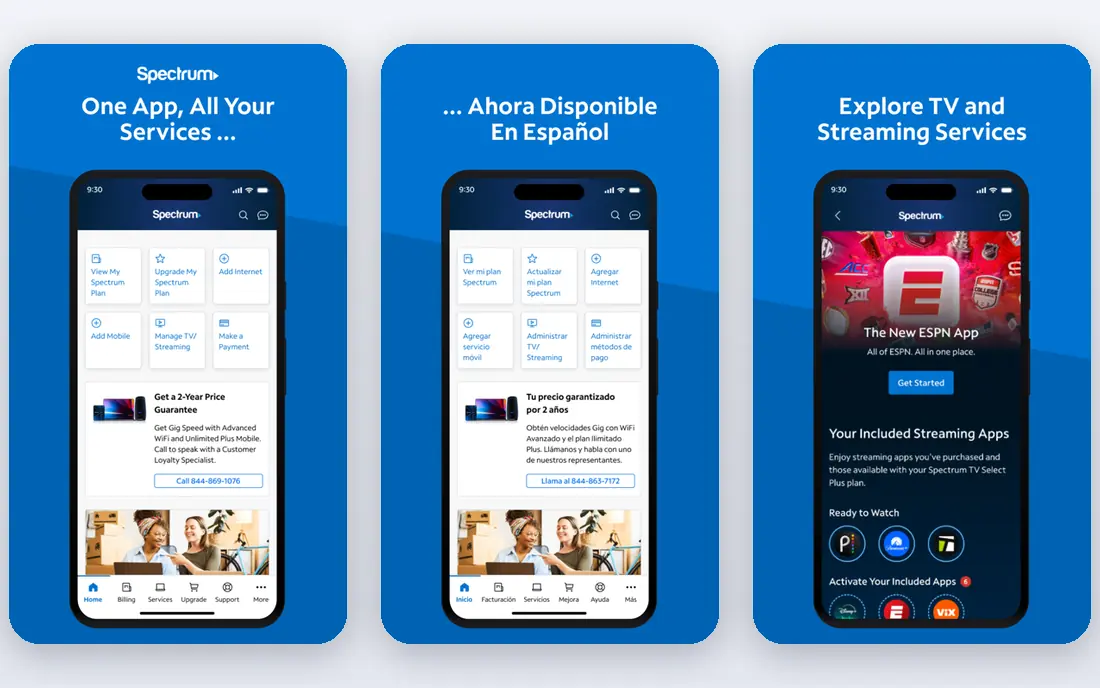
Spectrum covers a large cable footprint across many states, which makes it a common choice where fiber has not arrived. Internet plans carry no data cap, and many offers avoid an annual contract, which suits renters and movers. Speed tiers cover basic browsing through gigabit plans for large households. Upload speeds still lag fiber, and the price after a promo period can be higher than the headline figure. Check the standard rate for your address before you sign, not just the first-year price.
- Wide cable footprint
- No data cap on internet plans
- No annual contract in many offers
- Upload speeds lag fiber
- Post-promo pricing varies
- Equipment fees may apply
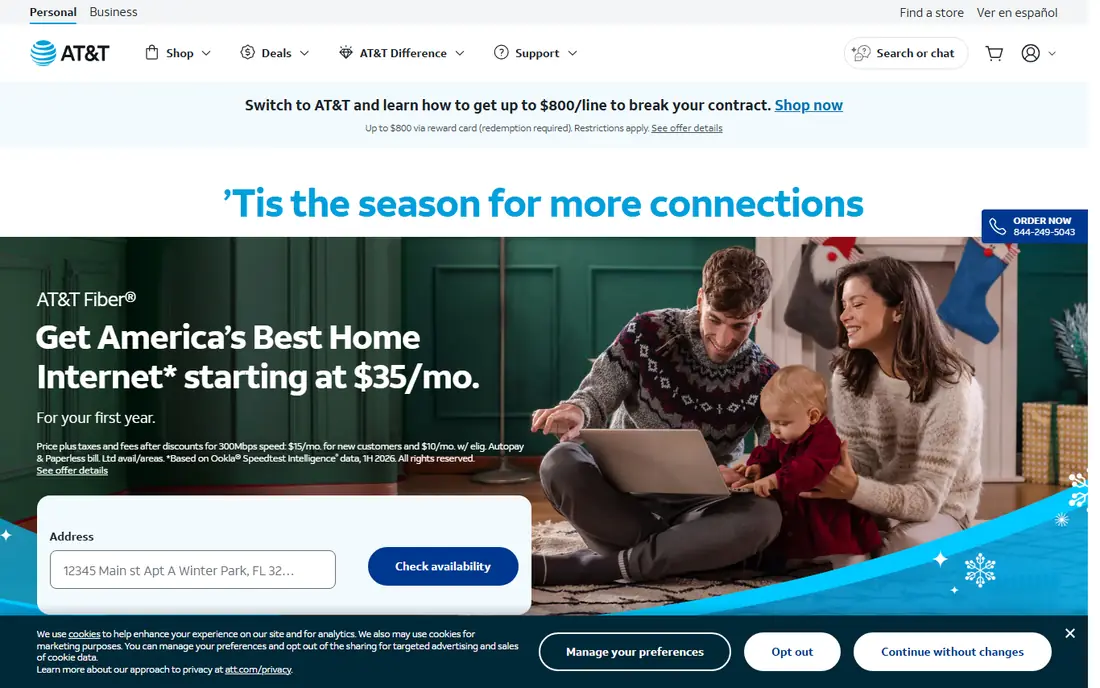
AT&T Fiber is a strong pick where its fiber network reaches your street. Upload and download speeds match, which helps video calls, cloud backups, and large uploads. Fiber plans carry no data cap, and equipment is included on fiber plans in the offers we checked. The catch is footprint, since many addresses only get slower AT&T internet rather than fiber. Enter your exact address on the provider site, since a nearby street with fiber does not mean your home has it.
- Symmetrical upload and download speeds
- No data cap on fiber
- Equipment included on fiber plans
- Fiber footprint is limited
- Slower AT&T DSL areas are a different product
Verizon Fios is a leading fiber option in the Northeast and Mid-Atlantic, with symmetrical speeds and a reputation for steady performance. Plan structure is simple, and bundles with Verizon mobile can lower the total bill. The main limit is geography, since Fios is not available in most of the country. If you live inside its footprint, Fios is often the best wired choice. If you live outside it, Verizon 5G Home Internet is a separate product with different speeds and availability.
- Symmetrical fiber speeds
- Strong reliability record
- Simple plan structure
- Limited footprint outside its regions
- Bundle pricing varies
Google Fiber appeals to households that want simple, fast fiber without a maze of fees. Gigabit plans offer symmetrical speeds, equipment is included, and there is no data cap in the offers we checked. Higher tiers reach multi-gigabit speeds for power users. The limit is availability, since Google Fiber serves a small set of cities and neighbourhoods. If it reaches your address, it is often the best value fiber plan. If not, it is not an option at any price.
- Symmetrical gigabit speeds
- Simple pricing with equipment included
- No data cap
- Very limited city footprint
- Higher tiers cost more
T-Mobile Home Internet uses the 5G network to deliver home broadband without a cable or fiber line. That makes it a good option for renters, homes with poor wired options, and households that want simple flat pricing with equipment included. Speeds vary with signal strength, tower load, and placement of the gateway in your home. Availability is checked by address, and some areas are full. Test speeds during the return window and place the gateway near a window for the best signal.
- No wired line needed
- Simple flat pricing
- Equipment included
- Speeds vary with signal and congestion
- Not available at every address
Frontier Fiber offers a low entry price for fiber in the areas it serves, which makes it attractive for budget households that still want symmetrical speeds. Fiber plans carry no data cap in the offers we checked, and equipment is often included. The footprint is regional, and some addresses only get older DSL service, which is far slower. As with all providers, check your exact address and confirm whether the offer is fiber or DSL before ordering.
- Low entry price for fiber
- Symmetrical speeds on fiber plans
- No data cap on fiber
- Footprint is regional
- Older DSL areas are a different, slower product
Optimum serves cable and fiber customers across parts of the South, Midwest, West, and Northeast. Its speed range covers basic plans through multi-gigabit fiber in areas where fiber is built out. Bundles with mobile and TV can lower the total bill. The footprint is regional, so many readers cannot get it at all, and post-promo pricing varies by plan and area. If Optimum serves your address, compare its fiber plans against cable rivals, since fiber upload speeds are a clear advantage.
- Mix of cable and fiber plans
- Wide speed range
- Bundle options
- Regional footprint
- Post-promo pricing and fees vary
Starlink is the option of last resort that actually works for many rural and remote homes. Low-orbit satellites deliver far lower latency than older geostationary satellite services, and the service works where no wired line exists. Monthly pricing is the highest on this list, hardware costs extra, and speeds vary with weather, obstructions, and network load. A clear view of the sky matters, so check obstructions before ordering. For a remote home with no other broadband, Starlink can be transformative. For a city home with fiber, it is not the right pick.
- Works where wired and 5G options are absent
- Low-orbit latency beats older satellite
- Portable options exist
- Highest monthly price here
- Hardware cost extra
- Speeds vary with weather and congestion
How we picked these
We compared provider pricing pages and public coverage for home internet services that power home Wi-Fi and that exist and work in October 2026. We kept a mix of fiber, cable, 5G, and satellite options across different regions. Where pricing varies by address, promo, or bundle, we used the published entry figure or wrote See website.
What to check before you buy
Check availability at your exact address first, since provider maps and city lists do not prove service at your home. Compare the standard rate after any promo, plus equipment fees, data caps, and contract terms. Ask about upload speeds, not just download speeds, if you work from home or back up large files. Place your router centrally, use wired connections for work devices where possible, and test speeds during any return window. Remember that Wi-Fi speeds inside your home depend on walls, distance, and device limits, so no provider can guarantee them.
Frequently asked questions
What is the best Wi-Fi service for a home?
It depends on your address. Fiber from AT&T, Verizon Fios, or Google Fiber is best where available, while Xfinity or Spectrum cable is often best where fiber is absent. T-Mobile or Starlink suit homes without good wired options.
Why do Wi-Fi speeds differ from advertised speeds?
Advertised speeds refer to the wired connection to your home, while Wi-Fi speeds depend on distance, walls, router placement, and device limits. Use a wired test to check your plan speed, then improve Wi-Fi placement and equipment.
Is 5G home internet as good as fiber?
No, in most cases. Fiber offers more consistent speeds and symmetrical uploads, while 5G speeds vary with signal and congestion. 5G home internet is a good option where fiber and good cable are absent.
Do I need to rent a router from my provider?
Not always. Many providers include equipment or let you use your own compatible router and modem. Check compatibility and fees, since a good router can improve Wi-Fi coverage in a larger home.
Can I get home internet without a contract?
Yes, many cable and 5G providers offer no-contract options, though promo pricing may still change after a set period. Read the standard rate and terms for your address before ordering.
Sources
See where you really rank - block by block
ProMapRanker scans Google Maps across a grid of your service area. Simple monthly plans from $19, white-label on every plan.
Start freeKeep reading
 worlds best local seo company
8 Worlds Best Local SEO Companies for Map Pack Growth in 2026
Compare the worlds best local seo company options for Google Business Profile work, citations, reviews, and multi-location rankings and reporting in 2026.
Read → world's best web hosting company
World's Best Web Hosting Company in 2026
Searching for the world's best web hosting company? We compared 10 hosts on price, renewal rates, speed, and support to help you choose well today in 2026.
Read → who's got the best nanny tax services
Who's Got the Best Nanny Tax Services in 2026
We answer who's got the best nanny tax services, comparing full filing, back taxes, software, and pricing so families can handle nanny taxes correctly.
Read →