 ProMapRanker
10 Best WEM Platforms With Analytics and Reporting for 2026


Large omnichannel contact centres that need forecasting, scheduling, quality, and analytics in one suite · Pricing starts at: See website
Key takeaways
- WEM means workforce engagement management, combining forecasting, scheduling, quality, coaching, and analytics for service teams.
- Strong analytics connect staffing data to quality and outcomes, rather than reporting schedule adherence in isolation.
- Suite platforms suit large omnichannel centres, while focused WEM suites can suit mid-size teams that need faster deployment.
- Reporting value depends on filters, scheduled delivery, and permission controls, so test those features with your own team structure.
Quick comparison
| Pick | Great for | Pricing starts at | Free tier | |
|---|---|---|---|---|
| NICE CXone | Large omnichannel contact centres that need forecasting, scheduling, quality, and analytics in one suite | See website | No | Visit |
 Genesys Cloud CX | Cloud contact centres that want native WEM inside a full contact centre platform | See website | No | Visit |
 Verint Workforce Engagement | Complex global centres that need deep forecasting, scheduling, and back-office coverage | See website | No | Visit |
 Calabrio ONE | Contact centres that want WFM, quality, and analytics in one approachable suite | See website | No | Visit |
 Playvox | Digital-first and back-office teams that need AI forecasting across channels | See website | No | Visit |
 Five9 | Omnichannel centres that want WEM with coaching, performance, and gamification | See website | No | Visit |
 Talkdesk | Mid-market centres that need WFM and AI automation with industry-specific options | See website | No | Visit |
 Aspect Workforce | Large centres that want dedicated, vendor-neutral workforce management depth | See website | No | Visit |
 Assembled | Support teams that want modern AI scheduling and forecasting for SaaS and digital work | See website | No | Visit |
 SuccessKPI | Operations teams that want WEM, analytics, and quality in one operational view | See website | No | Visit |
The best WEM platforms with analytics and reporting
NICE CXone
Great for: Large omnichannel contact centres that need forecasting, scheduling, quality, and analytics in one suite
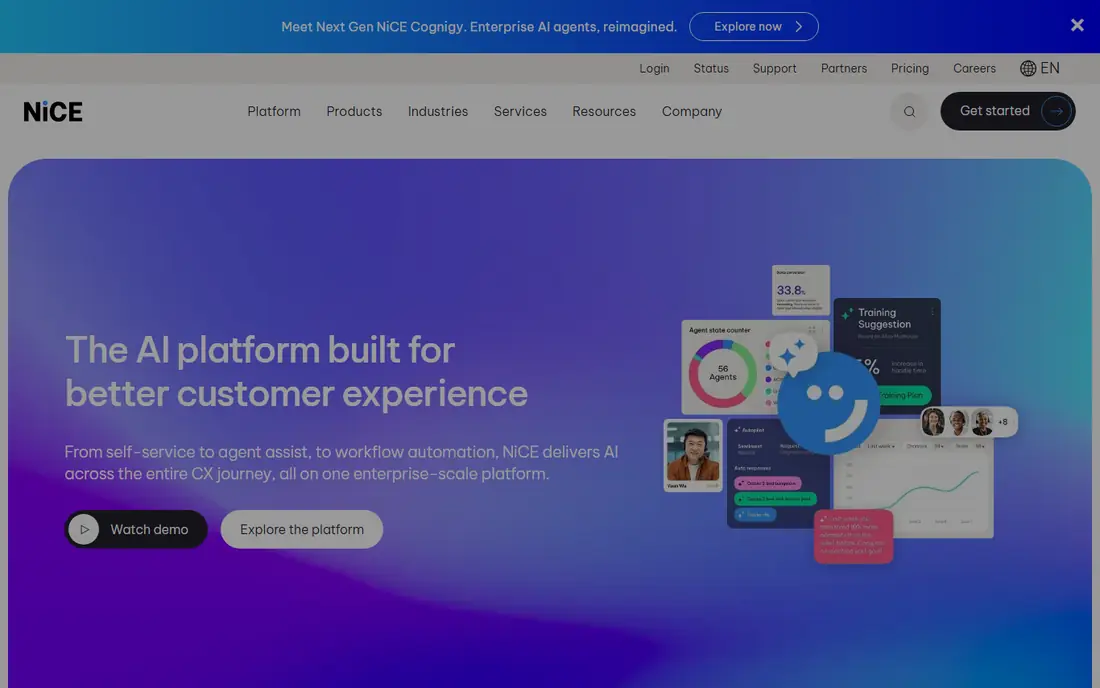
NICE CXone is often the benchmark for depth in this category. Its workforce engagement layer covers workforce management, quality management, performance management, and interaction analytics, all connected to omnichannel routing. That connection matters for reporting, because forecasts and schedules can reflect cross-channel demand instead of treating voice, chat, and email as separate worlds. Supervisors can drill into intervals, compare forecast to actual, and review quality alongside staffing patterns.
The cost of that depth is complexity. Pricing is tiered by suite, implementation usually needs planning, and supervisors need training to use the full reporting set well. Smaller centres may find that they pay for modules they rarely open. For large operations that want one governed platform for routing, staffing, and quality, however, the breadth is the point, and the analytics reward teams that invest in setup and adoption.
- Broad WEM coverage, interval-level insight, and analytics tied to routing and interaction data
- Enterprise pricing and implementation effort, with a learning curve for new supervisors
Genesys Cloud CX
Great for: Cloud contact centres that want native WEM inside a full contact centre platform
Genesys Cloud CX pairs contact centre routing with workforce engagement, so workforce decisions draw on the same interaction data that drives queues and channels. Forecasting, scheduling, adherence, and quality reports sit inside that shared system, which helps managers see why a service level dipped, rather than only seeing that it dipped. AI-assisted forecasting can also help teams adjust to changing demand patterns without rebuilding every schedule by hand.
The main limitation is scope. Genesys makes most sense when the centre already uses, or plans to use, Genesys for routing and digital channels. A team that only wants standalone WEM may find the platform larger than needed. For cloud-first centres that want routing and workforce planning to stay aligned, that shared foundation is a clear strength.
- Native WEM tied to routing, plus AI-assisted forecasting and scheduling tools
- Full value depends on adopting the wider Genesys platform, not WEM alone
Verint Workforce Engagement
Great for: Complex global centres that need deep forecasting, scheduling, and back-office coverage
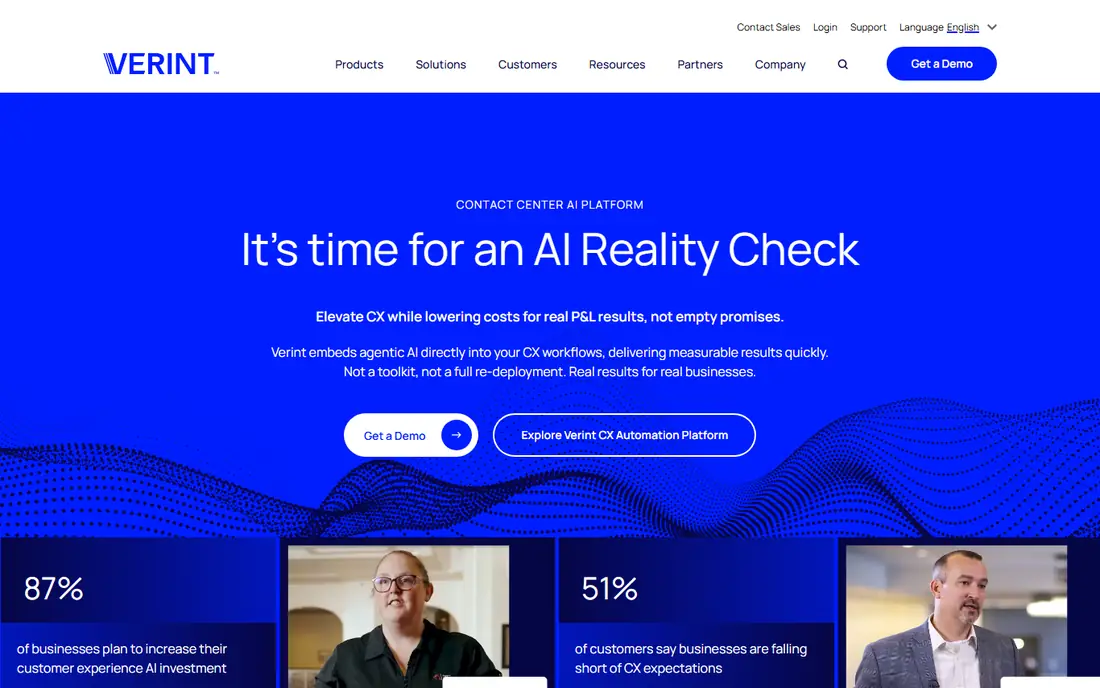
Verint has long served large and complex contact centres, and its workforce tools reflect that history. Forecasting and scheduling handle multi-skill, multi-channel, and back-office work, while reporting covers adherence, performance, and quality in detail. That depth helps global operations with varied shift patterns, language skills, and compliance needs, where a simple scheduler would miss important constraints.
The trade-off is effort. Verint rewards teams that invest in configuration, data hygiene, and supervisor training, and it can feel heavy for a small centre with simple schedules. Pricing is quote-based, so buyers should scope modules, users, and implementation separately. For large centres where forecasting accuracy directly affects service levels and labour cost, the depth often justifies that investment.
- Deep forecasting and scheduling, broad reporting, and strong back-office support
- Implementation and training time can be high, and pricing is quote-based
Calabrio ONE
Great for: Contact centres that want WFM, quality, and analytics in one approachable suite
Calabrio ONE brings workforce management, quality management, and interaction analytics together in a single suite. That combination helps supervisors move from a staffing question to a quality question without switching systems, for example by checking whether a dip in quality scores lines up with a staffing gap or a coaching gap. Recording, speech-to-text, and quality review tools support that link between what happened on a contact and how the team was staffed.
Calabrio is often positioned as a more approachable path than the largest enterprise suites, especially for mid-size and less complex centres. It is not without limits, and buyers should test reporting depth and implementation timelines against their own needs. For centres that prioritise WFM and quality together, and that want one vendor for both, Calabrio is a strong shortlist candidate.
- Unified suite, quality command centre, and analytics that link scheduling to interaction quality
- Some users report slower implementation and reporting limits compared with larger suites
Playvox
Great for: Digital-first and back-office teams that need AI forecasting across channels
Playvox focuses on workforce engagement for digital and back-office work as well as voice, which suits teams whose volume now spans chat, email, and ticket queues. AI forecasting helps planners model demand across those channels, while quality and coaching tools link review scores to agent development. Supervisors get a modern workspace for schedules, adherence, and performance, without the feel of a legacy planning system.
The platform is newer in this market than NICE, Genesys, or Verint, so very large legacy voice centres should check references for their specific scale and telephony setup. For digital-first support teams, growing SaaS companies, and back-office operations, Playvox offers a focused and current alternative. Its reporting strength lies in connecting forecasting, quality, and coaching in one workflow.
- AI forecasting, quality and coaching tools, and a modern interface for supervisors
- Less proven for very large legacy voice estates than the longest-established vendors
Five9
Great for: Omnichannel centres that want WEM with coaching, performance, and gamification
Five9 combines contact centre routing with workforce management, agent coaching, and performance tools. That mix helps managers link staffing to agent development, because coaching notes, quality scores, and gamification can sit near the schedule and performance data. For teams that struggle with agent engagement and retention, that link between recognition, coaching, and performance reporting can matter as much as forecast accuracy.
Buyers should confirm which WEM modules are included in their package, because depth varies by tier and configuration. Five9 also suits teams that already value its routing and AI features, since WEM then extends a known platform rather than adding a separate system. For omnichannel centres that want engagement alongside planning, it deserves a place on the shortlist.
- WFM and quality inside a known contact centre platform, plus engagement tools for agents
- Pricing is quote-based, and WEM depth varies by package and configuration
Talkdesk
Great for: Mid-market centres that need WFM and AI automation with industry-specific options
Talkdesk offers workforce management inside a cloud contact centre platform that also covers AI automation and industry-specific workflows. That structure helps mid-market teams that want planning, routing, and automation from one vendor, without assembling several point tools. Reporting can draw on routing and interaction data, which helps supervisors explain service trends in context.
The caution is the same as with other suites. Buyers who only need WEM should compare Talkdesk reporting, forecasting depth, and total cost against focused WEM vendors, rather than assuming suite parity. For mid-market centres that plan to use Talkdesk more broadly, the integrated path is convenient and keeps workforce data close to customer interaction data.
- Cloud contact centre with WFM, plus AI tools and industry-focused configurations
- WEM is part of a wider platform, so standalone reporting comparisons need care
Aspect Workforce
Great for: Large centres that want dedicated, vendor-neutral workforce management depth
Aspect Workforce focuses on the core workforce problem: forecast demand accurately, build workable schedules, and track adherence across a large centre. That dedicated focus appeals to centres that do not want workforce planning tied to a single routing vendor, or that run a mixed telephony estate. Reporting covers the staffing fundamentals in depth, including interval performance and adherence patterns that supervisors use every day.
The platform carries a more traditional enterprise feel than some cloud-native rivals, so buyers should check user experience, mobile access for agents, and integration effort with their current routing and HR systems. For large centres where forecasting and scheduling accuracy are the main buying criteria, Aspect remains a credible and specialised choice.
- Dedicated forecasting, scheduling, and adherence tools for large, complex centres
- Can feel less modern than cloud-native suites, and integration planning matters
Assembled
Great for: Support teams that want modern AI scheduling and forecasting for SaaS and digital work
Assembled is built for support teams that plan around tickets, chats, and emails as well as calls. Its forecasting uses historical patterns to project demand, and its scheduling tools help managers balance coverage, agent preferences, and service targets. Reporting is designed for support leaders who need to see staffing, volume, and performance together, without wading through legacy planning screens.
The platform fits SaaS and digital-first support organisations best. Very large voice centres with deep legacy requirements should test forecasting and integration fit carefully. For growing support teams that want a modern planning tool with clear analytics, Assembled offers a faster learning curve than many enterprise suites.
- Modern interface, AI-assisted forecasting, and clear reporting for support leaders
- Less suited to very large legacy voice centres with complex telephony needs
SuccessKPI
Great for: Operations teams that want WEM, analytics, and quality in one operational view
SuccessKPI positions itself as a cloud-native WEM provider that brings workforce management, analytics, quality management, and AI insight into one operational environment. That unified view helps operations leaders connect staffing decisions to quality and business outcomes, rather than reviewing each area in a separate report. The platform suits teams that want analytics as the centre of workforce planning, not as an afterthought.
Because SuccessKPI is less widely known than NICE or Genesys, buyers should ask for references in their sector and size, and test reporting on their own data during evaluation. For teams that value a single operational intelligence view and a cloud-native approach, it is a worthwhile addition to a shortlist that might otherwise include only the largest vendors.
- Unified analytics across WFM, quality, and operations, with AI-assisted insight
- Smaller brand presence than the largest suites, so reference checks matter
How we picked these
We defined WEM as workforce engagement management and required each platform to offer analytics and reporting alongside forecasting, scheduling, or quality tools. We compared official feature pages, pricing pages, product documentation, and public reviews, and we kept only platforms that are sold and supported in October 2026. We favoured platforms with interval reporting, team and channel filters, scheduled reports, and a link between staffing and quality data. Where pricing was quote-based, we wrote See website rather than presenting an unverified figure as fact.
How to choose a WEM platform with analytics that your team will actually use
Start with a reporting test, not a feature demo. Ask each vendor to build three reports from your structure: forecast versus actual by interval for one busy week, adherence by team and shift, and quality scores beside coaching activity. If a vendor cannot build those reports cleanly, its analytics will frustrate supervisors after purchase, no matter how polished the sales screens look.
Next, check data sources and permissions. Confirm which systems feed forecasting, such as routing, CRM, and HR data, and confirm who can see agent-level versus team-level reports. Good analytics need clean inputs and clear access rules, especially when quality scores and performance data are involved. Also confirm how reports are scheduled, exported, and shared, because supervisors need regular delivery, not only on-screen dashboards.
Finally, weigh implementation and adoption. A deep suite can deliver more insight, but only if supervisors learn it and agents trust the schedule. Ask for training time, implementation timelines, and reference customers of similar size. Choose the platform whose reporting your supervisors can explain without vendor help, because that is the reporting they will use every week.
Frequently asked questions
Sources
See where you really rank - block by block
ProMapRanker scans Google Maps across a grid of your service area. Simple monthly plans from $19, white-label on every plan.
Start freeKeep reading
 worlds best local seo company
8 Worlds Best Local SEO Companies for Map Pack Growth in 2026
Compare the worlds best local seo company options for Google Business Profile work, citations, reviews, and multi-location rankings and reporting in 2026.
Read → world's best web hosting company
World's Best Web Hosting Company in 2026
Searching for the world's best web hosting company? We compared 10 hosts on price, renewal rates, speed, and support to help you choose well today in 2026.
Read → who's got the best nanny tax services
Who's Got the Best Nanny Tax Services in 2026
We answer who's got the best nanny tax services, comparing full filing, back taxes, software, and pricing so families can handle nanny taxes correctly.
Read →