 ProMapRanker
Best Web3 Blockchain Platforms in 2026

Key takeaways
- Alchemy and Infura are the safest default picks for managed RPC access, with free tiers and broad chain support for production apps.
- Chainstack and Ankr suit teams that want flat, request-based pricing or wide multichain coverage without weighted compute units.
- Moralis and Thirdweb suit teams that need data APIs, wallet tools, or full-stack app building rather than raw node access alone.
- This article covers developer platforms, not investment advice, and crypto markets carry risk, so never build a budget on promised returns.
Quick comparison
| Pick | Great for | Pricing starts at | Free tier | |
|---|---|---|---|---|
 Alchemy | Managed RPC plus enhanced APIs | Free | Yes | Visit |
 Infura | Reliable Ethereum and EVM RPC | Free | Yes | Visit |
 Moralis | Wallet, token, and NFT data APIs | $149 per month | No | Visit |
 Thirdweb | Full-stack Web3 app building | $99 per month | No | Visit |
 Chainstack | Flat-rate multichain nodes | Free | Yes | Visit |
 Ankr | Multichain RPC at scale | Free | Yes | Visit |
 Blockdaemon | Institutional node infrastructure | See website | No | Visit |
 Tenderly | Contract testing and monitoring | See website | Free trial | Visit |
 OpenZeppelin | Secure smart contract libraries | Free | Yes | Visit |
The best Web3 blockchain platforms
A Web3 blockchain platform, in this article, means the infrastructure a developer uses to build an app: node access, data APIs, wallets, contract tools, and monitoring. It does not mean a token to buy. The platforms below differ mainly in how they price requests, which chains they support, and how much app-building help they add on top of raw node access.
Please note: this is general information only, not financial advice. Crypto assets are volatile, returns are never guaranteed, and smart contract work carries security risk. Use audited libraries, test on testnets, and get a professional review before handling real user funds.
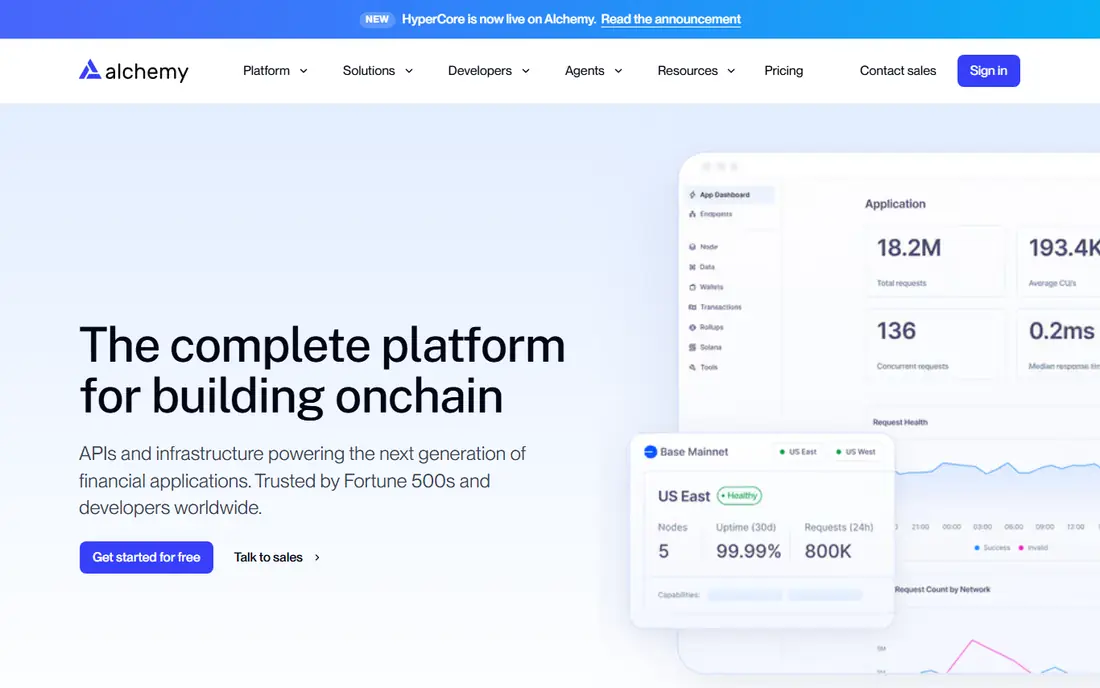
Alchemy runs managed nodes across many chains, with an application layer on top that turns raw chain data into usable APIs. Wallets, DeFi dashboards, and NFT apps use its token balances, transfers, and webhook features to avoid building their own indexers. The free tier offers 30 million compute units per month, and pay-as-you-go pricing starts at $49 per month in published comparisons.
The main watch point is billing. Compute units are weighted by method, so a heavy log scan costs far more than a simple block number call. Budget with a realistic method mix, and monitor usage in the dashboard before a traffic spike turns into a surprise bill.
- Free tier with 30 million compute units per month
- Enhanced token and NFT APIs
- Dashboards and webhooks for app events
- Compute-unit pricing can be hard to forecast
- Heavier methods cost more units
- Non-EVM chain support is narrower
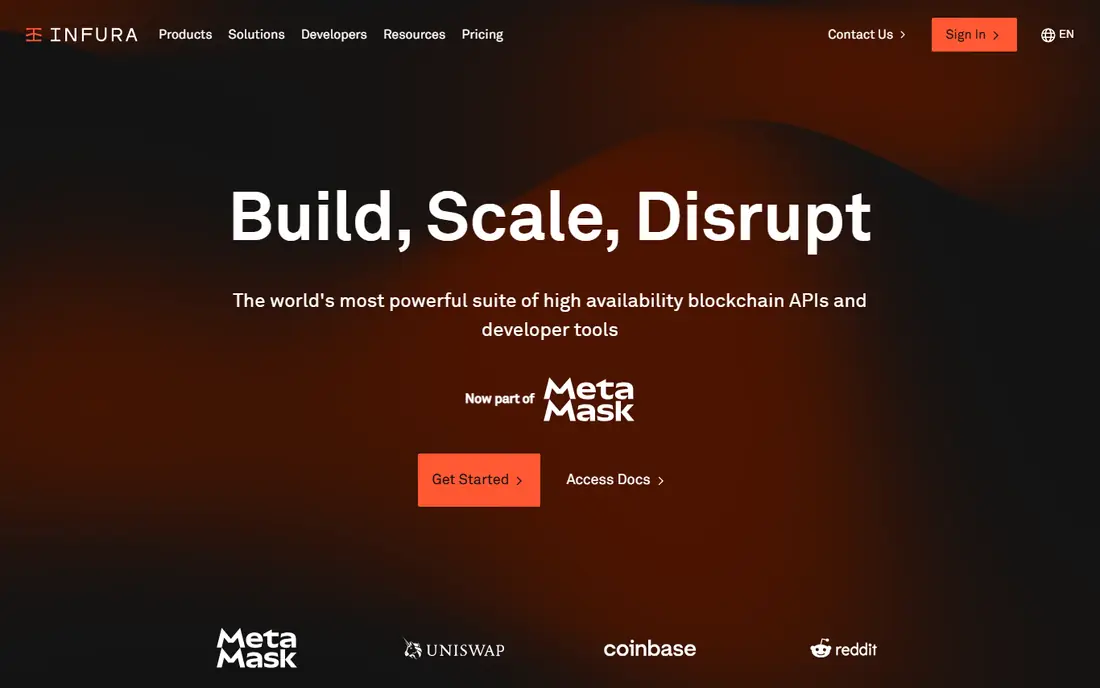
Infura, from Consensys, provides managed RPC and node infrastructure for Ethereum and other EVM networks, including Polygon, Arbitrum, and Optimism. It is widely used by wallets and DeFi apps that need stable, production-grade connectivity without running their own nodes. The free Core plan offers 3 million credits per day, and paid Developer plans start at $50 per month in published pricing summaries.
Daily credits suit steady traffic but need care for spikes, because hitting the ceiling can block requests until reset. For an EVM-only app that values stability over extra APIs, Infura is a strong, simple choice.
- Long track record since 2016
- Free Core plan with daily credits
- Broad EVM network support
- EVM-focused, so non-EVM apps need another provider
- Daily credit reset needs planning for spiky traffic
- Advanced tools are thinner than Alchemy
Moralis is built for apps that need clean blockchain data, not just node access. Its APIs return wallet balances, token holdings, NFT ownership, prices, and DeFi positions in structured form, which saves a team from parsing raw logs. Streams can push real-time events to an app when a wallet or contract changes.
Published pricing puts Starter at $149 per month on annual billing, with Pro higher. That makes Moralis a better fit for data-rich apps, such as wallets and analytics dashboards, than for a simple app that only needs an RPC endpoint. Check throughput limits against your expected traffic before committing.
- Structured wallet, token, NFT, and price APIs
- Streams for real-time events
- Multichain coverage including Solana
- Paid plans start higher than raw RPC providers
- Pricing rises with throughput
- RPC is one part of a larger data product
Thirdweb aims to cover the whole app stack: deploy contracts from templates, connect wallets, handle gas abstraction, and call APIs from one dashboard. That breadth helps small teams ship a Web3 app without assembling five vendors. It lists support for a very large number of chains, which suits multichain apps.
The trade-off is dependence on one platform and a higher entry price than a bare RPC provider. Teams that want full control over contracts and infrastructure may prefer OpenZeppelin plus Alchemy or Infura. Teams that want speed to a working app will find Thirdweb hard to beat.
- SDKs, contract templates, and dashboards in one place
- Wallet and account abstraction tools
- RPC and APIs included
- Growth pricing starts at $99 per month in published comparisons
- Platform lock-in is a real consideration
- Heavy usage costs add up
Chainstack offers managed nodes across more than 70 protocols, including Ethereum, Solana, Bitcoin, BNB Chain, Polygon, Arbitrum, Base, and Optimism. Its pricing counts each API call as one request unit, which makes monthly costs easier to forecast than weighted compute-unit models. The free Developer plan offers 3 million requests per month, and Growth starts at $49 per month.
The free tier is best for prototypes and small apps, because archive, debug, and trace features start on higher plans. For a multichain app that values predictable billing, Chainstack is one of the clearest options on this list.
- Free plan with 3 million request units per month
- Flat request pricing, not weighted units
- Support for 70 plus protocols
- Free tier excludes some archive and debug features
- Higher tiers needed for high throughput
- Dedicated nodes cost extra
Ankr provides RPC access across a large number of blockchain networks, with public endpoints for quick testing and premium plans for production apps. Its API credits and pay-as-you-go options suit apps whose traffic varies month to month. Token, NFT, and query APIs sit alongside core RPC for teams that need more than node access.
Ankr is less of a full-stack app builder than Thirdweb, and its pricing needs a careful read, because different products bill differently. For a multichain app that mainly needs fast, distributed RPC, it is a solid alternative to Alchemy and Infura.
- Broad multichain RPC coverage
- Public endpoints for testing
- Premium and enterprise plans for production
- Pricing varies by usage model
- Advanced APIs are separate products
- Support depth depends on plan
Blockdaemon provides institutional-grade node infrastructure, staking, and blockchain data APIs for enterprises and financial institutions. It supports Ethereum, Bitcoin, Solana, Avalanche, Polygon, and many other networks, with dedicated nodes and managed infrastructure for production workloads. Security, uptime, and support are central to its pitch.
Pricing is custom and quote-based, so small developers should start with a free-tier provider and move to Blockdaemon only when scale, compliance, or staking needs justify it. For a large team handling significant transaction volume, that enterprise focus is the point.
- Managed nodes across many networks
- Staking and wallet APIs
- Enterprise security and support options
- Pricing is quote-based
- Aimed at institutions and larger teams
- Overkill for a small prototype
Tenderly fills a gap that raw RPC providers leave open: what happens before and after a transaction runs. Developers can simulate transactions, debug failed calls, test on virtual testnets, and set alerts for contract events. That workflow catches bugs that only appear with real state, rather than with mock data.
Tenderly is a companion tool, not a standalone infrastructure choice. Pair it with Alchemy, Infura, or Chainstack for node access, and use Tenderly for testing and monitoring. Pricing is arranged through the vendor, with trial access available for evaluation.
- Transaction simulation and debugging
- Virtual testnets
- Alerts and monitoring for live contracts
- Pricing is not fully published for all tiers
- Not a general RPC replacement
- Best paired with a node provider
OpenZeppelin is the security-first choice for teams writing their own contracts. Its open-source libraries cover tokens, access control, proxies, and other common patterns, and they are widely reviewed by the developer community. That shared, tested code reduces the risk of writing a custom token contract from scratch.
OpenZeppelin does not replace node infrastructure, so a team still needs an RPC provider for a live app. Its paid Defender tools add operations features, but the core libraries are free and open source. For any team handling user funds, starting from audited libraries and getting an independent audit is a baseline, not an optional extra.
- Open-source, audited contract libraries
- Widely used token and access control standards
- Defender tools for operations
- Requires developer skill to use well
- Not a hosted RPC provider
- Paid services are separate from the libraries
How we picked these
We compared official product pages, pricing pages, and current provider comparisons for Web3 infrastructure live in October 2026. We favored platforms with working production infrastructure, clear chain support, and pricing we could state without guessing. Where a vendor does not publish a price, we wrote See website rather than estimating a figure. QuickNode was left out as a headline pick because its entry tier is a one-month trial, not a permanent free tier, which matters for long-term planning.
How to choose a Web3 platform without overpaying
Start from the app, not the chain list. A wallet needs data APIs, a DeFi app needs reliable RPC and event streams, and a game needs fast reads and wallet onboarding. A provider with 100 chains is no help if its pricing model punishes your heaviest method.
Test with real traffic patterns
Run a testnet build, then replay a realistic traffic mix, including heavy log scans and spikes, before choosing a plan. Compare the bill across providers on the same workload, because weighted units, daily credits, and flat requests produce very different totals. Set usage alerts on day one.
Plan for security and failure
Use more than one RPC provider for a production app, so an outage at one vendor does not take your app down. Keep private keys out of front-end code, use audited contract libraries, and test upgrades on a testnet. A fallback endpoint is cheap insurance for a live product.
Frequently asked questions
What is the best Web3 blockchain platform for beginners?
Alchemy and Infura are the easiest starts, because both offer free tiers, clear documentation, and stable RPC access. Add OpenZeppelin libraries when you write contracts, and use Tenderly to test transactions before mainnet. Start on a testnet, where mistakes cost nothing.
Is Web3 development a good investment?
That question mixes two different things: building apps and buying crypto assets. Building skills and shipping an app can be valuable regardless of token prices, while buying tokens carries market risk and can lose value. This article is general information only, not financial advice, and no platform can guarantee returns.
Do I need to run my own node?
Most apps do not need to run their own node at first. Managed providers handle uptime, scaling, and updates, which lets a small team focus on the app. Larger teams may run dedicated nodes for control, latency, or compliance, often alongside a managed provider as a fallback.
What is the difference between RPC access and data APIs?
RPC access lets an app talk directly to a blockchain node, reading blocks and sending transactions. Data APIs return structured results, such as token balances or NFT ownership, without parsing raw logs. Many apps use both: RPC for transactions and data APIs for screens and dashboards.
How much does Web3 infrastructure cost?
Free tiers cover prototypes and small apps on several platforms on this list. Paid plans start around $49 to $50 per month for Chainstack Growth and Infura Developer, with Moralis and Thirdweb higher. Enterprise and high-throughput plans are quote-based, so test with a realistic workload before signing.
Which chains should I support first?
Support the chains where your users already hold wallets and assets, rather than every chain a provider lists. Ethereum and its rollups suit many DeFi and NFT apps, while Solana suits apps that need low fees and fast confirmation. Adding chains later is easier than supporting many chains poorly at launch.
Sources
See where you really rank - block by block
ProMapRanker scans Google Maps across a grid of your service area. Simple monthly plans from $19, white-label on every plan.
Start freeKeep reading
 worlds best local seo company
8 Worlds Best Local SEO Companies for Map Pack Growth in 2026
Compare the worlds best local seo company options for Google Business Profile work, citations, reviews, and multi-location rankings and reporting in 2026.
Read → world's best web hosting company
World's Best Web Hosting Company in 2026
Searching for the world's best web hosting company? We compared 10 hosts on price, renewal rates, speed, and support to help you choose well today in 2026.
Read → who's got the best nanny tax services
Who's Got the Best Nanny Tax Services in 2026
We answer who's got the best nanny tax services, comparing full filing, back taxes, software, and pricing so families can handle nanny taxes correctly.
Read →