 ProMapRanker
Best Weather Tracking Tools for Farmers in 2026


Farm-focused forecasts and alerts · Pricing starts at: $16.99 per month
Key takeaways
- DTN Ag Weather Tools is the most farm-focused app in this list, with field-level forecasts and alerts built for planting, spraying, and harvest decisions.
- aWhere and Meteomatics suit larger operations and advisers that need agronomic models or weather data feeds, not just a daily forecast.
- On-farm stations paired with Davis WeatherLink give you measured field conditions, which can differ sharply from the nearest town forecast.
- Free consumer weather apps help with a quick check, but they rarely cover soil, spray windows, or field-level rainfall the way farm tools do.
Quick comparison
| Pick | Great for | Pricing starts at | Free tier | |
|---|---|---|---|---|
| DTN Ag Weather Tools | Farm-focused forecasts and alerts | $16.99 per month | Free trial | Visit |
 aWhere | Agronomic weather intelligence | $50 per month | Free trial | Visit |
 Meteomatics | Weather data feeds and APIs | See website | Free trial | Visit |
 Davis WeatherLink | On-farm station data | See website | No | Visit |
 Tomorrow.io | Hyperlocal forecasts and alerts | See website | Free trial | Visit |
 Windy | Detailed maps and wind data | See website | Yes | Visit |
 AccuWeather | Everyday forecasts with farm use | See website | Yes | Visit |
 Climate FieldView | Field data plus weather context | See website | Free trial | Visit |
 Xweather | Weather API for farm platforms | See website | Free trial | Visit |
The best weather tracking tools for farmers
Farm weather decisions depend on more than a high temperature. Planting, spraying, irrigation, and harvest all hinge on rainfall timing, wind, humidity, soil conditions, and frost risk at a specific field. The tools below range from farm apps to data feeds and on-farm stations.
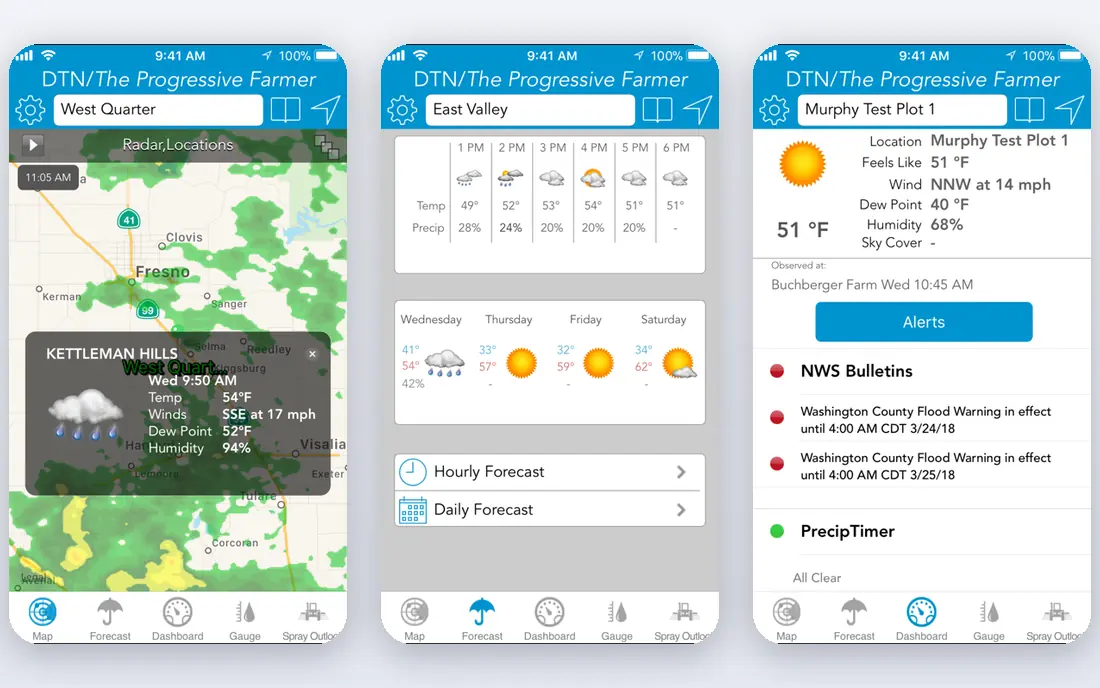
DTN Ag Weather Tools is built for producers, not general users. It monitors multiple locations, sends alerts for the fields you work, and pairs forecasts with agriculture weather news and a daily market weather outlook from DTN meteorologists. That farm framing helps when a forecast must guide a spray window or a harvest start, not just a weekend plan.
Pricing varies by platform and term, with a monthly option around $16.99 and a yearly option around $169.99 in app listings, plus a 30-day free trial in some listings. Check the current app store terms before buying, since trial and renewal rules differ. For a producer who checks weather daily during the season, DTN is the most directly useful app in this list.
- Farm-specific forecasts and alerts
- Multiple location monitoring
- Daily market weather outlook from DTN meteorologists
- App pricing differs by platform and term
- Best value needs a yearly subscription
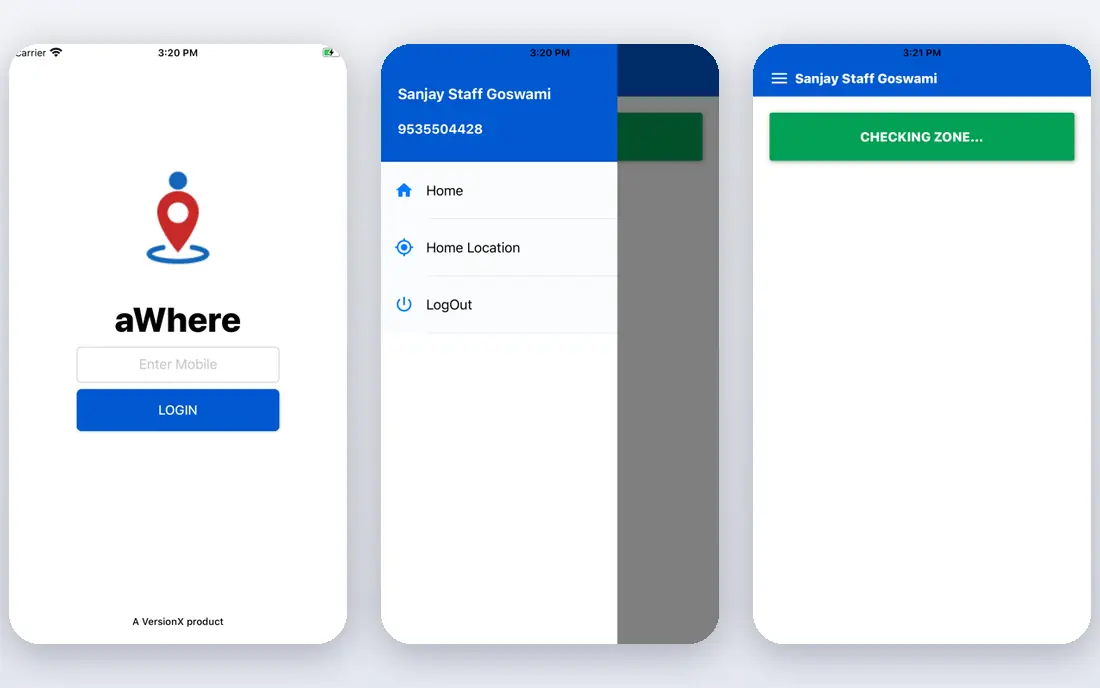
aWhere combines weather data with agronomic models to help farmers, crop consultants, and retailers make decisions. Its scientists and commodity professionals track localized and aggregate agricultural risk, and its data can arrive as reports or as a daily stream through an API. That makes it useful for advisers who serve many farms, not just one field.
The price and setup reflect that audience. At around $50 per month in third-party listings, with a free trial, it costs more than a consumer app and needs more setup to get value. A single small farm may find DTN simpler. An adviser, cooperative, or larger operation that needs consistent agronomic data across many locations will get more from aWhere.
- Agronomic models built for agriculture
- Global weather and crop data
- API delivery for advisers and platforms
- Priced for businesses and advisers, not casual users
- Setup needs more work than a phone app

Meteomatics is a weather data provider rather than a simple farm app. It offers high-resolution forecasts, historical data, and APIs that farm platforms, advisers, and larger operations can build into their own tools. That flexibility suits teams that already have software and need reliable weather inputs for irrigation, disease models, or logistics.
Business pricing is calculated by configuration, so small users should request a quote and check the free tier terms before planning around it. You will also need someone who can work with an API to turn raw data into field decisions. For a farm platform or a large operation with developer help, Meteomatics is a strong data source.
- High-resolution weather data
- Broad API coverage
- Serves agriculture, energy, and logistics users
- Quote-based business pricing
- Needs developer help to use well
Davis WeatherLink pairs Davis Instruments weather stations with an app and web platform, so you see measured conditions from your own farm rather than a forecast for the nearest town. Rainfall, wind, temperature, and humidity at the field can differ enough from a town forecast to change a spray or irrigation decision, and historical station data helps you compare seasons.
The catch is hardware. Station and sensor costs are separate from any WeatherLink subscription, and installation and maintenance are your job. It also works best when paired with a forecast tool, since measured data tells you what happened, not what will happen. For farms that need field truth, Davis is a proven choice.
- Measured data from your own farm
- Station and sensor options
- App and web access to live conditions
- Hardware cost is separate
- Setup and maintenance fall on the farm
Tomorrow.io focuses on hyperlocal, minute-by-minute forecasts and alerts, which help with short-term decisions such as whether rain will hit a field in the next hour. Its platform and API options suit operations that want alerts in their own systems, and its maps make it easy to see rain movement across a region.
It is not a farm agronomic platform in the same way as DTN or aWhere, so soil and crop models are thinner. Pricing also varies by plan and use, so check the current terms for your volume. Use Tomorrow.io for sharp short-term timing, and pair it with a farm tool for season-long planning.
- Minute-by-minute hyperlocal forecasts
- Alerts for rain and severe weather
- API and platform options
- Farm-specific agronomic features are thinner than DTN or aWhere
- Business pricing varies
Windy is a favorite for wind and rain maps, and farmers use it to check spray windows, storm movement, and wind direction across a region. It offers several forecast models on the same map, which helps you compare model agreement before a critical job. Core maps are free, which makes it an easy second opinion alongside a paid farm tool.
The interface is dense, and new users may need time to learn which layers matter for their work. Farm-specific alerts, soil data, and agronomic models are limited compared with DTN or aWhere. Use Windy as a visual check for wind and rain timing, not as your only farm weather system.
- Detailed wind, rain, and temperature maps
- Many forecast models
- Free access to core maps
- Interface is dense for new users
- Farm-specific alerts are limited
AccuWeather is the familiar choice for a quick daily forecast, and many farmers already check it on a phone or website. Hourly forecasts, severe weather alerts, and broad coverage make it useful for a first check before work, especially when you need a simple answer fast.
It is a general weather service, not a farm platform, so field-level soil, spray, and agronomic data are limited. Business and API features sit in separate products with their own pricing. Use AccuWeather for everyday checks and alerts, and keep a farm tool for decisions that hinge on field conditions.
- Familiar daily and hourly forecasts
- Severe weather alerts
- Broad US coverage
- Farm-specific field data is limited
- Business features need a separate product
Climate FieldView, from Bayer, is a field data platform that puts weather in context with planting, application, and harvest data. A farmer can see field maps, track operations, and check weather alongside the work already done in a field, which helps when comparing seasons or explaining a yield result. Equipment links reduce manual data entry for many operations.
Weather alone is not the reason to buy FieldView, since it is a larger platform with its own pricing and learning curve. Farmers who already use it for field data will find the weather context useful. Farmers who only need a forecast should pick a simpler, cheaper app from this list.
- Field maps and planting data in one platform
- Weather context for field decisions
- Equipment data links
- Weather is part of a larger platform, not a standalone forecast app
- Pricing varies by plan
Xweather, from Vaisala, provides weather data through an API for platforms that serve farmers, advisers, and logistics teams. It suits a farm software company or a large operation that wants to embed forecasts, observations, and alerts into its own dashboard, rather than asking staff to open another app.
It is not a ready-made farm app for most individual farmers, since using an API needs developer work. Pricing and trial terms also vary by use. For a platform builder or a large operation with technical staff, Xweather is a solid data source. For a single farm, a farm app such as DTN will be simpler.
- Weather API for developers and platforms
- Global coverage
- Data for agriculture use cases
- Needs developer help
- Not a ready-made farm app for most users
How we picked these
We compared official product pages, app listings, and public comparisons for tools that serve farmers or farm advisers. We favored tools with farm-specific forecasts, field-level data, alerts, or data feeds that farm platforms can use, and we marked any price we could not firmly verify as See website. We excluded general weather apps with no farm-relevant depth, except where they serve as a useful second check.
What to check before you buy
Start with the decision you make most often. If spraying is the critical job, wind, humidity, and rain timing matter most. If irrigation matters most, soil moisture, rainfall totals, and evapotranspiration data matter more. If harvest timing matters most, frost, rain windows, and field access matter most. Match the tool to that decision, not to the longest feature list.
Check location accuracy next. A forecast for the nearest town can miss field rainfall by a wide margin, so test a tool against your own rain gauge or station for a few weeks. Confirm alert options, offline access, and how many locations or fields a plan covers. Finally, keep a simple log of forecast versus actual conditions, so you learn which tool earns trust for your fields.
A simple buying checklist
- Name your top three weather decisions for the season.
- Test forecast accuracy against your own gauge or station.
- Check field-level coverage, alert options, and location limits.
- Confirm whether soil, spray, or agronomic data is included.
- Pair a forecast tool with measured on-farm data when possible.
Frequently asked questions
Can a phone weather app replace a farm weather tool?
For a quick daily check, yes, but farm tools add field-level forecasts, spray windows, soil context, and alerts that general apps often lack. Use a general app for a first look and a farm tool for work decisions.
Do I need an on-farm weather station?
Not always, but a station gives measured field conditions that a town forecast cannot. It helps most when rainfall varies across your fields or when spray and irrigation timing hinge on local wind and humidity.
How accurate are farm forecasts?
Accuracy varies by location, lead time, and weather type. Short-term rain timing is often more reliable than a seven-day rainfall total, so compare models, check updates before critical jobs, and log forecast versus actual results.
What is a spray window?
A spray window is a period when wind, temperature, humidity, and rain risk allow safe and effective application. Farm tools that show wind, humidity, and rain timing together make it easier to find and protect that window.
Should I use more than one weather tool?
Many farmers do. A farm app for daily decisions, a map tool such as Windy for storm and wind checks, and an on-farm station for measured data give a fuller picture than any single source.
Sources
See where you really rank - block by block
ProMapRanker scans Google Maps across a grid of your service area. Simple monthly plans from $19, white-label on every plan.
Start freeKeep reading
 zoho inventory alternatives
6 Alternatives to Zoho Inventory, Compared on Price and Fit
Zoho Inventory alternatives: 6 tools compared on price, free plans and fit. Katana leads the list for manufacturers. Fit and flaws are laid out for each entry.
Read → zoho crm alternatives
Best Zoho CRM Alternatives (2026)
Need Zoho CRM alternatives? We compare 7 tools on cost, free access and who each suits. Every pick gets a straight assessment. Built for quick decisions.
Read → zelle alternatives
Best Zelle Alternatives in 2026
Compare the best Zelle alternatives for sending money to friends, paying sellers and moving funds abroad, with honest notes on fees, speed and safety in 2026.
Read →