 ProMapRanker
Best Way to Manage Company Credit Cards in 2026

Key takeaways
- The best way to manage company credit cards is to set limits and rules before cards are issued, not to chase receipts after spending happens.
- Card first platforms such as Ramp and Brex give you free software funded by card spend, while card neutral tools let you keep your existing bank cards.
- Virtual cards for each vendor or project, real time alerts, and automatic receipt capture cut most of the month end work.
- Approval flows matter more than dashboards. Test a purchase that breaks a rule, a receipt that goes missing, and a card that needs freezing.
- Finance still owns the policy. A platform enforces your rules, but it does not set your spending limits or your accounting categories for you.
Quick comparison
| Pick | Great for | Pricing starts at | Free tier | |
|---|---|---|---|---|
 Ramp | Automation first spend management | Free | Yes | Visit |
 Brex | Startups wanting cards and banking together | Free | Yes | Visit |
 BILL Spend & Expense | Free cards with built in budgets | Free | Yes | Visit |
 Airbase | Procurement led mid market control | See website | No | Visit |
 Navan | Travel and card spend in one place | Free | Yes | Visit |
 Mercury | Banking first startups | Free | Yes | Visit |
 Rho | Banking, cards, and AP in one platform | Free | Yes | Visit |
 Mesh Payments | Mid market card control and travel | See website | No | Visit |
The best ways to manage company credit cards
Managing company cards well is less about the card itself and more about the system around it. We compared platforms on card issuance, spending limits, receipt capture, approvals, accounting sync, and price, and we favoured tools that stop bad spend before it happens rather than reporting it later.
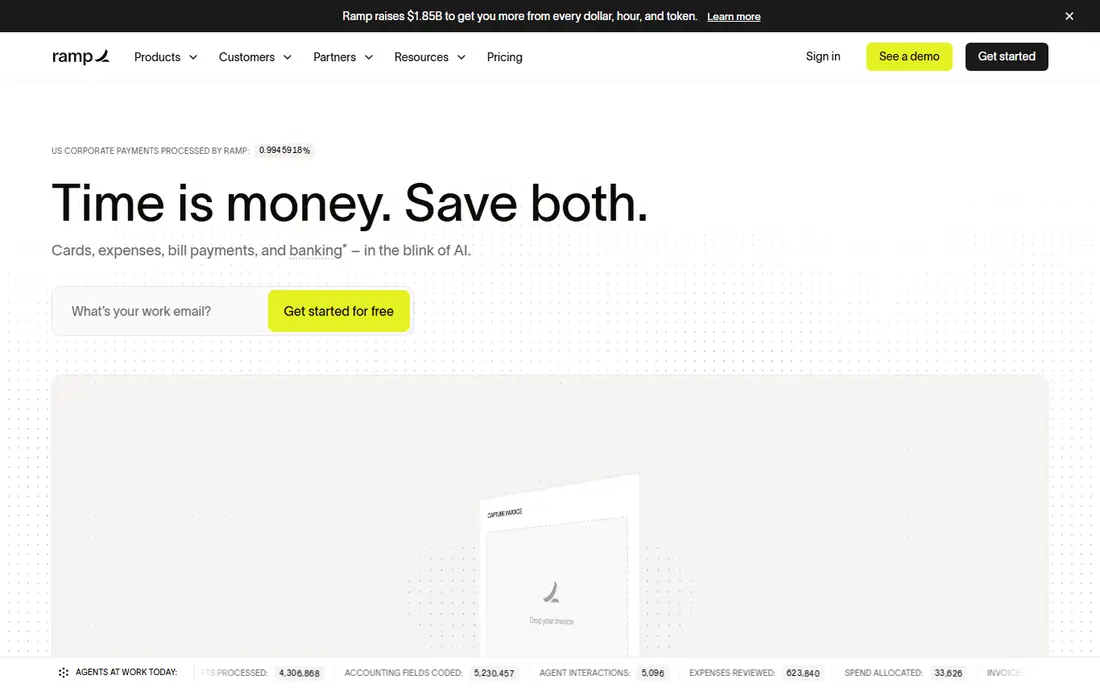
Ramp is our pick for most companies that want card management without a software bill. The core platform is free, and it issues virtual and physical cards with limits by employee, vendor, or category. Receipts are captured and matched automatically, and approved spend syncs to accounting tools, which removes much of the month end scramble.
The catch is the card itself. Ramp works best when you switch to Ramp cards, and advanced controls sit on the Plus tier at 15 dollars per user per month. If your company is happy to move its card programme, Ramp gives you the strongest free starting point. If you must keep your current bank cards, look at a card neutral tool instead.
- Free core platform with corporate cards
- Virtual and physical cards with limits
- Automatic receipt matching and accounting sync
- Paid Plus tier adds cost for advanced controls
- You must qualify for the Ramp card

Brex suits funded startups and growing companies that want cards, banking, and spend controls from one provider. The Essentials tier is free, and it includes corporate cards, expense capture, and approval flows. Premium adds deeper controls, travel perks, and higher limits for teams that need them.
The honest drawback is that the free tier has limits, and the full control set needs the paid tier. Brex also underwrites based on company finances, so very early companies may face lower limits at first. For a startup that wants one financial home for cards and cash, Brex is a strong, well designed choice.
- Free Essentials tier
- Cards plus banking and bill pay
- Strong travel rewards on some plans
- Premium tier costs 12 dollars per user per month
- Eligibility and credit checks apply
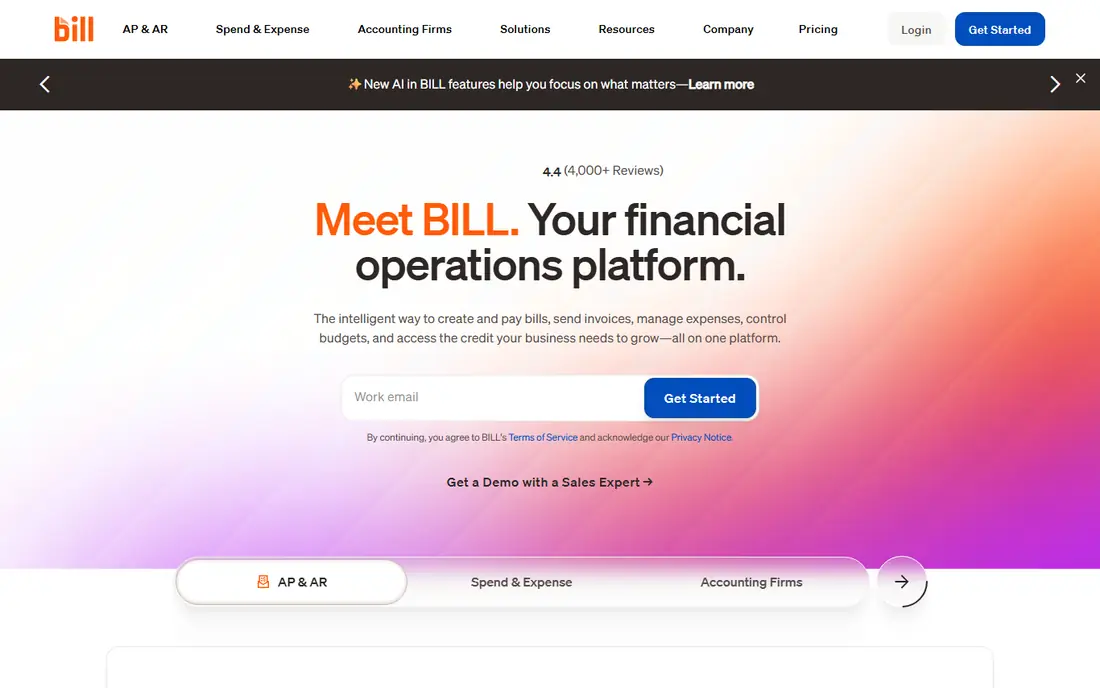
BILL Spend & Expense, formerly Divvy, is a good fit for small and mid size teams that already think in budgets. Managers set a budget for each team or cardholder, cards enforce it at the point of spend, and receipts and coding flow into the accounting system. The core card product is free, which makes it easy to trial without a budget fight.
The limit is scope. BILL accounts payable and receivable are separate products with their own pricing, so the free card tool is not a full finance suite on its own. For a team that wants simple, budget led card control and already uses BILL or an accountant who does, this is a practical pick.
- Free card product with budgets and approvals
- Works well for accountant led teams
- Bill pay available in the wider BILL suite
- Advanced BILL accounts payable features cost extra
- Card programme requires approval
Airbase, now part of Paylocity, suits mid market finance teams that want procurement control, not just card control. Staff raise a purchase request, it routes for approval, and only then is a virtual card issued for that exact amount and vendor. That workflow stops off policy spend before money moves, which is a step beyond simple limits.
The drawback is effort and price. Airbase prices by quote, and setup takes longer than issuing cards on Ramp or Brex. It is also best for teams that already run a formal procurement process. If your company approves spend by email today, Airbase will feel like a big change, but it is the right change for a growing mid market firm.
- Strong purchase requests and approvals
- Cards, bill pay, and expenses in one workflow
- Good accounting integrations
- Quote only pricing
- Implementation is heavier than a card only tool
Navan is the pick when travel is a large share of card spend. Staff book travel inside policy, card transactions flow into expenses automatically, and managers see travel and non travel spend in one place. For companies under 300 employees, the first five monthly expensing users are free, which makes a trial cheap.
The catch is that the free tier is limited, and the paid expense plan costs 15 dollars per user per month beyond it. Teams with little travel may get better value from Ramp or Brex. Teams where flights and hotels drive most card questions will find Navan saves time in a way a card only tool cannot.
- Travel booking and expense capture together
- First five expensing users free for smaller firms
- Real time policy enforcement
- Full expense pricing is 15 dollars per user per month after the free users
- Travel focus may be more than some teams need
Mercury is a banking platform first, with corporate cards and spend controls attached. Startups that bank with Mercury can issue cards, set limits, and view spend alongside cash balances without adding a second vendor. The core banking product is free, and the interface is notably clear for a finance tool.
The limit is depth. Mercury card controls and expense features are useful, but they are lighter than the dedicated spend platforms on this list. A company with complex approvals, procurement, or multi entity accounting will likely need more. A startup that wants banking and simple card control in one clean place will like Mercury a lot.
- Free core banking with cards
- Clean interface founders like
- Treasury and bill pay in the same account
- Spend controls are lighter than Ramp or Brex
- Not a full expense suite on its own
Rho combines banking, corporate cards, treasury, and accounts payable in one platform, with no platform fee for the core product. That makes it attractive to startups that want to cut vendor sprawl and see cash, cards, and bills in one place. Card controls, approvals, and accounting sync cover the daily work for many small teams.
The honest catch is that not every feature is free, and some carry per seat or per card fees, so check the tier that matches your use. Rho is also best for US companies, so international teams should confirm coverage. For a startup that wants one financial platform rather than three, Rho is worth a close look.
- No platform fee for the core product
- Cards, banking, treasury, and AP together
- Good for funded startups
- Some features carry per seat or per card fees
- Approval and expense depth varies by tier
Mesh Payments is a mid market card and spend platform that focuses on control at the point of purchase. Finance can issue virtual cards tied to a vendor, amount, and category, and staff can request cards or budget changes through approvals. Travel spend also flows into the same view, which helps teams that book a lot of trips.
The drawback is transparency and scale. Mesh prices by quote, and its integration list is smaller than the largest rivals, so check your accounting system before you commit. For a mid market team that wants strong card controls without moving to a full procurement suite, Mesh is a solid, focused option.
- Virtual cards with tight controls
- Travel and expense in one view
- Good for mid market finance teams
- Quote only pricing
- Smaller ecosystem than Ramp or Brex
How we picked these
We compared vendor pricing pages, card control features, approval workflows, receipt capture, and accounting integrations for platforms that manage company credit cards in October 2026. We kept only live products with real card programmes or genuine card neutral expense tools, and we favoured pre spend controls, virtual cards, and automatic accounting sync over reporting alone.
How to run a card programme that works
Start with a one page policy before you issue a single card. Set who gets a card, the default limit, which categories are blocked, when a receipt is required, and who approves what. Then build those rules into the platform, with virtual cards for vendors and projects, so the system enforces the policy without finance chasing every transaction.
Next, fix the month end routine. Receipts should be captured at the point of spend, coded automatically where possible, and synced to accounting on a schedule, not in a rush at month end. Review declined transactions and limit increase requests each month, since they show where the policy is too tight or too loose. Finally, freeze lost cards at once, remove cards from leavers on their last day, and audit a sample of spend each quarter.
Frequently asked questions
What is the best way to manage company credit cards?
Set limits and approval rules before cards are issued, use virtual cards for vendors and projects, capture receipts at the point of spend, and sync coded transactions to accounting. A card platform enforces those rules, but the policy itself is what keeps spend under control.
Should we switch cards or keep our bank cards?
Switching to a card first platform such as Ramp or Brex gives you free software and tighter controls, but it means moving your card programme. Keeping your bank cards suits companies with banking relationships they want to keep, and card neutral tools such as Expensify style expense software work with those cards. Choose based on how much control you need, not on price alone.
Are free corporate card platforms really free?
The core software is often free because the provider earns interchange revenue from card spend. Advanced controls, higher limits, and extra modules may sit on paid tiers. You still need to qualify for the card, and you should check paid tier boundaries before you commit.
How do virtual cards help?
A virtual card can be tied to one vendor, one amount, and one category, and it can be frozen or cancelled without affecting other cards. That limits damage if a card number leaks, and it makes it easy to track spend by project or supplier. Most platforms on this list issue virtual cards in seconds.
What happens when an employee leaves?
Remove their cards and app access on their last day, and check for recurring charges tied to their cards. A good platform lets finance freeze a card in one click and reassign subscriptions to another cardholder. Build this step into your leaver checklist so it never depends on memory.
Do we still need expense reports with corporate cards?
Yes, but they should be mostly automatic. Card transactions, receipts, and coding should flow into a report without manual retyping, and managers should approve exceptions rather than every line. If staff still type card spend into spreadsheets, the platform is not set up correctly.
Sources
See where you really rank - block by block
ProMapRanker scans Google Maps across a grid of your service area. Simple monthly plans from $19, white-label on every plan.
Start freeKeep reading
 zscaler alternatives
Best Zscaler Alternatives in 2026
Looking for zscaler alternatives? We compare 9 SASE and zero trust platforms on architecture, data protection, pricing, and fit for your network and team.
Read → zapier alternatives free
Best Zapier Alternatives Free in 2026
Nine automation tools for zapier alternatives free in 2026, all with genuinely free tiers, plus free plan limits, starting prices and upgrade paths explained.
Read → which platform is best for online reputation
Which Platform Is Best for Online Reputation in 2026
Wondering which platform is best for online reputation? We compare 8 review, listing, and response tools for small and multi-location businesses and agencies.
Read →