 ProMapRanker
Best Way to Issue Company Cards to Employees in 2026

Key takeaways
- The best way to issue cards is through a spend platform, not a single shared card: give each employee or team a card with its own limit and rules.
- Virtual cards for subscriptions and vendors reduce risk, since a compromised virtual card can be frozen without replacing every physical card.
- Ramp and Brex suit companies that want automation and controls, while BILL suits teams that want strict budget-first limits.
- Traditional business cards from American Express or Chase suit travel rewards and simple cash back, but controls are lighter than a spend platform.
- This is not financial advice; card eligibility, limits and fees depend on underwriting, cash balance or credit, so confirm terms before applying.
Quick comparison
| Pick | Great for | Pricing starts at | Free tier | |
|---|---|---|---|---|
 Ramp | Automated expense control | Free | Yes | Visit |
 Brex | Startups and high-growth teams | Free | Yes | Visit |
 BILL Divvy | Budget-first spend control | See website | No | Visit |
 Mercury | Banking plus cards in one place | Free | Yes | Visit |
 Rho | Cards with integrated banking | See website | No | Visit |
 Airwallex | Multi-currency global spend | See website | No | Visit |
 American Express Corporate | Travel rewards for teams | See website | No | Visit |
 Chase Ink Business Unlimited | Simple cash back cards | See website | No | Visit |
 Navan | Travel plus cards for teams | See website | No | Visit |
The best way to issue company cards to employees
Issuing company cards well means more than ordering plastic. A good system lets an admin issue physical and virtual cards in minutes, set a limit per person, team or vendor, block categories or merchants, collect receipts automatically and sync transactions to accounting. The options below cover spend platforms, banking-linked cards and traditional business cards, so you can match the tool to company size and control needs.
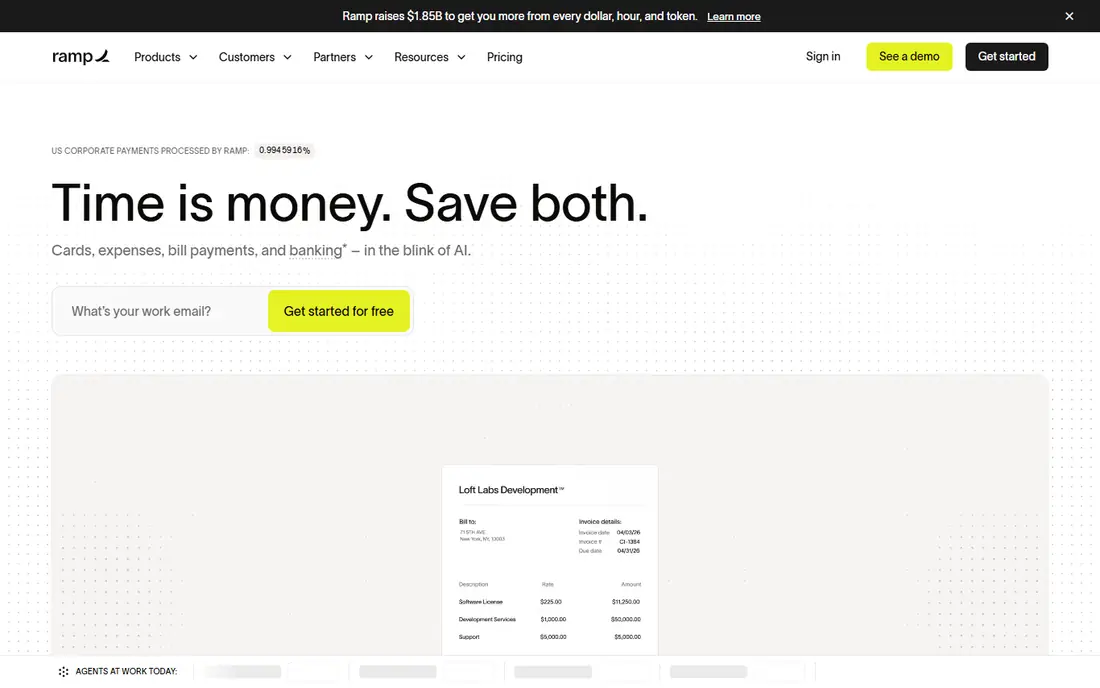
Ramp is our pick for most companies that want hands-off expense control. Admins can issue unlimited physical and virtual cards, set limits by employee, team or vendor, and block specific merchants, while staff spending shows up in real time. Receipt capture, categorization and accounting sync cut the month-end chase for receipts, and cash back on purchases returns value to the company rather than to individual cardholders.
The free tier covers the core card and expense tools, while Plus is cited at $15 per user per month for deeper features and Enterprise is custom priced. Eligibility is the check to make first, since Ramp underwriting in recent comparisons requires a meaningful company cash balance and a US incorporated entity. If your company meets that bar, Ramp gives the strongest mix of control and automation on this list.
- Unlimited physical and virtual cards
- Granular merchant, category and vendor controls
- Automated receipt capture and accounting sync
- Higher tiers cost per user per month
- Eligibility depends on company cash and incorporation
- Transaction coding is at transaction level, not line item
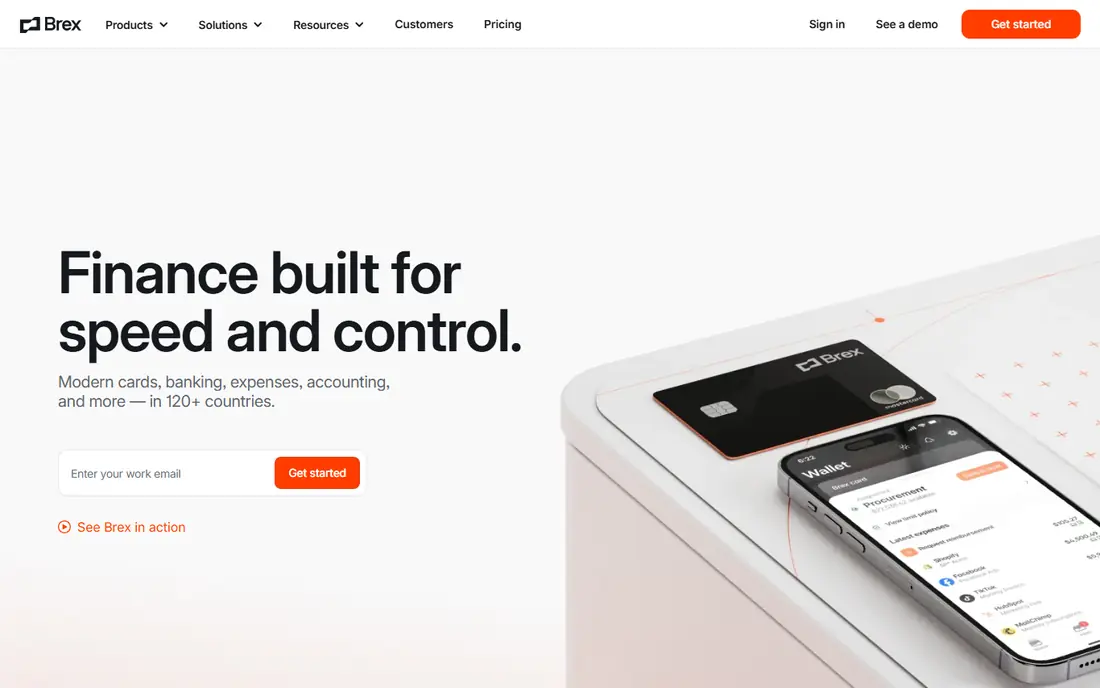
Brex built its name on corporate cards for startups, with limits based on company cash balance rather than a founder personal credit score, and no personal guarantee as described in vendor comparisons. Admins can issue employee cards and virtual purchasing cards, set spend limits and merchant or category rules, and use policy-based approvals. Rewards focus on common startup spend such as rideshare and travel, with points that can be redeemed through Brex partners.
Essentials is free, Premium is cited at $12 per user per month, and Enterprise is custom. That free entry is attractive, but the underwriting model still favors companies with funding or a healthy bank balance, so early-stage companies with thin cash may get lower limits. If your startup has solid cash and fast hiring, Brex offers speed and flexibility that traditional cards rarely match.
- No personal guarantee on the corporate card as described
- Limits based on company cash, not personal credit
- Unlimited virtual cards
- Model favors funded startups or strong cash balances
- Premium tier costs per user per month
- Travel booking through Brex carries a per-trip fee in comparisons
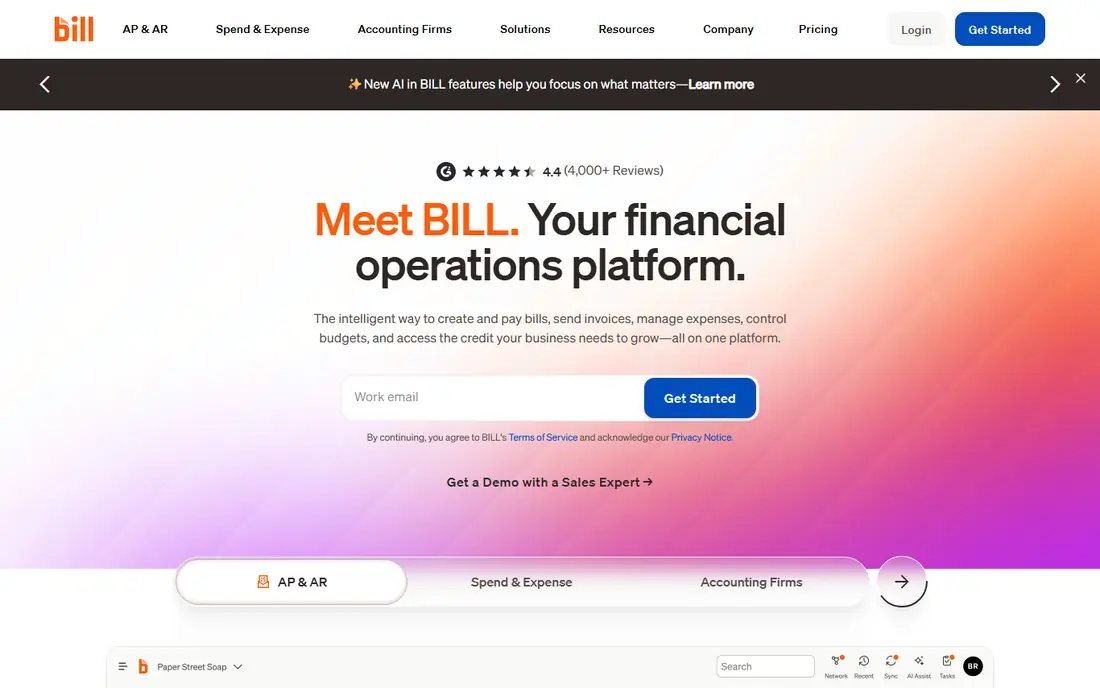
BILL Divvy, now part of BILL, takes a budget-first approach that suits finance teams who want hard stops, not soft guidance. Each card is tied to a pre-approved budget, so staff cannot spend beyond what finance approved. That design prevents overspending by construction, which helps distributed teams, field staff and companies with tight monthly budgets.
Rigidity is the trade-off. When a budget needs a fast change, an admin approval step can slow a purchase, and frequent budget edits create admin work. Rewards also depend on payment timing in vendor descriptions, so compare the rewards model with Ramp and Brex for your payment habits. Choose BILL Divvy when control and predictability matter more than speed and flexibility.
- Cards locked to pre-approved budgets
- Strict spend controls prevent overspending
- Approval workflows suit distributed teams
- Rigid budgets can slow teams when limits need quick changes
- Rewards depend on payment schedule
- Software tiers add cost for some features
Mercury suits startups that want banking and cards together without adding a separate spend platform. Business checking and savings sit alongside IO cards, with physical and virtual cards, basic spend controls and cash back as described in comparisons. For a small team that already banks with Mercury, issuing a card to a new hire is a short step, not a new vendor project.
Controls are the limit. Mercury offers basic limits and rules, but not the granular merchant, category and policy automation that Ramp or Brex provide. If your main need is a card tied to your bank balance with simple controls, Mercury is efficient. If you need deep expense automation, receipt enforcement and accounting sync, pair Mercury banking with a dedicated spend platform or choose Ramp or Brex instead.
- Cards tied directly to business banking
- Physical and virtual cards
- Simple setup for startups already banking with Mercury
- Spend controls are more basic than Ramp or Brex
- Card features are lighter than a full spend platform
- Eligibility is tied to Mercury banking
Rho combines corporate cards with business banking, treasury and spend controls in one platform, and recent comparisons cite no annual fee for its cards. That combination appeals to finance teams that want card spend, bank balances and payments visible together, rather than reconciling across separate tools. Cards, controls and integrated banking suit companies that already think in terms of treasury and cash management.
Rho is less widely covered than Ramp or Brex, so integration testing matters. Check connections to your accounting system, payroll timing and approval workflows in a demo with real transactions. If Rho fits your stack, it can simplify banking and cards into one relationship. If it does not connect cleanly, a better-known spend platform may save time despite a separate bank account.
- Corporate cards plus integrated banking and treasury tools
- No annual fee as cited in comparisons
- Controls and accounting connections
- Less well known than Ramp or Brex, so integration checks matter
- Pricing for higher tiers needs a quote
- Feature depth varies by plan
Airwallex is the pick for companies with staff, vendors or contractors in several countries. It offers multi-currency accounts and cards, so a team member abroad can spend in local currency without repeated conversion fees, and finance can view global spend in one place. Recent comparisons cite a free Standard tier and a paid Full Suite tier, which makes entry low for a first global test.
US-only companies may find Airwallex more than they need, since the global features are the main draw. Multi-entity setup also needs care around tax, payroll and local rules, so involve finance early. For a remote-first company paying contractors in several currencies, Airwallex can cut conversion friction that US-only cards create.
- Multi-currency cards and accounts for global teams
- Strong fit for international vendors and contractors
- Standard tier cited as free in comparisons
- Full Suite tier costs per month in comparisons
- US-only teams may not need the global features
- Setup for multi-entity companies takes planning
American Express corporate cards suit executive and sales teams that travel often and value rewards, lounge access and centralized billing. A corporate program lets an employer issue employee cards under one account, track spend centrally and earn travel benefits that staff actually use. For a team that flies weekly, those travel perks can outweigh a simpler cash back card.
The cost and underwriting model differ from fintech cards. American Express typically requires a personal guarantee and strong credit in comparisons, and premium cards carry annual fees that need a clear travel return to justify. Spend controls are also lighter than Ramp or Brex, so pair an Amex program with a written expense policy and regular review if control is a concern.
- Strong travel rewards and lounge access on premium corporate cards
- Centralized billing
- Well-known acceptance for business travel
- Often requires a personal guarantee and strong credit in comparisons
- Annual fees vary and can be high
- Spend controls are lighter than spend platforms
Chase Ink Business Unlimited is a traditional business card that suits companies wanting simple cash back without tracking categories. It offers flat cash back on purchases, no annual fee and free employee cards in vendor descriptions, which makes issuing cards to staff straightforward. A small business that already banks with Chase may find application and management especially easy.
Traditional cards come with traditional limits. Approval depends on credit, spend controls are basic compared with a spend platform, and there is no built-in receipt automation or budget locking. Use Chase Ink when cash back simplicity matters most, and use a spend platform when control, automation and accounting sync matter more. Many companies use both: a spend platform for daily staff spend and a traditional card for travel rewards.
- Flat cash back on every purchase as described
- No annual fee
- Free employee cards
- Approval depends on credit
- Spend controls are lighter than a spend platform
- Rewards are simple, not category-optimized
Navan, formerly TripActions, combines travel booking with expense and card tools, which suits teams whose card spend is closely tied to trips. When travel and card policies live in one system, a flight, hotel and meal spend can follow the same approval rules, and finance sees travel and card transactions together. That alignment reduces the gap between a booked trip and the card statement that follows it.
Teams that rarely travel may not need the travel layer, and pricing for full features needs a quote. Check how Navan cards handle non-travel spend, subscriptions and vendor payments before relying on it as a general company card system. For sales, consulting and field teams, the travel-plus-card combination can be the most practical way to issue cards.
- Travel booking and cards in one system
- Expense and travel policies can align
- Useful for teams that travel as part of work
- Travel focus may exceed the needs of non-travel teams
- Pricing needs a quote for full features
- Card controls are part of a wider platform
How we picked these
We compared corporate card and spend platforms with a current US offer, using recent card comparisons and vendor pages that describe issuance, controls, rewards and pricing. We favored platforms that issue both physical and virtual cards, offer per-person limits, and sync to accounting, and we added traditional cards for readers who prioritize rewards or an existing bank relationship.
We did not apply for cards or test underwriting ourselves. Eligibility, limits and fees change with company cash, credit and revenue, so confirm current terms with each issuer before applying. Card programs are financial products, so read fee schedules and cardholder agreements carefully.
How to issue company cards safely
Start with a written card policy before you issue a single card. State who gets a card, what it may be used for, what needs a receipt, what needs pre-approval, and what happens if a card is lost or misused. A short policy, signed by each cardholder, prevents most disputes later and gives finance a clear basis for blocking a transaction.
Next, issue cards by role, not by person alone. Give each employee a card with a limit that fits their job, give each vendor or subscription a virtual card with its own limit, and set category blocks for personal spend categories. Freeze a virtual card the moment a vendor changes or a subscription ends, rather than waiting for month-end review.
Finally, review spend weekly at first, then monthly. Check for duplicate charges, personal purchases, missing receipts and cards that are no longer needed, and close cards for staff who leave on their last day. Sync transactions to accounting so month-end close does not become a receipt hunt. A card system that is reviewed regularly stays a control tool; one that is ignored becomes a leak.
Frequently asked questions
How do I issue a company card to a new employee?
In a spend platform, an admin creates the employee profile, sets a limit and category rules, then issues a physical card, a virtual card, or both. The employee activates the card, accepts the card policy and can spend within the set limits. Traditional banks follow a similar application step, but approval and delivery may take longer.
Should employees get physical cards, virtual cards, or both?
Most teams need both. Physical cards suit travel, meals and in-person purchases, while virtual cards suit subscriptions, online vendors and one-off purchases. Virtual cards are safer for online spend, since each card can be limited to one vendor and frozen without affecting other cards.
Do company cards require a personal guarantee?
It depends on the issuer. Fintech cards such as Ramp and Brex are described as requiring no personal guarantee, with limits based on company cash, while traditional cards such as American Express often require a personal guarantee and strong credit. Check the cardholder agreement for your company before applying.
How do I set spending limits for employees?
Set limits by role and need, not by seniority alone. A traveling salesperson needs a higher travel limit than an office-based hire, while a subscription owner needs a vendor-specific virtual card limit. Review limits after the first month and adjust based on real spend, not guesses.
What happens when an employee leaves?
Freeze or close their cards on their last day, collect physical cards if your policy requires it, and check for pending subscriptions tied to their virtual cards. Move any needed vendor cards to a new owner before closing the old card, so services do not lapse unexpectedly.
Sources
- https://kurums.com/best-corporate-cards-2026-comparison/?v=0b3b97fa6688
- https://www.order.co/blog/finance/credit-cards-for-employees/
- https://ramp.com/blog/brex-vs-mercury-vs-ramp
- https://www.ramp.com
- https://www.brex.com
- https://www.bill.com
- https://www.mercury.com
- https://www.rho.co
- https://www.airwallex.com
- https://www.americanexpress.com
- https://www.chase.com
- https://www.navan.com
See where you really rank - block by block
ProMapRanker scans Google Maps across a grid of your service area. Simple monthly plans from $19, white-label on every plan.
Start freeKeep reading
 zscaler alternatives
Best Zscaler Alternatives in 2026
Looking for zscaler alternatives? We compare 9 SASE and zero trust platforms on architecture, data protection, pricing, and fit for your network and team.
Read → zapier alternatives free
Best Zapier Alternatives Free in 2026
Nine automation tools for zapier alternatives free in 2026, all with genuinely free tiers, plus free plan limits, starting prices and upgrade paths explained.
Read → which platform is best for online reputation
Which Platform Is Best for Online Reputation in 2026
Wondering which platform is best for online reputation? We compare 8 review, listing, and response tools for small and multi-location businesses and agencies.
Read →