 ProMapRanker
Best Water Filtration Company in 2026


Full service and local installation · Pricing starts at: $19.95 per month
Key takeaways
- Culligan suits buyers who want local service and installation handled for them, while direct sellers suit buyers who want clear prices online.
- Start with a water test, because hard water, chlorine taste, lead, and PFAS each point to a different kind of system.
- Whole-home systems and drinking-water systems solve different problems, so check which one a company is actually selling.
- Filter replacement cost and warranty terms matter as much as the first price, so read both before you buy.
Quick comparison
| Pick | Great for | Pricing starts at | Free tier | |
|---|---|---|---|---|
| Culligan | Full service and local installation | $19.95 per month | No | Visit |
 Aquasana | Direct buying with clear system choices | See website | No | Visit |
 AquaTru | Countertop reverse osmosis with no plumbing | $475 | No | Visit |
 SpringWell | Whole-home systems for well water | See website | No | Visit |
 APEC Water Systems | Under-sink reverse osmosis value | See website | No | Visit |
 iSpring | Wide under-sink range at varied prices | See website | No | Visit |
 Waterdrop | Tankless under-sink reverse osmosis | See website | No | Visit |
 Pentair | Broad whole-home and point-of-use range | See website | No | Visit |
 Brita | Simple pitcher and faucet filters | See website | No | Visit |
The best water filtration companies
We compared companies that sell filtration for homes in the United States, looking at system types, certification claims, service models, and published prices.
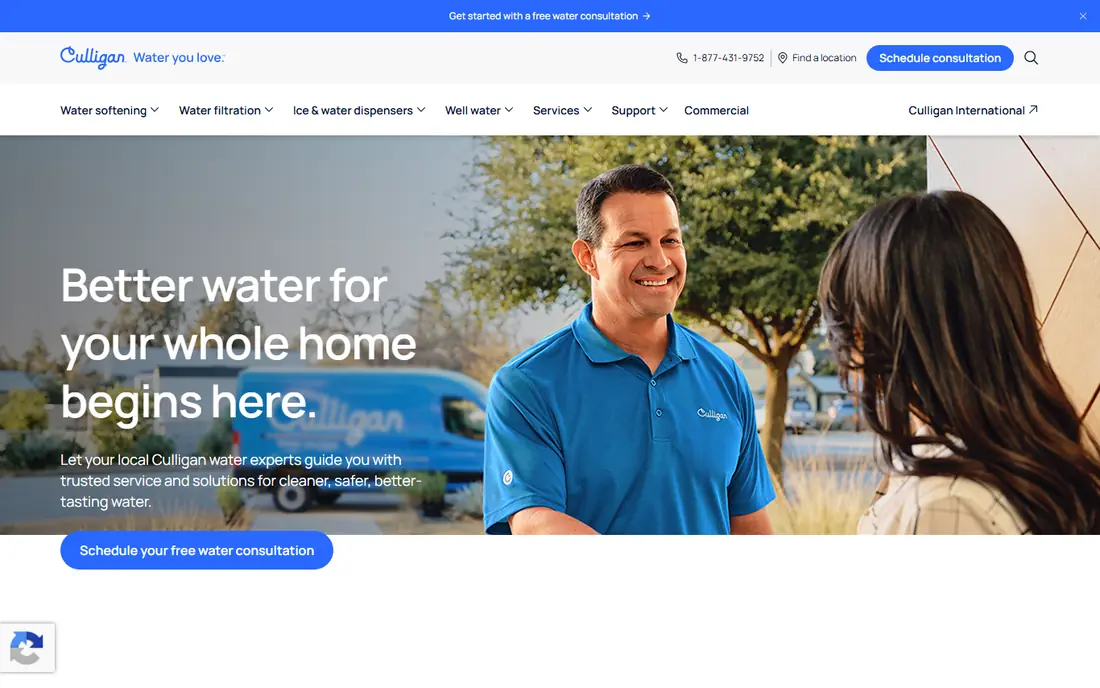
Culligan is the pick for people who do not want to choose parts, fit pipes, or maintain a system alone. A local dealer tests the water, recommends a softener or filter, installs it, and stays available for service. That hands-on model is a real benefit for whole-home work, where sizing and plumbing matter and a wrong choice can be costly to fix.
The trade-off is price clarity. Culligan promotes rental options from $19.95 per month in some offers, but purchase prices for softeners and whole-home systems vary by dealer and home. Ask for the purchase price, the rental total over the term, filter costs, and what service visits cover before you sign. For buyers who value a single point of contact, that extra checking is worth it.
- Local dealer service
- Professional installation
- Free water test offered in many areas
- Final prices vary by dealer
- Rental terms need careful reading
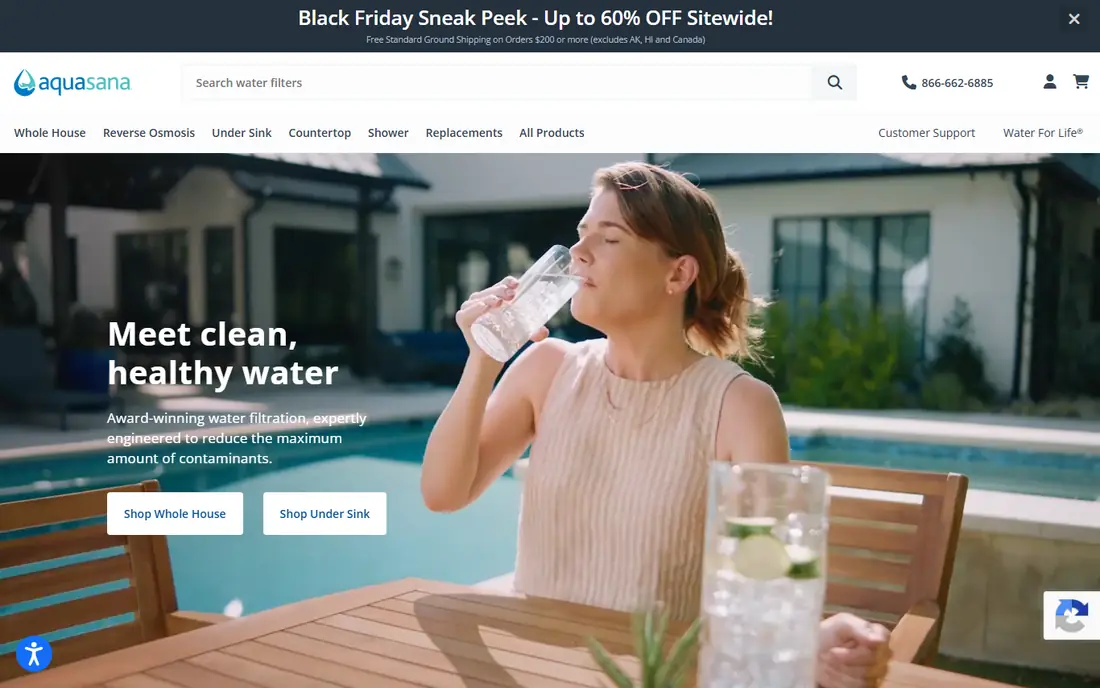
Aquasana suits shoppers who want to research online and buy without an in-home sales visit. Its range covers countertop units, under-sink systems, shower filters, and whole-home systems, with notes on which contaminants each system is tested to reduce. That breadth helps when one home needs better drinking water and another needs treatment at every tap.
The catch is installation and warranty detail. Some whole-home warranties are stronger with professional installation, so a do-it-yourself buyer should read the warranty page for the exact model. Replacement filters also add a yearly cost, and Aquasana offers a subscription discount for some filters. Check the filter life and price for your model, not just the system price.
- Wide range from under-sink to whole-home
- Published system details
- Filter subscription option
- Whole-home warranty terms differ for professional and do-it-yourself installation
- Installation is extra
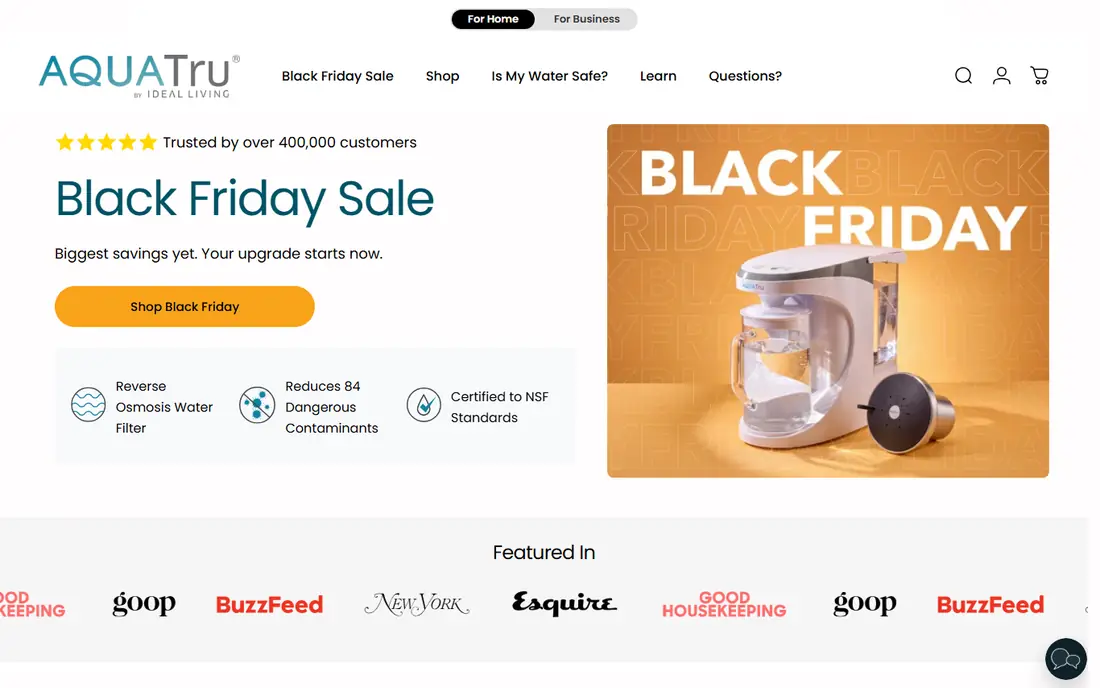
AquaTru is a good fit for renters and for owners who want purified drinking water without altering plumbing. The Classic countertop unit uses reverse osmosis, sits on a counter, and dispenses from a tank of about three quarters of a gallon. Its maker states independent certification to reduce 84 contaminants, including lead, PFAS, fluoride, and chlorine.
The limit is scale. A countertop tank will not serve baths, laundry, or a large family at every tap, and refilling takes time. Filter lives range from about six months to two years depending on the filter, so keep the replacement schedule in mind. For drinking water only, though, the lack of installation is a clear advantage.
- No plumbing changes needed
- Certified to reduce many contaminants
- Simple countertop use
- Small tank suits drinking and cooking, not whole-home use
- Filters need regular replacement
SpringWell focuses on whole-home filtration, including systems for iron, sulfur, and sediment that trouble many well-water homes. A whole-home unit treats water at the point it enters the house, so showers, laundry, and kitchen taps all benefit. That scope makes it a stronger choice than a single-tap filter when the problem affects the whole supply.
The downside is commitment. Whole-home systems cost far more than a pitcher, and correct sizing depends on flow rate, household size, and water chemistry. SpringWell sells direct, so buyers should use its water test guidance and support team before ordering, and confirm installation needs. Get the filter change interval in writing, since low-maintenance claims still depend on local water quality.
- Systems aimed at well water problems
- Whole-home coverage
- Long warranty claims on some models
- Higher upfront cost than a pitcher or under-sink unit
- Sizing needs care
APEC is a practical choice for buyers who want proven under-sink reverse osmosis without paying for a smart faucet or tankless design. Its Essence and Ultimate series use multi-stage filtration under the kitchen sink, with a storage tank and a dedicated faucet. The designs are familiar to plumbers, which can help if service is ever needed.
The weakness is space and pace. A tank system needs room under the sink, and flow drops as the tank empties until it refills. Buyers who want fast, on-demand flow may prefer a tankless model from another firm on this list. For steady drinking-water use at one tap, APEC offers solid value and a wide parts range.
- Long track record in under-sink reverse osmosis
- Straightforward designs
- Many replacement parts available
- Tank systems take under-sink space
- Basic styling compared with tankless rivals
iSpring suits buyers who want to match a system closely to their water and budget. Its catalog runs from basic five-stage reverse osmosis units to tankless high-flow models and systems with alkaline remineralization or UV stages. That range means a buyer can step up in flow or treatment without switching brands.
The risk is choice overload. Similar model codes differ in stages, flow, and included filters, so two listings that look alike may not be the same system. Read the stage list and the certified reduction claims for the exact model, and check whether a booster pump or UV stage is included or extra. Once the right model is chosen, iSpring is often one of the lower-cost routes to reverse osmosis.
- Many stages and options, including alkaline and UV models
- Competitive prices
- Broad filter range
- Model names are easy to confuse
- Some models need a plumber for a tidy fit
Waterdrop is the pick for kitchens where under-sink space is tight and waiting for a tank to refill is a nuisance. Its tankless reverse osmosis systems deliver water on demand, and higher-flow models suit larger households. Some models add a smart faucet display that signals filter life, which removes guesswork from maintenance.
The trade-off is price and ongoing cost. Top tankless models cost more upfront than basic tank systems, and filter packs differ by model, so the yearly cost is not the same across the range. Check the pure-to-drain ratio and the filter replacement price for the exact model before buying. For a busy kitchen, the space saving and steady flow can justify the premium.
- Tankless designs save under-sink space
- Fast flow on higher models
- Smart faucet indicators on some models
- Higher prices for top tankless models
- Replacement filter costs vary by model
Pentair is a large water treatment maker whose products appear under its own name and through partner brands and dealers. That scale gives buyers many options, from whole-home carbon filtration to under-sink systems and softeners, and parts and service are widely available. It suits buyers who want a mainstream brand and are buying through a dealer or retailer they trust.
The drawback is clarity. With so many product lines and sellers, comparing two Pentair systems is not always simple, and prices vary by channel. Ask the seller for the exact model, its certification, and its filter schedule, and compare that model rather than the brand name alone. Used this way, Pentair is a dependable mainstream choice.
- Large product range through dealers and retailers
- Whole-home and drinking-water options
- Established brand
- Range is broad and hard to compare
- Prices and availability vary by seller
Brita is the sensible starting point when the main complaint is taste and chlorine in drinking water. Pitchers need no plumbing, cost little upfront, and filters are sold in most grocery and home stores. Faucet models add a bit more convenience for households that fill bottles and kettles often.
The limit is treatment depth. Brita pitchers mainly improve taste and reduce chlorine and some metals depending on the filter type, and they do not match reverse osmosis for lead, PFAS, or a wide contaminant list. Capacity is also small, so a large household will refill often. For taste-only needs and tight budgets, Brita is hard to beat, but it is not a whole-home solution.
- Low upfront cost
- No installation for pitchers
- Widely sold filters
- Limited contaminant reduction compared with reverse osmosis
- Small capacity
How we picked these
We compared official feature pages, pricing pages, app store listings where relevant, certification claims, and public reviews for companies selling filtration in the United States in October 2026. We kept only firms with a working official homepage and systems that fit home filtration, and we left out firms whose prices or product details could not be checked at all. Where a price could not be verified from the vendor, we wrote See website rather than guessing.
We favored a mix of service-led firms, direct sellers, and simple filter brands, so readers can compare a dealer-installed whole-home system with a countertop unit and a pitcher. We also weighed filter replacement cost, warranty detail, and whether a system treats one tap or a whole home, since those factors shape the true cost over several years.
What to check before you buy a filtration system
Test first, then shop. A free or low-cost water test from a local dealer, a certified lab, or a home test kit can show hardness, chlorine, iron, lead, or PFAS concerns. A system chosen without a test may treat the wrong problem, and a whole-home softener will not by itself remove every drinking-water contaminant.
Match the system to the tap. Whole-home systems treat every outlet and suit hardness, sediment, and odor across a house. Under-sink and countertop systems focus on drinking and cooking water and suit lead or PFAS concerns at one tap. Pitchers suit taste only and small households.
Read the full cost
Add the system price, installation, and yearly filters. Rental plans look cheap monthly but can cost more over five years than buying outright, while a cheap system with costly filters can do the same. Ask for filter life in gallons and months, and check whether the warranty needs professional installation.
Check certifications and fit
Look for the exact standard and certifier on the product page, not just a claim on a sales page. Confirm flow rate for your household size, space under the sink or at the entry point, drain needs for reverse osmosis, and power needs for UV or smart models. A short call with the seller about these points can prevent a return.
Frequently asked questions
What is the best water filtration company for a whole home?
It depends on your water problem and whether you want local service. Culligan and SpringWell are strong whole-home options, while Aquasana and Pentair offer direct and dealer routes. Test your water first, then compare systems that treat the contaminants found.
Is reverse osmosis better than a pitcher filter?
Reverse osmosis reduces a wider range of contaminants, including lead and PFAS on certified models, while pitchers mainly improve taste and chlorine. Reverse osmosis costs more, needs space or plumbing, and wastes some water during filtration. Choose reverse osmosis for drinking-water safety concerns and a pitcher for taste only.
How often do filters need replacing?
It varies by system and water use, often from six months for pre-filters to two years for membranes. Tankless and under-sink models list filter life in gallons or months on the product page. Follow the maker schedule, since an old filter can reduce flow and treatment quality.
Do I need a water softener or a filter?
A softener treats hard water minerals that cause scale and spots, while a filter targets taste, odor, and specific contaminants. Some homes need both, and some whole-home systems combine filtration with salt-free conditioning. A water test will show whether hardness or contaminants are the main issue.
Are rental filtration plans worth it?
Rental plans can suit buyers who want installation and service included without a large upfront payment. Compare the total rent over the expected term with the purchase price plus filters and service. Check what happens at the end of the term and who pays for repairs.
Sources
See where you really rank - block by block
ProMapRanker scans Google Maps across a grid of your service area. Simple monthly plans from $19, white-label on every plan.
Start freeKeep reading
 worlds best local seo company
8 Worlds Best Local SEO Companies for Map Pack Growth in 2026
Compare the worlds best local seo company options for Google Business Profile work, citations, reviews, and multi-location rankings and reporting in 2026.
Read → world's best web hosting company
World's Best Web Hosting Company in 2026
Searching for the world's best web hosting company? We compared 10 hosts on price, renewal rates, speed, and support to help you choose well today in 2026.
Read → who's got the best nanny tax services
Who's Got the Best Nanny Tax Services in 2026
We answer who's got the best nanny tax services, comparing full filing, back taxes, software, and pricing so families can handle nanny taxes correctly.
Read →