 ProMapRanker
Best Warehouse Software in 2026


Multichannel sellers needing inventory and warehouse control · Pricing starts at: $349 per month
Key takeaways
- Cin7 and Fishbowl publish real starting prices, at $349 and $229 per month, and suit product businesses that need inventory plus warehouse work.
- Zoho Inventory and Finale Inventory suit small warehouses, with Zoho offering a free tier and Finale starting at $99 per month.
- NetSuite WMS, ShipHero, Logiwa, and Deposco suit larger or high-volume operations, and most are quote-based.
- A warehouse system is judged by receiving, putaway, picking, packing, and cycle counts, not just by stock levels.
- Budget for implementation, scanners, and training, not just the subscription, because those costs decide the first-year total.
Quick comparison
| Pick | Great for | Pricing starts at | Free tier | |
|---|---|---|---|---|
| Cin7 | Multichannel sellers needing inventory and warehouse control | $349 per month | Free trial | Visit |
 Fishbowl | Manufacturers and distributors on QuickBooks | $229 per month | No | Visit |
 Zoho Inventory | Startups and small warehouses on a budget | $29 per month | Yes | Visit |
 Finale Inventory | Simple, affordable warehouse tracking | $99 per month | Free trial | Visit |
 inFlow | B2B and wholesale warehouses | $99 per month | Free trial | Visit |
 NetSuite WMS | Companies already running NetSuite ERP | See website | No | Visit |
 ShipHero | High-volume ecommerce fulfillment | See website | No | Visit |
 Logiwa | High-volume multi-warehouse and 3PL work | See website | No | Visit |
 Deposco | Fast-growing brands and 3PLs | See website | No | Visit |
The best warehouse software
Warehouse software manages movement, not just stock. It tells staff where to receive goods, where to put them, what to pick in what order, and how to pack and ship, while keeping counts accurate across locations.
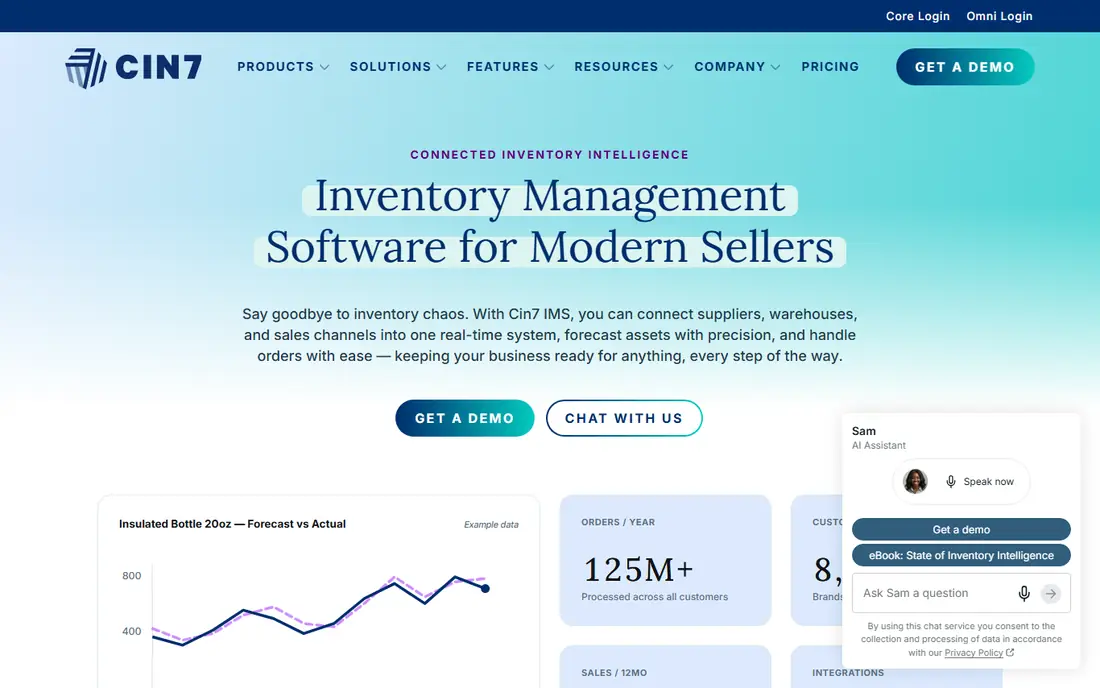
Cin7 is our pick for product businesses selling across Shopify, Amazon, wholesale, and retail at the same time. The Core plan starts at $349 per month and centralizes inventory, warehouse operations, point of sale, and third-party logistics in one cloud system. Higher tiers add EDI compliance that big-box retail partners demand.
The honest limit is that a small warehouse with one location and a few hundred SKUs may not need this breadth, and may find the price hard to justify. Cin7 earns its cost when channels, locations, and order volume create complexity that spreadsheets and simple inventory tools cannot handle.
- Centralizes inventory, orders, and warehouse work
- EDI on higher tiers
- Many channel integrations
- Price is high for a single-location startup
- Advanced warehouse features sit on higher plans
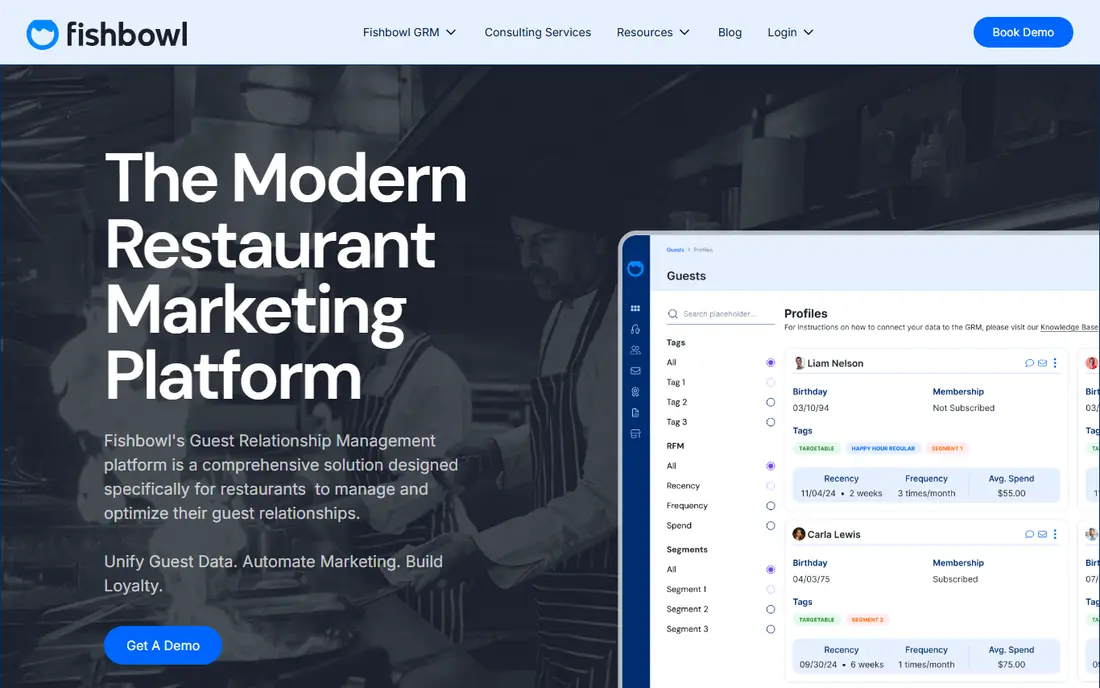
Fishbowl combines inventory management with warehouse features, and it is best known for its QuickBooks integration. Manufacturers can track raw materials, work orders, and finished goods, while warehouse staff use barcode scanning for receiving, picking, and cycle counts. The Essentials plan is listed at $229 per month on annual billing for two users.
There is no free plan, only a demo and sales process, so small teams should confirm total cost, including users and implementation, before committing. Fishbowl fits when accounting lives in QuickBooks and warehouse work needs to stay in step with it, without moving to a full ERP.
- Strong QuickBooks integration
- Manufacturing and warehouse features
- Barcode support
- No free plan
- Implementation and training take time
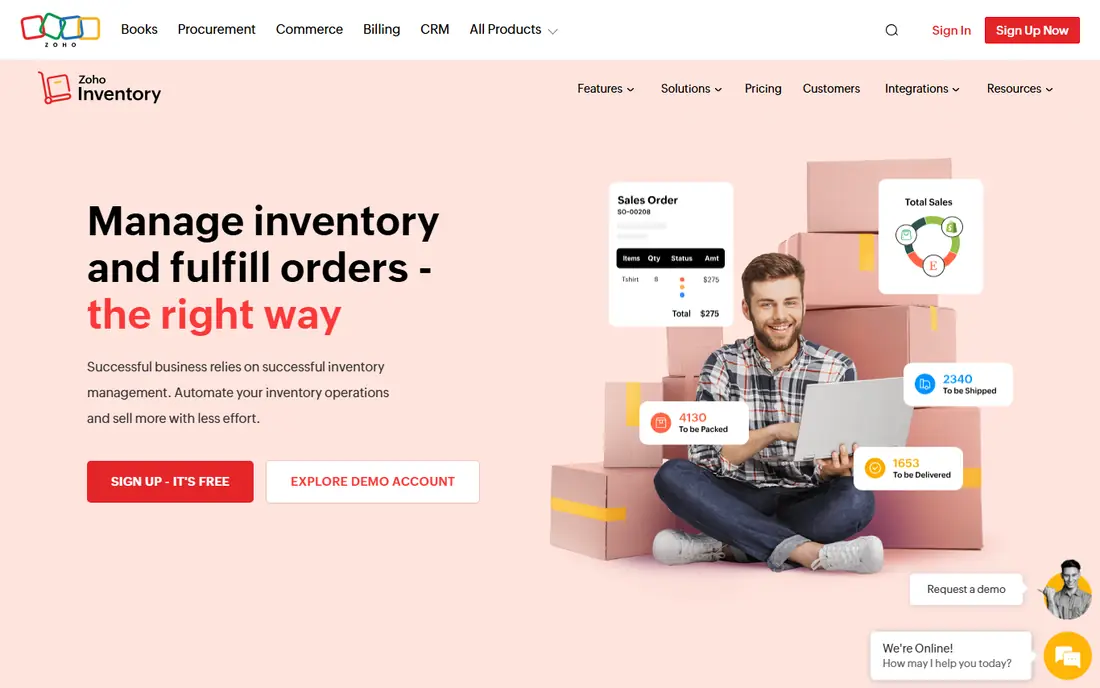
Zoho Inventory is the low-cost entry point here. A free tier covers small use, and paid plans start at $29 per month on annual billing. It handles stock, orders, purchase orders, and multiple locations, with integrations to Zoho Books and other Zoho apps for a small business already in that world.
It is lighter than a dedicated warehouse system. Directed putaway, wave picking, and complex 3PL billing are not its strengths, so a growing operation may outgrow it. For a first warehouse system, or a small team shipping from one or two locations, it is a sensible and affordable start.
- Free tier for small use
- Low paid entry price
- Zoho app integrations
- Lighter than a dedicated WMS
- Advanced warehouse workflows need higher plans
Finale Inventory suits a small warehouse that needs accurate stock, locations, and barcode scanning without enterprise complexity. The plan starts at $99 per month, with a free trial, and it covers multiple locations, purchase orders, and order fulfillment in a plain interface.
Teams that need 3PL client billing, advanced wave picking, or deep EDI work will need a heavier platform. Finale is best when the main problems are mispicks, lost stock, and manual counts, and when a team wants to fix those problems without a long implementation project.
- Low entry price
- Barcode and multi-location support
- Straightforward setup
- Less depth for 3PL or high-volume automation
- Integrations are narrower than Cin7
inFlow is a practical pick for wholesale and B2B warehouses that sell in cases, track customer pricing, and manage purchase orders. The entry plan starts at $99 per month on annual billing, with a 14-day trial, and it handles inventory, orders, and barcode scanning in a clean interface.
Check location limits before buying, since the entry plan covers one location and multi-location work needs a higher tier. inFlow fits a growing wholesale operation that needs reliable inventory and order control, rather than a high-volume ecommerce fulfillment center with complex picking automation.
- Clear order and inventory workflows
- Barcode support
- 14-day trial
- Entry plan covers one location
- Heavier warehouse automation needs higher plans
NetSuite WMS is the warehouse module for companies already on NetSuite ERP. It adds directed putaway, wave and zone picking, packing, cycle counting, and mobile scanning, all tied to the same inventory, order, and financial records. That shared data removes the sync problems that come from bolting a separate WMS onto an ERP.
Pricing is quote-based, and implementation is a real project, often measured in months rather than days. A company not already on NetSuite should not adopt the whole ERP just for warehouse work. Inside NetSuite, though, it is the most coherent warehouse choice.
- Native NetSuite integration
- Multi-location and 3PL features
- Mobile warehouse app
- Quote-based pricing
- Implementation can take months
- Needs NetSuite expertise
ShipHero is built for ecommerce brands running their own warehouse at volume. It handles receiving, batch picking, packing verification, and shipping across channels, with workflows designed to keep pickers moving and error rates low. Integrations cover major storefronts, marketplaces, and shipping carriers.
Published comparisons list ShipHero pricing as quote-based, with high-volume plans reported well above $1,000 per month, so it is not a small-warehouse tool. It earns its cost when daily order volume, SKU count, and shipping complexity make a lighter tool a bottleneck. Get a quote based on your actual order volume, not on a generic tier.
- Built for ecommerce warehouse throughput
- Batch picking and shipping workflows
- Many integrations
- Quote-based and costly for small operations
- Needs volume to justify the price
Logiwa, also known as Logiwa IO, is a cloud warehouse system for high-volume ecommerce and third-party logistics operations. It supports multiple warehouses, client separation for 3PL work, and order workflows that scale with volume. That focus makes it a strong shortlist pick for a 3PL or a brand with several warehouses.
Pricing is quote-based, and onboarding is a project, not a same-day setup. A small single-location warehouse will find it heavy and costly. A multi-warehouse or multi-client operation should compare Logiwa with Deposco and ShipHero on client billing, warehouse throughput, and integration depth.
- Multi-warehouse and 3PL support
- Strong order and inventory workflows
- Cloud-based
- Quote-based pricing
- Implementation and onboarding take time
Deposco combines order management with warehouse management, which helps brands and 3PLs that need one view from order to shipment. It supports multi-client work, billing for storage and handling, and fulfillment workflows for growing operations. Published comparisons note implementation timelines of 90 days or less for larger rollouts, which is fast for this category but still a project.
Pricing is quote-based, so a buyer should request a quote tied to order volume, locations, and users. Deposco fits when growth, 3PL work, or complex fulfillment rules make a simple inventory tool insufficient, and when the team can support a structured rollout.
- Combined order and warehouse management
- 3PL client billing
- Strong fulfillment workflows
- Quote-based pricing
- Larger rollout needs planning and training
How we picked these
We compared official feature and pricing pages and public documentation for warehouse and inventory tools live in October 2026. We kept tools that manage warehouse movement, including receiving, putaway, picking, packing, and cycle counts, not stock-count-only tools. Prices are starting list prices where published, and marked as See website where a vendor quotes by volume or project. We did not claim hands-on testing.
How to choose warehouse software
Count your operation before you count features. Locations, channels, daily orders, SKU count, and 3PL work decide the right tier more than any feature list.
Size the operation first
A single location with a few hundred SKUs and modest daily orders fits Zoho Inventory, Finale, or inFlow. Multiple locations, high daily volume, kitting, or EDI point to Cin7, Fishbowl, or a quoted platform such as NetSuite WMS, ShipHero, Logiwa, or Deposco. Write down those numbers and share them with vendors, so quotes compare like with like.
Test the floor workflow
Run a pilot with real receiving, putaway, picking, packing, and a cycle count, using your own SKUs and scanners. Check barcode scanning, mobile use, and what happens when a pick is wrong. A tool that looks good in a demo but slows pickers on the floor will cost more in labor than it saves in software.
Budget the full first year
Add implementation, scanners, label printers, training, and any ERP or channel integration to the subscription. Ask vendors what onboarding includes, how long it takes, and what support costs after go-live. A low subscription with a long implementation can cost more than a higher subscription with a faster rollout.
Plan for growth and clients
If you serve 3PL clients, check client separation, billing, and client portals before buying. If you plan to add locations or channels, check plan limits and data migration. Moving warehouse systems is disruptive, so pick a tool that fits the next two years, not just the next quarter.
Frequently asked questions
What is the best warehouse software?
Cin7 and Fishbowl are the strongest published-price picks for product businesses, while NetSuite WMS leads inside NetSuite, and ShipHero, Logiwa, and Deposco lead for high-volume fulfillment. Zoho Inventory is the best low-cost start. The right pick depends on locations, order volume, channels, and whether you run 3PL work.
What are the top 10 warehouse management software options?
Common top options include Cin7, Fishbowl, Zoho Inventory, Finale Inventory, inFlow, NetSuite WMS, ShipHero, Logiwa, and Deposco, plus 3PL-focused tools such as Extensiv. This article covers nine of them in depth, chosen for published pricing, warehouse depth, and fit across small, mid-size, and high-volume operations.
How much does warehouse software cost?
Published starting prices here run from free for Zoho Inventory, to $29 per month paid, $99 per month for Finale and inFlow, $229 per month for Fishbowl, and $349 per month for Cin7. Larger platforms are quote-based and often cost far more, plus implementation. Always add scanners, training, and onboarding to the first-year total.
Do I need a WMS or just inventory software?
Inventory software tells you what you have and where it should be. A warehouse system tells staff where to walk, what to pick, and in what order, and it checks packing and counts. If you pick more than a few dozen orders a day, run multiple zones, or serve 3PL clients, a WMS saves labor and errors that inventory software alone will not fix.
Can warehouse software handle multiple warehouses?
Yes, most tools here handle multiple locations in some form, but plan limits differ. inFlow entry covers one location, while higher tiers and quoted platforms handle unlimited warehouses, transfers, and location-level stock visibility. Check transfer workflows and per-location reporting before buying for a multi-site operation.
Sources
- https://www.cin7.com/pricing/
- https://www.fishbowl.com/pricing/
- https://www.zoho.com/inventory/pricing/
- https://www.finaleinventory.com/pricing/
- https://www.inflowinventory.com/pricing/
- https://www.netsuite.com/portal/products/wms.shtml
- https://shiphero.com/pricing/
- https://www.logiwa.com/pricing/
- https://deposco.com/pricing/
See where you really rank - block by block
ProMapRanker scans Google Maps across a grid of your service area. Simple monthly plans from $19, white-label on every plan.
Start freeKeep reading
 zscaler alternatives
Best Zscaler Alternatives in 2026
Looking for zscaler alternatives? We compare 9 SASE and zero trust platforms on architecture, data protection, pricing, and fit for your network and team.
Read → zapier alternatives free
Best Zapier Alternatives Free in 2026
Nine automation tools for zapier alternatives free in 2026, all with genuinely free tiers, plus free plan limits, starting prices and upgrade paths explained.
Read → which platform is best for online reputation
Which Platform Is Best for Online Reputation in 2026
Wondering which platform is best for online reputation? We compare 8 review, listing, and response tools for small and multi-location businesses and agencies.
Read →