 ProMapRanker
Best VR Companies in 2026

Key takeaways
- Meta Quest remains the widest reach choice for standalone VR, while Valve, HTC Vive and Varjo suit high fidelity PC VR and enterprise use.
- Pico and HTC Vive offer stronger enterprise and managed deployment options than most consumer-first firms.
- Sony PS VR2 suits PlayStation owners, while Apple Vision Pro suits premium spatial computing budgets.
- Headset price is only part of the cost, since PC VR needs a capable PC and enterprise fleets need management tools.
- Check current headset prices and store availability before buying, since models and bundles change during the year.
Quick comparison
| Pick | Great for | Pricing starts at | Free tier | |
|---|---|---|---|---|
 Meta | Standalone reach and value | $299 | No | Visit |
 HTC VIVE | PC VR and enterprise fleets | See website | No | Visit |
 Valve | High fidelity PC VR | See website | No | Visit |
 Pico | Enterprise standalone VR | See website | No | Visit |
 Sony PlayStation VR | PlayStation VR gaming | See website | No | Visit |
 Apple | Premium spatial computing | $3,499 | No | Visit |
 Pimax | Simulation visuals | See website | No | Visit |
 Varjo | Enterprise visual fidelity | See website | No | Visit |
 Samsung | Android XR mixed reality | See website | No | Visit |
The best vr companies
We compared VR firms on headsets, platforms, enterprise tools and price, using vendor sites and 2026 headset guides. The best VR company for you depends on whether you want standalone gaming, PC VR fidelity, enterprise training or premium mixed reality, rather than on one spec alone.

Meta is the default VR choice for most buyers in 2026, because the Quest line holds the largest standalone audience and needs no PC or console. The Quest 3S starts at $299 based on 2026 headset guides, while the Quest 3 offers higher resolution and better mixed reality for a higher price. For gaming, fitness, social VR and media, the Quest store is the broadest standalone catalogue.
The main drawbacks are the Meta account requirement and battery life, which is around two hours for active gaming on most standalone headsets. PC VR streaming is possible over Wi-Fi, but it needs a strong network and a capable PC. If you want the widest app choice at the lowest standalone entry price, Meta is our pick for most people.
- Widest standalone audience
- Quest 3S starts at $299 based on 2026 guides
- Strong app store and mixed reality features
- Meta account required
- Battery life is around two hours for active gaming
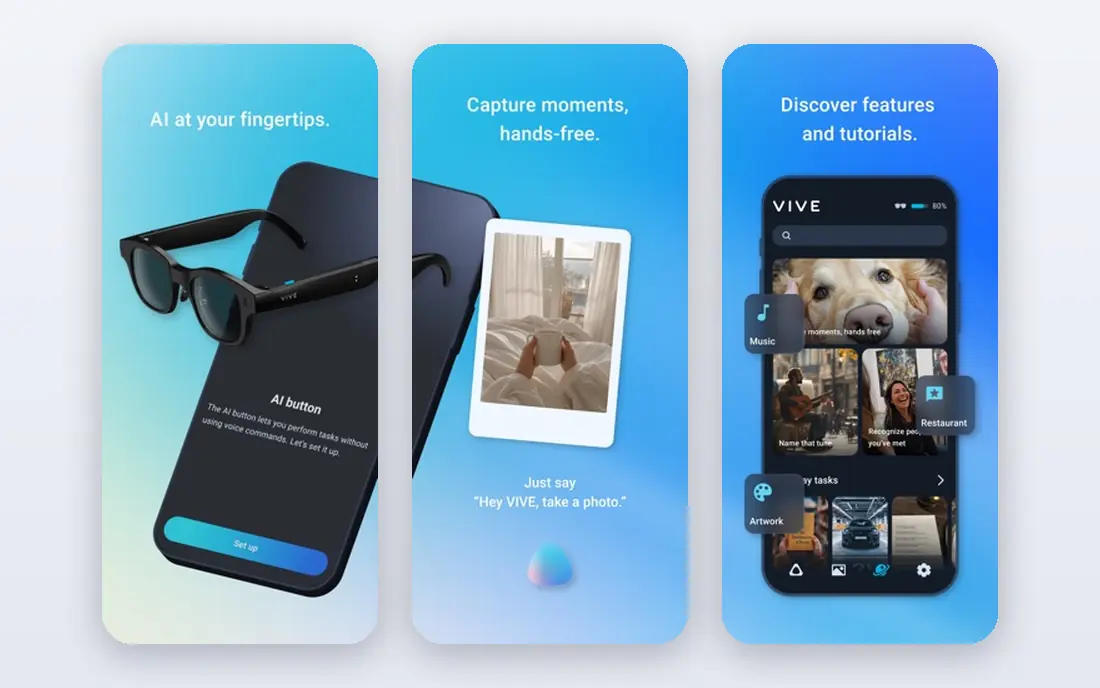
HTC VIVE covers both PC VR and enterprise standalone use, with lines such as Vive Pro 2 for PC VR and Vive Focus Vision for enterprise fleets. The Focus Vision offers swappable batteries and enterprise management features that matter for training fleets, while Vive Pro 2 remains a high spec PC VR option. For businesses that need managed deployment, HTC VIVE is a serious alternative to Meta.
Prices are higher than Meta standalone headsets, and PC VR setup needs a capable PC and, in some cases, base stations. Consumer buyers who only want simple standalone gaming may find Meta simpler and cheaper. HTC VIVE suits PC VR fans and enterprise buyers who value management tools and fidelity over the lowest price.
- Strong PC VR and enterprise lines
- Focus Vision suits managed fleets
- High fidelity tracking options
- Higher prices than Meta standalone
- Setup can be more complex
Valve is the PC VR purist choice, thanks to the Valve Index and the SteamVR ecosystem. The Index still holds a large share of SteamVR users in 2026 surveys, with strong tracking, high quality controllers and a large PC VR game library through Steam. For PC gamers who already own a powerful rig, Valve offers the most mature PC VR platform.
The Index design is older than newer standalone headsets, and it needs a wired PC setup, which limits room-scale freedom compared with standalone devices. Pricing is also higher once you add a capable PC. Valve suits dedicated PC VR users who value fidelity and Steam integration above standalone convenience.
- Valve Index remains a high fidelity PC VR benchmark
- Deep SteamVR ecosystem
- Strong tracking and controllers
- Index is an older design
- Needs a powerful PC and wired setup
Pico, owned by ByteDance, is a strong enterprise standalone option, with the Pico 4 Ultra Enterprise highlighted in 2026 business guides as a complete enterprise package. It offers strong mixed reality, comfort for long sessions and fleet management tools that matter for training rollouts. Pico 4 also reached a recent high in SteamVR survey share in 2026, which shows growing PC VR use.
Consumer availability varies by region, and the Pico app store is smaller than the Meta Quest store, so consumer buyers should check local availability and app choice. Enterprise buyers, by contrast, often value Pico management tools and hardware comfort over store size. Pico suits business fleets and buyers who want a non-Meta standalone option.
- Pico 4 Ultra Enterprise suits managed fleets
- Strong mixed reality and comfort
- Growing SteamVR presence in 2026 surveys
- Consumer availability varies by region
- App store is smaller than Meta Quest store
Sony PlayStation VR, through PS VR2, is the clear choice for PlayStation 5 owners who want VR without a PC. Setup is simpler than PC VR, since the console handles processing, and Sony first-party titles give it a distinct game library. For console gamers, that combination is hard to beat.
The limit is obvious: you need a PlayStation 5, and PS VR2 is not a standalone headset you can take anywhere without the console. PC VR use needs an adapter and is not the main design goal. Sony suits PlayStation households first, while standalone buyers should look at Meta or Pico instead.
- PS VR2 built for PlayStation 5 owners
- Strong first-party and exclusive titles
- Simple console setup
- Needs a PlayStation 5
- Not a true standalone headset
Apple Vision Pro targets premium spatial computing, with leading display quality, passthrough and eye and hand interaction, running visionOS. For professional, design and high-end media work where visual quality matters most, it is a distinct product from gaming-first headsets. The hardware and interaction design set a high bar for mixed reality.
Price is the main barrier, at $3,499 based on 2026 guides, which puts it far above gaming headsets. The app library for VR gaming is also smaller than Meta or SteamVR. Apple suits premium professional budgets and spatial computing work, not buyers who want the cheapest way into VR gaming.
- Leading display quality and passthrough
- Eye and hand interaction
- VisionOS app ecosystem
- Price is $3,499 based on 2026 guides
- Best for premium professional use, not broad gaming reach
Pimax is the simulation specialist, with Crystal Light highlighted in 2026 guides for hyper-realistic environments and seated setups such as flight and racing simulation. Its high resolution and wide field of view options give simulation users a visual edge over general headsets. For a fixed simulation rig, that focus is a real advantage.
Setup, tuning and PC requirements demand more effort than a standalone headset, and Pimax is less suited to room-scale casual gaming. Prices vary by model and bundle, so check the vendor site. Pimax suits simulation fans with a strong PC who want visual fidelity above all else.
- Crystal Light suits simulation with high resolution
- Wide field of view options
- Strong fit for seated simulation
- Setup and tuning need more effort
- PC VR hardware requirements are high
Varjo builds high-end enterprise headsets, with the XR-4 highlighted in 2026 training guides as the top pick for simulation-grade visual fidelity. Its human-eye resolution approach suits technical training, design review and research where fine detail matters. For enterprises with visual-critical work, Varjo offers a level of clarity that consumer headsets do not.
Pricing is enterprise level and not aimed at consumer gaming, so it is a poor fit for casual buyers. Varjo suits organisations with technical training or design needs and budgets to match, rather than home gamers. Check enterprise terms and support before committing a fleet.
- XR-4 suits human-eye resolution work
- Enterprise focus for training and design
- High visual fidelity for technical use
- Enterprise pricing is high
- Not aimed at consumer gaming
Samsung Galaxy XR is the newer Android XR option, highlighted in 2026 guides as a non-Meta standalone alternative with Google app library support. It suits buyers who want Android XR mixed reality and Google ecosystem integration, without committing to Meta. Samsung hardware backing also gives it credibility as a long-term platform bet.
As a newer ecosystem, its app library and track record are thinner than Meta Quest or SteamVR, and availability and pricing vary by market. Samsung suits early adopters and Android ecosystem users who want mixed reality choice, while cautious buyers may prefer the larger Meta store for now.
- Galaxy XR joins Android XR ecosystem with Google app library
- Mixed reality focus
- Strong hardware partner backing
- Newer ecosystem than Meta or SteamVR
- Availability and pricing vary by market
How we picked these
We compared vendor sites and 2026 headset guides, SteamVR survey data and enterprise training guides, and we kept only firms with shipping headsets or announced systems active in 2026. We included standalone, PC VR, console VR, enterprise and premium mixed reality options, so the list covers different budgets and uses rather than one type of headset alone.
What to check before you buy a VR headset
Start with how you will actually use VR, since standalone, PC VR and console VR suit different homes and budgets. A standalone headset is the simplest start, while PC VR needs a capable PC and console VR needs the matching console. Enterprise buyers should also check management, hygiene and support for fleets.
Match the headset to your platform
If you own a PlayStation 5, PS VR2 is the natural fit. If you own a gaming PC, Valve Index, HTC Vive Pro 2 and Pimax become realistic options. If you own neither, a standalone Meta Quest or Pico headset avoids extra hardware costs. Check the app store for the games or training apps you actually want, since store size varies.
Check comfort, battery and space
Comfort matters more than specs suggest, especially for long sessions. Check weight balance, strap options and battery life, which is around two hours for active gaming on most standalone headsets. Also check your play space, since room-scale VR needs clear floor area, while seated simulation needs a fixed rig and desk space.
Budget for extras
Headset price is only part of the total. PC VR may need a graphics card upgrade, standalone headsets benefit from battery straps and cases, and enterprise fleets need management licences and spares. Add those costs before you compare headline prices, and check return policies, since comfort and fit are personal.
Frequently asked questions
What is the best VR company?
The best VR company depends on your use. Meta suits most standalone buyers, Valve and HTC Vive suit PC VR, Pico suits enterprise fleets, Sony suits PlayStation owners, and Apple suits premium spatial computing. Pick by platform and budget, not by one headline spec.
Is Meta Quest still the best standalone VR option in 2026?
For most buyers, yes. Quest 3 and Quest 3S offer the widest standalone app choice, no PC requirement and a low entry price, with Quest 3S starting at $299 based on 2026 guides. Pico 4 Ultra is a strong non-Meta alternative, especially for enterprise use, but its consumer store is smaller.
Do I need a PC for VR?
No, not for standalone headsets such as Meta Quest or Pico. You need a capable PC for PC VR headsets such as Valve Index, HTC Vive Pro 2 and Pimax, and a PlayStation 5 for PS VR2. Standalone headsets can also stream PC VR over Wi-Fi, but that still needs a PC and a strong network.
How long does a standalone VR battery last?
Most standalone VR headsets deliver about two to two and a half hours per charge during active gaming, with lighter media apps lasting longer. Battery strap accessories can roughly double runtime for longer sessions, which helps for fitness and training use.
Which VR headset is best for business training?
Pico 4 Ultra Enterprise, HTC Vive Focus Vision and Meta Quest 3 are common business training choices, with Varjo XR-4 suited to visual-critical technical training. The right choice depends on fleet size, management needs, comfort and the training apps you plan to run, so test with a small pilot fleet first.
Sources
See where you really rank - block by block
ProMapRanker scans Google Maps across a grid of your service area. Simple monthly plans from $19, white-label on every plan.
Start freeKeep reading
 zscaler alternatives
Best Zscaler Alternatives in 2026
Looking for zscaler alternatives? We compare 9 SASE and zero trust platforms on architecture, data protection, pricing, and fit for your network and team.
Read → zapier alternatives free
Best Zapier Alternatives Free in 2026
Nine automation tools for zapier alternatives free in 2026, all with genuinely free tiers, plus free plan limits, starting prices and upgrade paths explained.
Read → which platform is best for online reputation
Which Platform Is Best for Online Reputation in 2026
Wondering which platform is best for online reputation? We compare 8 review, listing, and response tools for small and multi-location businesses and agencies.
Read →