 ProMapRanker
Best VPS Services in 2026

Key takeaways
- DigitalOcean, Linode, and Vultr suit developers who want simple cloud servers and full root access.
- Hetzner and Contabo offer strong value in Europe, while Cloudways and Liquid Web suit buyers who want management included.
- Managed VPS plans cost more, but they save time on updates, backups, and server security.
- Check data-centre location, renewal pricing, and backup costs, since headline prices rarely tell the full story.
Quick comparison
| Pick | Great for | Pricing starts at | Free tier | |
|---|---|---|---|---|
 DigitalOcean | Developers and startups | $4 per month | Free trial | Visit |
 Linode by Akamai | Stable Linux servers | $5 per month | Free trial | Visit |
 Vultr | Global locations | $2.50 per month | Free trial | Visit |
 Hetzner Cloud | Value in Europe and the US | €3.79 per month | No | Visit |
 Contabo | Most resources per dollar | See website | No | Visit |
 OVHcloud | DDoS protection and EU hosting | See website | No | Visit |
 Kamatera | Custom server configurations | $4 per month | Free trial | Visit |
 Cloudways | Managed cloud hosting | $11 per month | Free trial | Visit |
 Liquid Web | Fully managed VPS | See website | No | Visit |
The best vps services
A virtual private server gives you dedicated resources and root access without paying for a whole physical machine. Prices vary by region and plan, and availability of data-centre locations varies by provider. We compared official pricing pages and public review coverage for hosts that exist and work in October 2026.
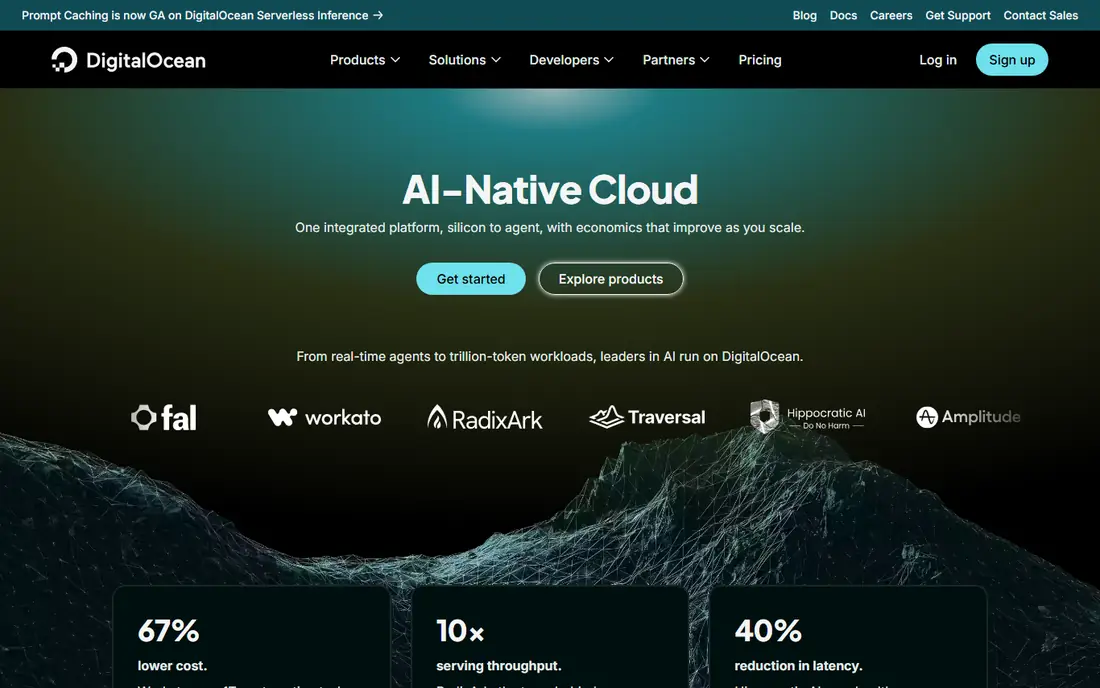
DigitalOcean is often the first cloud server a developer tries, and the simple dashboard is the reason. Droplets deploy in minutes, snapshots and firewalls are easy to find, and managed databases can sit beside a server without extra setup. Trial credits help new accounts test a setup before committing. The trade-off is value, since a comparable amount of RAM costs more here than at Hetzner or Contabo. If ease of use matters more than squeezing every dollar, DigitalOcean is a safe pick.
- Simple dashboard and pricing
- One-click apps
- Managed databases and snapshots
- Higher cost per unit of RAM than budget rivals
- Support is ticket-based on basic plans

Linode, now part of Akamai, has built a loyal following among Linux users who want a server that simply stays up. Pricing is predictable, locations cover many regions, and support has a strong reputation for helpful, human replies. The control panel is functional rather than flashy, and managed services are thinner than at DigitalOcean. For a team that runs its own stack and wants steady performance, Linode is a dependable choice.
- Predictable pricing
- Many global locations
- Human support with a good reputation
- Interface feels plain next to newer rivals
- Managed services are thinner

Vultr suits projects that need servers close to users in many parts of the world. Its location list is one of the widest among budget cloud hosts, and high-frequency plans help single-core workloads such as game servers and busy web apps. Hourly billing makes short tests cheap. Support is ticket-based, and you manage the server yourself, so it suits users who are comfortable with Linux admin. If location choice drives your decision, Vultr is hard to ignore.
- Many data-centre locations
- High-frequency compute options
- Hourly billing
- Support is ticket-based
- Managed help is limited
Hetzner Cloud is the value leader for many European workloads, with German data centres and a generous traffic allowance in EU regions. A small plan can run a website, database, and a few services at a price that rivals charge far more for. US locations are also available, though traffic allowances differ by region. Support is ticket-based and aimed at technical users, so beginners may want a managed host instead. Check the current price before ordering, since Hetzner adjusted rates during 2026.
- Strong price per unit of RAM
- Generous traffic allowance in the EU
- German data centres
- Support is ticket-based
- Prices have risen during 2026, so check current rates
Contabo appeals to buyers who want the most RAM and storage per dollar. Its VPS plans often include far more resources than similarly priced rivals, which suits media servers, game servers, and development boxes. Object storage and dedicated options extend the range. The trade-off is polish, since setup times and support responses can feel slower than at premium hosts. If raw resources matter most and you can manage a server yourself, Contabo offers a lot for the money.
- Large RAM and storage for the price
- Many locations
- Object storage options
- Setup and support can feel slower
- Plan details change often
OVHcloud suits public-facing sites that need built-in DDoS mitigation and European hosting. Its VPS range covers small test boxes through larger production servers, with data centres in Europe and beyond. Anti-DDoS protection is included, which helps sites that have faced attacks before. The control panel and support experience vary by region, and prices differ by billing term, so read the plan page for your country. For EU teams that want protection included, OVHcloud is a practical pick.
- Built-in DDoS mitigation
- European data centres
- Wide VPS range
- Panel and support vary by region
- Pricing differs by billing term
Kamatera lets you build a server to exact specs rather than picking a fixed plan, which suits workloads that do not fit standard sizes. You choose CPU type, RAM, storage, and location, then pay for what you use. A free trial helps test the platform before a larger commitment. Custom specs can push the monthly total above a fixed-plan rival, and managed services are an add-on. If your workload needs an unusual mix of resources, Kamatera gives you control that fixed plans do not.
- Fully custom CPU, RAM, and storage
- Many locations
- Pay-as-you-go billing
- Costs climb with custom specs
- Managed services cost extra
Cloudways adds a managed layer on top of DigitalOcean, AWS, Google Cloud, and other providers, so agencies can host client sites without managing servers directly. Staging, backups, server monitoring, and support come as part of the service. You pay a markup over the raw cloud price, and you give up some root-level control. For agencies and site owners who want cloud performance without server admin, that trade is often worth it. For developers who want full control, an unmanaged host fits better.
- Managed layer on major clouds
- Staging and backups included
- Choice of provider
- Adds a markup over raw cloud pricing
- Less root-level control
Liquid Web targets business owners who want a server managed for them, with support staff who handle updates, monitoring, and troubleshooting. That service suits stores and business sites where downtime costs money and no one on staff wants server duty. Prices run higher than unmanaged hosts, and entry plans are larger than the cheapest cloud boxes. If uptime and support matter more than the lowest monthly figure, Liquid Web is a strong managed pick.
- Fully managed support
- Proactive monitoring
- Good choice for business-critical sites
- Higher price than unmanaged hosts
- Fewer tiny entry plans
How we picked these
We compared official pricing pages, plan specs, and public review coverage for VPS hosts that offer root access, dedicated resources, and current plans in October 2026. We kept a mix of unmanaged cloud hosts and managed VPS providers. Where pricing varies by region, term, or configuration, we used the published entry figure or wrote See website.
What to check before you buy
Decide first whether you want managed or unmanaged hosting, since that choice shapes price and workload more than any spec. Unmanaged servers need you to handle updates, firewalls, backups, and security patches. Managed plans handle much of that, but cost more and limit some control. Next, pick a data centre near your users, check renewal pricing rather than only the first-term price, and confirm backup and snapshot costs. Test a restore, set up monitoring, and keep a copy of your data outside the server itself.
Also check whether backups and snapshots are included or billed separately, since that cost can change the monthly total by a large margin. Ask about support hours, response times, and whether help covers application issues or only the server itself. A cheap server with slow support can cost more in lost time than a slightly pricier plan with helpful staff, so weigh support alongside specs.
Frequently asked questions
What is the best VPS software for a beginner?
Cloudways and Liquid Web suit beginners because management, backups, and support are included. DigitalOcean also suits beginners who are willing to learn basic server admin, thanks to its simple dashboard.
Is a VPS better than shared hosting?
A VPS gives dedicated resources and root access, so a neighbour site cannot slow yours down as easily. Shared hosting is cheaper and simpler, but it limits software choice and performance under load.
How much RAM does a VPS need?
A small website often runs on 1 to 2 GB of RAM, while a busy store or app with a database often needs 4 GB or more. Start with 2 to 4 GB, monitor usage, and resize before performance suffers.
Do VPS prices vary by region?
Yes. Prices vary by region, data-centre location, and billing term, and traffic allowances also differ. Always check the price for the location you will actually use, not just the headline figure.
Can I upgrade a VPS later?
Most cloud hosts let you resize CPU and RAM, though some changes need a reboot or a plan change. Managed hosts may need a support request, so ask about resize steps before you buy.
Sources
See where you really rank - block by block
ProMapRanker scans Google Maps across a grid of your service area. Simple monthly plans from $19, white-label on every plan.
Start freeKeep reading
 worlds best local seo company
8 Worlds Best Local SEO Companies for Map Pack Growth in 2026
Compare the worlds best local seo company options for Google Business Profile work, citations, reviews, and multi-location rankings and reporting in 2026.
Read → world's best web hosting company
World's Best Web Hosting Company in 2026
Searching for the world's best web hosting company? We compared 10 hosts on price, renewal rates, speed, and support to help you choose well today in 2026.
Read → who's got the best nanny tax services
Who's Got the Best Nanny Tax Services in 2026
We answer who's got the best nanny tax services, comparing full filing, back taxes, software, and pricing so families can handle nanny taxes correctly.
Read →