 ProMapRanker
Best Voice Analytics Software in 2026


Enterprise conversation intelligence · Pricing starts at: See website
Key takeaways
- Voice analytics turns recorded calls into transcripts, topics, sentiment, and scores, so managers can review every call instead of a small sample.
- CallMiner, NiCE, and Verint suit large contact centres, while Insight7 and Enthu.ai suit smaller teams that need faster setup and clearer pricing.
- Most enterprise tools are quote based, so ask for pricing by agent count, call volume, and retention period before comparing.
- Only record and analyse calls where you have a lawful basis and have given the notice your state or country requires, and tell agents and callers how recordings are used.
- Our pick for most mid-size teams is a tool that links transcripts to coaching and quality scores, rather than a transcription-only service.
Quick comparison
| Pick | Great for | Pricing starts at | Free tier | |
|---|---|---|---|---|
| CallMiner | Enterprise conversation intelligence | See website | No | Visit |
 NiCE Interaction Analytics | Large CXone contact centres | See website | No | Visit |
 Verint Speech Analytics | Enterprise speech and trend analysis | See website | No | Visit |
 Observe.AI | QA and coaching linked to calls | See website | Free trial | Visit |
 Insight7 | Smaller teams needing fast insight | See website | Yes | Visit |
 Gong | Revenue teams and sales calls | See website | No | Visit |
 Talkdesk Interaction Analytics | Talkdesk contact centres | See website | No | Visit |
 Invoca | Marketing calls and conversions | See website | No | Visit |
 Enthu.ai | Affordable call scoring for small teams | See website | Free trial | Visit |
The best voice analytics software
Voice analytics software listens to phone calls, transcribes them, and finds patterns in what callers and agents say. The nine tools below differ in whether they focus on contact centre quality, sales coaching, or marketing attribution, so the right choice depends on which calls you need to understand and what you will do with the insight.
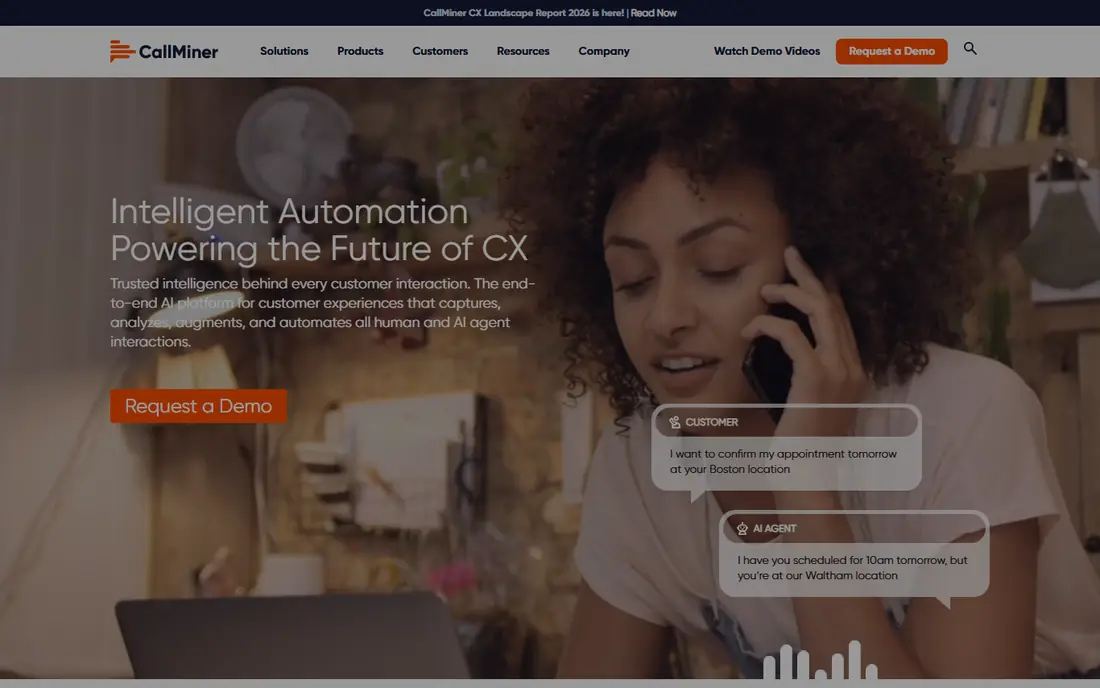
CallMiner is the enterprise standard many large contact centres compare everything else against. It analyses voice and digital conversations, scores interactions against your criteria, and surfaces root causes behind repeat contacts, complaints, and churn signals. For a centre handling thousands of calls a week, that ability to analyse every interaction, rather than a random sample, changes how quality and compliance work.
The cost is scope and effort. CallMiner is quote based, and getting full value requires tuning categories, scores, and dashboards to your business, which takes staff time. Smaller teams may find the platform more than they need, but large centres that need defensible quality data and trend analysis will find it hard to beat.
- Omnichannel conversation analysis
- Automated scoring and sentiment
- Root-cause analysis for recurring issues
- Enterprise pricing is quote based
- Implementation and tuning take time and staff
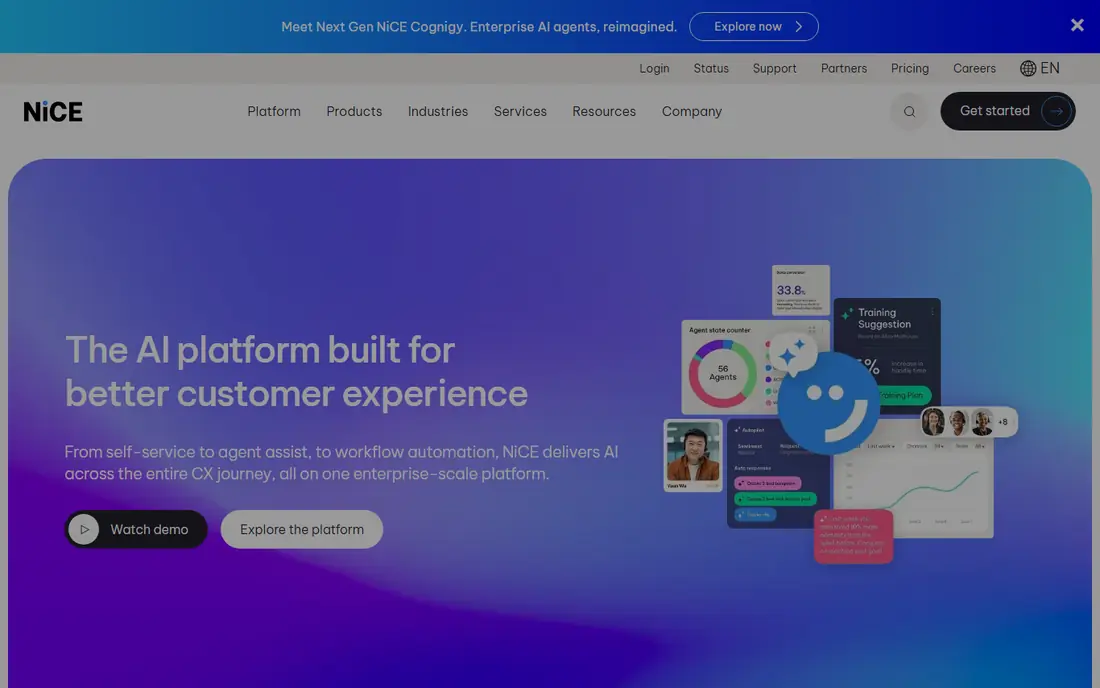
NiCE Interaction Analytics suits a contact centre already running on NiCE CXone, because analytics sit inside the same platform as routing, workforce tools, and quality management. It transcribes calls, detects sentiment and intent, and finds emerging topics without waiting for a manual review sample. Managers can link a trend, such as a billing complaint spike, back to specific calls and agent behaviours.
Outside CXone, the fit is weaker, because much of the value comes from that integration. Pricing is quote based and tied to your CXone arrangement, so a standalone comparison is hard. If you already use NiCE, start here. If you do not, compare CallMiner and Verint before committing to a platform change for analytics alone.
- Deep fit inside NiCE CXone
- Sentiment and intent analysis
- Automated discovery of topics and agent behaviours
- Best value inside the NiCE ecosystem
- Standalone pricing is not published simply
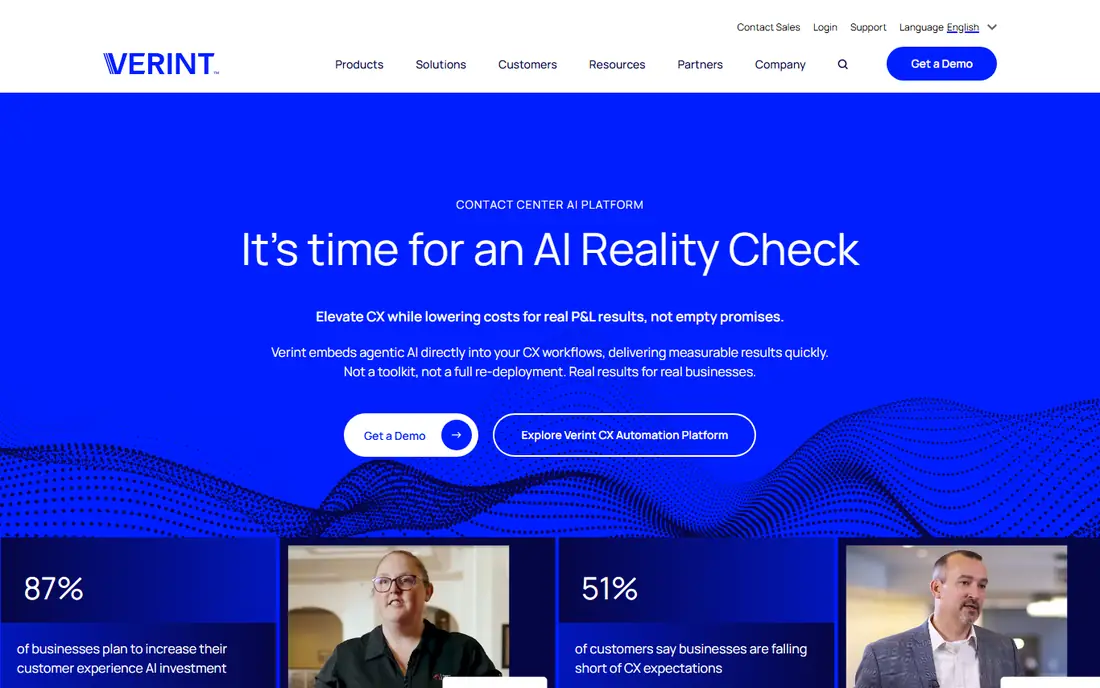
Verint Speech Analytics has a long history in large contact centres, and its strength is turning speech into operational themes you can act on. It maps what callers talk about, how sentiment shifts over a call, and where processes break down, then links those findings to quality and coaching workflows. That structure helps operations teams fix a broken process, not just coach one agent.
Verint is an enterprise purchase with quote-based pricing and a setup phase that rewards a dedicated owner. Small teams will find it heavy, and teams without a quality programme may struggle to use the depth it offers. For a large centre with compliance needs and a quality team, Verint remains a safe, proven shortlist entry.
- Mature speech analytics with theme and trend mapping
- Sentiment analysis
- Root-cause workflows for operations teams
- Enterprise quote pricing
- Setup and category tuning require experienced owners
Observe.AI connects conversation analysis directly to quality assurance and coaching, which is where many analytics tools fall short. Instead of a dashboard alone, managers get scored calls with transcript evidence for each score, so coaching conversations start from what was actually said. That evidence link makes feedback fairer and easier for agents to accept.
The platform still needs good QA criteria to work well. If your scorecard is vague, automated scoring will reproduce that vagueness at scale, so invest time in defining what good looks like before rollout. Pricing is quote based, so ask for a price tied to agent count and call volume, and trial it with your own calls rather than demo data.
- Automated QA scoring tied to call evidence
- Intent and sentiment analysis
- Coaching workflows linked to real calls
- Pricing is quote based
- Best results need clear QA criteria defined up front
Insight7 is a good fit for a smaller team that wants voice analytics without an enterprise procurement cycle. It offers call transcription, custom scoring, performance dashboards, and coaching tools, with a free tier that lets you test the workflow on real calls. The coaching and roleplay features help small managers turn insight into practice, not just reports.
Insight7 does not match the enterprise suites on breadth of integrations or on massive contact centre scale. If you run a very large centre with complex routing and workforce systems, CallMiner, NiCE, or Verint may fit better. For a team of tens rather than thousands of agents, Insight7 gives a faster path to useful call insight.
- Free tier to start
- Custom call scoring and evaluation
- Coaching and roleplay tools
- Faster setup than enterprise suites
- Less enterprise breadth than CallMiner or Verint
- Larger contact centres may need deeper integrations
Gong is the voice analytics pick for sales and revenue teams, rather than for support centres. It captures sales calls, transcribes them, and surfaces deal risks, competitor mentions, and coaching moments for managers. The CRM integration means insight lands where sales leaders already work, which helps adoption compared with a standalone analytics dashboard.
Gong is a poor fit if your main need is support quality, compliance scoring, or general contact centre analytics, because its models and workflows are tuned for revenue conversations. Pricing is quote based, so get a price for your sales headcount and call volume. For a sales organisation that lives on calls, Gong is often the first tool to trial.
- Strong revenue and sales conversation intelligence
- Deal and trend insight
- CRM links for sales workflows
- Built for revenue teams, not general contact centre QA
- Pricing is quote based
Talkdesk Interaction Analytics makes sense for a centre already on Talkdesk, because it adds transcription, intent, sentiment, and topic discovery without a separate platform to maintain. Managers can search calls by topic, spot recurring customer issues, and link findings to quality workflows in the same system agents already use.
As with NiCE, the standalone case is weaker. If you are not on Talkdesk, switching contact centre platforms for analytics alone is rarely justified. Compare Observe.AI or Insight7 as standalone options first, and treat Talkdesk analytics as a strong reason to stay if you are already a Talkdesk customer.
- Native fit inside Talkdesk
- Transcription, intent, and sentiment
- Topic discovery for CX insight
- Value is strongest inside Talkdesk
- Pricing is tied to your Talkdesk plan
Invoca answers a different question from most tools here: which marketing campaigns drive valuable phone calls, and what happens on those calls. It links calls to campaigns and keywords, scores them, and surfaces sentiment and topics, so marketing teams can shift spend toward calls that convert. That attribution link is valuable for businesses where the phone is still a major sales channel.
Invoca is less suited to a support centre that needs detailed QA scorecards across every agent. If your priority is support quality, Observe.AI or CallMiner fit better. If your priority is proving which ads and pages produce real conversations and revenue, Invoca deserves the first trial.
- Call attribution for marketing campaigns
- Sentiment and call scoring
- Topic insight tied to revenue outcomes
- Marketing focus means less depth for general support QA
- Pricing is quote based
Enthu.ai suits a small sales or support team that wants to analyse every call without enterprise pricing. It transcribes calls, scores them against your criteria, filters by outcome or behaviour, and sends alerts when a call matches a pattern you care about. That full-coverage approach is a step up from manual sampling, even for a team of ten agents.
The trade-off is depth. Enthu.ai does not offer the same breadth of enterprise integrations or workforce tools as NiCE or Verint, and larger centres may outgrow it. For a small team that needs clear call scores, searchable transcripts, and coaching evidence at a fair price, it is a practical starting point, and the trial lets you test it on your own calls.
- Analyses all calls, not just a sample
- Call filtering and custom alerts
- Lower entry cost than enterprise suites
- Less enterprise integration depth
- Support and onboarding vary by plan
How we picked these
We compared official product pages, pricing pages, and public documentation for voice analytics tools operating in October 2026, keeping only tools that transcribe and analyse real voice calls with sentiment, topic, or scoring features. We weighed coverage of all calls versus sampling, quality and coaching links, integration with contact centre or CRM systems, and pricing transparency. We did not claim hands-on testing, and where vendors do not publish a price, we wrote See website rather than guessing.
Consent, recording, and buying guidance
Voice analytics only works if recording itself is lawful and trusted, so sort consent before you sort vendors. In the United States, recording consent rules vary by state, with some states requiring all parties to consent and others requiring one party, and other countries have their own rules. Give callers clear notice that calls may be recorded and analysed, tell agents how recordings and scores are used, and limit access to recordings to staff who need them for quality, training, or compliance.
When buying, trial the tool on your own calls, with your own accents, background noise, and call lengths, because demo accuracy rarely matches real-world audio. Check transcription quality, speaker separation, and how the tool handles silence, hold music, and overlapping speech. Also check retention controls, redaction of sensitive data such as payment details, and export options, because you will need to delete or produce recordings on request. A tool that scores well on your calls, respects consent and privacy, and feeds coaching directly is worth more than a tool with a longer feature list that nobody opens.
Frequently asked questions
What is the best voice analytics tool?
For large contact centres, CallMiner, NiCE Interaction Analytics, and Verint Speech Analytics lead on depth and scale. For smaller teams, Insight7 and Enthu.ai offer faster setup and clearer entry pricing. For sales teams, Gong leads on revenue insight, while Invoca leads on marketing call attribution. Choose by team size and by whether your calls are support, sales, or marketing calls.
What is the best voice analytics software for small businesses?
Small businesses usually do well with Insight7 or Enthu.ai, because both analyse all calls, offer trials or a free tier, and avoid enterprise procurement. Start with a trial on your own calls, check transcription quality, and confirm the price at your agent count and call volume. Add coaching workflows early, so insight turns into better calls rather than just reports.
Do I need consent to record and analyse calls?
Yes, in most cases you need a lawful basis and proper notice, and the exact rule depends on where callers and agents are located. Some US states require all parties to consent, while others require one party, and other jurisdictions add stricter rules. Give clear notice, record consent where required, limit who can access recordings, and check your state rules or get legal advice before rollout.
Can voice analytics replace manual quality checks?
It can reduce manual sampling a great deal, because it reviews every call instead of a few per agent per month. It does not fully replace human judgment, especially for complex, sensitive, or disputed calls. Most teams use analytics to flag calls for human review and coaching, and keep a human in the loop for final quality decisions.
How is voice analytics different from transcription alone?
Transcription turns speech into text, while voice analytics adds sentiment, topics, intent, scoring, and trends on top of that text. A transcript tells you what was said on one call, while analytics tells you what hundreds of calls have in common and where coaching or process fixes will help most. That pattern layer is what justifies the higher price over a basic transcription service.
How much does voice analytics software cost?
Pricing is mostly quote based for enterprise tools, tied to agent count, call minutes, and retention. Smaller tools publish entry prices or offer trials and free tiers, which makes early comparison easier. Ask every vendor for the total annual cost at your volume, including transcription minutes, storage, and any coaching or integration add-ons.
Sources
See where you really rank - block by block
ProMapRanker scans Google Maps across a grid of your service area. Simple monthly plans from $19, white-label on every plan.
Start freeKeep reading
 zoro.to alternatives
Best Zoro.to Alternatives in 2026
We compare the best zoro.to alternatives in 2026, listing only legal licensed anime streaming services, from Crunchyroll to free options for fans today.
Read → zip alternatives
Best Zip Alternatives in 2026
We compare the best zip alternatives for buy now, pay later in 2026, covering pay-in-4 plans, fees, spending limits, and credit reporting options today.
Read → yesware alternatives
Best Yesware Alternatives in 2026
Compare the best yesware alternatives for sales email tracking, templates, and sequences, with current pricing and honest tradeoffs for small sales teams.
Read →