 ProMapRanker
Best Virtual Career Fair Platforms in 2026

Key takeaways
- The best virtual career fair platform depends on audience, since campus, enterprise and public workforce events need different tools.
- Booths, video chat and scheduling matter more than visual effects, because candidates judge an event by how easy it is to talk to a recruiter.
- Most enterprise platforms are priced by quote, so ask for a scoped price based on booths, attendees and event length.
- A platform alone does not fill an event, so plan candidate outreach, employer training and follow up before event day.
Quick comparison
| Pick | Great for | Pricing starts at | Free tier | |
|---|---|---|---|---|
 Radancy (Brazen) | Enterprise hiring events | See website | No | Visit |
 vFairs | Branded virtual and hybrid fairs | See website | No | Visit |
 Handshake | Campus recruiting in the USA | See website | No | Visit |
 CareerEco | University and employer fairs | See website | No | Visit |
 EasyVirtualFair | Simple per event fairs | See website | No | Visit |
 Premier Virtual | Workforce and public sector fairs | See website | No | Visit |
 Whova | Events with fairs and networking | See website | No | Visit |
 Career Fair Plus | Campus fairs with an app | See website | No | Visit |
The best virtual career fair platforms
Virtual career fairs let candidates visit employer booths, join video chats and apply for roles without travel. The platforms here differ on audience, booth design and scheduling, so compare them by the event you actually run.

Brazen, now part of Radancy, is a long running virtual career fair product used by large employers for hiring events at scale. Recruiters can run booths, chat with candidates, hold video interviews and review event data in one place. For a large firm running many events a year, that scale and the wider Radancy suite are the main draw.
The trade off is fit for small events. Enterprise setup, contracts and training may be more than a single university fair needs, and pricing is not public. Ask how Brazen features work inside Radancy today, and what happens to existing event data. Radancy fits large employers that run repeated hiring events and need a full talent acquisition system around them.
- Built for high volume hiring events
- Chat and video tools for recruiters
- Part of a wider talent acquisition suite
- Enterprise pricing and setup
- May be heavy for a single small fair
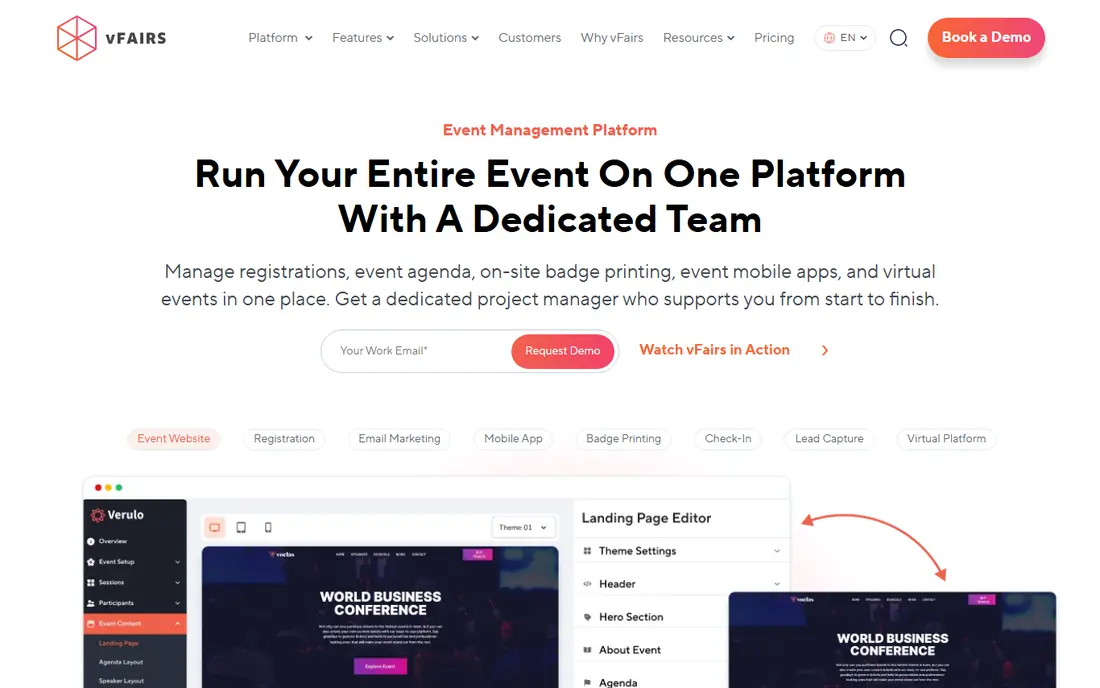
vFairs is a broad event platform with a clear career fair option, including virtual halls, employer booths, webinars, chat and lead capture. Organisers can brand the space, run live sessions and track which booths and jobs drew attention. That makes it a good fit when the fair is also a brand event, not just a chat room.
Visual depth is both a strength and a cost. A polished hall takes design time and clear content from each employer, and a rushed setup can confuse candidates. Ask for a timeline, a project manager and examples of fairs at your size. vFairs fits organisers who want a branded, polished fair and can invest in setup.
- Strong branded booths and event halls
- Webinar and networking tools
- Support for hybrid events too
- Pricing is by quote
- Rich visuals need planning time

Handshake connects students and recent graduates with employers, and its virtual fair tools sit beside job posts and employer profiles. Students can register, join sessions and talk to recruiters, while employers can target schools and roles. For campus recruiting, the built in student audience is the main advantage over a standalone fair tool.
It is less suited to general public hiring, since the audience is mainly students and graduates. Employers should also check how each university controls access and branding for its students. Handshake fits employers and universities that recruit students and graduates and want fairs inside a campus system.
- Large student audience in the USA
- Virtual fair tools linked to jobs and employer profiles
- Familiar to many students
- Mainly campus focused
- Employer access depends on university and school rules
CareerEco runs virtual career fairs for universities, colleges and employers, with booths, chat, video and job listings. It is a focused product, which helps organisers who want a fair without learning a full conference platform. Candidates get a clear event page, employer list and chat options, which keeps the focus on hiring.
The limit is breadth. If you also need a full conference, expo or hybrid event system, a broader platform may suit you better. Check booth limits, video capacity and reporting for your expected candidate numbers. CareerEco fits universities and mid sized employers that run regular career fairs and want a focused tool.
- Focused on university and employer events
- Chat and video booths
- Clear event pages for candidates
- Smaller general event toolset than broad platforms
- Pricing is by quote
EasyVirtualFair offers virtual career fairs with branded booths, live video chat and webinar stages, all in a browser. Its per event model suits universities, employers and public partners that run occasional fairs and do not want an annual enterprise contract. Setup is pitched as faster than large suite products, which helps small teams.
The trade off is scale and integration. Large firms that need deep applicant tracking links, complex reporting or a full talent suite may need a larger platform. Ask about integrations, data export and support hours for live events. EasyVirtualFair fits organisers who want a clear, standalone fair for one event or a small series.
- Browser based fairs with no downloads
- Custom booths
- Per event pricing model suits one off events
- Fewer enterprise suite features
- Smaller support team than large vendors
Premier Virtual serves workforce development boards, government partners and employers with virtual hiring events. Its tools cover booths, chat, video interviews and job matching for public facing events, where candidates may use varied devices and need clear instructions. That public sector experience is useful when accessibility and simple joining matter.
Organisers should still test the candidate journey on mobile and low bandwidth connections, since public events draw a wide range of devices. Ask about reporting for funders, since workforce events often need attendance and outcome data. Premier Virtual fits public sector and workforce events that need a practical, accessible hiring fair.
- Experience with workforce boards and public sector events
- Chat and video hiring tools
- Accessible event design
- Pricing is by quote
- Branding options vary by plan
Whova is an event platform with agenda, networking, exhibitor and mobile app tools, which can host a career fair as part of a larger event. Attendees can browse exhibitors, message contacts, join sessions and save jobs or booths in the app. That suits conferences, university events and expos where hiring is one track among others.
For a pure hiring fair, a focused platform may offer deeper recruiter tools, such as queue management and interview scheduling. Check how booth chats, resumes and recruiter notes work in Whova before choosing it for a hiring only event. Whova fits organisers who want a fair inside a wider event, with a strong mobile app.
- Full event app plus exhibitor and networking tools
- Agenda and attendee messaging
- Useful for hybrid events
- Career fair is one part of a wider event product
- Setup needs care for large hiring events
Career Fair Plus gives students and recruiters a mobile app for career fairs, with employer lists, booth details, saved favourites and messaging. Universities use it to help students plan a fair, find employers and follow up after the event. The app first design helps students who browse on phones.
It is not a full enterprise hiring suite, so large employers running complex multi day events may need extra tools for interviews and applicant tracking. Check how data flows to your recruiting system and how virtual sessions are handled. Career Fair Plus fits campuses that want a simple, student friendly fair app.
- Mobile app for students and recruiters
- Employer profiles and event maps
- Works for in person and virtual elements
- Focus is mainly campus events
- Enterprise hiring features are more limited
How we picked these
We compared official product pages, feature descriptions and public fair use cases, and we left out products with no live career fair service in October 2026. We did not invent prices, attendee counts or ratings, and where pricing was not public we wrote See website. Brazen is listed under Radancy because Brazen is now part of Radancy.
What to check before you buy
Start with audience and event size. A campus fair for 500 students, a public workforce fair for 5,000 jobseekers and an enterprise fair for 50 recruiters need different booth, video and reporting setups. Write down expected attendees, booths, sessions and peak concurrent chats before you request a quote.
Then test the candidate journey. Join as a candidate, find a booth, start a chat, join a video call and apply for a job, all on a phone. If any step needs a download, a complex login or unclear instructions, candidates will drop out. Also check accessibility, language options and support during live hours.
Finally, plan follow up and data. Ask how recruiter notes, resumes, chat logs and attendance data export to your applicant tracking system, and how long data is kept. Agree who trains employers, who supports candidates on event day and what happens if video fails. A fair succeeds on follow up, not just on event day traffic.
Frequently asked questions
What is the best virtual career fair platform?
The best platform depends on your event. Handshake and Career Fair Plus suit campus events, Radancy suits large enterprise hiring, vFairs suits branded fairs, and Premier Virtual suits workforce events.
What is the best virtual career fair software for universities?
Handshake, CareerEco, EasyVirtualFair and Career Fair Plus all serve universities, with different strengths. Handshake offers a student audience, CareerEco offers focused fairs, EasyVirtualFair offers per event simplicity, and Career Fair Plus offers a student app.
What is the best virtual job fair software for employers?
For employers, Radancy, vFairs and CareerEco are strong starting points, depending on scale and branding needs. Large firms should check Radancy, branded events should check vFairs, and focused fairs should check CareerEco.
How much does a virtual career fair platform cost?
Most platforms in this list price by quote, based on booths, attendees, features and support, which is why we wrote See website for them. Per event and annual models both exist, so request a scoped quote for your event size.
Do candidates need to download software to join?
Many platforms here run in a browser, and some offer optional mobile apps. Check the joining steps for your chosen platform, and test them on a phone before you invite candidates.
How do I get candidates to attend a virtual fair?
Promote the fair through schools, job boards, email and social channels, list real jobs and booths early, and give candidates a clear schedule. A platform alone will not fill seats, so outreach and employer preparation matter as much as the tool.
Sources
See where you really rank - block by block
ProMapRanker scans Google Maps across a grid of your service area. Simple monthly plans from $19, white-label on every plan.
Start freeKeep reading
 zscaler alternatives
Best Zscaler Alternatives in 2026
Looking for zscaler alternatives? We compare 9 SASE and zero trust platforms on architecture, data protection, pricing, and fit for your network and team.
Read → zapier alternatives free
Best Zapier Alternatives Free in 2026
Nine automation tools for zapier alternatives free in 2026, all with genuinely free tiers, plus free plan limits, starting prices and upgrade paths explained.
Read → which platform is best for online reputation
Which Platform Is Best for Online Reputation in 2026
Wondering which platform is best for online reputation? We compare 8 review, listing, and response tools for small and multi-location businesses and agencies.
Read →