 ProMapRanker
Best VDR Services for Fundraising in 2026

Key takeaways
- A fundraising data room is judged first on control: who can see each file, for how long, and what they do with it.
- Quote-based enterprise rooms suit large, complex rounds, while flat subscription rooms suit early-stage founders who need to move fast.
- Investor activity tracking matters more than storage size, because it shows which parts of the story are getting real attention.
- Check whether redaction, watermarking, and Q and A tools are included in the plan you are quoted, not just listed on the marketing page.
Quick comparison
| Pick | Great for | Pricing starts at | Free tier | |
|---|---|---|---|---|
 Datasite | Large, complex fundraises | See website | No | Visit |
 Intralinks | Regulated and cross-border deals | See website | No | Visit |
 iDeals | Mid-market rounds and first serious diligence | See website | Free trial | Visit |
 Firmex | Firms running repeat deals | See website | No | Visit |
 Ansarada | Deal preparation and bidder engagement | See website | No | Visit |
 DealRoom | Teams managing a pipeline of deals | See website | No | Visit |
 SecureDocs | Fast setup for smaller raises | $250 per month | No | Visit |
 CapLinked | Budget-conscious small and mid-size deals | $399 per month | No | Visit |
 Digify | Early-stage founders sharing sensitive files | $140 per month | Free trial | Visit |
The best VDR services for fundraising
Fundraising moves at the speed of trust, and a virtual data room is where that trust is tested. These services give founders a controlled place to share financials, contracts, and product material with investors, without sending the same files around by email.
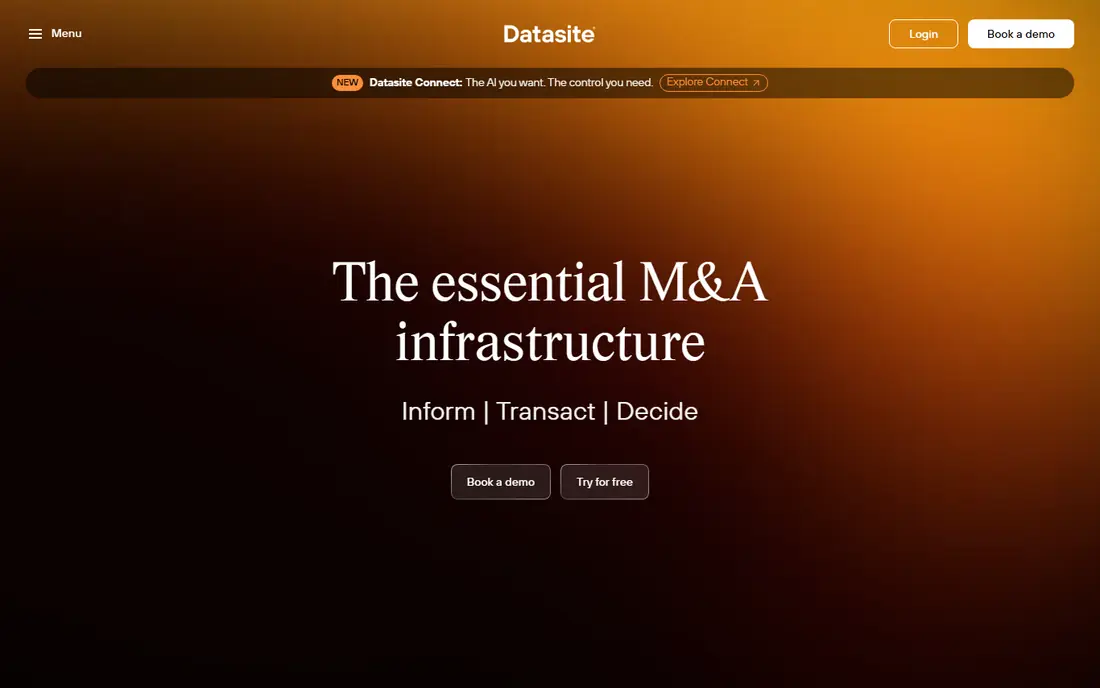
Datasite is the heavyweight choice in this list, and it shows in both its feature set and its sales process. It is built for transactions where many parties, many documents, and strict compliance requirements all meet at once. For a large growth round or a sale process run by advisers, that depth is a real benefit. Permission controls, audit trails, and document handling are designed for teams that cannot afford a loose file share.
The catch is fit. A seed-stage founder with a short document set will likely find Datasite more than is needed, and the quote-based price will reflect that enterprise positioning. We would shortlist it when the round is large, the diligence list is long, or counsel and advisers are already involved. For a simple investor update room, a lighter service will get you live sooner.
- Deep permission controls
- Strong AI-assisted redaction and document tools
- Built for large deal teams
- Quote-based pricing can be costly for small raises
- Setup can take longer than simpler rooms
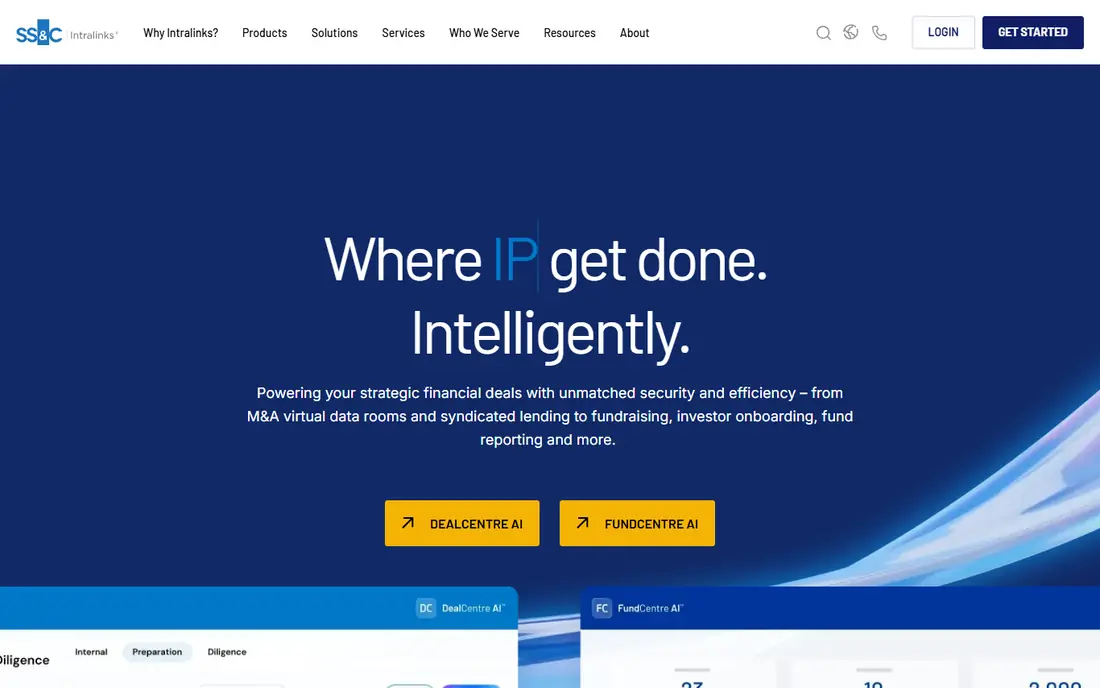
Intralinks has been used for major financial transactions for many years, and that history is part of its appeal. Its controls are aimed at deals where documents must stay protected even after they are viewed, and where regulators and multiple jurisdictions are involved. Banks, law firms, and large companies tend to know it already, which can shorten the approval conversation with their own compliance teams.
That familiarity comes with trade-offs. Pricing is quoted per deal, so small fundraises can find it hard to justify. The product also feels more formal than the newer, founder-friendly rooms in this list. We would pick it when the deal is regulated, cross-border, or large enough that institutional buyers expect a name they recognise.
- Long track record in capital markets
- Strong information rights controls
- Suited to regulated work
- Quote-based pricing
- Interface can feel dated next to newer rooms
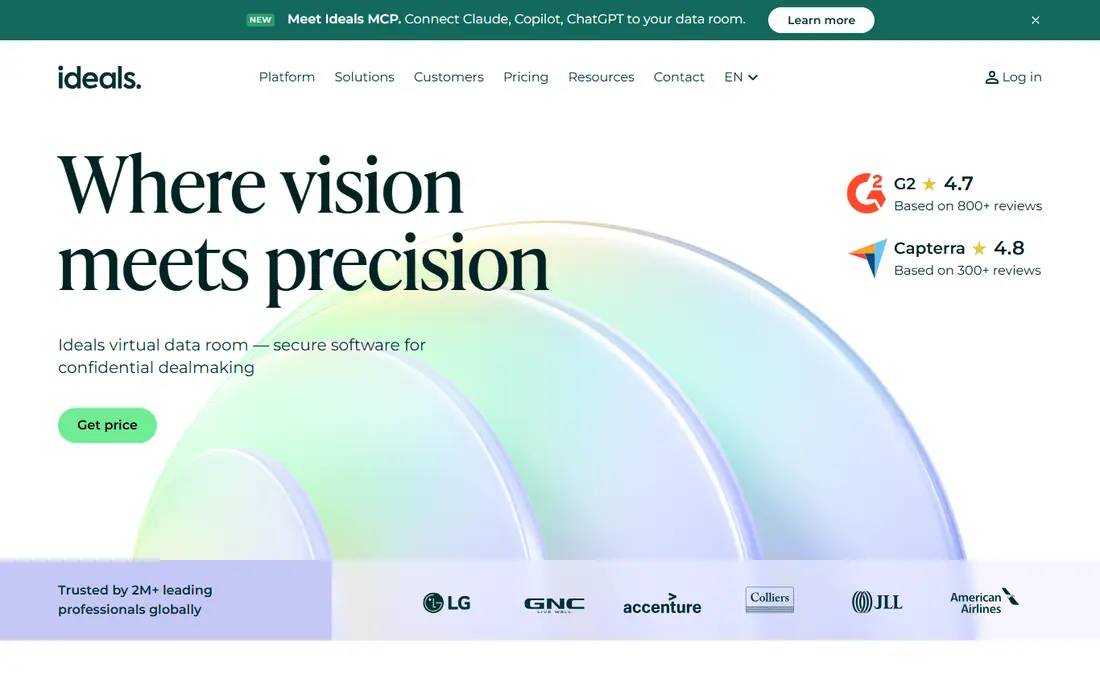
iDeals sits in a useful middle ground between enterprise rooms and simple file sharing. It offers granular permissions, secure viewing, redaction, and a Q and A workflow for handling investor questions in one place. At the same time, the interface is plain enough that a small finance team can learn it without a long training session. That balance makes it a strong default for a Series A or Series B diligence cycle.
The main drawback is that you still need to talk to sales for a price, so budgeting takes an extra step. It is also more room than a very early raise requires if you only need to share a pitch deck and a handful of documents. For a founder facing a real diligence checklist for the first time, though, iDeals is one of the easiest serious options to run well.
- Full VDR feature set with a friendly interface
- Q and A workflow built in
- 24/7 support on higher plans
- Pricing is quote-based
- Can be more than a seed round needs
Firmex is aimed less at a single founder and more at firms that run deal after deal. Law firms, advisers, and funds that need a fresh room for each transaction get value from a subscription that covers multiple rooms, rather than paying per deal each time. The product covers the core VDR needs: permissions, secure viewing, activity tracking, and document organisation.
It does not lead on flashy AI features, and that may matter if you want automated document sorting or AI-assisted Q and A. For repeat deal work, however, consistency and predictable handling often matter more than novelty. We would shortlist Firmex when your team will use a data room again and again, and when a subscription beats a string of one-off quotes.
- Subscription model suits repeat use
- Unlimited rooms on subscription plans
- Dedicated customer support
- Fewer headline AI features than some rivals
- Pricing is quote-based
Ansarada focuses on the work that happens before investors ever open the room. Its tools help teams prepare, sort, and clean up documents, and its bidder engagement scoring gives a read on which parties are engaging most seriously. That preparation focus suits sell-side teams and founders who want to arrive at diligence with a tidy, complete room rather than a pile of uploads.
Storage-based pricing means a document-heavy room can cost more than the headline rate suggests, so check the tier against your actual file set. Ansarada is now owned by Datasite, which is worth noting when you ask about roadmaps and support. We would pick it when preparation quality and bidder insight are your top concerns.
- AI-assisted deal preparation tools
- Bidder engagement scoring
- Structured workflow for sell-side teams
- Storage tiers can push the price up
- Now part of the Datasite group, so check future plans
DealRoom is different from a pure data room because it also handles the deal pipeline around it. Corporate development teams and funds that track several targets at once can manage outreach, diligence, and documents in one place. That joined-up view is its main strength, and flat-rate pricing with unlimited users can make budgeting simpler for a busy team.
For a founder running one raise, that breadth can feel like overkill. You are paying, in attention if not in money, for pipeline tools you may not use. We would recommend DealRoom to in-house deal teams first, and to founders second, unless the raise is part of a wider acquisition or investment programme.
- Combines pipeline management with the data room
- Flat-rate options for unlimited users
- Built for in-house teams
- Pricing is quote-based
- May be more than a single-raise founder needs
SecureDocs is built for speed. A founder can set up a room, upload documents, set permissions, and invite investors without a long onboarding process. Flat pricing makes the cost easy to forecast for a three-month or six-month raise, which is a real benefit when the timetable slips. The core controls, including permissions and activity tracking, cover what most smaller raises need.
The trade-off is depth. Very large deals with complex redaction, multi-party Q and A, and heavy compliance needs will outgrow it. We see SecureDocs as a strong fit for seed and early growth rounds where the priority is getting a clean, secure room live this week, not running a bank-led sale process.
- Flat subscription pricing
- Fast setup
- Simple permission and tracking tools
- Less depth than enterprise VDRs
- Higher tiers needed for larger deals
CapLinked aims at teams that want enterprise-style security without an enterprise quote process. Its published starting price makes it easier to compare against other rooms, and the feature set covers permissions, secure document sharing, and activity reporting. For a small or mid-size deal, that combination is practical and easy to explain to investors.
It does not match Datasite or iDeals on advanced AI-assisted features, and larger deals may need a higher tier. We would shortlist CapLinked when budget discipline matters and the document set is moderate. It is a sensible middle option between a simple file share and a full enterprise VDR.
- Published starting price
- Enterprise-style security on smaller deals
- Straightforward room setup
- Fewer advanced AI tools than larger rivals
- Support depth varies by plan
Digify is a good entry point for founders who need real document control but are not ready for an enterprise VDR. It lets you share files with permissions, watermarks, expiry controls, and view tracking, which is a clear step up from sending attachments by email. The lower starting price and free trial make it easy to test with a small investor group before committing.
Its limits show on larger deals. Complex Q and A workflows, deep redaction, and multi-party deal management are not its focus. We would pick Digify for an early-stage raise, a bridge round, or a sensitive document share where control matters more than deal workflow. When the round grows, moving to a fuller VDR is a natural next step.
- Simple data rooms for small teams
- Document control and tracking
- Lower starting price than enterprise rooms
- Less suited to very large transactions
- Feature depth is narrower than full VDR platforms
How we picked these
We compared official feature pages, pricing pages, and public product descriptions for VDR providers that are live in October 2026. We favoured services with clear permission controls, audit or activity tracking, and a track record in fundraising or M and A work. We left out generic file storage that lacks VDR controls, and we used See website wherever a vendor prices by quote rather than publishing a rate.
What to check before you pay
Start with your document list, not the sales demo. Count your files, note which ones are sensitive, and list who needs to see what. A room that charges by storage or by page can look cheap until your full set is uploaded, so ask for a total based on your real volume.
Next, test the investor experience. Invite a trusted colleague, set a permission, and watch how easy it is to find a document, ask a question, and view a file on a phone. If that flow feels clumsy, investors will notice too. Finally, check the exit terms: how long the room stays live, what happens to the audit trail, and whether you can export it when the round closes.
Permissions and tracking
Set permissions by group, not by individual, wherever the product allows it. That makes it far easier to add a new investor or close access when someone drops out. Turn on watermarks for sensitive files, and check the activity log weekly during an active raise so you can follow up with engaged investors first.
Pricing traps to avoid
Ask whether setup, extra storage, extra admins, and extended room time are included. Quote-based rooms can add fees for those items, while subscription rooms can charge for overages. Get the full cost for your expected timetable in writing before you upload your core documents.
Frequently asked questions
What is a virtual data room for fundraising?
A virtual data room is a secure online space where a company shares diligence documents with investors under controlled permissions. Unlike email or a shared drive folder, it tracks who viewed each file, limits downloads and printing, and lets the company revoke access. That control is the main reason investors expect one on a serious round.
How much does a fundraising data room cost?
Costs range from around $140 per month for a simple room to a custom quote in the tens of thousands for a large enterprise deal. Subscription rooms suit smaller raises with a clear timetable, while quote-based rooms suit large or complex transactions. Always confirm storage, admin seats, and room duration before you commit.
Do I need a data room for a seed round?
Not always. A very early round with a few angels may work with a simple secure share. Once you have institutional investors, a formal diligence list, or sensitive financial and legal documents, a data room is worth it. It also signals that your house is in order.
What documents go in a fundraising data room?
Common sections include the pitch deck, financial model and statements, cap table, key contracts, intellectual property records, hiring plans, and legal documents. Organise them with a clear index so investors can find what they need without asking for a guided tour.
Is a data room the same as Google Drive or Dropbox?
No. Those tools are useful for everyday file sharing, but they lack the granular permissions, watermarking, expiry controls, and detailed audit trails that define a VDR. Some teams use both, with everyday files in Drive and diligence material in the data room.
How long should a fundraising data room stay open?
Keep it open for the full raise and a short period after close, so late questions can still be answered. After that, export the audit trail and close investor access. Check your plan for how long the room stays live and what it costs to extend it.
Sources
See where you really rank - block by block
ProMapRanker scans Google Maps across a grid of your service area. Simple monthly plans from $19, white-label on every plan.
Start freeKeep reading
 zoro.to alternatives
Best Zoro.to Alternatives in 2026
We compare the best zoro.to alternatives in 2026, listing only legal licensed anime streaming services, from Crunchyroll to free options for fans today.
Read → zip alternatives
Best Zip Alternatives in 2026
We compare the best zip alternatives for buy now, pay later in 2026, covering pay-in-4 plans, fees, spending limits, and credit reporting options today.
Read → yesware alternatives
Best Yesware Alternatives in 2026
Compare the best yesware alternatives for sales email tracking, templates, and sequences, with current pricing and honest tradeoffs for small sales teams.
Read →