 ProMapRanker
Best VC Portfolio Value Add Services in 2026

Key takeaways
- Value add in venture capital usually means practical help: hiring, customers, follow-on fundraising, metrics and operations, not just capital.
- This guide is based on publicly reported service types, not a verified ranking of fund performance, since private returns are not publicly comparable in that way.
- Visible and Standard Metrics help funds track progress and spot companies that need help, while Affinity helps organise introductions and talent.
- Carta, AngelList, Allocations and Juniper Square handle the operational base: equity, vehicles, administration and investor reporting.
- The strongest value add often comes from a clear process, such as regular updates, a talent list and a fundraising plan, rather than from a single tool.
Quick comparison
| Pick | Great for | Pricing starts at | Free tier | |
|---|---|---|---|---|
 Visible | Portfolio updates and value tracking | See website | Free trial | Visit |
 Affinity | Talent and customer introductions | See website | No | Visit |
 Carta | Equity base for follow-on rounds | See website | Yes | Visit |
 AngelList | Fund vehicles and investor access | See website | No | Visit |
 Allocations | Deal vehicles for follow-on support | See website | No | Visit |
 Juniper Square | Investor reporting for follow-on rounds | See website | No | Visit |
 Standard Metrics | Metrics that support fundraising | See website | No | Visit |
 Sydecar | SPV support for syndicates | See website | No | Visit |
The best VC portfolio value add services
Founders often ask what a fund does beyond writing a cheque. The honest answer varies by firm, but the most common forms of help are hiring, customer introductions, fundraising support, pricing and operations advice, and clean reporting for the next round. The services below support those jobs. This is a guide to tools and providers, not a claim that any one of them guarantees growth or a successful exit.
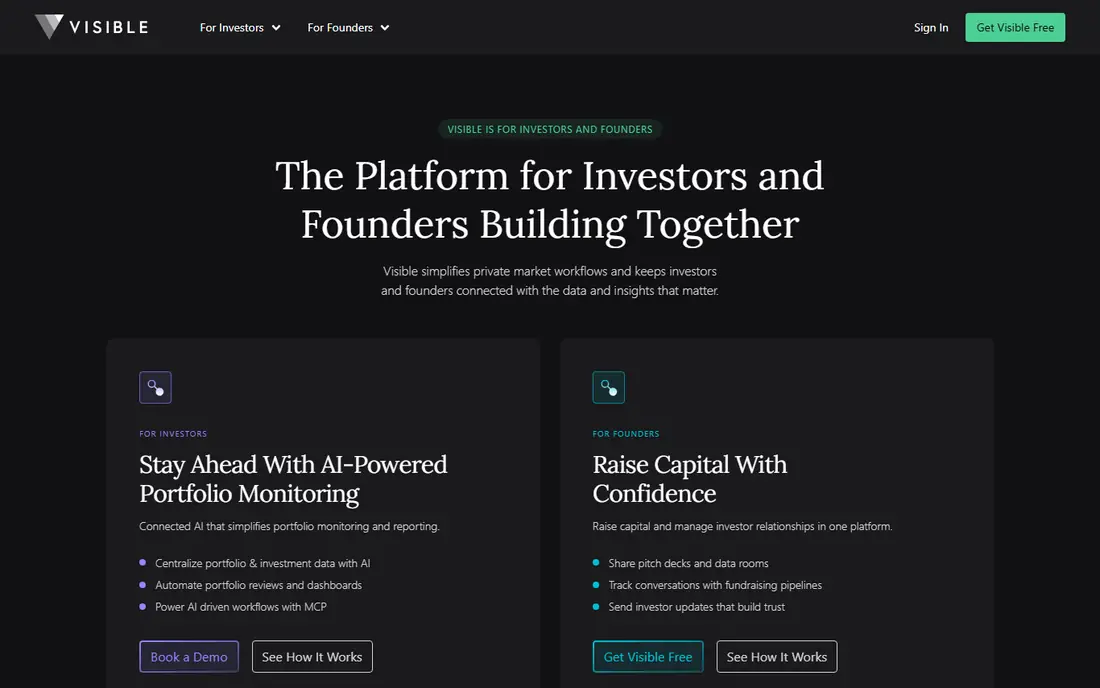
Visible is useful for value add because it makes help visible. When companies submit regular metrics, highlights and requests, the fund can see which companies need a hiring introduction, a customer contact or fundraising advice, and which are on track. That regular cadence turns vague check-ins into specific follow-up tasks.
The limit is participation. If founders treat updates as paperwork, the fund gets stale data and misses problems early. Firms should keep the form short, explain what help follows from each update, and follow up quickly when a company asks for support. Used that way, Visible supports a disciplined value add process.
- Structured updates from portfolio companies
- Clear metric history
- Investor-ready reporting
- Help depends on founders submitting updates
- Reporting alone does not create growth

Affinity helps funds turn a large network into usable help. A partner can search for a sales leader, a security firm or a potential customer contact, and see who on the team has the strongest relationship. Lists for recruiting needs and service needs help firms track requests across the whole portfolio, rather than relying on memory.
Introductions are still a human job. A warm introduction helps only if the timing, role and company stage fit, and the fund must follow up after the introduction. Affinity organises that work, but it does not replace judgement about fit. For firms that pride themselves on network help, it is a fitting tool.
- Network search across team contacts
- Lists for talent and service providers
- Portfolio follow-up tracking
- Quoted pricing
- Introductions still need human judgement and follow-through
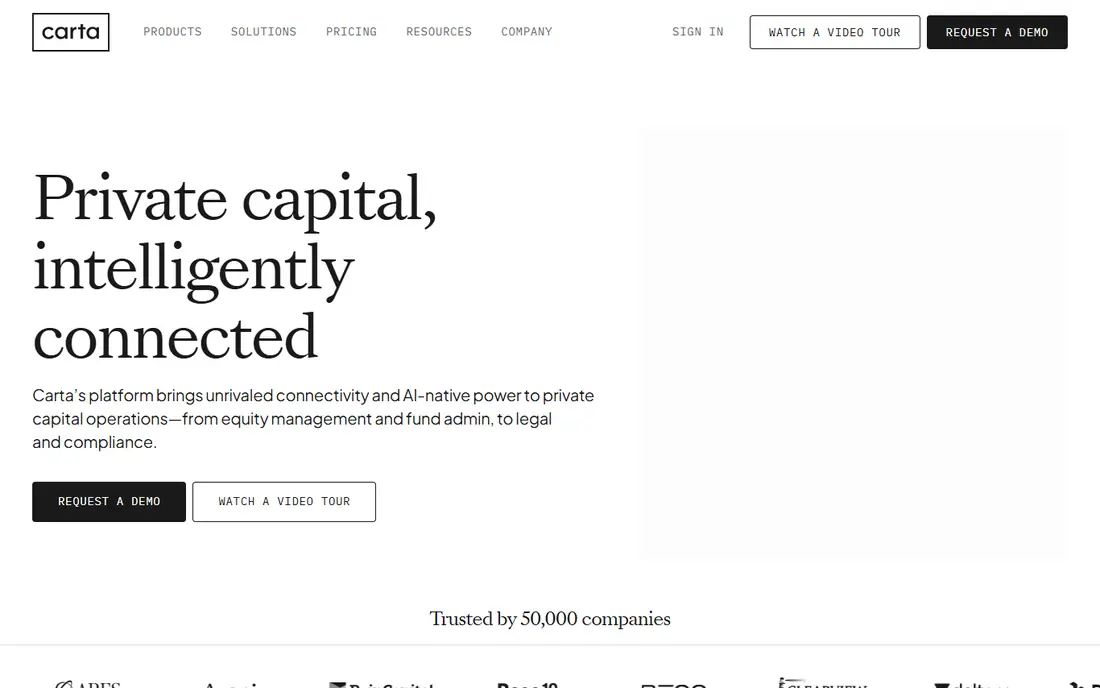
Clean equity data is a quiet form of value add. When a portfolio company approaches a follow-on round, a clean cap table, clear option records and reliable scenario modelling save weeks of legal and finance work. Carta provides that base for many venture-backed companies, and funds benefit when their companies already use it.
The cost and complexity trade-off remains. Paid plans are quoted, and firms should confirm what is included for fund reporting versus company equity management. For funds that support companies through multiple rounds, a standard equity system reduces friction at exactly the moment when speed matters.
- Clean cap tables for follow-on rounds
- Scenario modelling
- Investor reporting
- Quoted paid pricing
- Costs grow with complexity
AngelList adds value by letting a fund move quickly when a portfolio company needs follow-on capital or a co-investment vehicle. Setting up an SPV for a specific deal, onboarding investors and handling tax documents through one platform is faster than building that process from scratch for each deal. Rolling funds also let managers raise on an ongoing basis.
That speed helps only if the fund has a clear investment process behind it. Vehicle administration does not source deals or judge valuations. Firms should read the current pricing for the exact vehicle type and confirm what is included. For venture managers, AngelList is a practical value add base.
- Fund, rolling fund and SPV administration
- Investor onboarding
- Banking and tax handling
- Venture-focused
- Some services carry separate fees
Allocations supports value add in a similar way: it makes it easier for a fund or syndicate lead to organise follow-on capital for a portfolio company. Investors get a portal for documents and holdings, and the manager gets closings, calls and tax documents handled through the platform. That structure helps when several investors want to back the same company in a later round.
Managers should get a total quote for a typical vehicle, including add-ons for extra investors and closes. Complex structures with side letters may still need dedicated legal advice. For deal-by-deal follow-on support, Allocations is a clear option.
- SPV and fund administration
- Investor portal
- Closings and tax documents
- Add-on fees can add up
- Not suited to every complex fund structure
Good investor reporting is part of value add, even if it feels like back-office work. Limited partners who receive clear, timely reports are more likely to support follow-on funds and co-investments, which in turn helps portfolio companies raise later rounds. Juniper Square combines a portal with administration services for documents, calls and distributions.
Pricing is quoted, and firms should clarify what is software-only and what is full administration. Moving older records into a new system also takes planning. For firms that want reporting to support fundraising, Juniper Square is worth a detailed demo.
- Investor portal
- Capital accounts and performance reporting
- Administration services
- Quoted pricing
- Migration of legacy records takes time
Standard Metrics helps value add by giving founders and funds a shared language for progress. When revenue, growth and burn are defined the same way across companies, the fund can compare progress, prepare board materials and help a company build a fundraising narrative with credible numbers. Founders also get context on how similar companies report and perform.
That benefit depends on discipline. Firms should agree on a small set of core metrics, set a reporting calendar, and avoid asking for so many numbers that founders stop submitting. Pricing is quoted, so ask for a quote tied to portfolio size. For metrics-led support, Standard Metrics is a strong fit.
- Common metric definitions across portfolio
- Fund-level reporting
- Benchmarking context
- Depends on consistent founder reporting
- Quoted pricing
Sydecar focuses on SPVs and small venture funds, with formation, onboarding and administration handled as a turnkey service. Syndicate leads who want to organise capital for a portfolio company without building an operations team can use Sydecar to move faster. The structure suits deal leads who run a small number of vehicles per year.
Larger firms with many vehicles and complex reporting may outgrow a turnkey SPV service. Fees also vary by structure and add-ons, so confirm the total cost for a typical deal. For syndicate-led value add, where speed and simplicity matter, Sydecar is a useful option.
- Turnkey SPV formation and administration
- Investor onboarding
- No recurring fee on some structures
- Best for smaller funds and syndicates
- Larger firms may need broader administration
How we picked these
We compared official product pages and public descriptions of portfolio tools, and we grouped them by the value add job they support: tracking, introductions, equity, vehicles, reporting and metrics. We did not rank funds by returns, since verified, comparable private performance data is not publicly available in a form that would support such a ranking. Where pricing was quoted or unclear, we wrote See website. This article is general information, not financial advice.
What to check before you choose
Value add is a process before it is a product. A fund should be able to answer three questions: how often do we hear from each company, what help do companies actually ask for, and who on our team owns each request. Tools help only if those answers are clear.
Build a simple value add routine
Set a monthly or quarterly update cadence, keep the form short, and review requests in a regular team meeting. Track hiring needs, customer introductions and fundraising timelines in one place, whether that place is Affinity, a spreadsheet or another CRM. The routine matters more than the tool, because founders notice follow-through.
Match the tool to the stage
Early-stage companies need hiring help and first customers. Later-stage companies need metrics discipline, board preparation and follow-on fundraising support. A reporting tool that suits a 30-company portfolio may be overkill for a three-company fund, and a simple SPV tool may not suit a multi-fund firm. Buy for the next 12 months, not for a hypothetical future size.
Measure help, not activity
Count completed introductions, hires made and follow-on rounds supported, not just meetings held or emails sent. Ask portfolio founders what help actually mattered, and adjust the process based on those answers. A value add service that cannot point to completed help is a cost, not a benefit.
Frequently asked questions
What does VC value add actually mean?
It means practical help beyond capital, such as hiring introductions, customer introductions, fundraising advice, operations support and clean reporting for the next round. The exact help varies by firm, stage and company need.
Is this a ranking of the best venture capital firms?
No. This guide compares tools and services that support portfolio companies, based on publicly reported features. It does not rank firms by returns, since private fund performance is not publicly comparable in a verified way.
Which value add service matters most for early-stage founders?
Hiring help and customer introductions usually matter most early on, followed by fundraising advice. Tools that organise a fund network and track requests, such as Affinity, support those jobs, but the quality of the introductions matters more than the tool.
Do these tools guarantee better outcomes for portfolio companies?
No. Tools can organise help, improve reporting and speed up vehicles, but they do not guarantee revenue growth, hiring success or a successful exit. Outcomes depend on the company, the market and the quality of the fund team.
How should a fund choose between Carta, AngelList and Allocations?
Start with the job: Carta for equity, AngelList or Allocations for fund and SPV vehicles, and a reporting tool for investor updates. Many firms use more than one, since no single provider covers equity, vehicles and reporting equally well.
What should founders ask a fund about value add?
Ask how often the fund meets portfolio companies, what help recent companies received, who owns hiring and customer introductions, and how follow-on decisions are made. Specific examples from recent companies are more useful than general claims about network size.
Sources
See where you really rank - block by block
ProMapRanker scans Google Maps across a grid of your service area. Simple monthly plans from $19, white-label on every plan.
Start freeKeep reading
 zoro.to alternatives
Best Zoro.to Alternatives in 2026
We compare the best zoro.to alternatives in 2026, listing only legal licensed anime streaming services, from Crunchyroll to free options for fans today.
Read → zip alternatives
Best Zip Alternatives in 2026
We compare the best zip alternatives for buy now, pay later in 2026, covering pay-in-4 plans, fees, spending limits, and credit reporting options today.
Read → yesware alternatives
Best Yesware Alternatives in 2026
Compare the best yesware alternatives for sales email tracking, templates, and sequences, with current pricing and honest tradeoffs for small sales teams.
Read →