 ProMapRanker
Best Value Inventory Management Software Pricing in 2026

Key takeaways
- Zoho Inventory gives the best value for small sellers, with a free plan and paid plans from $29 per month.
- Sortly gives the best value for simple visual tracking, with a free plan and paid plans from $49 per month.
- Square for Retail gives the best value for stores already using Square at the counter.
- inFlow, Katana, Cin7, and Fishbowl cost more, but suit wholesale, manufacturing, and multi channel volume.
- Order, user, and location caps decide real value more than the headline monthly price.
Quick comparison
| Pick | Great for | Pricing starts at | Free tier | |
|---|---|---|---|---|
 Zoho Inventory | Small sellers on a budget | $29 per month | Yes | Visit |
 Sortly | Simple visual tracking | $49 per month | Yes | Visit |
 Square for Retail | Stores on Square POS | Free | Yes | Visit |
 inFlow Inventory | B2B and wholesale sellers | $99 per month | Free trial | Visit |
 Katana | Small manufacturers | $299 per month | Yes | Visit |
 Cin7 Core | Multichannel brands | $349 per month | Free trial | Visit |
 Fishbowl | QuickBooks based makers | $229 per month | Free trial | Visit |
 Ordoro | Ecommerce shipping and stock | $349 per month | Free trial | Visit |
The best value inventory management software pricing
Value is not the lowest price alone. It is what you get for that price at your order volume, SKU count, and channel mix. The tools below are ranked by value for small and growing businesses, not by feature count alone.
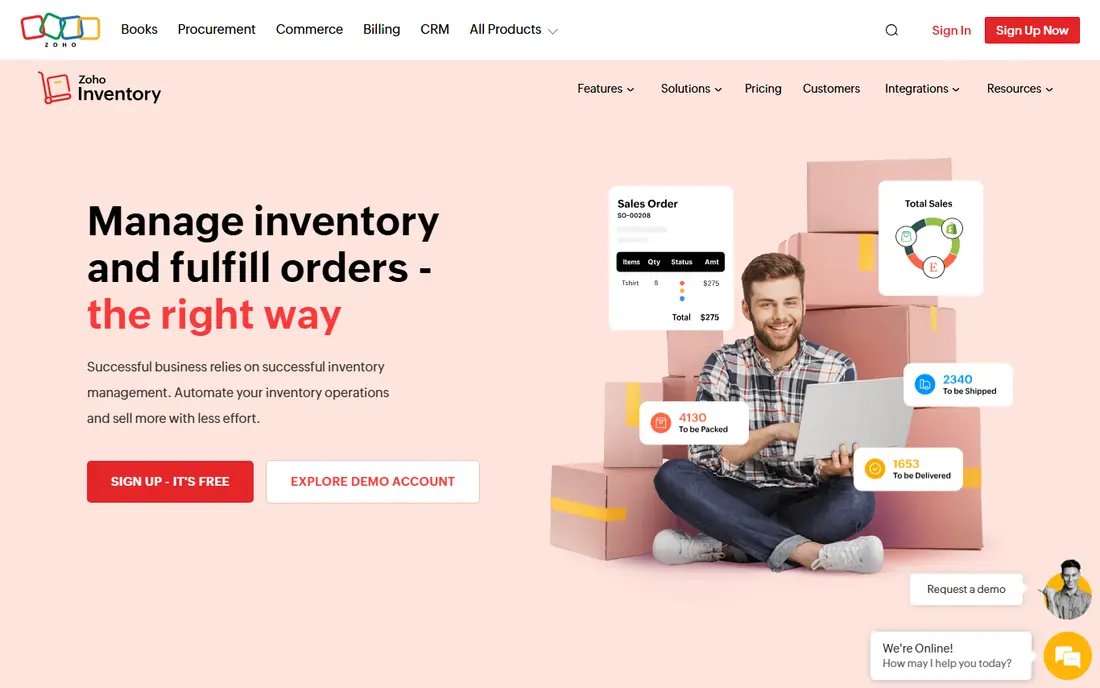
Zoho Inventory is the first tool to check for value because its pricing is per organisation, not per seat, and its free plan is usable for a new store. The free plan covers 50 orders a month for one user at one location, while the Standard plan at $29 per month billed annually covers 500 orders, three users, and two locations. For a side business or a new online store, that ratio is hard to match. The catch is growth. As orders, users, and locations rise, a seller moves to higher plans, and automation and fulfilment features also wait on those tiers. If you already use Zoho Books or Zoho CRM, the shared data strengthens the value case further, since stock, orders, and accounting stay in sync. For most small sellers, Zoho Inventory is the value benchmark to beat.
- Free plan for 50 orders a month
- Flat per organisation pricing
- Strong Zoho Books link
- Order, user, and location caps rise with plan
- Advanced automation sits on higher tiers
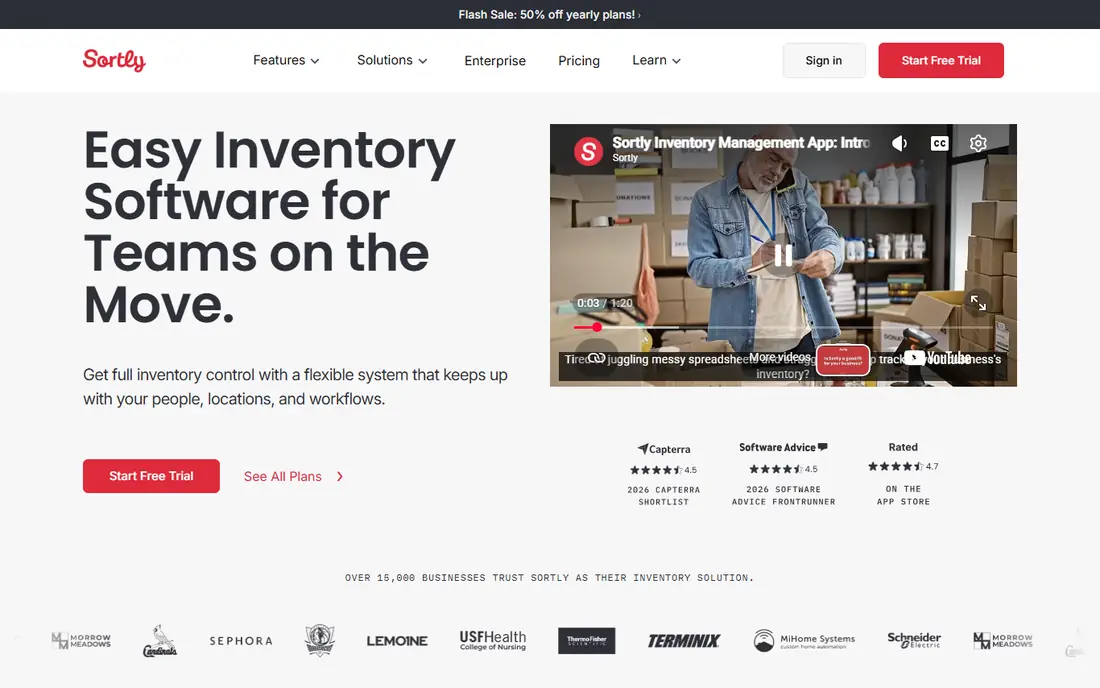
Sortly suits teams that need to know what is where, rather than run a full order system. Items are tracked with photos, barcodes, and QR codes, and staff can count stock on a phone, which helps for equipment, supplies, materials, and small retail stockrooms. Reorder alerts flag low items before they run out, and the visual catalog makes training new staff easier. The value case depends on volume. Sortly is less suited to high volume ecommerce, where order sync, shipping, and multi channel stock need a deeper tool. The paid plan also costs more than Zoho Inventory for basic tracking, so a seller who needs order management should compare both. For visual, location based tracking, Sortly is simple, fast, and easy to adopt.
- Photo based catalog and QR scanning
- Simple mobile counts
- Reorder alerts
- Less suited to high volume sales
- Paid plan price is higher than Zoho for basic stock
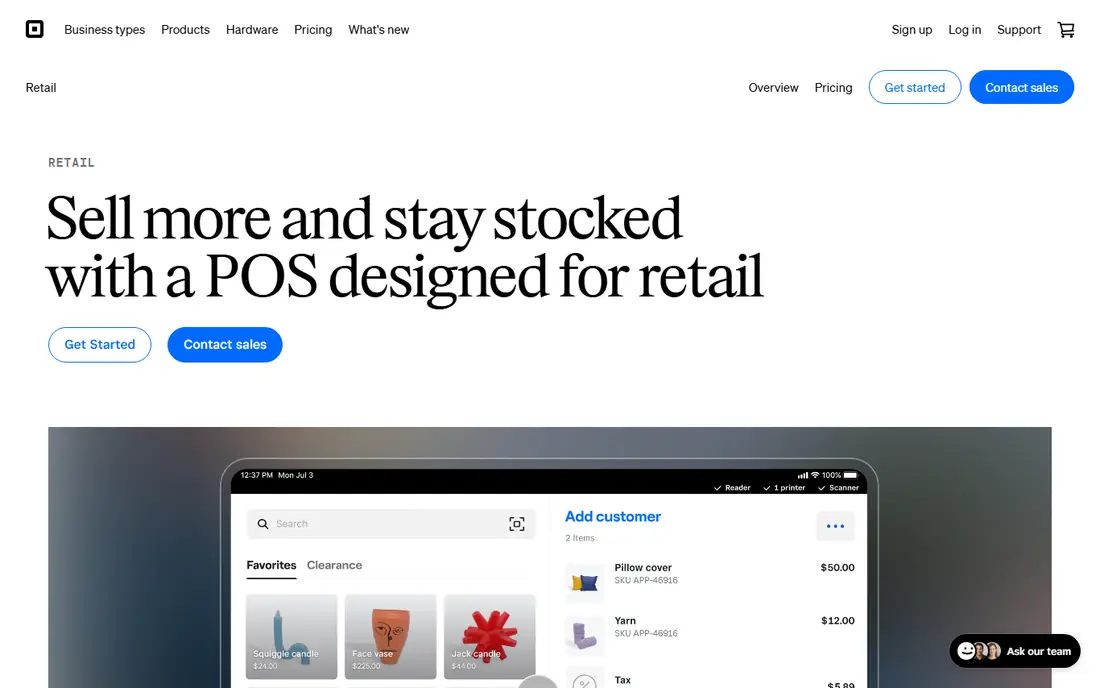
Square for Retail is the value pick for a brick and mortar store that already runs Square at the counter. Inventory, sales, and payments share one system, so stock drops when an item sells and staff do not need a separate tool for the till. The free plan covers basic inventory, which is enough for many small shops, while paid plans add more advanced retail features. The limit is scope outside the shop. Multi warehouse, manufacturing, and complex multi channel work are better served by Zoho, Cin7, or Katana. For a single store, or a small chain on Square, the lack of a separate inventory subscription is real value, since the cost is already inside the POS workflow. Check the paid plan price for your terminal count before judging the total.
- Inventory built into the POS
- Free plan for basic stock
- Simple checkout and stock link
- Advanced warehouse tools are limited
- Best value only for Square users
inFlow suits wholesale and B2B sellers who need structure around orders, pricing, and customer terms. Showrooms let trade customers browse and order, invoicing is built in, and purchase orders help a team manage supplier stock. That B2B focus is the reason to pay more than for a simple tracker, since trade pricing and customer specific catalogs are core to wholesale work. The entry price is the trade off. At $99 per month billed annually, inFlow costs several times Zoho Inventory, and monthly billing is higher again. A pure retail seller with low volume will get better value elsewhere. A wholesaler who needs showrooms, trade pricing, and invoicing in one place will find the price easier to justify, especially when it replaces separate order and invoicing tools.
- B2B showrooms and invoicing
- Order and purchase management
- Barcode and pricing control
- Higher entry price than Zoho or Sortly
- Monthly billing costs more than annual billing
Katana is the value pick for product businesses that also make or assemble what they sell. Bills of materials, production planning, and raw material tracking sit alongside sales and stock, so a maker can see what to produce, what is in stock, and what needs ordering in one view. Multi channel sales sync helps makers who sell on their own site and on marketplaces. The price is the honest limit. At $299 per month for the paid Core plan, Katana is not a value pick for a pure reseller who does not manufacture, and the free plan covers only a small SKU count. For a maker, the value comes from replacing separate production and inventory tools, not from the headline price alone. Compare the total tool count before deciding, since one Katana plan can replace two or three smaller subscriptions.
- Production planning and bills of materials
- Multi channel sales sync
- Free plan for small SKU counts
- High paid price for pure resellers
- Manufacturing depth is wasted on simple retail
Cin7 Core suits brands that have outgrown basic inventory and now sell across several channels and locations. Stock, purchasing, warehousing, and order flow are managed together, with integrations for ecommerce, accounting, and shipping tools. That depth helps a brand avoid overselling, manage purchase orders, and keep stock accurate across warehouses. The price and setup time are the costs of that depth. At $349 per month, Cin7 is a serious subscription for a small seller, and implementation takes longer than Zoho or Sortly. Value appears when volume, channels, and locations make manual work or spreadsheet stock risky. For a brand at that stage, the cost of a stock error or an oversell can exceed the subscription, which is the real value test.
- Multi channel and multi location stock
- Purchasing and warehouse depth
- Many integrations
- High price for small sellers
- Setup and learning time are greater than simpler tools
Fishbowl suits manufacturers and distributors who already run QuickBooks and need deeper inventory and warehouse control. The QuickBooks link keeps accounting and stock in sync, while manufacturing, assembly tracking, and warehouse features handle production and distribution work. Barcode scanning on mobile helps warehouse teams count and pick accurately. The entry price at $229 per month billed annually is high for a small shop, and the value drops if a business does not use QuickBooks. A maker on Xero or Zoho Books should compare Katana or Cin7 first, since Fishbowl's strength is tied to its QuickBooks integration. For a QuickBooks based maker with warehouse volume, Fishbowl is a proven, if pricey, fit.
- Strong QuickBooks link
- Manufacturing and warehouse features
- Barcode scanning
- Price is high for small shops
- Best fit depends on QuickBooks use
Ordoro suits ecommerce brands that want shipping and inventory managed together, rather than in two separate tools. Orders can be forwarded, stock can be tracked across channels, and shipping labels can be created from the same order flow. Forecasting tools help a brand plan reorders, which matters when a best seller can sell out during a promotion. The inventory plan price is the limit, at $349 per month, and brands should not confuse a cheaper shipping only plan with full inventory control. Value depends on shipping volume and channel count. A brand that ships daily across several marketplaces may save enough admin time to justify the price, while a low volume seller will get better value from Zoho Inventory plus a separate shipping tool.
- Shipping and inventory in one place
- Order forwarding and forecasting
- Multi channel sync
- Inventory plan price is high
- Shipping only plans do not include full inventory control
How we picked these
We compared official pricing pages and public buyer guides for inventory tools in October 2026, focusing on published starting prices, free plans, and plan limits. We ranked by value for small and growing businesses, weighing order caps, user and location limits, and channel fit alongside price. Quote based enterprise tools were left out, since their pricing cannot be compared fairly.
Choosing the right inventory tool for your budget
Start with your numbers, not the price list. Count monthly orders, SKUs, users, and locations, then check which plan covers those numbers without forcing an upgrade in three months. A free plan that caps at 50 orders is good value only if your volume stays under that cap, while a $29 plan that caps at 500 orders may be better value than a $49 plan with no order cap but fewer integrations. Next, check the total cost. Add payment, shipping, barcode hardware, and any accounting integration cost to the subscription, and check whether billing is monthly or annual. Finally, run a real cycle through a trial, from purchase order to sale to stock count, since that test reveals limits that a feature list hides. The cheapest plan that passes that test is the value pick.
Frequently asked questions
What is the best value inventory management software overall?
Zoho Inventory is the best value overall for small sellers, with a free plan and paid plans from $29 per month. Sortly is the best value for simple visual tracking, Square for Retail for stores on Square, and inFlow for wholesale sellers. The right pick depends on order volume and channel mix.
Is there really free inventory management software?
Yes, Zoho Inventory, Sortly, and Square for Retail all offer free plans, and Katana offers a free tier for small SKU counts. Free plans have limits on orders, items, users, or locations, so check those caps against your volume before relying on a free plan for a growing business.
How much should a small business budget for inventory software?
Small business tools run from free to around $99 per month, with Zoho from $29, Sortly from $49, and inFlow from $99 billed annually. Manufacturing and multi channel tools run $229 to $349 per month. Budget for the plan that covers your order volume, not just the entry price.
Do I need barcode scanning for inventory?
Not always, but it speeds up counts and reduces errors once SKU counts grow. Sortly includes barcode and QR scanning on its free plan, while Fishbowl and Cin7 include mobile scanning on paid tiers. For inventories over a few hundred SKUs, scanning usually pays for itself in time saved.
Can inventory software sync with my accounting tool?
Yes, most tools here sync with QuickBooks, Xero, or Zoho Books. Zoho Inventory syncs with Zoho Books, Fishbowl with QuickBooks, and inFlow with QuickBooks Online. That sync keeps stock movements and cost of goods sold aligned with your books, which helps at tax time.
When should I upgrade from a free inventory plan?
Upgrade when order, user, or location caps start to force workarounds, when automation or multi channel sync becomes essential, or when stock errors start to cost sales. A paid plan is worth it when it removes manual work or prevents overselling, not just when it adds features you may never use.
Sources
See where you really rank - block by block
ProMapRanker scans Google Maps across a grid of your service area. Simple monthly plans from $19, white-label on every plan.
Start freeKeep reading
 what’s the best risk software for enterprises
What Is the Best Risk Software for Enterprises in 2026
We compared what’s the best risk software for enterprises on risk registers, controls, third-party risk, and reporting, with pricing notes for large teams.
Read → what's the best pam software for enterprises
What is the Best PAM Software for Enterprises in 2026
Find what's the best pam software for enterprises, with vaulting, session recording, just in time access and pricing compared for large enterprise IT teams.
Read → what’s the best grc software
What Is the Best GRC Software in 2026
We compared what’s the best grc software on risk, compliance, audit and vendor risk, so teams can pick a platform that fits their frameworks and budget.
Read →