 ProMapRanker
What Is the Best Risk Software for Enterprises in 2026


Configurable risk workflows without heavy code · Pricing starts at: See website
Key takeaways
- Enterprise risk software earns its keep when risk registers, controls, issues, and third-party risk share one system, rather than living in separate spreadsheets.
- LogicGate and Resolver suit teams that want configurable workflows without a heavy implementation, while Archer and MetricStream suit large regulated firms.
- Almost every enterprise platform in this list is quote-only, so compare implementation time, admin effort, and module scope alongside the licence.
- A risk tool does not remove risk or guarantee compliance; it organises assessment, ownership, and reporting so leaders can act on what they find.
- Trial with a real risk register and control list, not a vendor demo dataset, because data quality and workflow fit show up only with your own risks.
Quick comparison
| Pick | Great for | Pricing starts at | Free tier | |
|---|---|---|---|---|
| LogicGate Risk Cloud | Configurable risk workflows without heavy code | See website | No | Visit |
 AuditBoard | Audit, risk, and compliance in one platform | See website | No | Visit |
 MetricStream | Large regulated firms needing AI-led risk insight | See website | No | Visit |
 ServiceNow IRM | Firms already on ServiceNow wanting integrated risk | See website | No | Visit |
 RSA Archer | Large firms needing deep customisation | See website | No | Visit |
 Resolver | Mid-market and enterprise risk with clear reporting | See website | No | Visit |
 OneTrust | Privacy and third-party risk alongside enterprise risk | See website | No | Visit |
 Riskonnect | Large firms managing risk, claims, and insurance together | See website | No | Visit |
The best risk software for enterprises
We compared enterprise risk tools on risk registers, control mapping, assessment workflows, third-party risk, reporting, and implementation effort. The question behind this list is practical: which tool helps a large firm see its risks, assign owners, and report to the board without drowning in administration.
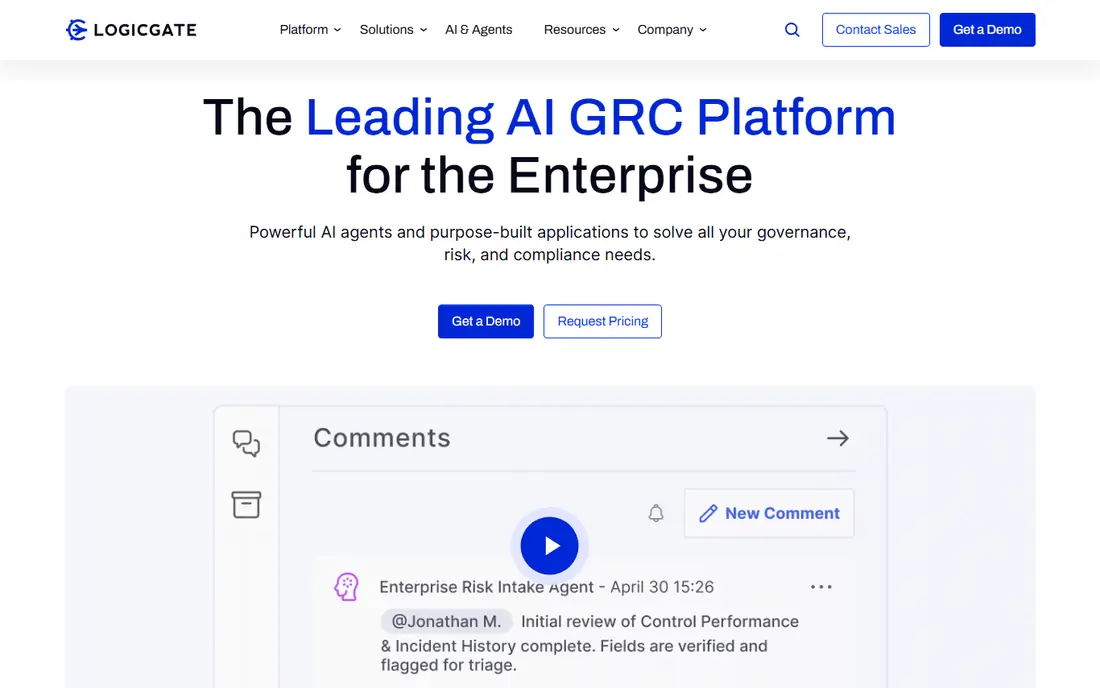
LogicGate Risk Cloud is built around a no-code workflow builder, which lets risk teams design registers, assessments, and approval flows without waiting for developers. That flexibility suits a firm building its first enterprise risk programme, or a firm whose risk taxonomy changes often. A basic risk register can be live in weeks, which is faster than a full enterprise suite rollout.
Pricing is quote-only, and very large or complex programmes may still need vendor support for advanced configuration. For a mid-sized enterprise team that wants control over its own workflows, LogicGate is a strong starting point, and it can scale as the programme grows.
- No-code workflow builder for risk and compliance
- Flexible risk registers and assessments
- Faster setup than enterprise suites
- Quote-only pricing
- Deep enterprise customisation may still need vendor help
AuditBoard connects audit, risk, and compliance in one platform, so a control tested by audit can inform a risk assessment without manual copying between systems. That connection helps a public company or large firm that manages several frameworks at once, with evidence tracking and reporting that board and audit committee members can follow.
Pricing is quote-only, and the platform works best when audit and risk teams adopt it together. A firm that only needs a standalone risk register may find it broader than necessary, but a firm that wants audit and risk aligned should shortlist it.
- Connected audit, risk, and compliance modules
- Control testing and evidence tracking
- Board-ready reporting
- Quote-only pricing
- Full value needs audit and risk teams to adopt together
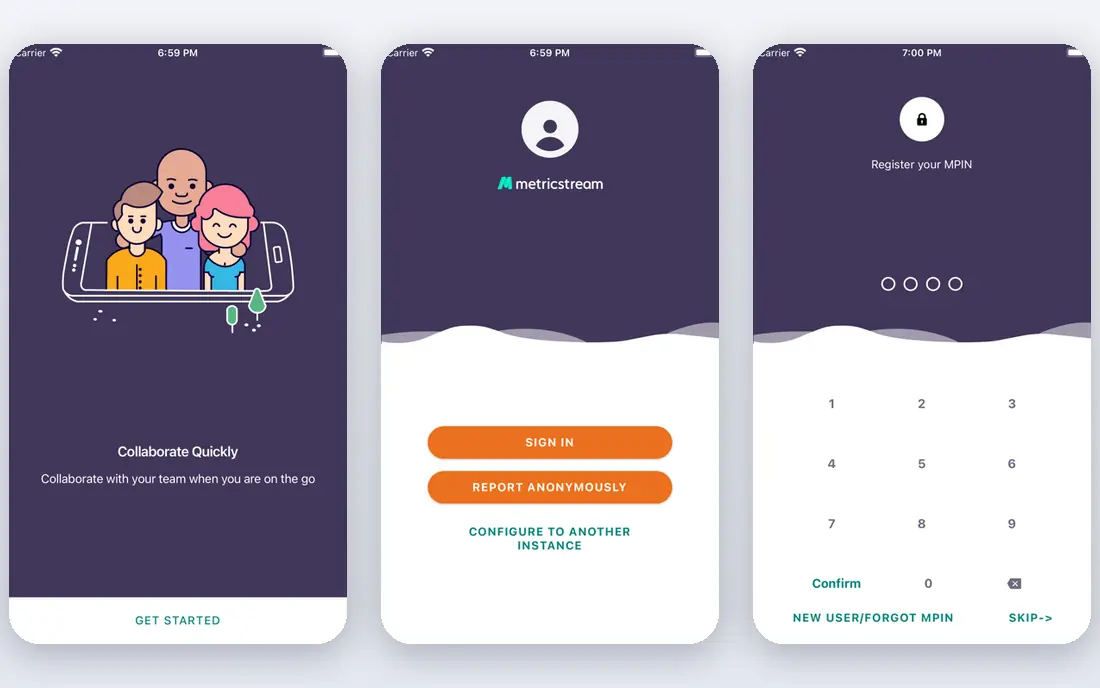
MetricStream is an enterprise GRC platform with a federated data model that brings risk information from many business units into one view. AI and machine learning surface predictive insights, while continuous control monitoring auto-collects evidence when issues arise. That depth suits a large, regulated firm with complex requirements across regions and business lines.
The trade-offs are learning curve and support responsiveness, both raised in user feedback, plus quote-only pricing that depends on scope. A large firm with the staff to run a full GRC programme will get the most from MetricStream, while a smaller team should look at LogicGate or Resolver first.
- Centralised risk management across business units
- AI insights and predictive analytics
- Continuous control monitoring
- Quote-only pricing
- Steep learning curve and slow support reported by some users
ServiceNow Integrated Risk Management, or IRM, brings risk, compliance, and audit workflows into the same platform many firms already use for IT service management. That integration means a risk can link to an IT incident, a vendor record, or an operational process without a separate integration project. Automated workflows and an AI assistant help route assessments and follow-ups.
Pricing is quote-only, and the value depends heavily on existing ServiceNow investment. A firm outside ServiceNow will face a platform purchase as well as a risk purchase, while a ServiceNow firm gets risk management that fits its existing workflows and data.
- Risk workflows inside the ServiceNow platform
- Integration with IT and operations
- Automated workflows and AI assistant
- Quote-only pricing
- Best value only for firms already invested in ServiceNow
RSA Archer, now known as Archer, is a long-established integrated risk management platform used by large enterprises and government agencies. Its application builder and framework library let a firm shape risk workflows to its own methodology, and its integrations cover vulnerability scanners, threat intelligence, and other GRC tools. For a regulated firm with a defined risk methodology, that flexibility is valuable.
The interface feels dated compared with newer platforms, and reporting can require manual work or custom scripting. Pricing is custom and scope-dependent, with third-party estimates pointing to a wide range. Choose Archer when methodology and customisation matter more than a modern interface, and budget for implementation expertise.
- Long-established integrated risk platform
- Deep customisation and framework library
- Broad third-party integrations
- Quote-only pricing in practice
- Interface feels dated and reporting can need manual work
Resolver offers risk management with clear registers, assessments, incident tracking, and reporting, aimed at mid-market and enterprise teams that want a usable system without a heavyweight rollout. Issues can be tracked from identification through remediation, with owners and due dates visible to risk leaders. That clarity helps a team that needs board reporting without a large GRC admin function.
Pricing is quote-only, and Resolver has less brand scale than the largest GRC vendors in very large global programmes. For a mid-sized enterprise, that trade is often fair, since usability and faster adoption matter more than vendor size. Larger global firms should still compare it with Archer and MetricStream.
- Clear risk registers, assessments, and reporting
- Incident and issue tracking
- Configurable without heavy coding
- Quote-only pricing
- Less brand scale than Archer or MetricStream in very large global programmes
OneTrust is best known for privacy and third-party risk, and it also covers enterprise risk, which makes it a fit for a data-heavy firm that needs those areas together. Data mapping, vendor risk assessments, and regulatory content help a company track where personal data sits and which vendors carry risk. That convergence saves a firm from buying separate privacy and risk tools.
Pricing is module-based, so the total grows with each module added, and implementation needs careful scoping. A firm whose main risk is operational or financial, rather than privacy and vendor risk, may find a dedicated GRC platform a better fit. A firm with heavy privacy exposure should shortlist OneTrust.
- Privacy, third-party, and enterprise risk modules
- Data mapping and vendor risk workflows
- Broad regulatory content
- Module-based pricing that grows with scope
- Implementation needs scoping by module
Riskonnect brings risk management together with claims, insurance, and business continuity, which suits a large firm that manages risk across operations, insurance, and safety. A single platform can show how a claim, a vendor issue, and an operational risk connect, rather than leaving each in a separate system. Third-party risk and business continuity modules extend that view further.
Implementation for a large firm is a multi-month enterprise project, and pricing is quote-only by scope. A mid-sized firm may find LogicGate or Resolver lighter, while a large firm with insurance and claims complexity will value Riskonnect for bringing those areas together.
- Integrated risk, claims, and insurance management
- Enterprise reporting
- Third-party and business continuity modules
- Quote-only pricing
- Implementation is a multi-month enterprise project for large firms
How we picked these
We compared official product pages and public GRC guides for enterprise risk tools operating in October 2026. We kept platforms with a real risk register, control and assessment workflows, and board-level reporting, and we left out small compliance checklist tools that do not support enterprise risk programmes. Where pricing is not published, we wrote See website, and we did not treat any tool as a guarantee of compliance or risk removal.
What to check before you buy enterprise risk software
Start with your own risk register. Load a sample of real risks, controls, owners, and issues into each trial, and run an assessment, an issue escalation, and a board report from that data. A vendor demo with clean sample data hides workflow friction, data import problems, and reporting gaps that only appear with your own risks.
Check admin effort and total cost together. Ask who will own the platform day to day, how long a new assessment takes to build, and what implementation and module fees apply beyond the licence. A tool that needs a dedicated GRC admin and consultants for every change will cost more than its licence suggests, while a configurable tool that risk owners can update themselves will stay useful as the programme grows.
Frequently asked questions
What is enterprise risk software?
It is software that helps a large organisation identify, assess, score, and manage risks, assign owners, track controls and issues, and report risk to leaders and the board. It usually covers operational, IT, third-party, and compliance risk in one system.
How much does enterprise risk software cost?
Almost every platform in this list is quote-only, with pricing by modules, users, and implementation scope. Expect enterprise pricing to scale with programme size, and get at least two written quotes that include implementation before comparing totals.
What is the difference between GRC software and risk software?
GRC is the broader category covering governance, risk, and compliance, including audit and policy management. Risk software is the narrower discipline of identifying, scoring, and mitigating risks. Most tools here are GRC platforms that include risk management as a core module.
Can risk software make a company compliant?
No. It organises risk, controls, and evidence, but compliance also needs policies, ownership, testing, and oversight. A tool supports a compliance programme; it does not replace it or guarantee an audit outcome.
How long does implementation take?
No-code platforms such as LogicGate can stand up a basic risk register in weeks. Enterprise suites such as Archer, MetricStream, and Riskonnect typically run multi-month implementations with professional services, so ask for a written timeline with your scope before signing.
Sources
See where you really rank - block by block
ProMapRanker scans Google Maps across a grid of your service area. Simple monthly plans from $19, white-label on every plan.
Start freeKeep reading
 what's the best pam software for enterprises
What is the Best PAM Software for Enterprises in 2026
Find what's the best pam software for enterprises, with vaulting, session recording, just in time access and pricing compared for large enterprise IT teams.
Read → what’s the best grc software
What Is the Best GRC Software in 2026
We compared what’s the best grc software on risk, compliance, audit and vendor risk, so teams can pick a platform that fits their frameworks and budget.
Read → what's the best elt software
What Is the Best ELT Software in 2026
Compare what's the best elt software for extract-load-transform pipelines, from managed connectors to open source tools that load raw data first in 2026.
Read →