 ProMapRanker
Best Value Inventory Management Software in 2026


Small sellers who want the most for the least · Pricing starts at: $29 per month
Key takeaways
- Value means features per dollar at your order volume, not only the lowest monthly price.
- Zoho Inventory is the value benchmark for small sellers, with a free plan and a paid tier from $29 per month.
- Sortly and Square for Retail suit simple or store-based stock, while inFlow suits wholesale and B2B sellers.
- Katana, Cin7, and Fishbowl cost more, but they add manufacturing, multichannel, or warehouse depth.
- Odoo can be low cost for one app, but setup time and extra modules change the total.
Quick comparison
| Pick | Great for | Pricing starts at | Free tier | |
|---|---|---|---|---|
| Zoho Inventory | Small sellers who want the most for the least | $29 per month | Yes | Visit |
 Sortly | Simple visual tracking of items and assets | $49 per month | Yes | Visit |
 inFlow | Wholesale and B2B sellers | $99 per month | Free trial (14 days) | Visit |
 Square for Retail | Stores already running on Square | Free | Yes | Visit |
 Katana | Makers and light manufacturers | $299 per month | Yes | Visit |
 Cin7 | Multichannel brands outgrowing basic tools | $349 per month | Free trial (14 days) | Visit |
 Fishbowl | QuickBooks users with warehouse needs | $229 per month | No | Visit |
 Odoo Inventory | Flexible modular inventory at low entry cost | Free | Yes | Visit |
The best value inventory management software
Value inventory software should track stock accurately, sync with sales channels, and warn you before you run out, without charging enterprise prices. The tools below range from free plans to mid-priced systems, so you can match price to order volume and complexity.
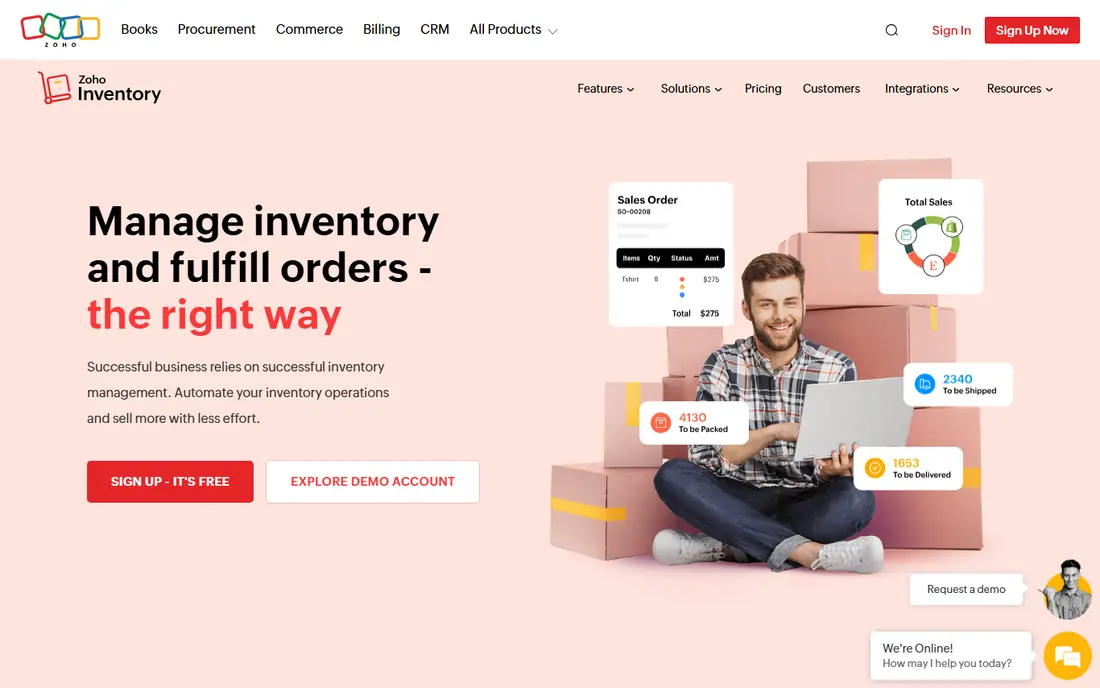
Zoho Inventory is the value benchmark for small sellers. The free plan covers up to 50 orders per month, which is enough to test the system with real sales, and the Standard tier was listed from $29 per month billed annually. It syncs stock across online channels and connects with Zoho Books and other accounting tools.
Caps are the trade-off. Lower tiers limit orders, users, and locations, so a growing seller will need to upgrade. Manufacturing support is also limited compared with Katana. For a small seller who wants the most features per dollar, Zoho is still the first tool to test.
- Free plan with 50 orders per month
- Multichannel sync
- Paid Standard tier from $29 per month
- Order and user caps on lower tiers
- Manufacturing features are limited
- Support can be slow on lower plans
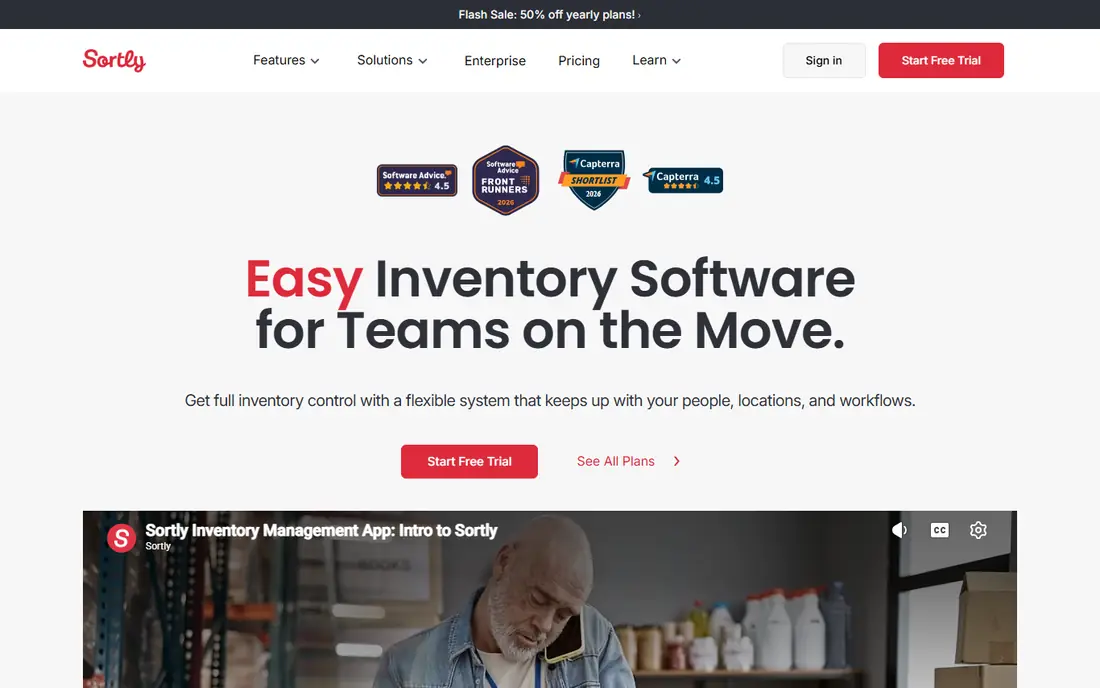
Sortly suits teams that need to know what is where, not teams that need complex order workflows. Photos, barcodes, and folders make it easy to track equipment, supplies, and stock on a phone, which is useful for field teams and small warehouses.
The limit is depth. Sortly is not a full order and accounting system, and some paid tiers lack purchase orders and stock counts that rivals include. If you sell at high volume across many channels, Zoho or inFlow will fit better. If visual tracking is the main job, Sortly is simple and cheap to start.
- Photo based visual catalog
- Easy mobile scanning
- Free plan for limited items
- Advanced plan omits purchase orders and stock counts in some comparisons
- Weak for high-volume sales
- Limited accounting depth
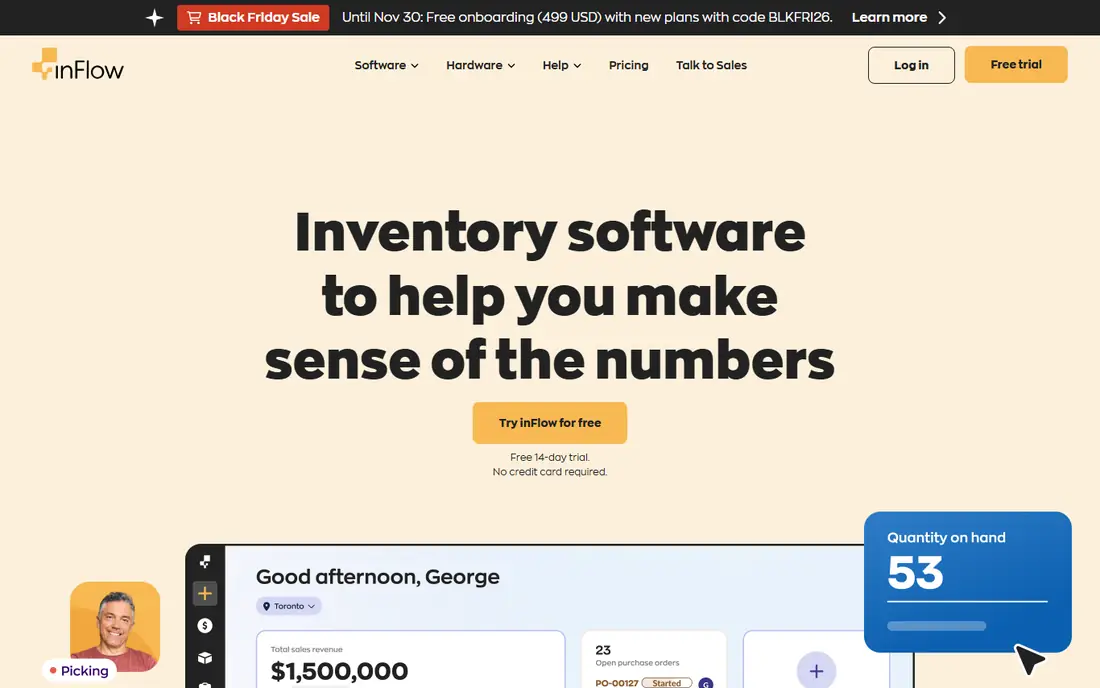
inFlow is built for B2B and wholesale sellers who need structure. It handles orders, invoicing, customer pricing, and showrooms in one system, which suits distributors and wholesalers better than a simple stock tracker. Pricing was listed from $99 per month billed annually, with higher monthly billing also available in comparisons.
The price is the main barrier. There is no free plan, only a 14-day trial, so small sellers should test it with real orders before paying. Manufacturing support is also limited without add-ons. For wholesale value, inFlow packs more core features per dollar than many rivals at its tier.
- Strong order, invoicing, and showroom features
- B2B pricing support
- Good structure for wholesalers
- Entry price is a jump from free tools
- No free plan, only a trial
- Manufacturing is an add-on
Square for Retail is the value pick for a physical store already using Square. The free plan covers point of sale and basic inventory, and the paid plan was listed from $49 per month in comparisons. Setup is fast, because hardware, payments, and stock sit in one system.
Advanced warehouse features are limited, and the system works best when you stay inside Square for payments and online sales. For a single-location shop, that trade-off is often worth it. For a multichannel brand with several warehouses, Cin7 or Zoho will fit better.
- Free plan with point of sale and inventory
- Fast setup for stores
- Paid plan from $49 per month in comparisons
- Limited advanced warehouse tools
- Best inside the Square system
- Processing fees apply on card sales
Katana is the value choice for businesses that make what they sell. It tracks raw materials, production orders, and finished stock together, so a maker can see whether a product can be built, not only whether it is in stock. A free plan covers limited SKUs, while paid plans were listed from $299 per month.
Pure resellers will not need that manufacturing depth, and the paid price is high for a small shop. For a product business that assembles, batches, or manufactures, Katana replaces separate spreadsheets and stock tools, which is where the value appears.
- Production planning and bills of materials
- Multichannel stock sync
- Free plan for limited SKUs
- High entry price for paid plans
- Overkill for pure resellers
- Forecasting sits on higher tiers
Cin7 is the step up when basic tools start to break. It handles multichannel orders, purchasing, manufacturing, and warehouse work in one system, with hundreds of integrations. Core pricing was listed at $349 per month, with a 14-day free trial.
That price only makes sense at real volume. A small seller will pay for depth it does not use, and setup takes planning. For a brand selling across many channels with several locations, Cin7 can be better value than patching several cheaper tools together.
- Deep multichannel and warehouse features
- Many integrations
- Automation for growing brands
- High starting price
- Implementation takes time
- Only makes sense above a certain order volume
Fishbowl suits manufacturers and distributors already running QuickBooks. Stock, assembly, and warehouse work sync with the books, which keeps costs and stock movements aligned for accounting. Essentials pricing was listed from $229 per month billed annually.
There is no free plan, and setup takes effort, especially for warehouse workflows. For a QuickBooks shop with real warehouse needs, Fishbowl is a strong value pick. For a small online seller, Zoho will be cheaper and simpler.
- Deep warehouse and manufacturing features
- Strong QuickBooks integration
- Real-time assembly tracking
- High entry price
- No free plan
- Interface and setup feel dated to some users
Odoo Inventory appeals to teams that want flexibility without a high starting price. The one-app-free model means a small team can start with inventory alone at no license cost, then add sales, accounting, or manufacturing modules as needed.
Flexibility is also the risk. Odoo takes time to configure, and the wrong module choices can create a system that is hard to maintain. For a team with time to set it up, or a partner to help, Odoo can be excellent value. For a team that wants a ready-made stock tool, Zoho is faster.
- One app free model
- Highly flexible modules
- Wide app ecosystem for sales, accounting, and more
- Steeper learning curve
- Setup and customization take time
- Paid modules add cost
How we picked these
We compared official pricing pages, product documentation, and current inventory guides for tools that exist and work in October 2026. We ranked value by features per dollar at realistic small and mid-size order volumes, not only by headline price. We kept tools with real stock control, order or sales sync, and reorder support, and we left out pure point of sale tools without inventory depth. Where pricing varied by billing period, we noted the annual figure. We did not claim hands-on testing.
How to judge value for your business
Price your volume, not the headline rate
A free plan with 50 orders per month is not free once you pass 51 orders. Count orders, SKUs, users, and locations for next year, then price each tool at that volume. A $29 tool with caps can cost more than a $99 tool without them.
Check the integrations you actually use
Inventory value disappears when stock must be updated by hand. Confirm sync with your sales channels, shipping tools, and accounting system before you buy. Zoho, Cin7, and Fishbowl lead on different integrations, so match the tool to your stack.
Test receiving, picking, and reordering
A demo that only shows a dashboard hides the daily work. Test receiving a shipment, picking an order, adjusting stock, and setting a reorder point. If those steps are slow or confusing, the tool will cost staff time every day.
Plan for the next tier
Ask what happens when you outgrow a plan. A tool with a clear upgrade path, such as Zoho to Cin7 or Katana, is better value than a tool that forces a full migration. Also ask about implementation fees, which are easy to miss in a monthly price.
Frequently asked questions
What is the best value inventory management software for a small business?
Zoho Inventory is the best value starting point for most small sellers, because the free plan covers 50 orders per month and paid plans start from $29 per month. Sortly suits simple visual tracking, while Square for Retail suits stores already on Square.
Is there free inventory management software?
Yes. Zoho Inventory offers a free plan, Sortly offers a free plan for limited items, Square for Retail offers a free plan, and Odoo offers one app free. Free plans have caps on orders, items, or users, so check limits against your volume.
How much does inventory management software cost?
It ranges from free to $349 per month or more on this list. Zoho starts from $29 per month, inFlow from $99 per month, Fishbowl from $229 per month, Katana from $299 per month, and Cin7 at $349 per month for Core. Implementation and add-ons can add to those figures.
What is the best inventory software for wholesale?
inFlow is a strong wholesale pick, because it handles B2B pricing, orders, invoicing, and showrooms. Fishbowl also suits wholesale distributors with warehouse needs, especially when QuickBooks is already in use.
Can inventory software work with Shopify and Amazon?
Yes, for the multichannel tools on this list. Zoho Inventory, Cin7, Katana, and Odoo sync with major sales channels, but the exact channels and sync rules differ by plan. Confirm your channels are covered before you commit.
When should I move from a free plan to a paid plan?
Move when order caps, user caps, or missing features slow down daily work. Signs include manual stock updates, missed reorder points, and time spent fixing sync errors. Price the paid plan at your next-year volume, not only at today's volume.
Sources
- https://www.zoho.com/inventory/
- https://www.sortly.com
- https://www.inflowinventory.com
- https://squareup.com/us/en/point-of-sale/retail
- https://katanamrp.com
- https://www.cin7.com
- https://www.fishbowlinventory.com
- https://www.odoo.com
- https://rankite.com/blog/best-value-inventory-management-software-pricing
- https://www.cin7.com/blog/best-inventory-management-software-solutions/
See where you really rank - block by block
ProMapRanker scans Google Maps across a grid of your service area. Simple monthly plans from $19, white-label on every plan.
Start freeKeep reading
 best website platform for seo
Best Website Platform for SEO in 2026
Compare the best website platform for SEO in 2026, from WordPress and Webflow to Wix, Squarespace and Shopify, judged on SEO control, speed and ease today.
Read → best website hosting services
Best Website Hosting Services in 2026
We compared the best website hosting services for small business, blogs and stores, with starting prices, renewal traps, free domains and support trade-offs.
Read → best web analytics tools
Best Web Analytics Tools in 2026
Compare the best web analytics tools for traffic, privacy, and product insights, including Google Analytics, Matomo, Plausible, Fathom, and Mixpanel for 2026.
Read →