 ProMapRanker
Best UX Research Companies in 2026


Methods, training, and expert reviews · Pricing starts at: See website
Key takeaways
- The best ux research companies split into full-service firms, which run studies for you, and platforms, which let your team run studies itself.
- Nielsen Norman Group and AnswerLab suit enterprise teams that need rigorous methods and large, managed studies.
- UserTesting, Maze, User Interviews, and dscout suit teams that want faster, repeatable feedback inside a product cycle.
- Ask how participants are recruited and screened, since panel quality shapes results more than any report template.
- A good engagement ends with prioritized findings tied to decisions, not a long report that no team acts on.
Quick comparison
| Pick | Great for | Pricing starts at | Free tier | |
|---|---|---|---|---|
| Nielsen Norman Group | Methods, training, and expert reviews | See website | No | Visit |
 AnswerLab | Enterprise research at scale | See website | No | Visit |
 UserTesting | Continuous video feedback | See website | Free trial | Visit |
 Maze | Fast unmoderated testing | See website | Yes | Visit |
 User Interviews | Participant recruitment | See website | Free trial | Visit |
 dscout | Diary studies and longitudinal research | See website | No | Visit |
 Key Lime Interactive | Mobile and multi-channel research | See website | No | Visit |
 Bold Insight | Regulated and human factors research | See website | No | Visit |
 Optimal Workshop | Card sorting and information architecture tests | See website | Yes | Visit |
The best ux research companies
These firms and platforms cover discovery, usability testing, and ongoing feedback. We compared their public services, methods, and participant options, and we kept the list to providers with current, verifiable research offerings.
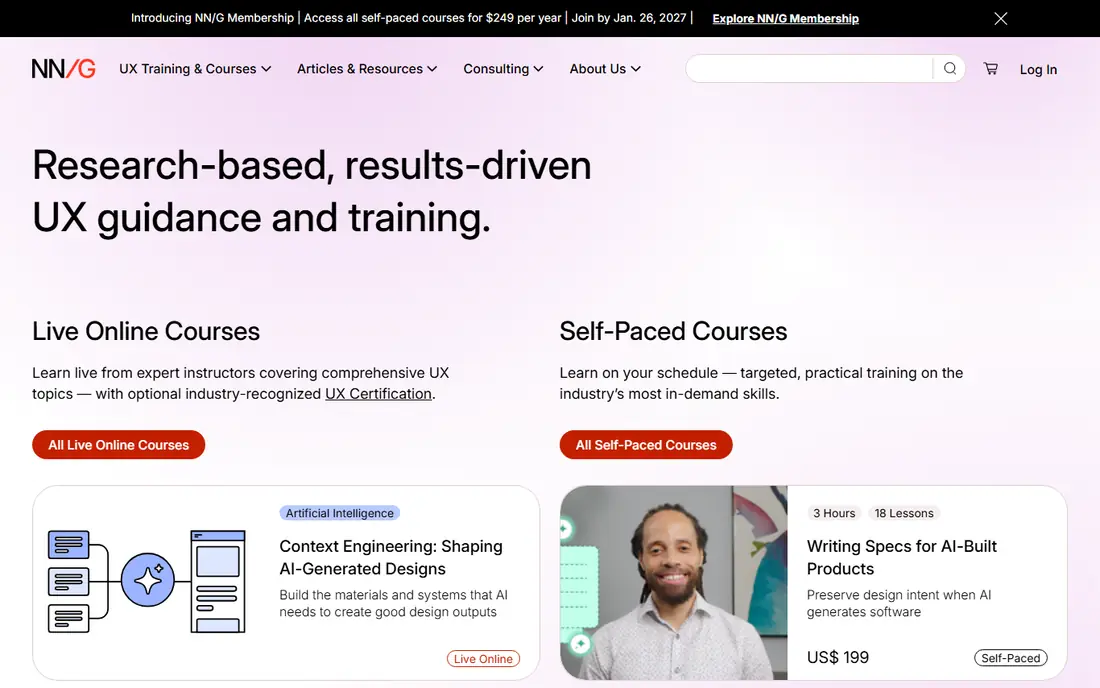
Nielsen Norman Group, often called NN/g, is the firm many teams turn to when they want to get methods right. Its consultants run usability studies, expert reviews, and research programs, and its training courses teach teams to run their own studies with care. That combination suits an organization that wants both answers now and stronger skills later.
The trade-off is that NN/g is not a quick, self-serve panel. If you need 50 video responses by tomorrow, a platform such as UserTesting or Maze will move faster. NN/g fits best when the question is important, the product is complex, or the team wants a defensible method it can reuse. Ask whether the engagement includes training or only findings, since the two have different value.
- Long record in usability methods
- Training for in-house teams
- Evidence-based articles and courses
- Consulting engagements are priced by scope and can be costly
- Less of a self-serve testing tool
- Scheduling for experts can be tight
AnswerLab runs qualitative and quantitative research for large product teams, including usability testing, interviews, surveys, and continuous discovery programs. It is a strong pick when a study must cover several markets, audiences, or product areas and still produce one clear set of decisions. The firm also works in areas where recruitment and consent need careful handling.
For a small team with one prototype, AnswerLab may be more structure than needed. The value grows with study size and risk, since a wrong call on a flagship product costs far more than the research. Before you brief AnswerLab, list the decisions the study must inform, since that focus keeps a large program from turning into a general exploration.
- Enterprise-grade moderated and unmoderated studies
- Global recruitment experience
- Strong work in regulated sectors
- Enterprise pricing and process
- Smaller teams may find the engagement heavy
- Timelines depend on recruitment needs
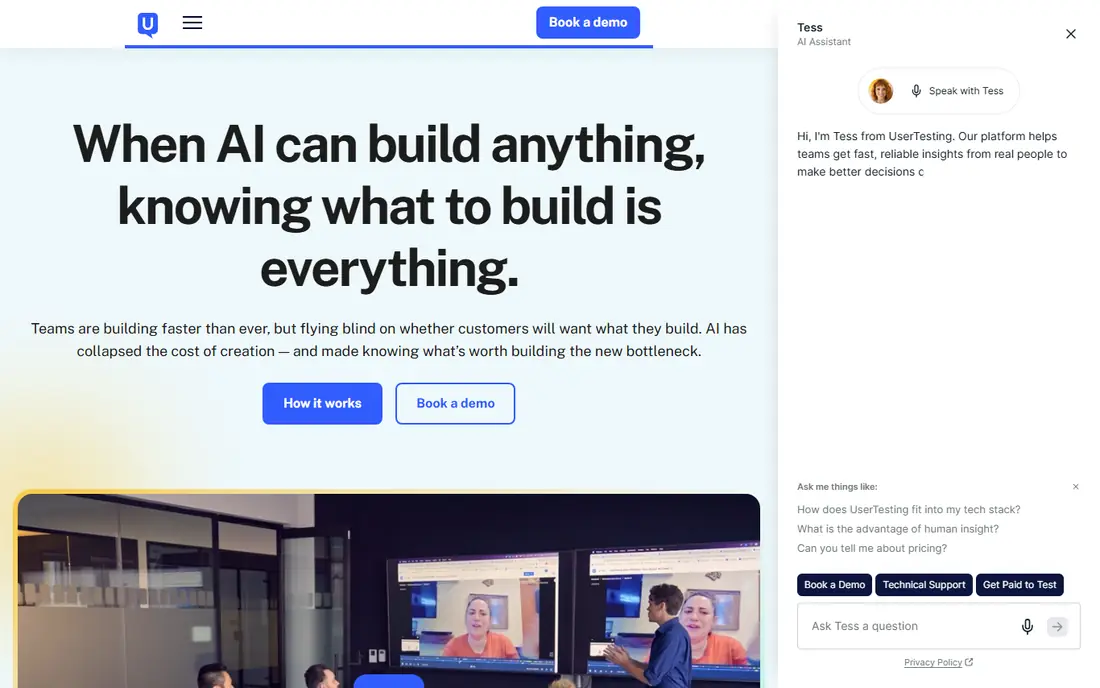
UserTesting lets teams get video feedback from real people as they use a prototype, website, or live product. You can run unmoderated tests, where participants complete tasks alone, or moderated sessions with a researcher guiding the conversation. That speed makes it useful inside a sprint, when a team needs to check a new flow before it ships.
The honest catch is that fast feedback is only as good as the tasks and screening. A vague task produces vague answers, and a poorly screened panel produces polite but useless sessions. Treat UserTesting as a way to learn quickly, and pair it with a researcher who can turn clips and notes into prioritized fixes. Pricing is by plan, so request a quote based on seat count and testing volume.
- Large contributor network
- Video plus survey feedback
- Tools for moderated and unmoderated tests
- Pricing is quote-based for most teams
- Panel quality depends on screening
- Analysis still needs skilled researchers
Maze is a practical choice for product teams that test often and want numbers as well as comments. You can test a Figma prototype, a live site, or a concept, and Maze reports task success, time, and where people drop off. That makes it easy to compare two versions of a flow or to check whether a redesign actually helped.
Maze does not replace a moderated interview when you need to understand why people behave a certain way. Use it for frequent checks, such as onboarding, checkout, or navigation, and use interviews for deeper questions about needs and habits. The free plan is a fair way to learn the tool before you commit a team to it.
- Free plan for getting started
- Quick prototype and website tests
- Clear quantitative results such as success rates
- Unmoderated tests miss follow-up questions
- Depth is lower than a moderated study
- Advanced features sit on paid plans
User Interviews focuses on the part of research many teams find hardest, which is finding the right people. Its panel and tools help teams recruit, screen, schedule, and pay participants for interviews, surveys, and tests. That service suits a team that already has researchers but lacks a reliable way to reach users, including professionals with specific jobs or tools.
The catch is cost and care. Incentives, especially for professionals, can raise the total well above the platform fee, and a loose screener can admit people who do not match the target. Write screening questions that test real behavior, such as tools used in the last month, rather than self-described interest. Used well, User Interviews removes a common bottleneck in research.
- Large research panel
- Screening and scheduling tools
- Useful for interviews, surveys, and unmoderated tests
- Incentive costs add up
- Niche audiences can be hard to recruit
- Quality depends on careful screening questions
dscout helps teams study life as it happens, through diary studies, interviews, and surveys on a mobile-first platform. Participants can share video, photos, and notes from their own routines, which gives context a lab test cannot capture. That approach fits questions about habits, such as how people manage money, shop, or use a health product over days or weeks.
A diary study is slower than a single usability test, and the volume of entries can overwhelm a small team. Plan analysis time into the study, and keep prompts short so participants stay engaged. When the question is about real routines rather than a single screen, dscout is one of the more direct tools for the job.
- Strong diary and in-context research
- Video and photo entries from daily life
- Good for habits over time
- Studies take longer than a one-time test
- Analysis of diary entries needs time
- Pricing is by plan
Key Lime Interactive is a full-service research firm with a focus on mobile, multi-channel journeys, and emerging technology. It runs moderated and unmoderated testing, contextual inquiry, and benchmarking, which helps when a product spans an app, a website, and support. The firm suits teams that need a managed study and a report their stakeholders will trust.
Like other full-service firms, Key Lime is not the cheapest way to test a single prototype. Its value shows in larger programs, where recruitment, facilitation, and analysis must stay consistent. If you hire the firm, agree on the metrics that matter before fieldwork starts, so the final report answers a business question and not only a usability question.
- Experience with mobile and emerging tech
- Moderated and unmoderated testing
- Competitive benchmarking work
- Full-service pricing
- Best for teams with a defined program
- Smaller one-off tests may suit a platform better
Bold Insight works on UX research, human factors, and accessibility testing, including for medical devices, automotive products, and other regulated areas. That expertise matters when safety, error handling, or accessibility is part of the product, since a standard usability test may miss risks that a human factors study catches. The firm also runs global studies and in-person lab work.
For a simple website test, Bold Insight is more specialized than needed. For a regulated product, that specialization is the reason to hire it. Ask about the standards and documentation the study must meet, and confirm how findings will feed into design changes and risk records. That planning step keeps research useful beyond a single report.
- Human factors and accessibility expertise
- Global study capacity
- Research facilities for in-person work
- Specialized focus means higher costs for simple tests
- Timelines reflect regulatory care
- Not a self-serve tool
Optimal Workshop
Great for: Card sorting and information architecture tests
Optimal Workshop gives teams focused tools for information architecture, including card sorting, tree testing, first-click testing, and surveys. Those methods answer a specific question that general testing tools handle poorly, which is whether people can find things in your navigation and labels. If users cannot locate a feature, no amount of visual polish will fix the problem.
The limit is scope. Optimal Workshop is not a general interview or video testing platform, so pair it with another tool when you need to watch people use a full flow. The free plan is enough for a small card sort or tree test, which makes it a low-risk way to settle a navigation debate with evidence instead of opinion.
- Focused tools for card sorting, tree testing, and surveys
- Free plan for small studies
- Clear reports for navigation decisions
- Narrower than a full research platform
- No moderated video testing as the core offer
- Larger teams need paid plans
How we picked these
We compared official service pages, method descriptions, and public case work, and we kept only providers with current research services and a clear method. We included both firms that run studies for clients and platforms that help teams run studies themselves, since buyers often need one or the other. We did not claim hands-on testing, and we treated a large panel or a long client list as a starting point, not proof of quality for a specific brief.
How to choose a UX research partner
Start with the decision, not the method. Write down what you need to decide, what would change your mind, and when the answer is needed. A team choosing between two onboarding flows needs a different study than a team exploring why customers leave after three months. That decision statement also helps a vendor quote accurately, since recruitment and analysis time depend on it.
Next, check recruitment and analysis, not only the tool. Ask how participants are screened, how incentives are set, and who will analyze the results. A vendor that hands over raw clips without synthesis leaves the hardest work to you. For sensitive topics, ask how consent, privacy, and data storage are handled, and confirm that participants can withdraw without penalty.
Finally, run a small study first. A short pilot with a few participants can reveal unclear tasks, weak screening, and reporting gaps before you fund a large program. Agree on deliverables in advance, such as a prioritized issue list, clips tied to each issue, and recommended next steps. A partner that welcomes a pilot and a clear brief is usually a partner that will stay useful as the program grows.
Frequently asked questions
What are the best companies for ux research for a small team?
Small teams often do best with a platform such as Maze or Optimal Workshop for frequent tests, plus User Interviews when they need participants. A full-service firm becomes worth the cost when the decision is large, the audience is hard to reach, or the team lacks research time.
How much do the best ux research companies cost?
Costs vary by method, audience, and study size, and most firms price by scope rather than a public rate. A small unmoderated test can cost far less than a moderated, multi-market study with professional participants, so ask for a quote tied to your exact brief and participant count.
What is the difference between UX research and usability testing?
Usability testing is one method inside UX research. Research also includes interviews, surveys, diary studies, card sorting, and field work that explore needs, habits, and context. A good program uses several methods, since no single method answers every product question.
How many participants do we need for a usability study?
For a focused usability test, many teams learn a great deal from a small group, often five to eight people per audience segment, because major issues repeat quickly. Larger or more diverse audiences, and studies that need numbers rather than themes, require more participants and a different design.
Should we hire a firm or use a research platform?
Hire a firm when you need managed recruitment, skilled facilitation, and analysis for a high-stakes decision. Use a platform when your team has research skills and wants speed, repeatability, and lower cost per test. Many teams use both, with a platform for frequent checks and a firm for major studies.
Sources
See where you really rank - block by block
ProMapRanker scans Google Maps across a grid of your service area. Simple monthly plans from $19, white-label on every plan.
Start freeKeep reading
 zscaler alternatives
Best Zscaler Alternatives in 2026
Looking for zscaler alternatives? We compare 9 SASE and zero trust platforms on architecture, data protection, pricing, and fit for your network and team.
Read → zapier alternatives free
Best Zapier Alternatives Free in 2026
Nine automation tools for zapier alternatives free in 2026, all with genuinely free tiers, plus free plan limits, starting prices and upgrade paths explained.
Read → which platform is best for online reputation
Which Platform Is Best for Online Reputation in 2026
Wondering which platform is best for online reputation? We compare 8 review, listing, and response tools for small and multi-location businesses and agencies.
Read →