 ProMapRanker
Best UI UX Companies in 2026

Key takeaways
- The best ui ux companies differ more by engagement model than by visual style, so shortlist by research depth, build support, and budget first.
- Large firms such as IDEO, frog, and Huge suit broad programs, while Clay, Ramotion, and Fantasy suit focused product and brand work.
- Most agencies price by project scope rather than a public rate card, so ask for a phased quote and a named senior team before you sign.
- A useful agency case study shows a measured outcome, such as higher activation or fewer support contacts, not only finished screens.
- For a first redesign, a paid audit or discovery sprint is usually a safer first step than a full rebuild.
Quick comparison
| Pick | Great for | Pricing starts at | Free tier | |
|---|---|---|---|---|
 IDEO | Human-centered research and service design | See website | No | Visit |
 frog | Large, multi-channel product programs | See website | No | Visit |
 Clay | Brand-led tech products | See website | No | Visit |
 Ramotion | Startups and SaaS product design | See website | No | Visit |
 Work and Co | Senior-led product design and engineering | See website | No | Visit |
 Huge | Enterprise digital transformation | See website | No | Visit |
 Fantasy | Premium consumer interfaces | See website | No | Visit |
 ustwo | Long-term product partnerships | See website | No | Visit |
 Momentum Design Lab | Data-heavy B2B products | See website | No | Visit |
The best ui ux companies
These nine firms cover the main ways to buy design help, from a short research engagement to a long product partnership. We compared their public services, case work, and stated focus areas, and we kept the list to firms with current, verifiable client work.
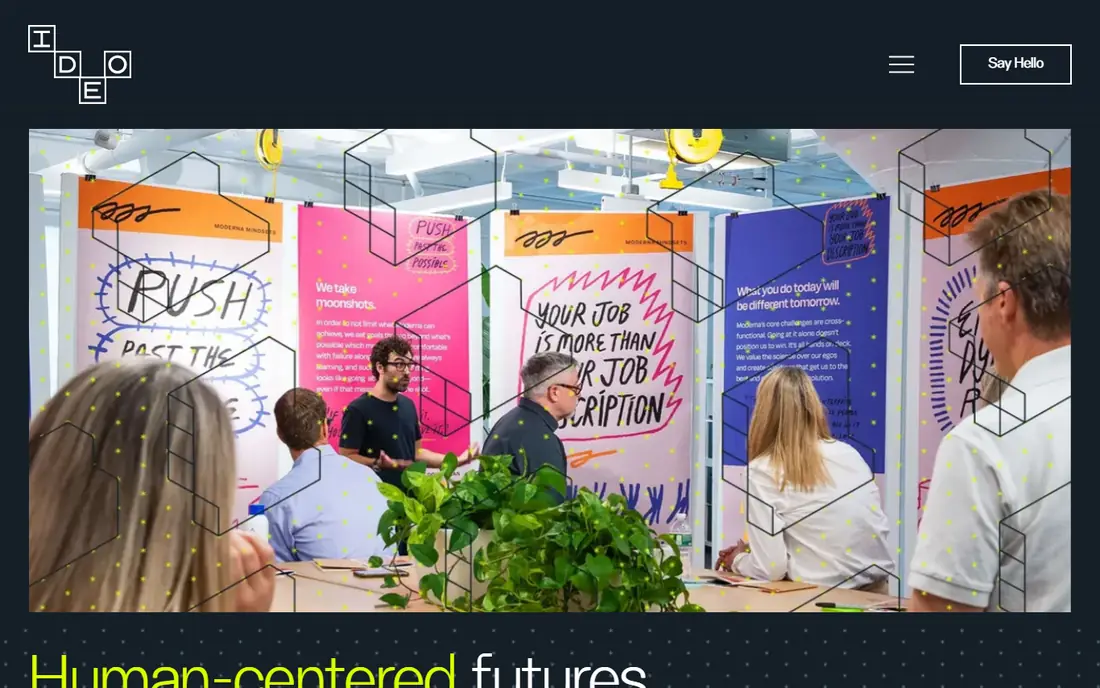
IDEO is a good first call when the problem is still unclear. The firm is known for human-centered research, early concept work, and service design, which means it studies how people behave before it settles on screens. That approach fits a company that needs to rethink a journey, a clinic workflow, or a multi-step service, not only polish an app.
The trade-off is scale and selectivity. IDEO engagements tend to be broad and senior-led, so a small team with a tight launch date may find the pace slower than a boutique studio. Ask early about scope, decision makers, and what a first phase will deliver in concrete terms. When the brief is fuzzy and the stakes are high, that rigor is the point.
- Deep research practice
- Work spans products, services, and organizations
- Strong design thinking methods
- Selective about engagements
- Enterprise-level budgets
- Timelines can be long
frog, part of Capgemini Invent, works across product strategy, experience design, and technology. That breadth helps when a product touches a website, a mobile app, in-store tools, and support channels at the same time. The firm can keep those touchpoints consistent instead of treating each screen as a separate job.
For a single app or a marketing site, frog may be more firm than you need. The fit improves when several teams, regions, or product lines must move together. If you go this route, agree on who owns product decisions day to day, since large programs stall when approval sits with too many groups.
- Global delivery capacity
- Strategy, design, and engineering under one roof
- Experience with complex ecosystems
- Best suited to larger budgets
- Smaller projects may get less senior attention
- Process can feel formal
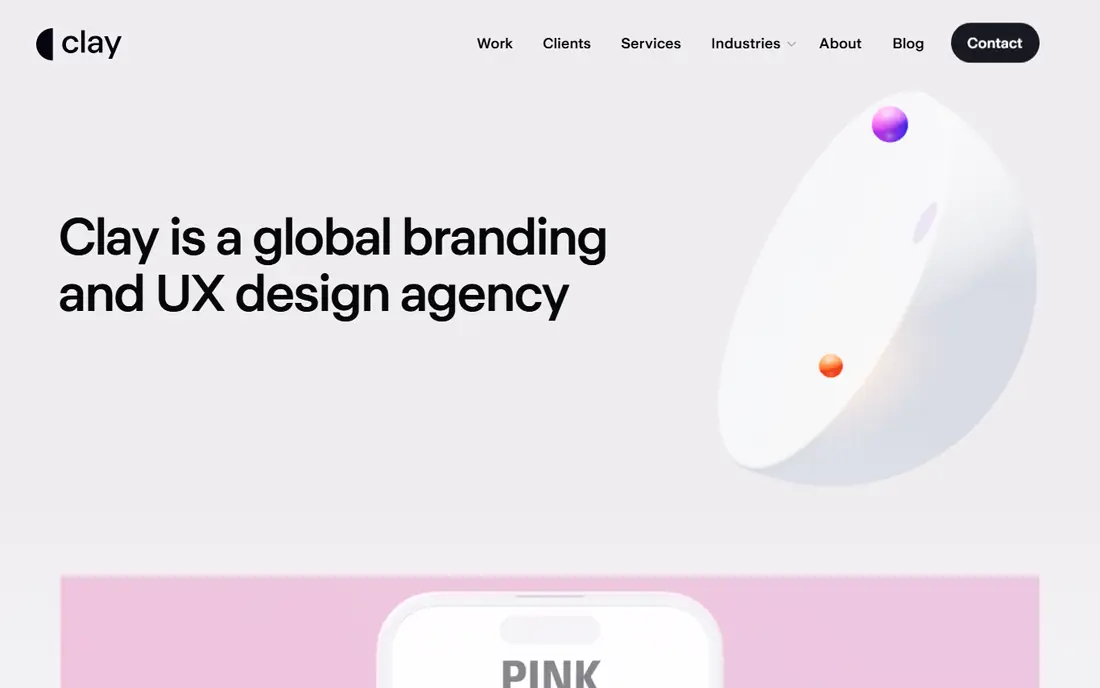
Clay is based in San Francisco and is known for brand-forward digital products, websites, and apps for technology companies. If your product needs to look credible to enterprise buyers or investors, and the story around the product matters as much as the flow, Clay is a natural shortlist entry. Its work tends to feel confident and clean rather than busy.
The honest catch is cost and focus. Published roundups put Clay projects in a higher bracket than many boutique studios, so it fits funded startups and established firms better than a bootstrapped first product. Ask how much user research is included, since a brand-led engagement can lean toward visual direction unless research is written into the scope.
- Strong visual craft for tech brands
- Clear case work for digital products
- Good fit for websites and apps together
- Project minimums are high for early startups
- Brand focus may suit polish more than deep research
- Availability can be tight
Ramotion works with startups and growing SaaS teams on brand identity, websites, and product interfaces. That mix is useful when a young company needs a coherent look and a usable product at the same time, without hiring separate brand and product teams. The studio is a good match for teams that already know their core user and need to move fast.
The limit is scale. Ramotion is not the obvious pick for a global platform with dozens of internal tools and strict compliance layers. For a focused product, though, its size can be a plus, since decisions tend to move quickly. Get a fixed scope for the first release, and hold later features for a second phase.
- Practical SaaS and startup focus
- Branding plus product design in one team
- Clear portfolio of shipped products
- Less suited to very large enterprise programs
- Senior time varies by project
- Scope must be tightly defined
Work and Co builds digital products with senior designers and engineers working together, which reduces the handoff gap between a design file and a working product. That matters for products with tricky flows, such as checkout, onboarding, or account setup, where small design choices change completion rates. The firm has a long record with well-known consumer and business products.
Because it now sits inside Accenture Song, expect a more structured engagement than a small studio offers. That structure helps large clients, but it can feel heavy for a short project. It is a strong pick when you need both design quality and a team that can ship the result.
- Senior teams
- Design plus engineering delivery
- Strong record with large consumer and enterprise products
- Now part of Accenture Song, so enterprise process applies
- Not a low-cost option
- Best for substantial products
Huge designs brand and digital experiences for large organizations, including websites, apps, and commerce flows. It suits a company that needs to change how customers find, buy, and get help across many channels, rather than fix one screen. The firm can bring strategy, creative, and technology planning into a single program.
The drawback is fit for small teams. A startup with one product and a short runway will likely find Huge too large and too slow. For an enterprise team, the value is consistency at scale and a partner that can stay through several releases. Ask for examples in your sector, since enterprise work varies a lot by industry rules and internal systems.
- Large-scale experience design
- Brand and product work together
- Capacity for multi-year programs
- Enterprise budgets required
- Smaller briefs are not the focus
- Timelines run longer than boutique work
Fantasy, also styled Fantasy Interactive, is known for polished consumer interfaces and design systems for brands that compete on experience. If your app lives or dies on first impressions, motion, and a clear visual voice, Fantasy belongs on the list. The studio is a good match for media, entertainment, lifestyle, and consumer tech products.
It is less obvious for a data-dense internal dashboard, where speed and clarity matter more than visual drama. Pricing also sits at the premium end, so a funded team or an established brand is the usual buyer. Before you commit, check recent work for products like yours and ask how the design system will be handed to your engineers.
- Distinctive consumer product craft
- Strong design systems work
- Good for brands that compete on feel
- Premium pricing
- Less of a fit for dense internal tools
- Research depth varies by brief
ustwo is a digital product studio with studios in several cities and a record of building and improving products over time. It fits teams that want a partner to stay past launch, learn from real use, and keep refining the product. That model works well when the product roadmap is long and the internal team is small.
If you only need a one-time review, a retainer-style partner may be more commitment than you want. The value shows up over months, as the team builds context about your users and your business. For a company planning several releases, that shared context can save repeated onboarding and rework.
- Product thinking plus design craft
- Experience with long partnerships
- Work across mobile, web, and emerging products
- Retainer-style work suits ongoing needs more than one-off fixes
- Not the cheapest route to a quick audit
- Availability depends on studio capacity
Momentum Design Lab, now part of HTEC, focuses on B2B and enterprise products, including dashboards, admin tools, and data-heavy workflows. That focus is valuable because B2B products fail in different ways than consumer apps. Users juggle many tasks, roles, and permissions, and a clean look alone does not fix a confusing workflow.
The firm is a strong pick for a SaaS team rebuilding a core product surface, such as reporting, settings, or onboarding for teams. It is less suited to a brand campaign or a consumer app that needs visual spectacle. Ask for a case study with a similar workflow, and confirm whether engineering help is included or if your team will build from the designs.
- Strength in B2B dashboards and complex workflows
- Research-informed process
- Engineering support through HTEC
- B2B focus means less consumer brand flair
- Project minimums still apply
- Enterprise clients get priority
How we picked these
We compared official service pages, published case work, and independent roundups of active firms, and we kept only firms with current client work and a clear focus on UI and UX. We favored a mix of large consultancies and smaller studios, and we favored firms that describe their research methods and show shipped products rather than concept art alone. We did not claim hands-on testing, and we did not treat a polished portfolio as proof of results.
What to ask before you hire a UI UX company
Start with the problem, not the deliverable. Write down the user task that fails today, the people who do it, and the outcome you want to change, such as completed signups, fewer errors, or faster task completion. Share that brief with two or three firms and compare their questions, not only their decks. A firm that asks about users, constraints, and success measures is usually a safer bet than one that jumps straight to a new look.
Agree on scope in phases. A discovery or audit phase should end with findings you can act on, such as a prioritized issue list, test results, and a plan for the next release. Confirm who will be on the team, how often you will review work, and how research participants are recruited. For regulated products, ask about accessibility, privacy, and data handling early, since fixes late in a project cost more.
Check price structure in plain terms. Agencies may charge by project, by sprint, or by retainer, and the total depends on research depth, number of screens, and engineering support. Ask what is included, what counts as a revision, and what happens if the scope grows. Finally, ask to speak with a past client in a similar situation, and ask that client what went wrong as well as what went well.
Frequently asked questions
What is the best ui ux company for a startup?
A smaller studio such as Ramotion or Momentum Design Lab often fits a startup better than a large consultancy, since the team is closer to the work and the engagement can stay focused. That said, the right pick depends on budget, timeline, and whether you need research, branding, or engineering help as well.
What makes the best user experience companies different from a freelance designer?
A company brings a team, a research process, and a design system practice, which helps when a product has many screens, roles, or platforms. A freelancer can be excellent for a focused task, but a firm is usually better when the work must stay consistent across releases and teams.
How much does the best ui ux company cost?
Most firms in this guide price by project and do not publish a single rate, so totals vary widely by scope and research depth. Published roundups often place boutique projects in the tens of thousands of dollars and enterprise programs far higher, so request a phased quote tied to a clear scope.
Are the best companies to work for as a ux designer also the best firms to hire?
Not always. A firm can be a good employer and still be a poor fit for your brief, budget, or timeline. Judge a hiring decision on recent client work, team seniority, and fit for your product, and judge an employer separately on its culture, growth, and day-to-day work.
Should we hire an agency or build an in-house UX team?
An agency suits a defined project, a redesign, or a gap in skills, while an in-house team suits a product that changes every week. Many companies start with an agency for discovery and a design system, then hire in-house designers to carry the work forward.
Sources
See where you really rank - block by block
ProMapRanker scans Google Maps across a grid of your service area. Simple monthly plans from $19, white-label on every plan.
Start freeKeep reading
 zscaler alternatives
Best Zscaler Alternatives in 2026
Looking for zscaler alternatives? We compare 9 SASE and zero trust platforms on architecture, data protection, pricing, and fit for your network and team.
Read → zapier alternatives free
Best Zapier Alternatives Free in 2026
Nine automation tools for zapier alternatives free in 2026, all with genuinely free tiers, plus free plan limits, starting prices and upgrade paths explained.
Read → which platform is best for online reputation
Which Platform Is Best for Online Reputation in 2026
Wondering which platform is best for online reputation? We compare 8 review, listing, and response tools for small and multi-location businesses and agencies.
Read →