 ProMapRanker
Best UGC Platforms for Creators in 2026

Key takeaways
- Collabstr is the most open marketplace, with creators setting their own rates and brands booking directly.
- Billo and JoinBrands offer the steadiest volume for short product videos, especially for newer creators.
- Aspire and Cohley suit established creators chasing larger, longer-term brand deals.
- Most platforms are free for creators, but brand fees, platform cuts, and usage rights affect what you actually earn.
Quick comparison
| Pick | Great for | Pricing starts at | Free tier | |
|---|---|---|---|---|
 Collabstr | Open marketplace with your own rates | Free | Yes | Visit |
 Billo | Steady product-video work for DTC brands | Free | Yes | Visit |
 JoinBrands | High gig volume for beginners | Free | Yes | Visit |
 Insense | TikTok and Meta ad campaign briefs | Free | Yes | Visit |
 Aspire | Larger long-term brand deals | Free | Yes | Visit |
 Cohley | Managed briefs from mid-size brands | Free | Yes | Visit |
 Creator.co | Community plus gigs for micro-creators | Free | Yes | Visit |
 Influee | Quick pay-per-video jobs | Free | Yes | Visit |
The best UGC platforms for creators
UGC, or user-generated content, means brands pay creators to make authentic-style videos and photos for ads and social feeds, usually without needing a large following. These platforms connect creators with those briefs, handle delivery, and in many cases handle payment.
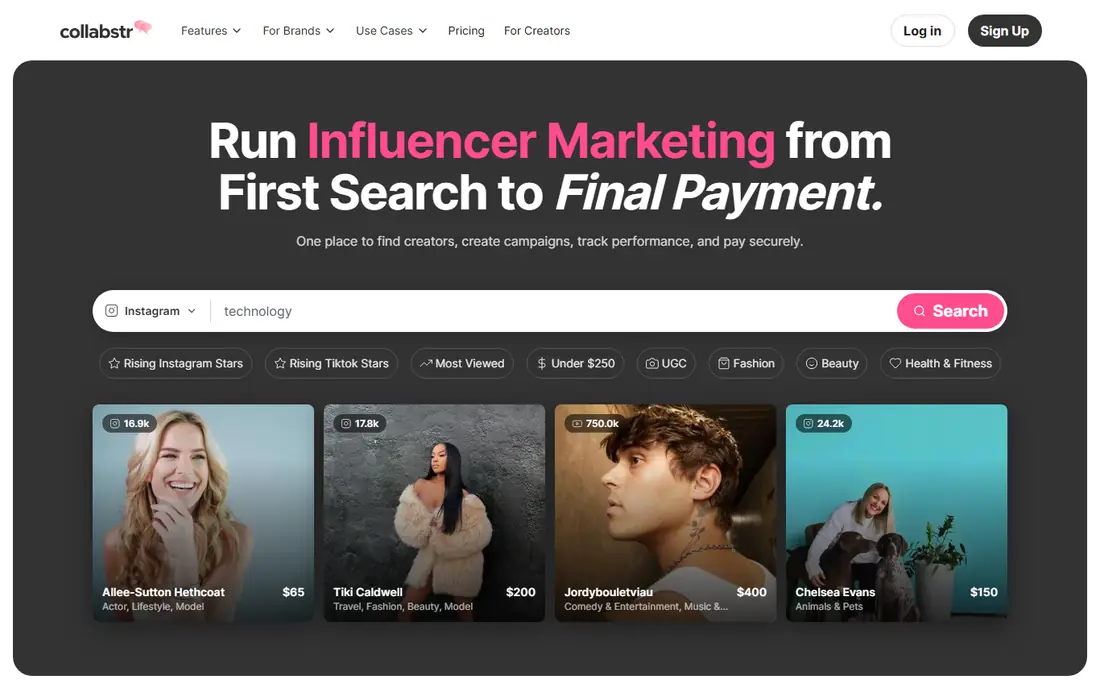
Collabstr is the closest UGC has to a public marketplace. You create a listing, set your price for a video or photo package, and brands can book you directly or post a brief for creators to apply to. Listing, negotiation, delivery, and payment happen in one place, which beats juggling direct messages and invoices.
The escrow system is the key protection: brand funds are committed before you film, and they release when the brand approves the work. Competition is the trade-off, especially in crowded niches, so a strong portfolio and fast replies matter more than a low price alone.
- Creators publish listings with their own rates
- Escrow payment protects creators until work is approved
- Brands search by niche and budget
- Heavy competition in popular niches such as beauty and fitness
- Reviews carry a lot of weight
- Brand-side fees can squeeze budgets
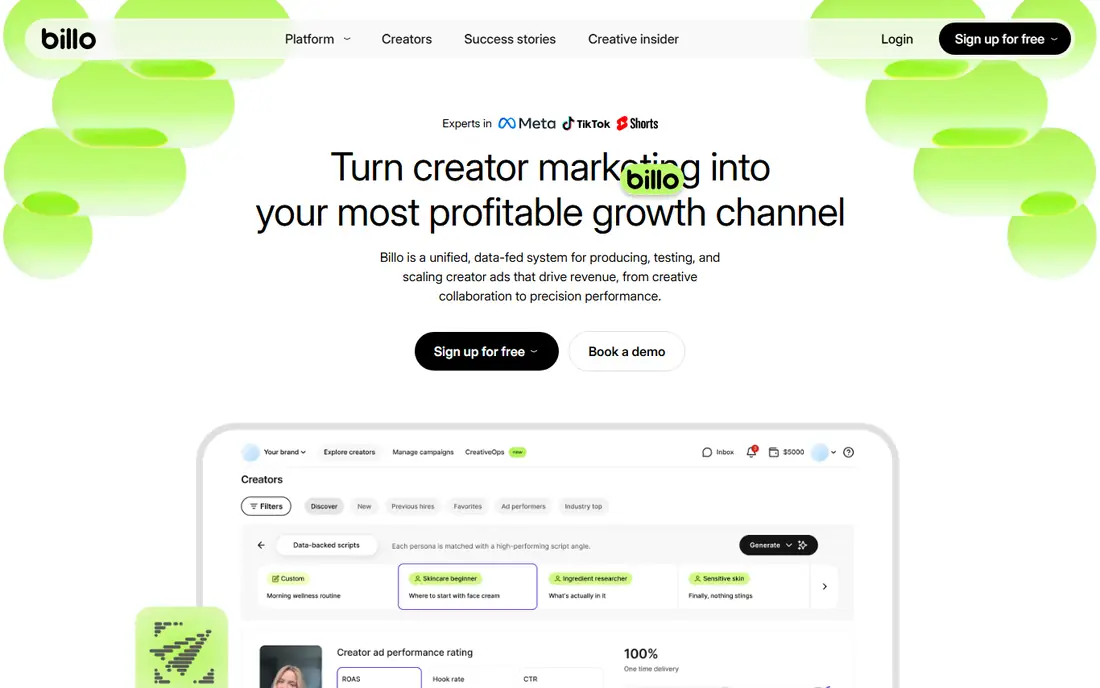
Billo focuses on short product videos for online brands, which makes it a good fit for creators who like a clear brief and a fast turnaround. You apply to briefs, film the product, and deliver a finished video that a brand can test as an ad. For newer creators, that structure is easier than negotiating custom deals from scratch.
Rates are set within the platform model, so you have less control than on Collabstr, and ad usage rights can extend beyond the first video. Read each brief for usage length and platforms before you accept, and price your time accordingly.
- Clear briefs for short product videos
- Steady volume from direct-to-consumer brands
- Creators are vetted before joining
- Videos are priced by the brand, so rates vary
- Competition for popular briefs
- Usage terms need careful reading for ad use
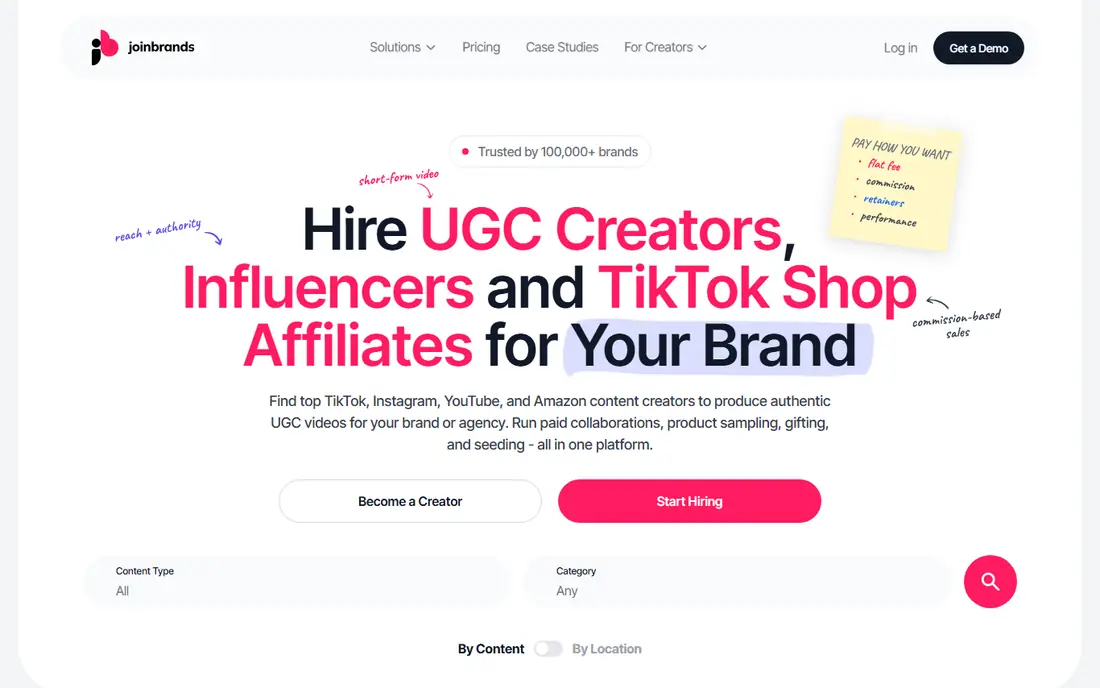
JoinBrands is a good starting point for creators building a portfolio. The volume is high, briefs are straightforward, and many jobs suit creators with small followings, since UGC pays for the content, not for posting to your own audience. That volume helps you practice hooks, lighting, and editing quickly.
The downside is pay. Per-video rates are often lower than on premium platforms, and gifted jobs should be weighed against your time. Use JoinBrands for reps and portfolio clips, then move to higher-paying platforms as your work improves.
- Large volume of TikTok and Amazon-focused jobs
- Beginner-friendly briefs
- Free to join with platform fees on jobs
- Lower per-video rates than premium platforms
- High competition
- Some jobs are gifted rather than paid, so check each listing
Insense suits creators who want their videos to run as paid ads, not just organic posts. Briefs are written with ad performance in mind, covering hooks, calls to action, and formats for TikTok and Meta. That focus helps creators learn what makes an ad work, which is a skill brands pay for repeatedly.
Because brand plans start at a higher level, the brands here tend to be larger and more demanding. Experienced ad creators compete for the same briefs, so a portfolio of past ad-style videos helps. Check usage rights carefully, since paid ad use is often broader than organic use.
- Briefs built for paid social ads
- Creator invitations as well as open applications
- Strong for TikTok and Meta formats
- Brand plans are expensive, so smaller brands are fewer
- Competition from experienced ad creators
- Ad usage terms vary by campaign
Aspire is the enterprise end of this list, built for brands running influencer, affiliate, and UGC programs at scale. For creators, that means larger budgets and the chance of repeat work, rather than one-off videos. Long-term partnerships, where a brand books you for several videos over months, are more common here than on volume marketplaces.
The trade-off is access. Aspire favors creators with a proven portfolio and, in many cases, an audience, so beginners may wait longer for matches. If you have steady UGC work elsewhere and want to step up to larger deals, Aspire is a logical next platform.
- Campaigns from larger brands with bigger budgets
- Tools for long-term partnerships and affiliate work
- Creator search by niche and audience
- Better suited to established creators with a track record
- Application process is more selective
- Smaller creators may see fewer matches
Cohley works with mid-market and larger consumer brands that want a managed flow of creator content for ads, social feeds, and product pages. Briefs are structured, and creators apply to campaign opportunities rather than posting open listings. That structure suits creators who prefer clear direction over constant pitching.
Selectivity is the limit. Not every applicant is approved, and open briefs are fewer than on a public marketplace. If you are accepted, though, the work tends to be steadier and better briefed than on volume platforms.
- Managed campaigns with clear briefs
- Brands in consumer goods and retail
- Content can be used across ads, social, and product pages
- Approval is selective
- Fewer open briefs than Collabstr
- Rates and usage terms are set per campaign
Creator.co blends a creator community with campaign work, which helps micro-creators who are still building confidence. You can find gigs, learn from other creators, and apply to brands in lifestyle, food, and beauty without needing a large following. That community layer is a real difference from pure marketplaces.
Campaign volume is smaller than on the largest platforms, and some listings are gifted rather than paid. Filter for paid work first, and treat gifted campaigns as portfolio builders only when the product and usage terms make sense for your time.
- Community features alongside campaign listings
- Suitable for micro-creators
- Brands across lifestyle, food, and beauty niches
- Smaller campaign volume than Collabstr or JoinBrands
- Some campaigns are gifted or product-only
- Platform fees and terms vary
Influee focuses on straightforward pay-per-video work, which suits creators who want to complete a job, get paid, and move to the next brief. The model is easy to understand, and short videos fit creators with limited filming time. It works well alongside a larger marketplace, filling gaps between bigger deals.
As with other volume platforms, rates are modest on many jobs, and usage terms differ by campaign. Read each brief for ad use, duration, and exclusivity before filming, since those terms affect what you can charge for future work with competing brands.
- Pay-per-video model with clear pricing on many jobs
- Quick turnaround for short videos
- Creators across TikTok, Instagram, and Facebook
- Rates vary by campaign and can be modest
- Competition for popular briefs
- Usage terms need checking on each job
How we picked these
We compared official creator pages, marketplace listings, and pricing pages for UGC platforms that are still operating in October 2026 and that accept creators directly. We favored platforms with clear creator signup, payment handling, and brief structures, and we included open marketplaces, volume platforms, and enterprise tools so readers can see the full range. We did not claim hands-on testing, and we left out agencies that do not offer open creator signup.
How to choose a UGC platform
Start with volume, then move to value
New creators benefit from volume platforms such as JoinBrands and Billo, where briefs are plentiful and feedback is fast. Once you have a portfolio of strong videos, move toward Collabstr for rate control and Aspire or Cohley for larger deals.
Read usage rights before you film
A video sold for organic social use and a video sold for paid ads are different products with different prices. Check how long a brand can run your video, on which platforms, and whether they can edit it. Longer or broader usage should mean higher pay.
Protect your payment and your time
Prefer platforms with escrow or in-platform payment over direct-message deals with no protection. Track turnaround time, revision rounds, and product shipping time, since those hidden hours affect your real hourly rate more than the headline video price.
Frequently asked questions
What is the best UGC platform for creators?
Collabstr is the best open marketplace for creators who want to set their own rates, while Billo and JoinBrands are best for steady volume. Aspire is best for established creators chasing larger, long-term brand deals.
What are the best UGC creator platforms for beginners?
JoinBrands and Billo are the best starting points, thanks to plentiful briefs and beginner-friendly formats. Creator.co is also friendly for micro-creators, and Collabstr works once you have a small portfolio to show brands.
Do UGC platforms cost money for creators?
Most platforms in this list are free for creators to join, with brands paying platform fees or a share on jobs. Some platforms charge brands a subscription, which affects how many brands are active, but creators should check for any creator-side fees before signing up.
Do I need a large following to do UGC?
No, UGC pays for the content itself, not for posting to your own audience in most cases. Brands use your video on their own ads and feeds, so a strong portfolio and good filming skills matter more than follower count.
How much do UGC creators earn per video?
Rates vary widely, from modest pay on volume platforms to several hundred dollars for premium ad videos with broad usage rights. Your niche, video quality, turnaround, and usage terms all affect the rate, so compare briefs rather than chasing a single average figure.
How do UGC creators get paid?
Most platforms handle payment in-platform, with escrow on Collabstr and scheduled payouts on others. Payment timing varies, so check each platform payout schedule and tax document handling before you accept a large batch of jobs.
Sources
See where you really rank - block by block
ProMapRanker scans Google Maps across a grid of your service area. Simple monthly plans from $19, white-label on every plan.
Start freeKeep reading
 galaxy.ai alternatives with lifetime access
Best Galaxy.ai Alternatives With Lifetime Access in 2026
Looking for galaxy.ai alternatives with lifetime access? We compare 7 pay-once AI tools for chat, writing, images, video and SEO work in 2026, in detail.
Read → best workforce management software
Best Workforce Management Software in 2026
Compare the best workforce management software for scheduling, time tracking, and payroll, with prices, free plans, and picks by team size and industry.
Read → best wms software
Best WMS Software in 2026: 8 Systems Compared
Compare the best WMS software for warehouses of every size in 2026, from enterprise systems like SAP and Manhattan to mid-market options for growing brands.
Read →