 ProMapRanker
Best Travel and Expense Management Software in 2026

Key takeaways
- Navan is the strongest pick when travel booking and expense capture need to live in one flow, with the first 5 expensing users free for smaller companies.
- Ramp and Brex both offer free tiers that pair corporate cards with expense controls, which suits startups that want to avoid a per-user fee at the start.
- Expensify remains the most flexible choice for teams that want to keep their existing cards and still automate receipts and reimbursements.
- SAP Concur and Emburse suit large firms with complex policies, audits, and multi-entity reporting, but both are quote-based.
- The cheapest headline price is rarely the full cost, so check card fees, platform fees, and approval limits before you sign.
Quick comparison
| Pick | Great for | Pricing starts at | Free tier | |
|---|---|---|---|---|
 Navan | Travel booking plus expenses | $15 per user per month | Yes | Visit |
 Ramp | Cards plus spend controls, free to start | Free | Yes | Visit |
 Brex | Startups and global teams | Free | Yes | Visit |
 Expensify | Receipt capture with existing cards | $5 per user per month | Yes | Visit |
 Zoho Expense | Budget teams and Zoho users | $3 per user per month | Yes | Visit |
 SAP Concur | Large enterprises | See website | No | Visit |
 TravelPerk | Travel booking with expense links | See website | Free trial | Visit |
 Fyle | Real-time card and receipt tracking | See website | Free trial | Visit |
 Emburse | Audited enterprise workflows | See website | Free trial | Visit |
The best travel and expense management software
Travel and expense tools fail in two familiar ways: trips get booked outside policy, and receipts arrive weeks late. The tools below close one or both gaps, but they do it in different ways, so the right pick follows your booking habits and your card setup.
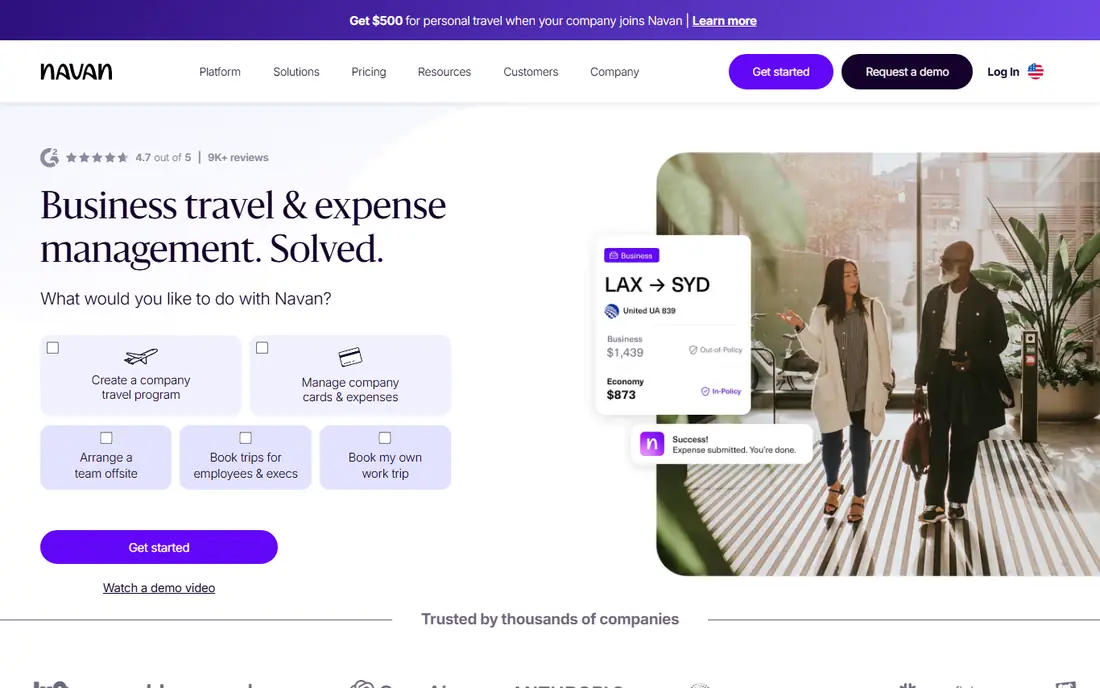
Navan, formerly TripActions, starts from the trip rather than the receipt. Staff book flights and hotels inside policy, managers see spend before it happens, and expenses can link back to the same trip instead of floating as separate claims. For firms where travel is the main cost, that order of work saves finance time.
The pricing detail matters for small firms. Travel booking is free to start, and the expense plan offers the first 5 monthly expensing users free for companies with up to 300 employees, with further users at $15 per user per month. Count your regular travellers before you compare, because a team of occasional travellers pays far less than a team of weekly flyers.
- Travel booking and expenses in one system
- Receipts can match to trips automatically
- Policy flags appear at booking time
- Full expense pricing starts after the free user allowance
- Larger firms face custom pricing for some tiers
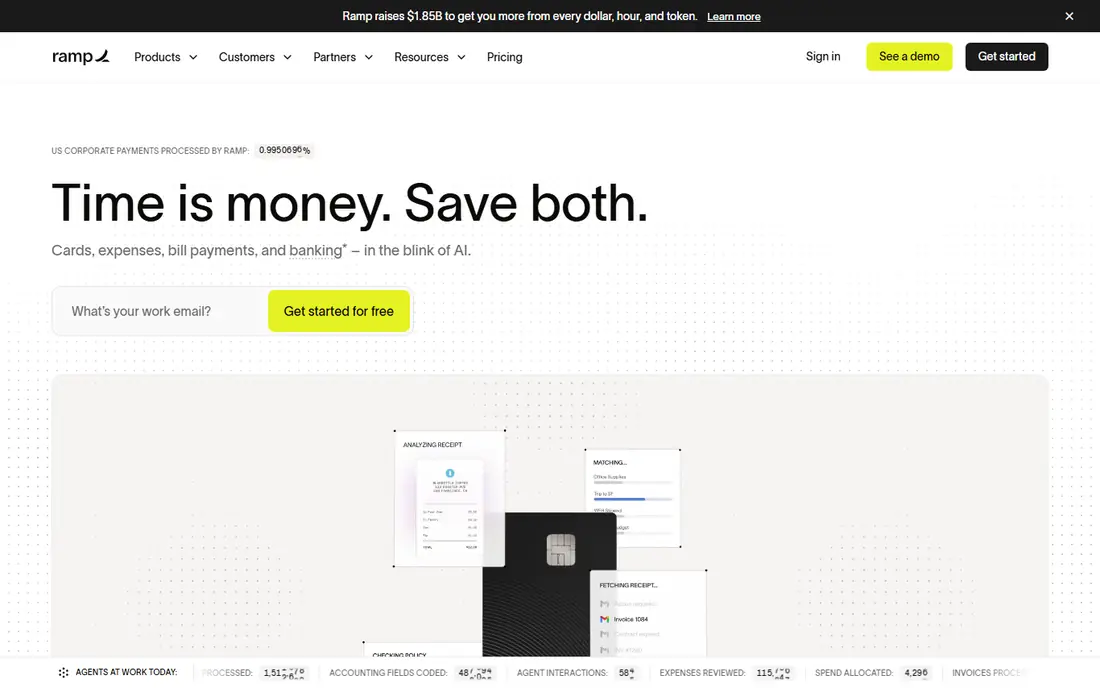
Ramp suits startups and growth firms that want controls without a software bill on day one. Issue physical or virtual cards, set limits by team or vendor, and let receipts match to transactions as staff spend. Finance sees spend in real time, rather than at month end when budgets are already gone.
The free tier is real, but it is not the whole product. Plus starts at $15 per user per month plus a platform fee, and adds deeper controls and accounting features. Model the paid tier at your headcount before you assume the free tier will cover approval chains, multi-entity books, or heavy procurement work.
- Free tier with corporate cards and expense tools
- Automatic receipt matching
- Savings and duplicate spend flags
- Paid Plus plan adds a platform fee on top of per-user pricing
- Card eligibility depends on the business profile
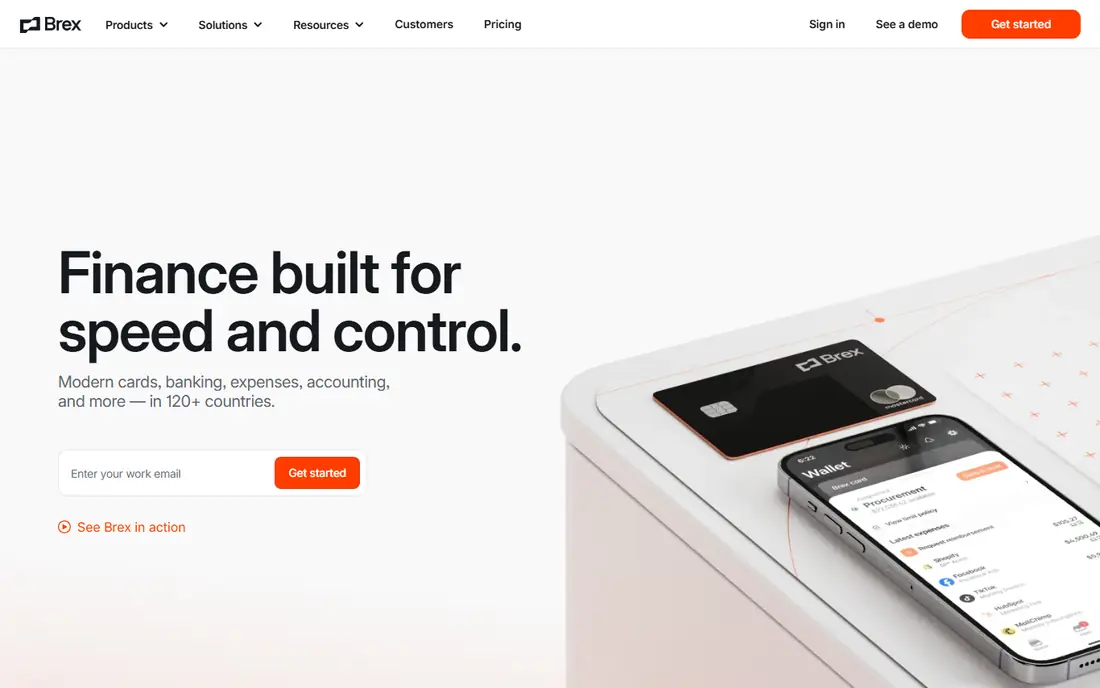
Brex fits a similar buyer to Ramp, with a stronger global angle. Teams that pay vendors in several currencies or run staff across countries get cards, expense capture, and bill pay in one account, with limits and approvals set by role. The free Essentials tier lowers the barrier for a young firm that is still formalising finance.
Premium at $12 per user per month adds advanced controls, custom approvals, and deeper reporting. For a small US-only team, Essentials may be enough for a long time. For a firm with subsidiaries, travel-heavy staff, or strict approval chains, test Premium in a trial and check which controls sit behind the paywall.
- Free Essentials tier
- Cards with built-in spend controls
- Global payment and accounting integrations
- Premium features cost $12 per user per month
- Card approval depends on business type and history
Expensify is the pick when you do not want to change cards. Staff photograph receipts, SmartScan pulls out the merchant, amount, and date, and expenses match to card transactions or cash claims. Managers approve from a phone, and finance exports to accounting without retyping every line.
That simplicity is the point, and also the limit. Small teams do well on the Collect plan from $5 per member per month, while firms that need multi-level approvals, ERP links, and single sign-on move to Control at a higher price. If your card programme is already settled, Expensify avoids a card migration for the sake of software.
- SmartScan receipt capture
- Works with existing corporate cards
- Simple reimbursement and approval flows
- Advanced controls sit on the higher Control plan
- Pricing and limits need care for larger teams
Zoho Expense is the budget play that still feels complete for expense-only work. Receipt scanning, mileage, per diem, approvals, and accounting exports cover the daily needs of a small firm, and the free version helps a team of up to 3 users start without a bill. Firms already using Zoho Books get the cleanest setup, since data flows without a separate integration project.
Travel is where you should check the fit. Zoho Expense handles travel expenses well, but it is not a full travel booking platform like Navan or TravelPerk. If your staff book complex multi-city trips, pair Zoho Expense with a booking tool, or pick a combined platform instead.
- Low starting price
- Free version for small teams
- Strong fit inside Zoho Books and Zoho CRM
- Travel booking is not its core strength
- Advanced features need higher tiers
SAP Concur remains the default for large firms with strict policy, audit, and reporting needs. Travel, expense, and invoice workflows share policy rules, card feeds, and approval chains, which matters when thousands of staff claim across entities and countries. Finance teams get the control and audit trail that lighter tools cannot match.
That depth costs time and money. Pricing is quote-based, and rollout often needs IT and change management, not just a signup page. Small firms should not start here. Large firms with complex policies, however, will find the controls worth the effort, especially where SAP systems already run the back office.
- Deep travel and expense policy controls
- Broad ERP and card integrations
- Audit and reporting depth for large firms
- Quote-based pricing
- Implementation and training time can be long for smaller firms
TravelPerk starts from booking, like Navan, but with a European base and a large inventory of flights, hotels, trains, and cars. Travellers book inside policy, admins see live trip spend, and invoices arrive in one place instead of scattered hotel and airline bills. For firms with heavy European travel, the rail and hotel coverage is a real plus.
Expense handling is the question to test. TravelPerk connects to expense and accounting tools, but the depth of that link varies by integration, so check receipt capture, approval, and reimbursement for your exact stack. Get a written quote and a trial with a real trip before you judge the total cost.
- Business travel booking with policy controls
- Centralised invoices for trips
- Integrations with expense tools
- Pricing is not a simple published per-user figure for all tiers
- Expense depth depends on the integration chosen
Fyle suits finance teams that want expenses captured the moment a card is used. Connect existing corporate cards, and staff get a prompt to add a receipt straight away, by app or by message, while the purchase is still fresh. That timing cuts the usual chase for missing receipts at month end.
The fit is expense-first. Fyle does not replace a travel booking platform, so firms with heavy travel may pair it with Navan or TravelPerk, or choose a combined tool. Ask for pricing in writing, because published figures vary by plan and region, and confirm which accounting system your firm uses is supported out of the box.
- Real-time feeds from existing cards
- Fast receipt capture by text and app
- Strong accounting integrations
- Pricing is quote-based for many teams
- Travel booking is not the core product
Emburse, which includes the Chrome River product line, targets mid-size and large firms that need auditable travel and expense workflows. Policy rules, approvals, and audit trails are built for finance teams that answer to auditors, not just for managers approving a lunch receipt. Card feeds and ERP exports keep the books consistent across entities.
Smaller firms will find the setup heavier than Ramp, Brex, or Expensify, and the quote-based pricing makes quick comparison hard. For a firm that already outgrew a light tool because approvals, audits, or multi-entity reporting broke down, Emburse is a sensible next step, with a demo and a pilot group before full rollout.
- Strong audit and compliance workflows
- Travel and expense in one enterprise suite
- Broad card and ERP links
- Quote-based pricing
- More setup than small teams need
How we picked these
We compared official pricing pages, product pages, and recent comparison guides for tools that combine travel, expense, or both in October 2026. We kept tools with a clear card, booking, or receipt story, and we used published starting prices where vendors publish them, with See website where pricing is quote-based. Tools that only track personal spending, without business approvals or accounting exports, did not make the list.
How to choose for your team
Start by naming your biggest leak. If trips are booked outside policy, pick a booking-first tool such as Navan or TravelPerk. If receipts arrive late, pick a card-first or receipt-first tool such as Ramp, Brex, Expensify, or Fyle. If audits and multi-entity rules drive the choice, shortlist SAP Concur and Emburse and accept a longer rollout.
Next, count the real users and the real cards. Free tiers help when only a few people travel, but per-user fees grow fast once the whole firm claims expenses. Check whether the price includes cards, whether a platform fee applies, and whether approvals, accounting exports, and single sign-on sit on a higher tier. A trial with two real trips and two real expense claims tells you more than a demo with sample data.
Set the policy before you launch, and keep it short. Define who approves what, which receipts are required, and how fast reimbursements arrive. Tell staff how to book, how to photograph a receipt, and who to ask when a trip changes. A clear policy plus a tool that flags out-of-policy spend at booking time prevents most month-end arguments.
Frequently asked questions
What is the best travel expense management software for small business?
For most small firms, Ramp or Brex work well when a free card-based start matters, and Expensify works well when you want to keep existing cards. Navan is the better pick when travel booking is the main cost and you want trips and expenses in one place. Match the tool to your biggest cost, not to the longest feature list.
What are the best travel expense management platforms for large companies?
SAP Concur and Emburse lead for large firms, because they handle complex policies, audits, and multi-entity reporting. Navan also serves larger firms with travel-heavy staff, and TravelPerk suits firms with heavy European travel. Expect quote-based pricing and a planned rollout for any of these, rather than a self-serve signup.
What are the best travel expense management apps for receipts?
Expensify, Fyle, Ramp, and Brex all capture receipts fast, with phone scanning and card matching. Fyle stands out for real-time prompts tied to existing cards, while Expensify stands out for SmartScan and simple approvals. Test receipt capture on a real hotel bill and a fuel receipt, because handwriting and foreign currencies expose weak scanners.
What are the best travel expense management tools with a free plan?
Ramp, Brex, Zoho Expense, and Navan all offer a free starting point, but the limits differ. Ramp and Brex offer free card-based tiers, Zoho Expense offers a free version for small teams, and Navan offers free travel booking plus a limited free expensing allowance. Read the user limit and the paid tier before you rely on a free plan for a growing team.
Do I need a travel booking tool and an expense tool, or one platform?
One platform works best when travel is frequent and policy matters at booking time, because spend is checked before it happens. Separate tools can work when travel is rare and expenses are the main workload, with a booking site plus an expense app. If you split the tools, check that trip data and receipts still link cleanly for finance.
Sources
See where you really rank - block by block
ProMapRanker scans Google Maps across a grid of your service area. Simple monthly plans from $19, white-label on every plan.
Start freeKeep reading
 zscaler alternatives
Best Zscaler Alternatives in 2026
Looking for zscaler alternatives? We compare 9 SASE and zero trust platforms on architecture, data protection, pricing, and fit for your network and team.
Read → zapier alternatives free
Best Zapier Alternatives Free in 2026
Nine automation tools for zapier alternatives free in 2026, all with genuinely free tiers, plus free plan limits, starting prices and upgrade paths explained.
Read → which platform is best for online reputation
Which Platform Is Best for Online Reputation in 2026
Wondering which platform is best for online reputation? We compare 8 review, listing, and response tools for small and multi-location businesses and agencies.
Read →