 ProMapRanker
7 Best Translation Project Management Software Options for 2026


Engineering-led teams localizing apps across systems · Pricing starts at: See website
Key takeaways
- Lokalise takes the first slot, best suited to engineering-led teams localizing apps across systems.
- Pricing across the list, from Lokalise to RWS Trados, is by quote only.
- RWS Trados suits enterprises standardized on the industry terminology leader.
- What to know about Lokalise first: less depth for document translation.
- Just one of the 7 tools, Crowdin, has a free plan.
Direct answer
Lokalise comes first here, mainly for engineering-led teams localizing apps across products. XTM is the stronger choice for large enterprises needing configurable, audit-ready translation workflows, while Transifex suits enterprises managing continuing app and digital content localization. Prices, free plans and limits for all 7 tools follow.
Quick comparison
| Pick | Great for | Pricing starts at | Free tier | |
|---|---|---|---|---|
| Lokalise | Engineering-led teams localizing apps across systems | See website | Free trial | Visit |
 XTM | Large enterprises needing configurable, audit-ready translation workflows | See website | No | Visit |
 Transifex | Enterprises managing continuing app and digital content localization | See website | Free trial | Visit |
 Smartling | Enterprises needing end-to-end localization with AI plus human workflows | See website | No | Visit |
 Crowdin | Teams wanting collaborative, developer-connected localization | See website | Yes | Visit |
 memoQ | Translation agencies coordinating large freelance networks | See website | Free trial | Visit |
 RWS Trados | Enterprises standardized on the industry terminology leader | See website | Free trial | Visit |
Tool-by-tool breakdown
Short on time? The summary and table above give the quick view of 7 tools for translation project management software, and the profiles that follow give the detail behind each entry.
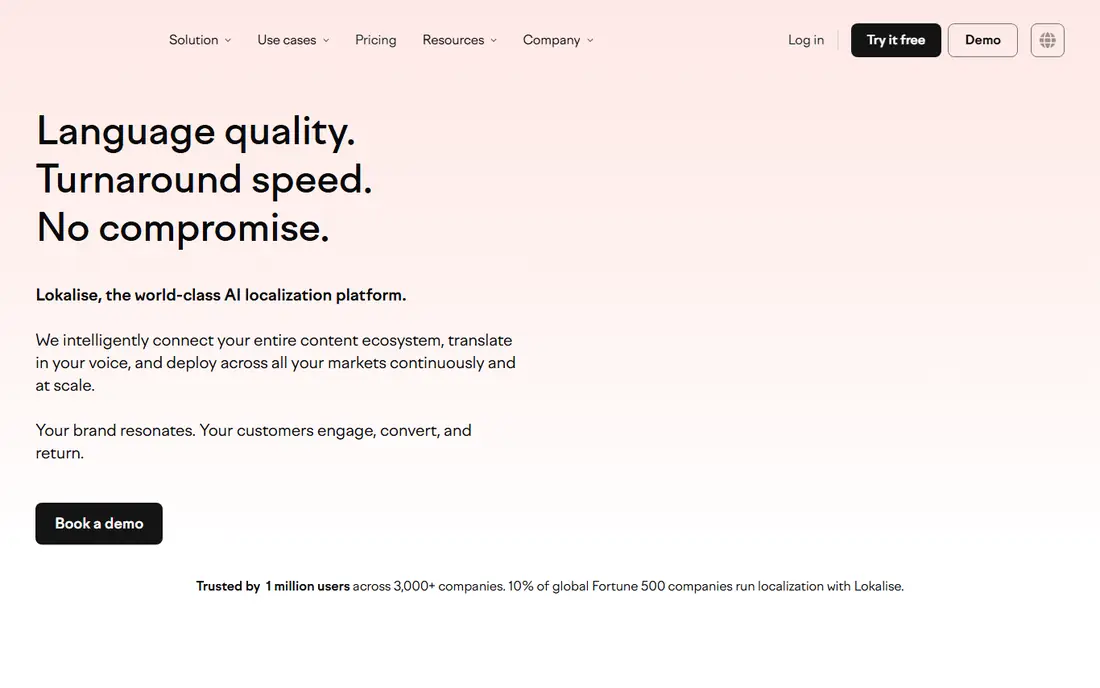
Choose Lokalise for engineering-led teams localizing apps across products. Lokalise embeds localization in the engineering workflow: API-first integrations pull strings from codebases, designers preview translations in Figma, and continuous delivery pushes localized builds automatically. More specifically, document-heavy and regulated workflows need more than Lokalise supplies.
Downsides: Less depth for document translation.
But for software localization at engineering speed, it is the modern standard. In practice, for product teams shipping in dozens of languages, it removes localization from the critical path. Lokalise shows no starting price here, so confirm the cost on the vendor site. Free access: Free trial.
- Developer-friendly API and integrations
- Well suited to in-app strings
- Pricing scales with usage
XTM
Great for: Large enterprises needing configurable, audit-ready translation workflows
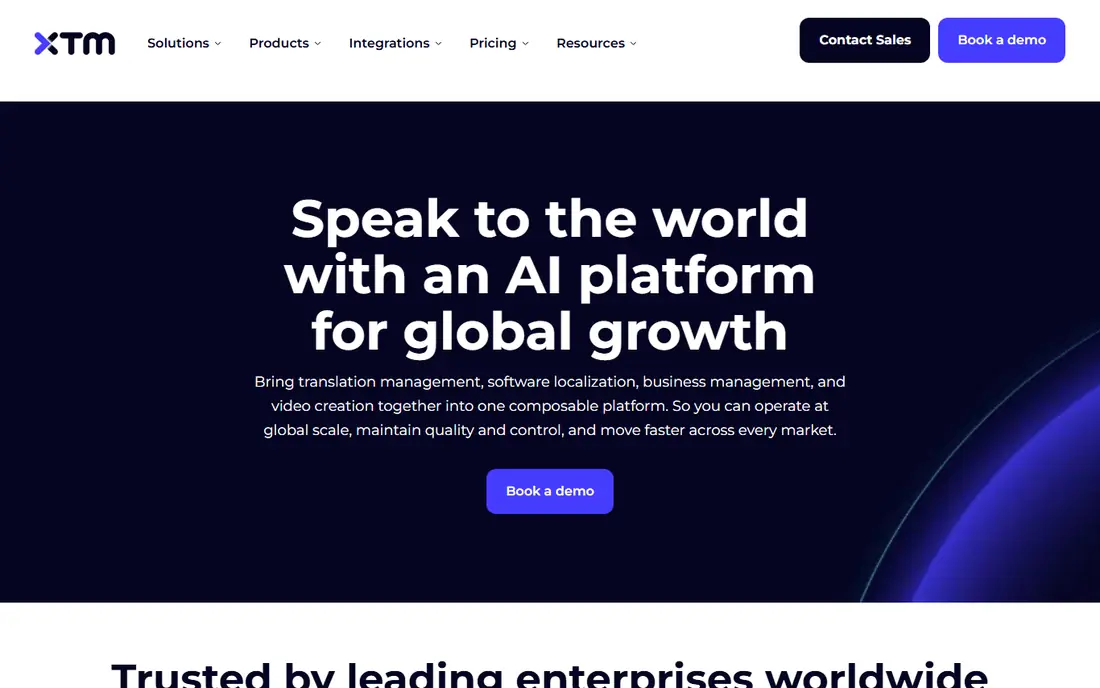
XTM was built for large enterprises needing configurable, audit-ready translation workflows. XTM Cloud serves enterprises where translation is mission-critical and auditable: legal, life sciences and regulated manufacturing.
Beyond that, terminology management, vendor workflows and reporting manage the complexity of global operations. More specifically, configuration is genuinely complicated and pricing is enterprise-grade. XTM does not show a starting price in this comparison, so check the vendor site for current pricing. There is no free plan with XTM.
Where it shines: Scalable architecture. What to check first: Enterprise pricing.
- A decent match for regulated industries
- Capable QA and audit trails
- Implementation effort
Transifex
Great for: Enterprises managing continuing app and digital content localization

Transifex is a good fit for enterprises managing continuing app and digital content localization. The API-first architecture connects with development workflows, and the product scales to large language counts and content volumes.
Where it is weaker: Interface less modern than newer rivals.
Check the vendor site for Transifex pricing; none is listed in this comparison. Trial and free access: Free trial.
- Solid enterprise features
- Proven at scale
- Ramp-up time
Smartling
Great for: Enterprises needing end-to-end localization with AI plus human workflows
Smartling serves enterprises needing end-to-end localization with AI plus human workflows. Smartling is the enterprise TMS for continuous localization: content flows from CMS, codebase and marketing platforms into automatic workflows combining machine translation with human review, then back into production. From a buyer's view, for brands running numerous content products across dozens of languages, Smartling's automation and service layer deal with the operational complexity.
Main advantages: AI plus human workflow choices.
More specifically, quality estimation, workflow customization and reporting suit mature localization programs. On top of that, pricing and implementation are enterprise-grade. But for continuous enterprise localization at scale, Smartling is the proven choice. The integrations are the strength; localization becomes part of the release pipeline instead of a separate project. Smartling does not show a starting price in this comparison, so check the vendor site for current pricing. Smartling has no free tier.
What to check first: Implementation effort.
- Mature enterprise product
- Decent service layer
- More product than small teams need
Crowdin is built with teams wanting collaborative, developer-connected localization in mind. The free level supports open-source projects generously, and the community features suit products with engaged user bases willing to help translate. Worth adding: the developer integrations link repositories and CI pipelines smoothly.
Where it is weaker: Advanced workflows need higher tiers.
What Crowdin does well: Active community. Enterprise governance, audit depth and service layers trail the big systems. But as collaborative localization with developer DNA, Crowdin is the community favorite. This comparison lists no price for Crowdin; ask the vendor. Crowdin has a free plan.
- Capable collaboration features
- Free level for open source
- Enterprise governance thinner
In short, memoQ is for translation agencies coordinating large freelance networks. memoQ is the translator's TMS: capable computer-assisted translation with translation memory, terminology management and QA checks that professional linguists trust, plus the project management layer agencies have to coordinate dozens of freelancers. Also, terminology control satisfies regulated-industry clients in legal and life sciences.
But for professional translation operations, memoQ's depth is the industry reference. In practice, server and cloud deployments centralize language assets across the organization. memoQ shows no starting price here, so confirm the cost on the vendor site. Trial and free access: Free trial.
Watch-outs: Enterprise server setup needs IT.
- Adaptable deployment
- Very good terminology and TM management
- Ramp-up time
Pick RWS Trados if this describes you: enterprises standardized on the industry terminology leader. For organizations sitting on decades of translation memory investments, Trados guards and exploits those assets better than any alternative. Trados is the name most professional translators know: the CAT tool standard for decades, now extended into enterprise TMS offerings.
On top of that, the translator familiarity means vendor onboarding is frictionless. The product carries legacy weight in places, and newcomers face a ramp-up time. Translation memory reuse across large programs provides real cost savings, and terminology consistency satisfies the strictest enterprise standards. This comparison lists no price for RWS Trados; ask the vendor. Free access: Free trial.
Honest limits: Ramp-up time for newcomers.
- Huge translator familiarity
- Terminology management standard
- Pricing enterprise
Notes on translation project management software
Translation project management software, normally called a translation management system or TMS, coordinates everything between source content and finished translations: assigning jobs to translators, managing translation memory and glossaries, running quality checks, tracking costs per word and language, and integrating with the CMS, codebase or design tools where content lives. The wrong TMS presents up as terminology drift, missed release deadlines and translators working from outdated glossaries.
How the list was put together
ProMapRanker looked at what each vendor publishes: pricing, plan limits, feature coverage for translation project management software and stated drawbacks. No hands-on testing is claimed. Where a price is missing, the vendor does not list one publicly or ties it to a quote. Always confirm before budgeting. Tools are placed by general fit for translation project management software, with price clarity and free access as tie-breakers. A different team can reasonably rank them differently.
What to check before you buy
- Confirm the entry price with every vendor: no tool from Lokalise to RWS Trados shows a fixed starting price.
- Test the free plan from Crowdin against your real workload before relying on it.
- Run a trial of Lokalise, Transifex, memoQ and RWS Trados with real work before paying for a year; your own workflow is the best test.
- Read the limits listed for Lokalise first: less depth for document translation.
- Check the integration list for memoQ against the tools you run today, and note which ones need a higher plan.
- Read the plan comparison for Smartling carefully; key features often start on a higher tier.
Frequently asked questions
What does translation management software cost?
From budget-friendly team plans in the tens monthly to enterprise products costing five to six figures annually. Pricing models vary: per user, per word, per project or product fee.
Is Lokalise the right pick for everyone comparing translation project management software?
No single tool suits every team. Lokalise comes first because it fits engineering-led teams localizing apps across platforms, while XTM suits large enterprises needing customizable, audit-ready translation workflows and Transifex suits enterprises managing ongoing app and digital content localization. Match the tool to your own size, budget and workflow before deciding.
How is a TMS different from Google Translate?
Machine translation converts text immediately; a TMS handles the whole workflow around translation quality, consistency, approvals and cost. As for the details, enterprises need workflow control and auditability that raw MT cannot offer.
Which options for translation project management software have a free plan?
Crowdin is the only tool in this list with a free plan. Free plans usually cap users, projects or features, so check the limits on the vendor page. Several others offer a trial instead.
Can I try these options before paying?
Often, yes. Crowdin has a free plan and Lokalise, Transifex, memoQ and RWS Trados offer a free trial. Use your own data and a real task during the test, and check what the free tier or trial limits before you rely on it.
Do we need a TMS or just freelance translators?
Freelancers translate; a TMS makes their work consistent, trackable and scalable. Past a handful of languages or any regulatory requirement, the TMS pays for itself in terminology consistency and project visibility.
Sources
See where you really rank - block by block
ProMapRanker scans Google Maps across a grid of your service area. Simple monthly plans from $19, white-label on every plan.
Start freeKeep reading
 zscaler alternatives
Best Zscaler Alternatives in 2026
Looking for zscaler alternatives? We compare 9 SASE and zero trust platforms on architecture, data protection, pricing, and fit for your network and team.
Read → zapier alternatives free
Best Zapier Alternatives Free in 2026
Nine automation tools for zapier alternatives free in 2026, all with genuinely free tiers, plus free plan limits, starting prices and upgrade paths explained.
Read → which platform is best for online reputation
Which Platform Is Best for Online Reputation in 2026
Wondering which platform is best for online reputation? We compare 8 review, listing, and response tools for small and multi-location businesses and agencies.
Read →