 ProMapRanker
Best Tools for AI Search Marketing in 2026

Key takeaways
- Profound and Peec AI are the most focused AI visibility trackers on this list, while BrightEdge and Conductor suit enterprise teams that need SEO and AI visibility together.
- Semrush and Ahrefs remain valuable because they combine AI overview tracking with keyword, backlink and technical SEO data in one platform.
- Surfer is best for page-level content guidance, while Scrunch helps technical teams control how AI systems access and cite their content.
- Otterly.AI is a simpler, lower-cost entry point for brand monitoring, but it is less deep than enterprise platforms for large prompt sets.
- Track both classic rankings and AI answer visibility, since a page can rank well in search results yet rarely be cited in AI answers.
Quick comparison
| Pick | Great for | Pricing starts at | Free tier | |
|---|---|---|---|---|
 Profound | Enterprise AI visibility tracking | See website | No | Visit |
 Peec AI | Mid-market AI visibility and content guidance | See website | Free trial | Visit |
 BrightEdge | Enterprise SEO plus AI visibility | See website | No | Visit |
 Semrush | All-in-one SEO with AI overview tracking | $139.95 per month | Free trial | Visit |
 Ahrefs | SEO data depth with brand visibility tracking | $129 per month | No | Visit |
 Surfer | Page-level content optimization | $99 per month | Free trial | Visit |
 Otterly.AI | Simple brand monitoring in AI answers | See website | Free trial | Visit |
 Scrunch | Technical AI visibility and content delivery | See website | No | Visit |
 Conductor | Enterprise content and search performance | See website | No | Visit |
The best tools for AI search marketing
AI search marketing covers two jobs: getting cited inside AI answers from tools such as ChatGPT, Gemini, Claude, Perplexity and Google AI Overviews, and keeping classic search performance strong at the same time. We compared official pricing pages, feature pages and public product descriptions, and focused on which AI systems each tool tracks, how deep its prompt and citation data goes, and what action it recommends next.
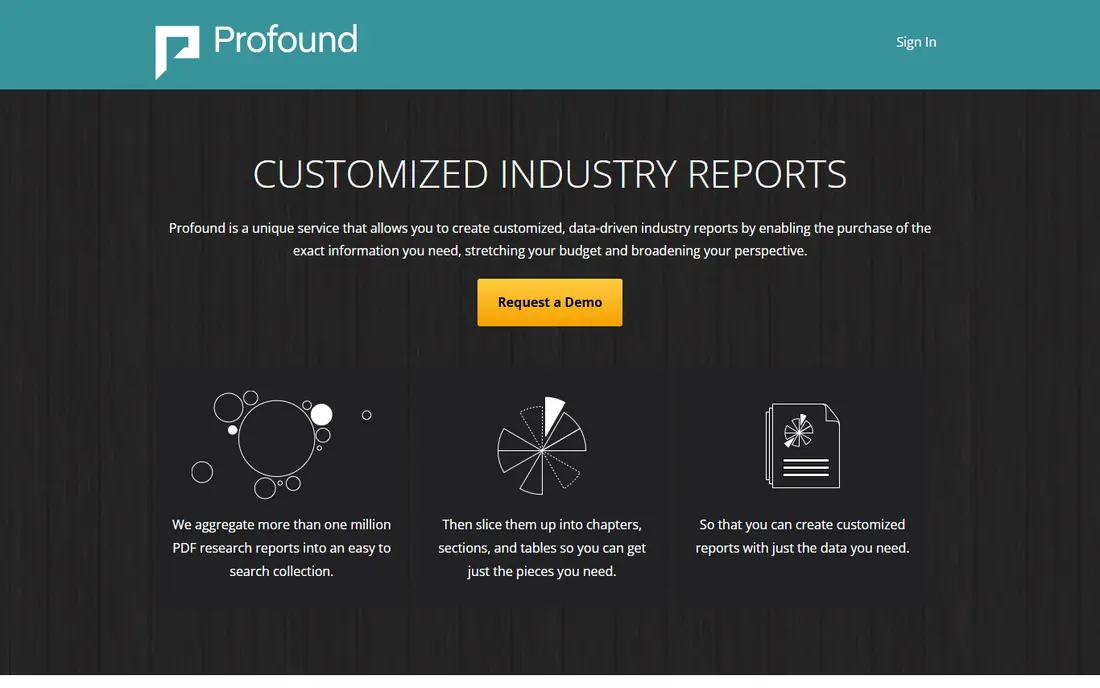
Profound is one of the best-known dedicated AI visibility platforms. It tracks how often a brand appears in AI answers, which competitors are cited instead, and which prompts drive those mentions. That prompt-level view helps marketing teams see not just whether they are visible, but for which questions they are winning or losing.
The main limit is price and scope. Published starting plans have been reported around $99 per month for limited coverage, with higher plans for more AI systems and prompt volume, and enterprise pricing by quote. Small teams should confirm exactly which AI systems and how many prompts are included before buying. For mid-market and enterprise brands that need serious AI visibility data, Profound is a strong anchor tool.
- Tracks brand mentions across major AI systems
- Competitor benchmarking
- Conversation-level prompt analysis
- Pricing is custom for larger plans
- Smaller teams may find it expensive for one brand
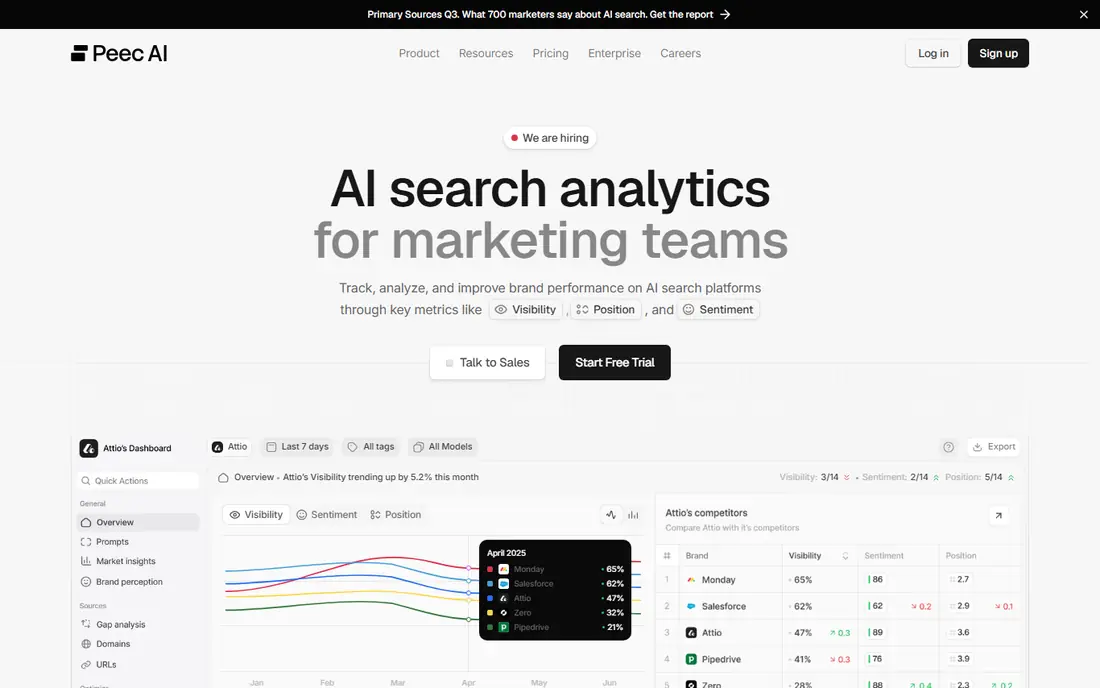
Peec AI tracks brand visibility across AI search systems and pairs that tracking with recommendations for what to publish or improve. That action step matters, because many visibility tools report a score without telling a content team which page to fix. Peec AI also offers unlimited seats on some plans, which helps agencies and larger content teams share access without per-seat cost pressure.
Pricing is published in some markets and quoted in others, so teams should confirm the current plan for their region. Peec AI is less of an all-in-one SEO platform than Semrush or Ahrefs, so teams that also need backlink and technical SEO data will need a second tool. For AI-focused marketing teams, it is a practical middle ground between simple monitors and enterprise suites.
- AI visibility tracking with content recommendations
- Unlimited seats on some plans
- Clear prompt and citation data
- Pricing varies by region and plan
- Enterprise depth is less than BrightEdge or Profound
BrightEdge is an enterprise SEO platform that has added AI search visibility to its existing keyword, content and reporting tools. Large teams benefit from that combination, since they can see classic rankings, AI overview presence and content performance in one system rather than reconciling several dashboards. Its content recommendations and forecasting tools also suit teams managing thousands of pages.
Cost is the clear trade-off. BrightEdge contracts are typically enterprise-level, often reported from around $25,000 per year and higher, and onboarding is more involved than a self-serve tool. Small and mid-size teams will usually get better value from a focused AI tracker plus a standard SEO tool. For large enterprises, BrightEdge remains a credible all-in-one choice.
- Combines classic SEO with AI visibility
- Large-scale keyword and content data
- Enterprise reporting
- Enterprise pricing is high
- Implementation and onboarding take time
Semrush is the most complete general SEO platform on this list. It covers keyword research, site audits, backlink analysis, rank tracking and content optimization, and it has added AI visibility and AI overview tracking to that toolkit. Teams already using Semrush can start measuring AI search without adding a separate platform on day one.
Dedicated AI trackers such as Profound or Peec AI go deeper on prompt coverage, citation analysis and AI-specific recommendations. Semrush is also priced per seat with add-ons, so a larger team should model total cost before committing. For teams that want one platform for classic SEO and a solid start in AI search, Semrush is a sensible pick.
- Broad SEO toolkit plus AI visibility features
- Keyword and competitor data
- Content tools included
- AI visibility depth is less than dedicated trackers
- Costs rise with add-ons and seats
Ahrefs is known for backlink and keyword data, and it has added Brand Radar to track brand mentions across AI systems and search. That combination suits teams that care about both authority building and AI citation, since links and mentions often support each other. Its rank tracking, site audit and content tools are mature and well documented.
Ahrefs does not offer a permanent free plan, and its AI visibility features are less specialized than a dedicated platform for very large prompt sets. Pricing also rises with seats and data limits. For SEO-led teams that want AI visibility alongside deep link and keyword data, Ahrefs is a strong choice.
- Strong backlink and keyword data
- Brand Radar for AI visibility
- Reliable rank tracking
- No permanent free plan
- AI features are newer than its classic SEO tools
Surfer helps content teams optimize individual pages for search and AI answers. It analyzes top-ranking pages for a topic, suggests headings, terms and structure, and scores drafts as they are written. That page-level guidance is useful when a team knows which topics matter but needs help turning a brief into a page that search systems can use easily.
Surfer does not replace a visibility tracker. It will not tell a team how often their brand is cited across ChatGPT or Gemini, and a high content score does not guarantee an AI citation. Pair Surfer with a tracker such as Profound, Peec AI or Otterly.AI for a complete workflow: track visibility, then use Surfer to improve the pages that matter most.
- Clear page-level content guidance
- SERP-based structure suggestions
- Content editor workflow
- Not a full AI visibility tracker
- Guidance is a score, not a guarantee of citation
Otterly.AI focuses on a simple job: show how often a brand appears in AI answers, and how that changes over time. Setup is faster than enterprise platforms, and pricing has been reported from around $99 per month, which makes it accessible for solo marketers and small teams. It covers major AI systems and gives a clear brand-level view without a long onboarding process.
The trade-off is depth. Large teams tracking hundreds of prompts, multiple brands and detailed citation sources will likely need a deeper platform. Otterly.AI also offers fewer enterprise features such as advanced reporting and governance controls. For a first AI visibility tool, or for a small brand that needs a reliable monitor, it is a good starting point.
- Easy setup for brand monitoring
- Tracks major AI systems
- Lower entry cost than enterprise tools
- Less depth for large prompt sets
- Fewer enterprise reporting features
Scrunch sits at the technical end of AI search marketing. It monitors how AI systems see a brand, checks whether AI crawlers can access key content, and helps teams deliver content in formats AI systems can cite reliably. That technical view matters when a site blocks AI bots by accident, or when structured data and page structure prevent citation.
Scrunch pricing is custom, and its technical focus may feel heavy for teams that only want a brand monitor. Content teams should still pair it with a content tool for writing and optimization. For technical SEO teams and larger sites where crawl access and content delivery affect AI visibility, Scrunch fills a gap that simpler trackers do not cover.
- Monitors AI visibility and bot access
- Helps control content delivery to AI systems
- Technical diagnostics
- Pricing is custom
- Technical focus may be more than content-only teams need
Conductor is an enterprise platform for search and content performance, with AI visibility features added to its classic SEO and content tools. Large marketing teams benefit from its reporting, workflow features and ability to connect search performance to content decisions across many pages and markets. It suits organizations that already manage SEO as a cross-team program.
As with BrightEdge, pricing is custom and onboarding is enterprise-grade, which puts it out of reach for many small teams. Solo marketers and small agencies will get faster value from Semrush or a focused tracker. For enterprises that need governed reporting and content workflows alongside AI visibility, Conductor is worth a formal evaluation.
- Enterprise search and content performance data
- Workflow and reporting for large teams
- AI visibility features
- Pricing is custom
- Smaller teams may find it more platform than they need
How we picked these
We compared official pricing pages, feature pages and public product descriptions, and kept only tools that currently track AI search visibility, optimize content for AI answers, or combine both with classic SEO. We included dedicated AI trackers, enterprise SEO platforms and content optimization tools so different team sizes and budgets are covered. We did not claim hands-on testing, and where pricing is negotiated or varies by region we wrote See website rather than guessing a rate.
What to check before you choose
Start by listing the AI systems that matter for your customers. A business-to-business software company may care most about ChatGPT and Perplexity, while a consumer brand may care more about Google AI Overviews and Gemini. Confirm which systems are included on the plan you can afford, since some tools move Gemini or Claude to higher tiers or paid add-ons.
Next, check prompt coverage and citation data. Ask how many prompts are tracked, how often they are refreshed, whether the tool shows the exact sources AI systems cite, and whether it recommends specific pages to create or improve. A tool that only reports a visibility score will not help a content team decide what to do next.
Building a workable AI search workflow
Use a tracker to find which questions your brand wins or loses, then use content tools to improve the relevant pages. Add clear answers near the top of key pages, use FAQ and product structured data where appropriate, and keep author and source information visible. Review AI visibility monthly, since AI answers change as models and sources update.
Avoiding common mistakes
Do not buy several overlapping trackers at once, and do not treat a content score as proof of citation. Keep classic SEO work going, since rankings, links and technical health still support AI visibility. Publish AI-assisted drafts only after a human editing pass, and check that AI bot access, structured data and page speed are not blocking citation.
Frequently asked questions
What are the best AI platforms for search marketing?
Profound and Peec AI are strong dedicated AI visibility platforms, while BrightEdge and Conductor suit enterprises that need SEO and AI visibility together. Semrush and Ahrefs are good all-in-one options for teams that also need classic SEO data.
What is the best AI tool for search marketing on a budget?
Otterly.AI is a lower-cost entry point for brand monitoring, and Semrush offers AI overview tracking inside a broader SEO toolkit. Small teams should start with one tracker, confirm prompt limits, and add a content tool only when tracking shows which pages need work.
How is AI search marketing different from classic SEO?
Classic SEO focuses on rankings and clicks in search results. AI search marketing also tracks whether a brand is mentioned or cited inside AI answers, which may not produce a click at all. Both matter, because AI answers often draw on pages that rank well and cite trusted sources.
Does AI search marketing replace SEO?
No. AI visibility builds on classic SEO work such as technical health, content quality, links and structured data. Teams that stop SEO work usually see AI visibility fall as well, since AI systems rely on the same web content.
What should I track in AI search marketing?
Track brand mention rate, citation rate, share of voice against competitors, prompt-level wins and losses, and which sources AI systems cite. Pair those metrics with classic rankings and traffic so the team can see whether visibility is turning into visits and enquiries.
How often should AI visibility be checked?
Check prompt and citation data at least monthly, and weekly during a launch or major content push. AI answers change often, so a single check can mislead. Look for trends over several weeks rather than reacting to one day of data.
Sources
See where you really rank - block by block
ProMapRanker scans Google Maps across a grid of your service area. Simple monthly plans from $19, white-label on every plan.
Start freeKeep reading
 zoro.to alternatives
Best Zoro.to Alternatives in 2026
We compare the best zoro.to alternatives in 2026, listing only legal licensed anime streaming services, from Crunchyroll to free options for fans today.
Read → zip alternatives
Best Zip Alternatives in 2026
We compare the best zip alternatives for buy now, pay later in 2026, covering pay-in-4 plans, fees, spending limits, and credit reporting options today.
Read → yesware alternatives
Best Yesware Alternatives in 2026
Compare the best yesware alternatives for sales email tracking, templates, and sequences, with current pricing and honest tradeoffs for small sales teams.
Read →