 ProMapRanker
Best Thrifting Apps in 2026: 9 Apps Compared

Key takeaways
- Vinted and Depop suit sellers who want to keep more of the sale price, since seller fees are low or absent on standard sales.
- Poshmark suits social sellers who want a large US audience and a simple flat-rate shipping label.
- ThredUp suits sellers who want a hands-off cleanout, while buyers who want luxury should check Vestiaire Collective and The RealReal style authentication.
- Photos, honest condition notes and fair pricing matter more than the app you choose.
Quick comparison
| Pick | Great for | Pricing starts at | Free tier | |
|---|---|---|---|---|
 Depop | Vintage and streetwear | Free | Yes | Visit |
 Poshmark | Social fashion selling | Free | Yes | Visit |
 ThredUp | Hands-off closet cleanout | Free | Yes | Visit |
 Vinted | Everyday secondhand clothes | Free | Yes | Visit |
 Mercari | Fast general resale | Free | Yes | Visit |
 eBay | Rare and high-demand finds | Free | Yes | Visit |
 Curtsy | Young women's fashion | Free | Yes | Visit |
 Vestiaire Collective | Authenticated luxury resale | Free | Yes | Visit |
 GoodwillFinds | Thrift-store treasure hunting | Free | Yes | Visit |
The best thrifting apps
We compared these apps on buyer and seller fees, audience, shipping, authentication and ease of listing. Our pick for most sellers is Vinted for everyday clothes and Depop for vintage and streetwear. Buyers who want a curated thrift-store feel should also check GoodwillFinds.
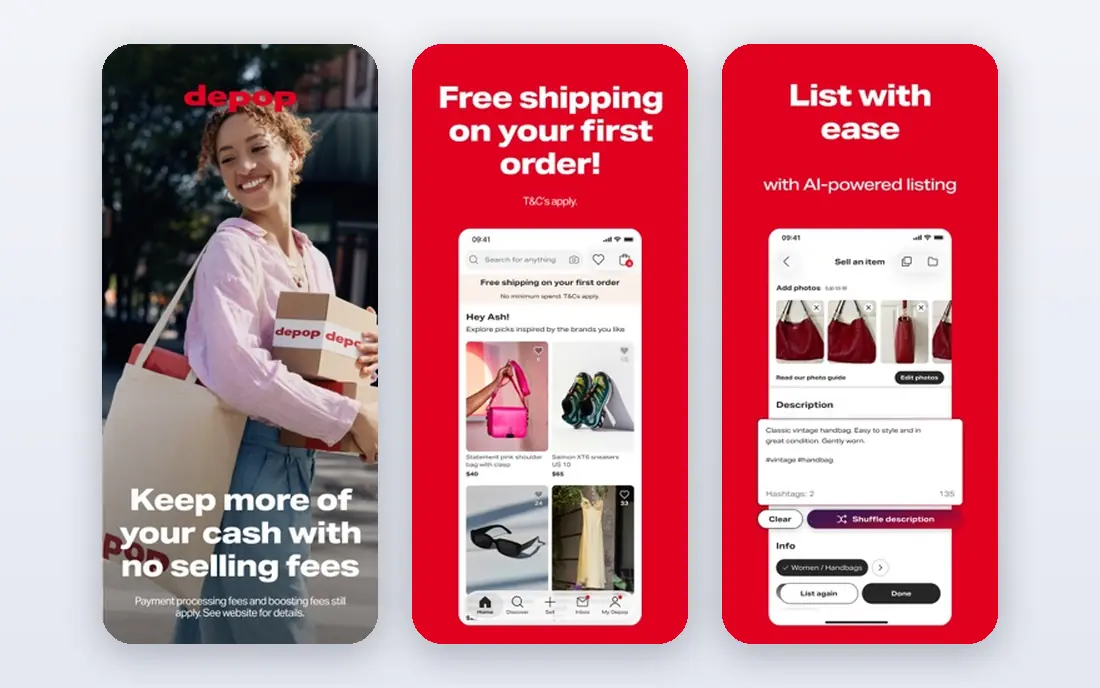
Depop is a visual marketplace where a shop feed, strong photos and a clear aesthetic matter as much as the item itself. It suits vintage, Y2K, streetwear and indie fashion, and its audience skews younger and trend-driven. US sellers pay no Depop selling fee on standard sales in recent listings, though payment processing of 3.3 percent plus 0.45 dollars still applies, so check the current fee page before pricing.
The trade-off is competition for attention. A plain listing with poor photos can sit unseen, while a styled shop with consistent photos tends to draw followers. Depop is best for sellers who enjoy curating a shop and buyers who like browsing by style rather than searching only by brand.
- Trend-led audience
- No US selling fee on standard sales
- Visual shop feeds
- Payment processing still applies
- Boosted listings cost extra
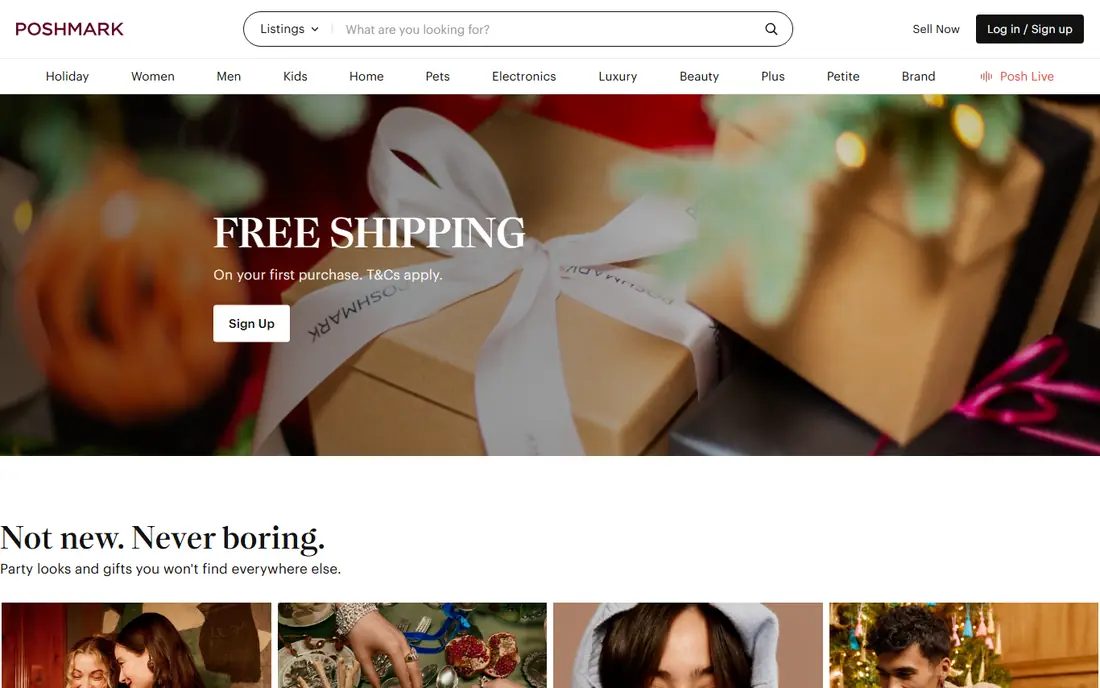
Poshmark is a social marketplace for women's, men's and kids' fashion plus home goods, where sharing, following and closet parties help listings get seen. Buyers pay a flat shipping rate on many orders, and sellers receive a prepaid label, which removes much of the shipping guesswork. That simplicity makes it a good first app for a casual seller.
The fee is the catch. Poshmark charges 2.95 dollars on sales under 15 dollars and 20 percent on sales of 15 dollars or more in recent listings, which is high compared with Vinted or Depop. Sellers should price with that cut in mind. Poshmark fits sellers who want a large audience and a simple shipping flow, and who will share listings regularly.
- Large US fashion audience
- Prepaid flat-rate label
- Social sharing tools
- High commission on higher-value sales
- Sharing takes time to build reach
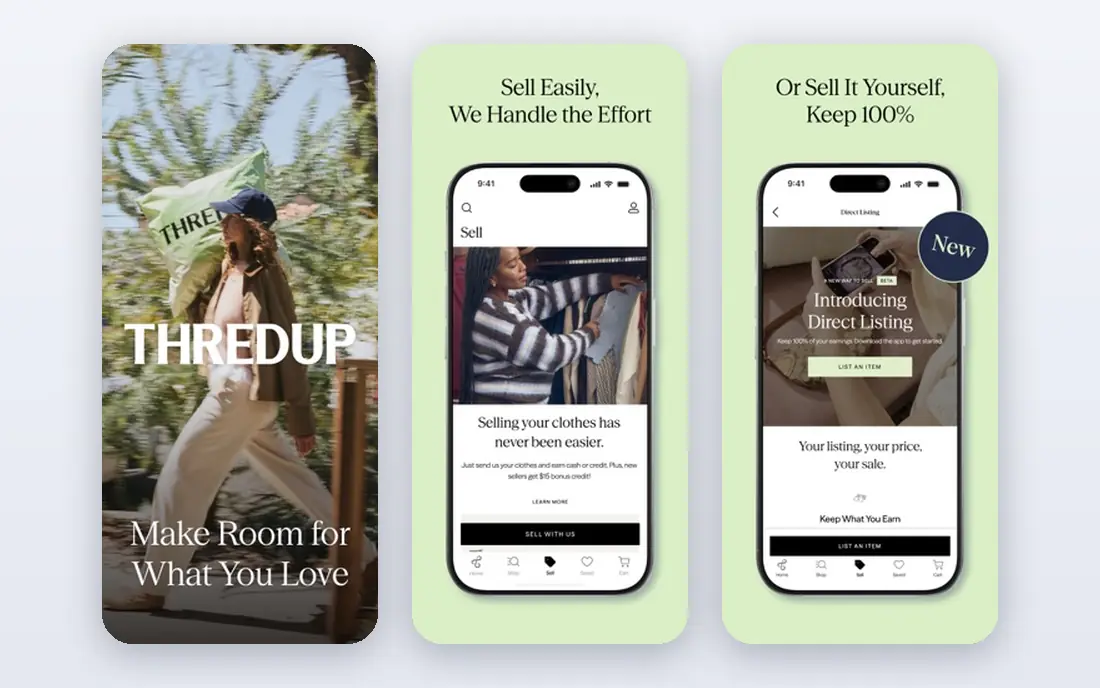
ThredUp is a consignment service rather than a peer-to-peer app. A seller orders a Clean Out Kit, fills a bag and mails it in, and ThredUp photographs, lists and ships accepted items. That hands-off model suits a seller with a large pile of everyday clothes and little time to list each piece.
The payout is lower than self-listing, since ThredUp keeps a share that varies with the selling price, and a cleanout fee can apply. Some items may also be rejected or donated, depending on the service chosen. ThredUp is best when convenience beats payout, and it is a poor choice for a valuable item that deserves its own listing and photos.
- Mail-in cleanout service
- No photos or listings for the seller
- Large secondhand catalog
- Lower payouts than self-listing
- Cleanout fees and item acceptance rules apply
Vinted has grown fast in the US and Europe by charging sellers no fee on standard sales, with buyers paying a protection fee at checkout. That structure means a seller keeps the full listed price on a standard sale, which is a clear advantage for everyday clothes, shoes and accessories. Listings are quick, and prepaid labels simplify shipping on many orders.
The drawback is that the buyer fee can make a total price look higher than on another app, and Vinted is less of a luxury destination than Vestiaire Collective. For everyday secondhand fashion, though, the math is hard to beat. Vinted is our pick for sellers who want to clear a closet without giving up a fifth of each sale.
- No seller fees on standard sales
- Buyer-paid shipping on many orders
- Simple listings
- Buyer protection fee can deter some buyers
- Less suited to high-end luxury
Mercari is a general resale app that covers clothes, toys, home goods and small electronics, so it suits a seller with a mixed pile rather than only fashion. Listings are fast on mobile, and prepaid labels keep shipping simple. The audience is broad and deal-seeking, which helps everyday items move quickly at fair prices.
The fee structure should be checked before pricing, since Mercari charges a seller fee on the item price in recent listings, plus buyer-paid shipping in many cases. It is less social and fashion-led than Poshmark or Depop, so a trend piece may get less attention here. Mercari fits sellers who want speed and simplicity across many categories.
- Fast mobile listings
- Prepaid labels
- Broad general audience
- Seller fee on item price
- Less fashion-focused than Poshmark or Depop
eBay remains the best place for rare, vintage and high-demand thrift finds, since its search depth and sold listings help both buyers and sellers price fairly. Auctions suit items with uncertain value, while fixed-price listings suit items with a clear market price. For sneakers and other authenticated categories, eBay also offers authentication on qualifying items.
The cost is higher than Vinted or Depop, with a final value fee of about 13.6 percent in most clothing categories plus a small per-order fee in recent listings. Listing well also takes more work, including measurements, condition notes and shipping choices. eBay fits sellers with rare items and buyers who want the widest choice.
- Huge global audience
- Auctions and fixed-price options
- Sold-price research
- Higher final value fees
- More work on listings and shipping
Curtsy focuses on young women's fashion, including popular mall and contemporary brands, and it offers prepaid labels to keep shipping simple. That focus helps sellers reach buyers who are already looking for those brands, rather than competing in a general feed. The listing flow is quick, which suits a seller clearing a dorm or first-apartment closet.
The audience is narrower than Poshmark or eBay, so a niche or high-end item may take longer to sell. Curtsy is best for sellers with clean, current young women's clothes and buyers who want that segment without wading through unrelated listings.
- Focused young women's audience
- Prepaid labels
- Simple listing flow
- Narrower audience than Poshmark
- Less suited to men's or vintage menswear
Vestiaire Collective is a marketplace for pre-owned designer and luxury fashion, with authentication checks that give buyers more confidence on high-value items. That trust matters for handbags, shoes and designer clothing, where a fake can cost hundreds of dollars. The global audience also helps a rare designer piece find a buyer who values it.
The trade-off is cost and control. Fees are higher than on everyday resale apps, and listing standards are stricter, with condition details and photos checked more closely. Vestiaire Collective fits sellers with authentic designer pieces and buyers who want authentication before they pay luxury prices.
- Authentication checks
- Global luxury audience
- Designer and vintage luxury focus
- Higher fees than everyday apps
- Stricter listing and condition standards
GoodwillFinds brings Goodwill thrift-store inventory online, so a buyer can hunt for vintage, books, home goods and clothing without visiting a store. Listings include auction and fixed-price options, and the catalog changes often, which suits buyers who enjoy the hunt. Proceeds support Goodwill programs, which is a plus for many shoppers.
The catch is condition. Items come from donations, so photos and descriptions should be read closely, and shipping costs can add up on bulky goods. GoodwillFinds is best for patient buyers who like thrifting as a hobby and can accept that a find may show wear.
- Online thrift-store inventory
- Wide category range
- Auction and fixed-price options
- Condition varies by donation
- Shipping and returns need careful checking
How we picked these
We compared official app and fee pages with recent resale guides, and we favored apps that are still available in the US in October 2026. We mixed peer-to-peer marketplaces, consignment and thrift-store shopping so readers can match the app to how much work they want to do. Where fees conflicted across sources, we described the general structure and advised checking the current fee page. We did not claim hands-on testing.
What to check before you buy or sell
Photograph in natural light, show flaws honestly and include measurements for clothes, since returns and disputes often start with a surprise. Price by checking sold listings for the same brand and condition, not only asking prices. For luxury items, use an authenticated marketplace or a trusted authenticator, and keep receipts and tags where possible.
For sellers, work out the net payout after fees, payment processing and shipping before you list. A higher asking price on a high-fee app can net less than a lower price on a no-fee app. For buyers, check shipping, return terms and seller feedback, and be cautious with deals that look far below market value for a designer item.
Frequently asked questions
What is the best thrifting app?
Vinted is a strong pick for everyday clothes because sellers pay no fee on standard sales, while Depop suits vintage and streetwear and Poshmark suits social sellers with a large US audience. The best app depends on what you sell and how much work you want to do.
Which thrifting app has the lowest seller fees?
Vinted charges sellers no fee on standard sales, and Depop charges US sellers no selling fee on standard sales, though payment processing still applies. Poshmark and eBay charge higher percentages, so check the current fee page before pricing.
Is ThredUp worth it?
ThredUp is worth it when convenience matters more than payout, since it handles photos, listings and shipping. It is less worthwhile for valuable items that deserve individual listings, where self-listing usually earns more.
How do I spot a fake luxury item?
Buy from an authenticated marketplace, check seller feedback, compare logos, stitching and hardware with the brand's known details, and ask for receipts and original packaging where available. If a price looks far below market value, treat it as a warning sign.
What is the best app for thrifting in person versus online?
GoodwillFinds suits online thrift-store hunting, while local thrift stores suit buyers who want to inspect condition in person. Online apps offer wider choice, while in-person thrifting avoids shipping costs and surprises about condition.
Sources
See where you really rank - block by block
ProMapRanker scans Google Maps across a grid of your service area. Simple monthly plans from $19, white-label on every plan.
Start freeKeep reading
 zscaler alternatives
Best Zscaler Alternatives in 2026
Looking for zscaler alternatives? We compare 9 SASE and zero trust platforms on architecture, data protection, pricing, and fit for your network and team.
Read → zapier alternatives free
Best Zapier Alternatives Free in 2026
Nine automation tools for zapier alternatives free in 2026, all with genuinely free tiers, plus free plan limits, starting prices and upgrade paths explained.
Read → which platform is best for online reputation
Which Platform Is Best for Online Reputation in 2026
Wondering which platform is best for online reputation? We compare 8 review, listing, and response tools for small and multi-location businesses and agencies.
Read →