 ProMapRanker
Best Territory Management Software in 2026


Salesforce-native enterprise teams · Pricing starts at: See website
Key takeaways
- Territory tools split into planning platforms, CRM-native mapping, and field routing tools, and the right type depends on team size.
- Salesforce Maps and Xactly Align suit larger teams with CRM and quota needs, while Badger Maps suits field reps who live on routes.
- Clean account data matters more than map polish, because territories built on stale records fail fast.
- Most enterprise options are quote-based, so budget for implementation and CRM licences as well as the tool itself.
Quick comparison
| Pick | Great for | Pricing starts at | Free tier | |
|---|---|---|---|---|
| Salesforce Maps | Salesforce-native enterprise teams | See website | No | Visit |
 Xactly Align | Enterprise territory and quota planning | See website | No | Visit |
 Maptive | Advanced territory design and mapping | See website | Free trial | Visit |
 Badger Maps | Field route optimisation | See website | Free trial | Visit |
 SPOTIO | Field sales execution and tracking | See website | No | Visit |
 eSpatial | Mid-market territory design | See website | Free trial | Visit |
 Fullcast | Revenue planning and territory operations | See website | No | Visit |
 Anaplan | Connected sales planning | See website | No | Visit |
 Geopointe | Salesforce-native mapping and routing | See website | Free trial | Visit |
The best territory management tools
We compared tools that design territories, assign accounts, balance workload, and support field execution. These nine cover enterprise planning, CRM mapping, and daily field work.
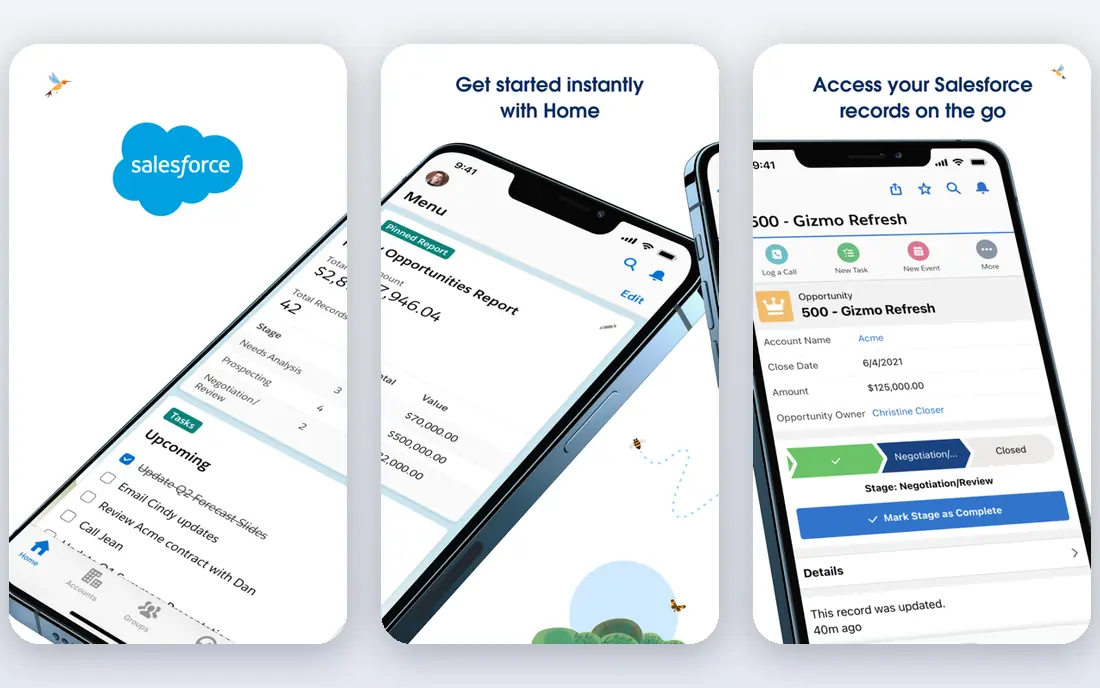
Salesforce Maps suits teams already running sales in Salesforce. Accounts, opportunities, and other records appear on maps without exports, so territory work reflects live CRM data. Territory planning tools help managers design and balance areas using that same data, and route features support field reps who visit accounts in person. That native link reduces sync errors that plague spreadsheet-based planning.
The cost is the catch. Salesforce Maps is an add-on, and Territory Planning is a separate add-on in many setups, so the total per-rep cost includes the base CRM licence. Implementation also needs clean data and agreed assignment rules. For Salesforce-heavy enterprises, the integration is worth it. For teams outside Salesforce, a standalone mapping tool will be cheaper and faster to adopt.
- Live Salesforce data on maps
- Territory planning inside the CRM
- Route tools for field teams
- Needs a Salesforce licence
- Total cost per rep can be high
- Setup takes planning
Xactly Align, part of the Xactly platform, helps sales operations design territories with quota implications in view. Managers can model scenarios, compare balance across reps, and test changes before publishing assignments. Map-based tools support design by geography, account, or other models, which helps when territories are not purely geographic. The link to compensation planning matters, because a territory change often changes pay.
Complexity and cost follow that depth. Xactly suits larger organisations with formal sales planning, not small field teams that mainly need routes. Teams that want design-to-payout in one platform should check which Xactly products cover each step, since territory planning and incentive calculation can sit in separate modules. For enterprise planning, the scenario discipline is a clear strength.
- Scenario modelling before publishing
- Links territory design to quota and compensation
- Map-based balancing
- Enterprise pricing and complexity
- Best value needs other Xactly products for full pay workflow
Maptive appeals to managers who need to see territories, not just list them. You can import account data, draw and balance territories, and layer demographic or sales data on the map. That visual work helps in planning meetings, where a map reveals gaps, overlaps, and uneven workload faster than a table. Custom layers let teams compare coverage against potential, headcount, or historic sales.
Maptive is less of a field execution tool than Badger Maps or SPOTIO, so reps who need daily routes and check-ins may need a second tool. Pricing also depends on plan and scale, so get a quote tied to your user count and data volume. For mid-market and enterprise design work, Maptive offers a strong balance of visualisation and control.
- Strong mapping and territory visualisation
- Data import from spreadsheets and CRMs
- Custom map layers
- Optimisation depth varies by plan
- Enterprise pricing can rise with users and features
Badger Maps is built for reps who spend the day driving between accounts. Route optimisation, mobile access, and CRM sync help a rep plan a day, record visits, and move efficiently between stops. For teams under twenty reps, that focus often beats a heavier planning platform, because adoption is fast and the daily benefit is obvious. Managers still get visit and coverage views, but the rep workflow comes first.
The limit is planning depth. Badger Maps visualises territories, but it is not primarily a scenario modelling platform like Xactly Align. Add-ons for territories, routing, and insights can also push the effective price above the base plan. Pick Badger Maps when field execution is the main pain, and pair it with a planning tool only if territory design itself becomes complex.
- Route optimisation for many stops
- Mobile-first for field reps
- CRM integrations
- Territory visualisation for managers is secondary
- Add-ons can raise the real cost
SPOTIO combines territory management with field execution, prospecting, route planning, and activity logging. Managers can assign territories, reps can plan routes and log visits, and activity data flows back to the CRM. That closed loop helps leaders see coverage and effort, not just assignments on a map. Visit verification adds accountability for teams where field presence matters.
SPOTIO is priced for teams, not solo reps, and there is no free version for very small setups. Implementation also needs agreement on how activity is logged, or reps may see it as surveillance rather than support. For mid-market field teams that need territory plus execution in one system, SPOTIO covers more of the daily workflow than a mapping-only tool.
- Territory, routing, and activity tracking in one platform
- Visit verification
- CRM integrations
- No free version for small teams
- Best return needs a team of several reps
eSpatial fits mid-market teams that need proper territory design without enterprise platform complexity. Managers can build territories from account data, balance workload, and visualise coverage on maps. That design focus helps when a team grows from spreadsheet territories to a repeatable process, but does not yet need full quota and compensation modelling.
Field execution is lighter here than in Badger Maps or SPOTIO, so reps who need advanced routing may still need a second app. Pricing is typically annual and plan-based, so confirm what balancing, data, and user limits each tier includes. For design-led mid-market planning, eSpatial is a practical middle ground.
- Territory design and balancing tools
- Map-based planning
- Suitable for mid-market scale
- Field routing is lighter than dedicated field tools
- Enterprise features need discussion with sales
Fullcast targets revenue and sales operations teams that plan territories as part of a wider go-to-market motion. Territory design sits beside quota, capacity, and coverage planning, so a change in headcount or targets can be tested against territory balance. CRM connections keep assignments and planning data aligned, which reduces manual handoffs between systems.
That breadth suits larger teams with formal planning cycles, and it can be more than a small team needs. Pricing is quote-based, and value depends on data quality and a regular planning cadence. If territory work is currently a spreadsheet exercise tied to annual planning, Fullcast offers a structured upgrade. If the need is only daily routes, a field tool will be simpler.
- Territory, quota, and capacity planning in one revenue platform
- Scenario tools
- CRM-connected workflows
- Enterprise focus and pricing
- Needs clean CRM data and planning discipline
Anaplan is a connected planning platform that includes territory and quota planning among wider sales, finance, and workforce models. That breadth helps when territory decisions must reflect hiring plans, finance targets, and capacity in one model. Flexible modelling and scenario analysis let planners test how a territory change affects coverage, quota attainment, and cost.
Anaplan is not a lightweight territory mapper. It is a platform investment that needs modelling skill, governance, and executive sponsorship. Small teams will find dedicated mapping tools faster and cheaper. Large organisations that already plan in Anaplan, or need territory linked to finance and headcount, will get more value from the connected model than from a standalone map.
- Connected planning across sales, finance, and HR
- Flexible modelling
- Scenario analysis
- Broad platform, not territory-only
- Implementation and cost suit larger organisations
Geopointe offers Salesforce-native mapping for teams that want location tools without leaving the CRM. Territory management, route planning, and check-ins write directly back to Salesforce records, which keeps field activity visible to managers and support teams. That native fit reduces integration work and keeps account data in one system.
The scope is narrower than Xactly Align or Anaplan, and it only makes sense for Salesforce users. Teams that need deep scenario modelling or quota-linked planning should look at those platforms instead. For Salesforce teams that mainly need maps, routes, and territory views inside the CRM, Geopointe is a focused and practical choice.
- Mapping inside Salesforce
- Territory management and route planning
- Check-in features write back to Salesforce
- Requires Salesforce
- Narrower scope than full planning platforms
How we picked these
We compared official product pages, pricing information, and public reviews, and kept only tools that exist and work in October 2026 and truly support territory design, assignment, or field execution. We mixed enterprise planning platforms, CRM-native mapping, and field tools, because territory work spans all three. Where a price could not be verified on the vendor site at writing time, we wrote See website rather than guessing.
How to choose territory software
Start with the job, not the map. If the pain is unfair territories and quota disputes, you need planning and scenario tools. If the pain is reps wasting time on routes, you need field execution. If the pain is invisible coverage in the CRM, you need CRM-native mapping. Naming the pain keeps you from buying a planning platform for a routing problem, or a routing app for a planning problem.
Next, audit your data before you buy. Check account addresses, ownership, and assignment rules, and fix duplicates and stale records. A new map will expose every data flaw, and teams often blame the tool for a data problem. Run a pilot on one region with real accounts, test a scenario change, and watch how assignments, routes, and reports behave before rolling out company-wide.
Finally, price the full setup. Include CRM licences, implementation time, training, and any add-ons for routing or insights. Quote-based tools can look similar until those extras are counted. Ask each vendor what the first-year total looks like for your rep count, and what happens when headcount or territory count changes.
Frequently asked questions
What is the best territory management tool for small field teams?
Badger Maps is a strong fit for small field teams, because route optimisation and mobile use deliver daily value fast. SPOTIO also works once a team has several reps and needs activity tracking. Small teams should start with a trial on real routes before committing to a planning platform.
What is the best territory management app for Salesforce users?
Salesforce Maps is the native choice for Salesforce teams, with live CRM data and territory planning inside the CRM. Geopointe is a focused alternative for mapping and routing inside Salesforce. Choose Salesforce Maps for deeper planning, and Geopointe when mapping and field work are the main needs.
What are the best territory management platforms for enterprise planning?
Xactly Align, Fullcast, and Anaplan suit enterprise planning, because they link territories to quota, capacity, and scenario modelling. Maptive and eSpatial suit design-led work at mid-market scale. Enterprise buyers should test scenario changes and quota impact during a pilot, not just map views.
How much does territory management software cost?
Costs vary widely, from per-user field tools with trials to quote-based enterprise platforms. Field tools often charge per user per month, while planning platforms charge by quote and implementation scope. Always ask for first-year total cost, including CRM licences and add-ons.
Do I need territory software if I already use a CRM?
A CRM stores accounts and assignments, but it may not design, balance, or visualise territories well. Territory software adds mapping, balancing, scenario testing, or routing that a basic CRM lacks. If assignments are stable and routes are simple, a CRM plus a map may be enough for now.
Sources
See where you really rank - block by block
ProMapRanker scans Google Maps across a grid of your service area. Simple monthly plans from $19, white-label on every plan.
Start freeKeep reading
 zoro.to alternatives
Best Zoro.to Alternatives in 2026
We compare the best zoro.to alternatives in 2026, listing only legal licensed anime streaming services, from Crunchyroll to free options for fans today.
Read → zip alternatives
Best Zip Alternatives in 2026
We compare the best zip alternatives for buy now, pay later in 2026, covering pay-in-4 plans, fees, spending limits, and credit reporting options today.
Read → yesware alternatives
Best Yesware Alternatives in 2026
Compare the best yesware alternatives for sales email tracking, templates, and sequences, with current pricing and honest tradeoffs for small sales teams.
Read →