 ProMapRanker
Best Telecom Expense Management Software in 2026

Key takeaways
- Tangoe and Calero lead for large global enterprises with many carriers, sites, and mobile lines.
- Brightfin suits ServiceNow shops that want telecom spend inside their existing IT workflow.
- Lightyear suits firms that want procurement, inventory, and expense management linked in one platform.
- Sakon, Cass, WidePoint, and Cimpl suit teams that want modular, managed, or specialist TEM help.
- Almost all TEM pricing is quoted, so shortlist on carrier coverage, inventory accuracy, and dispute handling, not on a headline price.
Quick comparison
| Pick | Great for | Pricing starts at | Free tier | |
|---|---|---|---|---|
 Tangoe | Large global telecom spend | See website | No | Visit |
 Calero | Unified telecom and technology spend | See website | No | Visit |
 Brightfin | ServiceNow-based IT spend | See website | No | Visit |
 Sakon | Modular TEM with ERP links | See website | No | Visit |
 Lightyear | Procurement plus expense management | See website | No | Visit |
 Cass Information Systems | Managed TEM with analyst support | See website | No | Visit |
 WidePoint | Secure lifecycle management | See website | No | Visit |
 Cimpl | Managed TEM for mid-sized firms | See website | No | Visit |
The best Telecom Expense Management Software in 2026
Telecom bills grow quietly when invoices, contracts, and inventory sit in different places. The tools below bring invoices, inventory, contracts, and usage into one view, so finance and IT teams can find overbilling and unused services.
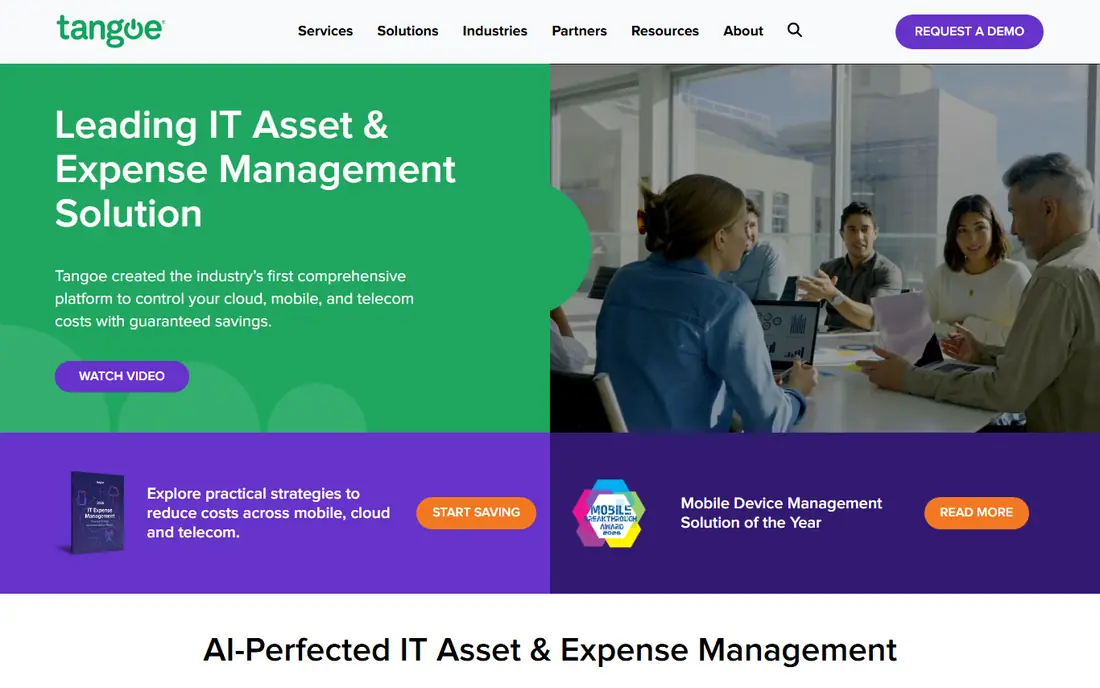
Tangoe is a long-standing TEM vendor for large organisations with complex, multi-carrier telecom needs. It handles invoice processing, contract tracking, inventory, and analytics across fixed, mobile, and cloud spend. Multi-currency and global carrier support help firms with sites in many countries.
Scale brings setup work. Deployments need careful data work around carriers, contracts, and inventory, and the platform grew through acquisitions, so teams should check how modules connect in a demo. For a large global firm, that effort is often worth it. For a small firm, it will be too much.
- Global carrier coverage
- Invoice management
- Contract and inventory tracking
- Enterprise setup can be long
- Modules came from acquisitions
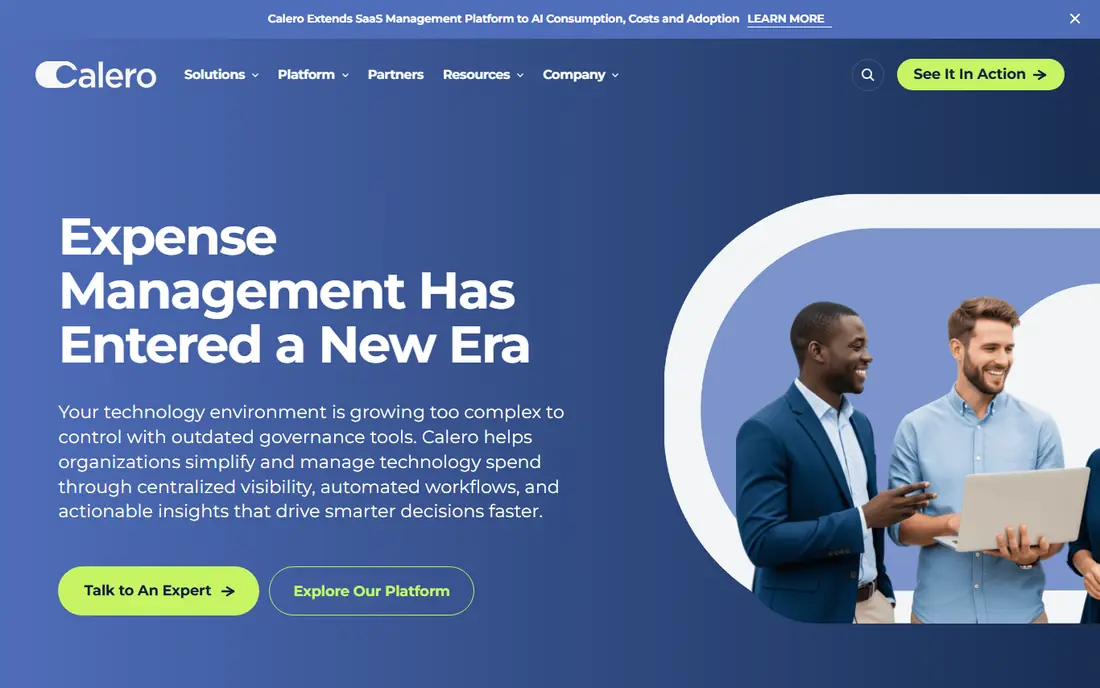
Calero, formerly Calero-MDSL, unifies telecom, mobile, and software spend in one platform, with inventory tracking, invoice reconciliation, and benchmarking. Network visualisation helps teams see what assets exist before renegotiating contracts or removing unused services. Automated dispute handling reduces finance workload.
The platform is enterprise-grade, so smaller teams without dedicated procurement staff may find setup and daily use heavy. Support response is also a common concern in user reviews. For a large firm that wants one view of technology spend, Calero is a strong shortlist candidate.
- Telecom, mobility, and SaaS expense in one view
- Inventory and benchmarking
- Dispute management
- Enterprise learning curve
- Support response varies in reviews
Brightfin is built to run natively inside ServiceNow, which suits firms that already manage IT work there. Telecom, cloud, and software spend can sit alongside existing IT records, with cost allocation and forecasting for finance teams. That link avoids a separate TEM silo for ServiceNow shops.
The catch is dependence on ServiceNow. Firms that do not use ServiceNow will get less value, and setup costs can still be high. For a ServiceNow firm that wants TEM inside its IT workflow, Brightfin is a natural fit. For others, a standalone TEM platform may be simpler.
- Runs natively in ServiceNow
- Telecom, cloud, and software visibility
- Cost allocation
- Best value inside ServiceNow
- Setup costs can be high
Sakon offers a modular TEM platform, so teams can buy the parts they need rather than a full suite at once. Invoice lifecycle management, expense allocation, and reporting connect to ERP and ITSM systems such as SAP and ServiceNow. That modularity helps mid-to-large firms modernise in stages.
Modularity still needs data discipline. Invoice and inventory data must be kept accurate, and some areas still need manual handling. Pricing is quoted, so ask for a price tied to line count and invoice volume. For firms with strong ERP workflows, Sakon is a practical choice.
- Modular platform
- ERP and ITSM integrations
- Invoice lifecycle management
- Manual data work in some areas
- Enterprise pricing is quoted
Lightyear links telecom procurement, inventory, and expense management in one connected platform. Teams can source and bid across many carriers, then keep inventory and billing linked so cost creep shows up early. Per-service pricing, rather than a share of spend, is a clear difference from some rivals.
The limit is scope beyond fixed telecom. Mobility and SaaS management rely on partners, so firms that need those in one native platform should check coverage first. For firms whose main problem is sourcing and managing fixed services, Lightyear is a modern, focused option.
- Native procurement across many carriers
- Inventory linked to billing
- Per-service pricing
- Mobility and SaaS needs rely on partners
- Newer vendor than Tangoe or Calero
Cass Information Systems takes a managed-service approach to TEM, with analysts handling invoice processing and optimisation. That suits organisations with high invoice volume and limited internal resources, since expert oversight catches billing errors that software alone might miss. Freight expense options also help firms with both freight and telecom spend.
The trade-off is control and cost. A managed service means less day-to-day self-service than a pure software platform, and pricing reflects analyst time. Firms that want a team to run TEM for them will value that model. Firms that want a login and full control may prefer a software-first vendor.
- Managed invoice processing
- Analyst oversight
- Freight plus telecom options
- Managed-service cost
- Less self-service control for some teams
WidePoint focuses on telecom and mobility lifecycle management with a strong compliance and security posture. That background suits government and regulated organisations that need strict controls around devices, services, and spend. Lifecycle tracking covers ordering, inventory, and expense in one workflow.
The interface feels dated compared with newer TEM platforms, and pricing is quoted. Teams that prioritise modern dashboards over compliance depth may prefer Lightyear or Sakon. Teams in regulated settings will value the security focus more than polish.
- Telecom lifecycle and mobility management
- Compliance-focused security
- Government experience
- Interface feels dated
- Enterprise pricing is quoted
Cimpl offers managed TEM with expert-led reporting and optimisation for mid-sized and larger firms. Human review helps interpret usage patterns and billing errors, while the platform gives finance teams a clearer view of telecom spend. That mix suits firms that want guidance, not only software.
Invoice handling is more manual than in some fully automated rivals, so teams should check turnaround and data accuracy in a trial. Cimpl is also smaller than Tangoe or Calero, so support and roadmap fit should be confirmed. For a mid-sized firm that wants managed help, it is worth a demo.
- Expert-led reporting
- Telecom optimisation
- Managed invoice handling
- More manual invoice handling than some rivals
- Smaller vendor profile
How we picked these
We compared official product pages and TEM buyer guides for each vendor, and we checked that each homepage belongs to the product named. We favoured tools with clear invoice, inventory, contract, and allocation features for business telecom spend. Prices marked See website were not published as a standard list price at the time of checking, which is normal for enterprise TEM.
Choosing by size and carrier mix
Start with your carrier and site count. A firm with one carrier and few sites may only need invoice checks and inventory cleanup, while a global firm with many carriers needs multi-currency support, contract tracking, and dispute workflows. Share carrier count, line count, and invoice volume with vendors early.
Next, test inventory accuracy. TEM savings depend on knowing what services and devices you actually have. Ask how inventory is built, how often it is reconciled to carrier bills, and who fixes mismatches. A platform with stale inventory will keep billing you for services you no longer use.
Finally, decide who runs it. A software platform suits a team with internal TEM staff, while a managed service suits a team that wants analysts to handle invoices and disputes. That choice affects cost, control, and speed more than any single dashboard feature.
Also build a contract renewal calendar as soon as inventory is clean. Many telecom savings come from renegotiating before a contract rolls over, not from finding a single billing error. Record contract end dates, notice periods, and usage trends for each service, and set reminders well before renewal. That calendar turns TEM from a monthly invoice check into a planning tool, and it gives finance and IT teams time to compare carriers instead of accepting a rollover price under pressure.
Check usage, not only invoices, each quarter. Lines with no use, devices that were returned, and services tied to closed sites are common sources of waste. A quarterly usage review, with owners named for each site, will catch waste that invoice checks alone can miss.
Frequently asked questions
What is telecom expense management software?
It is software that collects telecom invoices, tracks inventory and contracts, allocates costs, and finds billing errors or unused services. It helps finance and IT teams control fixed, mobile, and related technology spend from one view.
How much does TEM software cost?
Most enterprise TEM pricing is quoted based on lines, sites, carriers, and invoice volume, so we list See website for these vendors. Ask for a quote tied to your line count and whether managed services are included.
Can TEM software cut telecom costs?
It can, mainly by finding overbilling, unused lines, and contract terms that no longer fit usage. Savings depend on inventory accuracy and dispute follow-through, not only on buying software. Managed services can help where internal staff time is limited.
Do I need TEM if I only have a few phone lines?
Probably not. Small firms can usually manage telecom spend with carrier portals and a spreadsheet. TEM becomes useful when invoices, carriers, and sites multiply beyond what one person can check each month.
What is the difference between TEM and managed TEM?
TEM software is a platform your team runs, while managed TEM adds vendor analysts who process invoices, handle disputes, and report savings. Managed TEM costs more but suits teams without dedicated telecom staff.
Sources
See where you really rank - block by block
ProMapRanker scans Google Maps across a grid of your service area. Simple monthly plans from $19, white-label on every plan.
Start freeKeep reading
 zoro.to alternatives
Best Zoro.to Alternatives in 2026
We compare the best zoro.to alternatives in 2026, listing only legal licensed anime streaming services, from Crunchyroll to free options for fans today.
Read → zip alternatives
Best Zip Alternatives in 2026
We compare the best zip alternatives for buy now, pay later in 2026, covering pay-in-4 plans, fees, spending limits, and credit reporting options today.
Read → yesware alternatives
Best Yesware Alternatives in 2026
Compare the best yesware alternatives for sales email tracking, templates, and sequences, with current pricing and honest tradeoffs for small sales teams.
Read →