 ProMapRanker
Best Tech Sales Companies to Work in 2026


Enterprise software sales careers · Pricing starts at: See website
Key takeaways
- This guide is based on public reputation, product range, and the kinds of sales roles each company hires for, not on a verified ranking or pay survey.
- Salesforce, HubSpot, and Microsoft suit sellers who want a large, well-known product catalog and structured training.
- Adobe, Oracle, ServiceNow, and Snowflake suit sellers who want to focus on a specific buyer, from creative teams to data teams.
- Zoom suits sellers who want a product many buyers already know, with a clear use case.
- Pay, quotas, and culture vary by team and region, so talk to current sellers in the exact role before you accept an offer.
Quick comparison
| Pick | Great for | Pricing starts at | Free tier | |
|---|---|---|---|---|
| Salesforce | Enterprise software sales careers | See website | No | Visit |
 HubSpot | Growth-stage SaaS sales roles | See website | No | Visit |
 Adobe | Creative and document software sales | See website | No | Visit |
 Microsoft | Broad cloud and software sales | See website | No | Visit |
 Oracle | Enterprise database and cloud sales | See website | No | Visit |
 Zoom | Video and workplace software sales | See website | No | Visit |
 ServiceNow | Workflow platform sales | See website | No | Visit |
 Snowflake | Data platform sales | See website | No | Visit |
The best tech sales companies to work
We based this guide on each company's public product pages, careers pages, and the sales roles they describe, along with their public reputation in software sales. We do not present this as a verified ranking, and we do not quote pay figures, since pay depends on role, level, location, and performance. Treat each entry as a starting point for your own research.
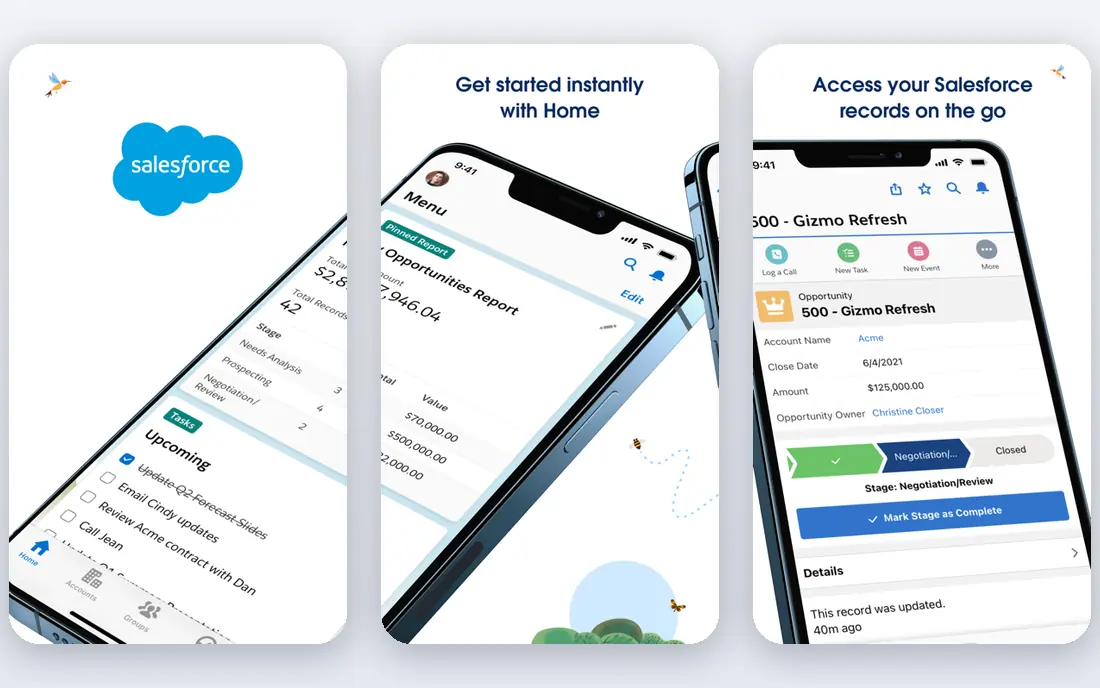
Salesforce is a natural first stop for anyone building a career in enterprise software sales. Its product range covers sales, service, marketing, and related tools, which gives sellers many buyer types to learn and many paths to move into, from small business sales to large enterprise accounts. Buyers usually know the brand, which helps open conversations.
Size is the trade-off. A seller's day-to-day experience depends heavily on the specific team, manager, and territory, so two Salesforce sellers can have quite different roles. Ask about the segment, the product focus, and the onboarding plan for the exact role you are considering.
- Very broad product range
- Well-known brand with buyers
- Structured sales roles and training paths
- Large organization, so team experience varies
- Enterprise cycles can be long and complex

HubSpot suits sellers who like a clear, process-driven sales motion. The company is known for inbound marketing and sales software aimed at growing businesses, and its sales roles often focus on helping smaller and mid-sized companies adopt marketing, sales, and service tools. That focus can mean faster cycles than large enterprise sales.
The flip side is deal size. Many HubSpot roles work with smaller companies, so sellers who want very large enterprise deals may prefer a different firm. Ask about average deal size, cycle length, and how leads are sourced for the role in question.
- Clear inbound sales model
- Products aimed at growing companies
- Strong training reputation in SaaS sales
- Smaller deal sizes than enterprise firms in many roles
- Pace can be high in inbound teams

Adobe offers sales roles across creative tools, document tools, and marketing products, which appeals to sellers who enjoy talking to creative and marketing buyers. The brand is familiar in design and media work, and the subscription model means many conversations center on ongoing value rather than a one-time purchase.
New sellers should expect a learning curve, since the product set is wide and buyers range from individual creators to large marketing teams. Clarify whether the role is new business, expansion, or renewal, since those jobs feel quite different day to day.
- Widely recognized creative products
- Buyers include creative, marketing, and document teams
- Subscription model
- Product range is broad, so new sellers need time to learn it
- Some roles focus on renewals more than new business
Microsoft is a strong choice for sellers who want breadth and long-term career options. Its catalog spans cloud services, workplace software, security, and business tools, and its customers range from small firms to governments and global enterprises. That breadth creates many routes to specialize over time.
Breadth also means your experience will depend on your division and team. A seller in cloud infrastructure faces a different buyer and cycle than a seller in workplace tools. Research the specific business unit, not only the company name, before you judge the role.
- Huge product range from cloud to workplace tools
- Buyers in almost every industry
- Many internal career paths
- Very large organization with varied team cultures
- Product breadth can make focus hard
Oracle suits sellers who want complex enterprise sales with large, established customers. Its database, applications, and cloud products serve organizations that have used Oracle technology for years, and deals often involve technical buyers, procurement teams, and long evaluation cycles. Sellers who enjoy that depth can build lasting expertise.
Long cycles are the honest cost. Progress can feel slow, and patience matters more than in a fast-moving SaaS role. Ask about the territory, the existing customer base, and how much of the role is hunting for new logos versus growing current accounts.
- Deep enterprise customer base
- Database and cloud products with long relationships
- Complex, high-value deals
- Enterprise sales cycles can be long
- Company culture and pace vary by team
Zoom is a good fit for sellers who want a product with a simple story. Most buyers already know what video meetings are, so the conversation often turns quickly to reliability, security, and how the tool fits a hybrid workplace. A free plan also lets prospects try the product before a sales conversation.
Competition is intense, since many firms offer video and workplace tools, and price pressure can be real. Sellers who do well here tend to focus on the wider workplace platform, including phone, rooms, and contact center tools, rather than meetings alone.
- Product many buyers already understand
- Clear use case for meetings and workplace communication
- Free plan aids trials
- Competitive market with many rivals
- Some buyers see video as a commodity purchase
ServiceNow appeals to sellers who like selling a platform rather than a single tool. Its products help organizations automate workflows across IT, employee service, and customer service, which means conversations often involve several departments at once. That breadth can make deals larger and more interesting.
The work is demanding. Sellers need enough technical understanding to discuss workflows, integrations, and outcomes with IT buyers, and deals can take time to close. Ask about sales engineering support and training, since those resources shape how well a new seller can succeed.
- Platform story around workflows and automation
- Buyers in IT, HR, and customer service
- Enterprise focus
- Deals need technical understanding
- Implementation complexity can lengthen cycles
Snowflake suits sellers who enjoy data and technical conversations. Its platform helps organizations store, share, and analyze data in the cloud, and its buyers are often data, engineering, and analytics leaders. Sellers who can discuss data workloads, costs, and use cases in plain terms tend to do well here.
The audience is also the challenge. Data buyers ask detailed questions, and competing data platforms are strong, so preparation matters. If you prefer selling to business buyers with a simple product story, a broader SaaS firm may fit better.
- Focused data platform story
- Buyers are data and engineering leaders
- Cloud-native positioning
- Technical buyer audience needs strong product knowledge
- Market is competitive with other data platforms
How we picked these
We reviewed each company's public careers and product pages, and we considered the range of sales roles, the clarity of the product story, and each firm's public standing in software sales. We did not use a single ranking source, and we did not invent pay, quota attainment, or satisfaction scores, since those figures vary by role and change often. Use this guide to shortlist firms, then verify the details for the exact role.
How to judge a tech sales job before you accept
Start with the role, not the logo. Ask for the segment, the territory, the product, and whether the job is new business, expansion, or renewal. Those four facts shape your daily work more than the company name. Also ask how leads are sourced, since a role fed by marketing leads feels very different from one built on cold outreach.
Next, ask about onboarding and support. Find out how long training lasts, whether you will have a mentor, and how sales engineering and customer success teams work with sellers. A strong support structure matters most in the first six months, when you are learning the product and the buyer.
Finally, talk to sellers in the same team if you can. Ask what a typical week looks like, how often the team hits its targets, and why the last person left the role. Those answers, combined with the written offer, give a far better picture than any general list.
Frequently asked questions
What are the best tech sales companies?
The best tech sales companies depend on the kind of sales you want to do. Salesforce, Microsoft, and HubSpot are common choices for broad SaaS careers, while Oracle, ServiceNow, and Snowflake suit enterprise and technical sellers. Judge the specific role, team, and territory, not only the brand.
What are the best software sales companies to work for?
Software sales companies to work for include Salesforce, HubSpot, Adobe, Microsoft, Oracle, Zoom, ServiceNow, and Snowflake, each with a different product focus and buyer. The best fit depends on whether you prefer small business, mid-market, or enterprise deals, and whether you like technical or business-led conversations.
What are the top software sales companies for beginners?
HubSpot and Zoom are often seen as accessible starting points, since their products are easier to explain and their sales motions are well documented. Salesforce and Microsoft also hire early-career sellers, but the product range is wider. Look for a role with structured training and a clear onboarding plan.
Do tech sales jobs pay well?
Pay in tech sales varies widely by company, role, level, location, and performance, and it usually combines base pay with commission. We do not quote figures here, since a single number would mislead. Ask the recruiter for the base range, the commission plan, and how the plan treats renewals and expansions.
How do I get into tech sales?
A common route is to start in a sales development or business development role, learn the product and buyer, and move into an account executive role. Product knowledge, clear communication, and steady prospecting matter more than a specific degree. A short course or a sales internship can help, but hiring teams usually weigh real selling experience most.
Sources
See where you really rank - block by block
ProMapRanker scans Google Maps across a grid of your service area. Simple monthly plans from $19, white-label on every plan.
Start freeKeep reading
 zoho inventory alternatives
6 Alternatives to Zoho Inventory, Compared on Price and Fit
Zoho Inventory alternatives: 6 tools compared on price, free plans and fit. Katana leads the list for manufacturers. Fit and flaws are laid out for each entry.
Read → zoho crm alternatives
Best Zoho CRM Alternatives (2026)
Need Zoho CRM alternatives? We compare 7 tools on cost, free access and who each suits. Every pick gets a straight assessment. Built for quick decisions.
Read → zelle alternatives
Best Zelle Alternatives in 2026
Compare the best Zelle alternatives for sending money to friends, paying sellers and moving funds abroad, with honest notes on fees, speed and safety in 2026.
Read →