 ProMapRanker
Best Tech Companies for Life Sciences Solutions in 2026


Clinical, regulatory, and commercial cloud · Pricing starts at: See website
Key takeaways
- Veeva and IQVIA lead on commercial and clinical scale, but they suit large pharma teams more than small biotech firms.
- Benchling and Medidata are stronger picks for research and trial teams that need modern, cloud-based tools.
- Pricing for most life sciences platforms is quoted per project or per user, so a demo and a written quote matter more than a public price list.
- Validation, audit trails, and data security are not extras here; they decide whether a platform can be used in regulated work at all.
Quick comparison
| Pick | Great for | Pricing starts at | Free tier | |
|---|---|---|---|---|
| Veeva Systems | Clinical, regulatory, and commercial cloud | See website | No | Visit |
 IQVIA | Clinical data, analytics, and commercial services | See website | No | Visit |
 Medidata | Clinical trial technology | See website | No | Visit |
 Benchling | Research and lab data management | See website | No | Visit |
 Oracle Life Sciences | Enterprise clinical and safety platforms | See website | No | Visit |
 Dassault BIOVIA | Scientific data and lab informatics | See website | No | Visit |
 Salesforce Life Sciences | Life sciences CRM and engagement | See website | No | Visit |
 Clarivate | Research intelligence and drug data | See website | No | Visit |
The best tech companies for life sciences solutions
We compared official product pages and published platform descriptions for companies serving pharma, biotech, and medical device teams. The best tech platforms for life science companies are those that handle regulated data correctly, connect research to trials to commercial work, and scale without forcing a rebuild at each stage.
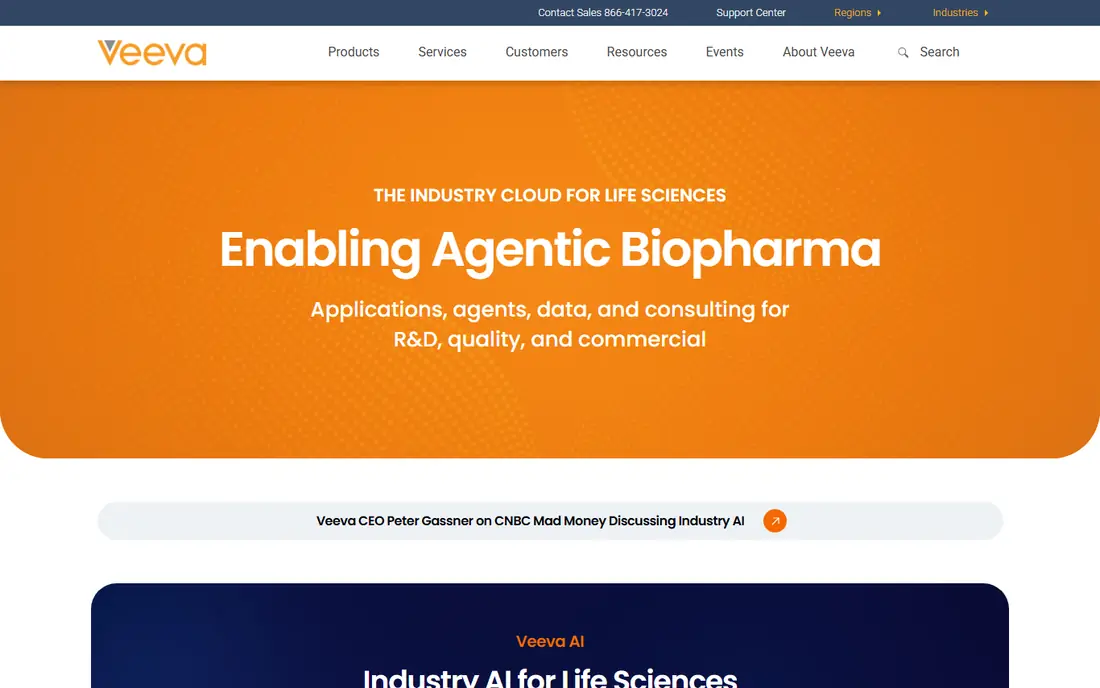
Veeva is the closest thing to a standard platform for life sciences cloud software. Its Vault products cover clinical trials, regulatory submissions, quality management, and commercial content, while Vault CRM serves field teams. Because the same vendor covers so many regulated workflows, data can move between teams with fewer hand-offs and fewer format conversions.
That breadth comes with enterprise weight. Pricing is quoted, implementation takes planning, and a small biotech team may not need the full Vault suite at first. For a growing pharma company that wants one regulated cloud across departments, Veeva is the default shortlist entry, and a demo should test the exact modules you will use, not the full catalog.
- Vault platform across clinical, regulatory, and quality
- Life sciences focus
- Strong commercial CRM
- Enterprise pricing and implementation effort
- Smaller firms may find it heavy
- Add-ons increase cost
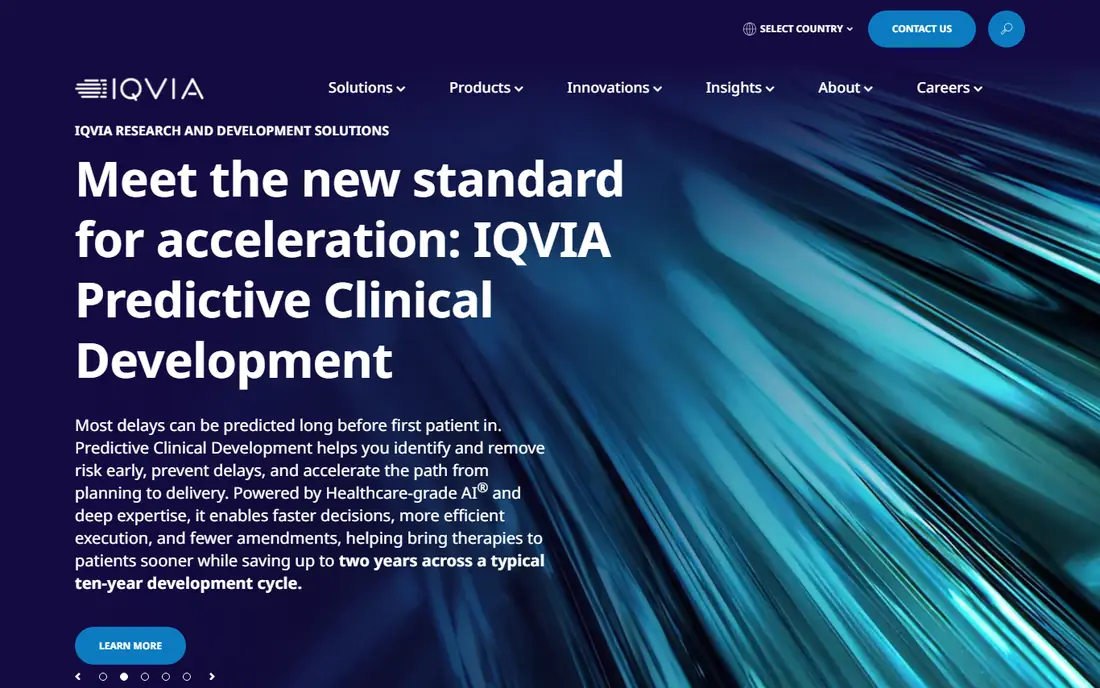
IQVIA combines technology with data and services in a way few rivals match. Its healthcare data, analytics, and clinical research offerings help sponsors plan trials, find sites, and understand prescriber and patient patterns. For a commercial team, that data depth is a real advantage when combined with CRM and analytics tools.
The model can be hard to price and scope, since software, data, and services are often bundled for a project. A buyer should ask for a clear split between platform fees, data fees, and service fees, and confirm what happens to data access when a project ends. For large sponsors, IQVIA scale is a strength; for a small team, a focused tool may be simpler.
- Large healthcare data assets
- Clinical research services
- Analytics for commercial teams
- Pricing is quoted and often bundled
- Services and software blur together
- Smaller teams may need a narrower vendor
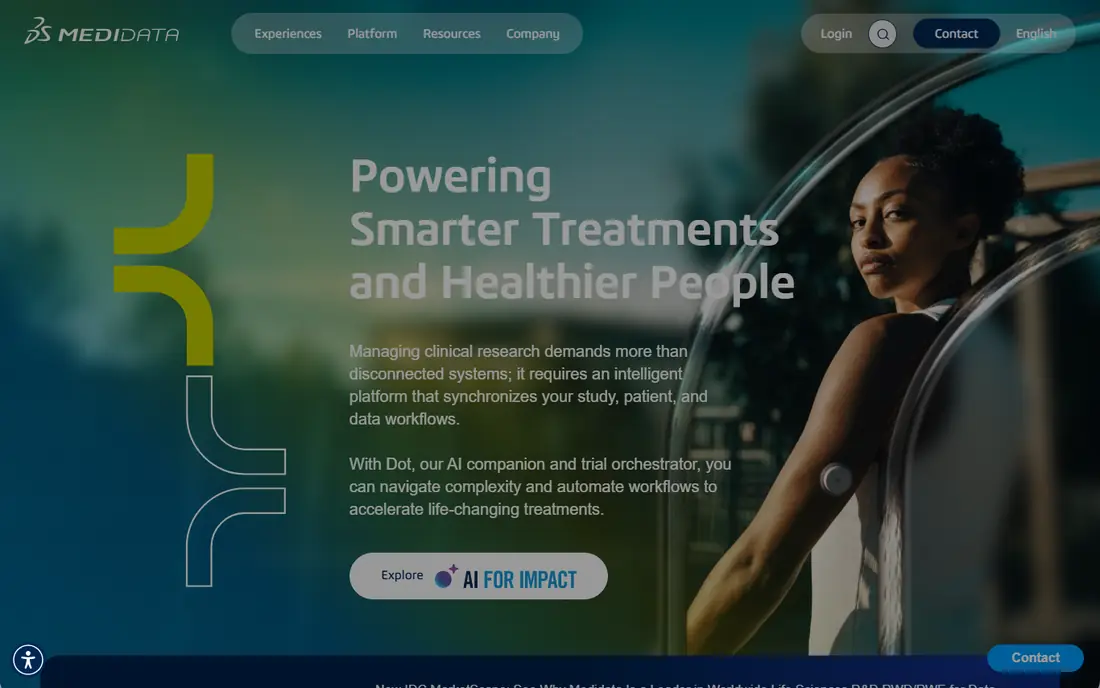
Medidata, part of Dassault Systemes, is a core clinical trial platform for sponsors and contract research organizations. Its tools cover electronic data capture, trial management, randomization, and patient engagement, with a long history in regulated trials. That depth matters when a trial spans many sites and countries.
Smaller trials may find the platform heavier than needed, and pricing is quoted per trial and per module. A sponsor should test data entry, monitoring, and reporting workflows with its own protocol, not just a demo dataset. For complex, multi-site trials, Medidata remains a top pick.
- Trial management and electronic data capture
- Patient-facing trial tools
- Long clinical track record
- Enterprise scope and cost
- Implementation needs experienced staff
- Smaller trials may need a lighter tool
Benchling is the modern pick for research teams. It combines an electronic lab notebook, sample and sequence registries, and workflow tools in a cloud interface that scientists actually enjoy using. Collaboration, version history, and structured data help a team move from scattered notebooks to a searchable research record.
It is research-first, so commercial, regulatory, and quality teams will still need other platforms as a product moves toward market. Pricing is quoted, and larger deployments need planning for data migration and access controls. For discovery and early development teams, Benchling is often the easiest platform to adopt and the hardest to give up.
- Modern lab notebook and registry
- Molecular biology tools
- Cloud collaboration for research teams
- Quoted pricing
- Research focus means less commercial depth
- Migration from paper or old systems takes work
Oracle Life Sciences serves large sponsors that need clinical, safety, and data platforms inside a wider enterprise stack. Its clinical trial and pharmacovigilance tools benefit from Oracle database, cloud, and security infrastructure, which matters for global, high-volume work. Existing Oracle customers may also gain from shared identity, hosting, and support arrangements.
The drawback is enterprise weight: long implementation, specialist staff, and quoted pricing that depends on scope. A mid-size sponsor should compare Oracle against Medidata and Veeva on the exact trial and safety workflows it runs, rather than on platform breadth alone.
- Broad enterprise platform
- Clinical and pharmacovigilance tools
- Strong security and scale
- Enterprise complexity and cost
- Implementation timelines can be long
- Interface feels enterprise-grade
BIOVIA, from Dassault Systemes, covers scientific data, lab informatics, and modeling for research and development teams. It suits organizations that already use Dassault design and manufacturing tools, since data can flow from research into development and production with fewer breaks. Lab execution, quality, and scientific search are core strengths.
Buyers should scope carefully, because the suite is broad and pricing is quoted. A team that only needs a lab notebook will find a narrower tool simpler, while a team building a connected research-to-manufacturing chain will get more from BIOVIA. Ask for a workflow demo using your own data types before committing.
- Scientific data management
- Lab informatics and modeling
- Integration with design and manufacturing tools
- Quoted pricing
- Suite breadth can confuse buyers
- Needs specialist implementation
Salesforce Life Sciences adapts the wider Salesforce platform for pharma, biotech, and medtech engagement, including field teams, medical affairs, and patient programs. Its strength is flexibility: teams can build engagement, service, and partner workflows on a platform many staff already know, with a large app and integration ecosystem.
It is not a clinical trial or regulatory system, so sponsors still need Medidata, Veeva, or a similar platform for trials and submissions. Licensing, configuration, and partner services can also push costs up if scope is not controlled. For commercial and medical engagement, Salesforce is a strong pick; for regulated trial data, pair it with a specialist.
- Familiar CRM platform
- Health and life sciences clouds
- Large integration ecosystem
- Needs life sciences configuration and partners
- Not a clinical trial system
- Licensing can grow quickly
Clarivate provides the intelligence layer many life sciences teams rely on: drug pipelines, patents, clinical trial data, and competitive insight. Its products help research, business development, and regulatory teams track rivals, find licensing targets, and plan market entry. For strategy and portfolio decisions, that data is often more valuable than another workflow tool.
Clarivate does not run trials or manage quality documents, so it complements operational platforms rather than replacing them. Subscription terms vary by dataset and user count, so buyers should confirm exactly which datasets, users, and export rights a quote includes. As a research intelligence partner, it belongs on most large-team shortlists.
- Drug, patent, and trial intelligence
- Research analytics
- Regulatory and competitive insight
- Data subscriptions can be costly
- Not an operational trial platform
- Access terms vary by dataset
How we picked these
We compared official product pages and published platform descriptions for technology companies serving life sciences in October 2026. We favored vendors with live, regulated-work products in clinical, research, quality, or commercial use, and with a clear life sciences focus rather than a generic tool relabeled for pharma. We left out single-feature apps and vendors whose life sciences offering we could not confirm. We did not claim hands-on testing; our comparison rests on vendor pages and public documentation.
How to choose a life sciences platform
Start from the regulated workflow, not from a feature list. Write down the exact process the platform must support: a trial protocol, a submission, a quality event, or a field engagement plan. Then test validation, audit trails, electronic signatures, data export, and user access controls against that process. A platform that looks modern but cannot produce a clean audit trail will fail a regulatory review.
Validation, security, and total cost
Ask for validation documentation, hosting and backup details, and a clear data exit plan. Confirm who owns the data, how long it is retained, and how you export it if you leave. Price the full cost: licenses, implementation, validation, training, and support, not just the first-year subscription. For a small team, a narrower tool with a fast start often beats a suite you cannot staff.
Frequently asked questions
What are the best tech companies for life sciences solutions?
Veeva and IQVIA lead for large, regulated programs, Medidata leads for clinical trials, and Benchling leads for research teams. The best choice depends on your stage: discovery teams need lab tools, trial teams need clinical platforms, and commercial teams need CRM and data. Most large sponsors use several vendors together.
Are these platforms suitable for small biotech companies?
Some are, with scoped deployments, but many are priced and built for enterprise teams. Benchling and smaller clinical tools often fit a small team better at first. Start with the one workflow that hurts most, prove value there, and expand only when headcount and regulatory load justify a larger suite.
How much do life sciences platforms cost?
Most vendors quote prices based on users, modules, trial size, or data access, so public prices are rare. Expect enterprise platforms to cost far more than a standard business app once implementation and validation are included. Get at least two written quotes with the same scope, and compare total cost over three years.
Do these tools replace a contract research organization?
No. Platforms provide software and data, while a contract research organization provides trial operations, sites, and staff. Many sponsors use both: a platform for data and workflows, and a research partner for execution. Clarify who owns each task in the contract before a trial starts.
How important is regulatory validation?
It is essential for any system that holds data used in a submission or a quality decision. Validation proves the system works as intended, audit trails show who changed what and when, and access controls limit who can approve records. Ask vendors for validation packs and customer references in your exact use case.
Sources
See where you really rank - block by block
ProMapRanker scans Google Maps across a grid of your service area. Simple monthly plans from $19, white-label on every plan.
Start freeKeep reading
 zoho inventory alternatives
6 Alternatives to Zoho Inventory, Compared on Price and Fit
Zoho Inventory alternatives: 6 tools compared on price, free plans and fit. Katana leads the list for manufacturers. Fit and flaws are laid out for each entry.
Read → zoho crm alternatives
Best Zoho CRM Alternatives (2026)
Need Zoho CRM alternatives? We compare 7 tools on cost, free access and who each suits. Every pick gets a straight assessment. Built for quick decisions.
Read → zelle alternatives
Best Zelle Alternatives in 2026
Compare the best Zelle alternatives for sending money to friends, paying sellers and moving funds abroad, with honest notes on fees, speed and safety in 2026.
Read →