 ProMapRanker
Best Tea Companies in 2026

Key takeaways
- Harney and Sons offers the widest easy range, while Rishi and Art of Tea suit deeper loose-leaf exploration.
- Loose leaf usually gives more control over strength and repeated infusions, while bags win on speed and consistency.
- Sourcing notes, ingredient lists, and freshness matter more than fancy packaging when judging quality.
- Start with a sampler or a small size before buying a large tin of an unfamiliar tea.
Quick comparison
| Pick | Great for | Pricing starts at | Free tier | |
|---|---|---|---|---|
 Harney and Sons | Widest all-round range | See website | No | Visit |
 Rishi Tea | Organic loose-leaf exploration | See website | No | Visit |
 Smith Teamaker | Polished blends and sachets | See website | No | Visit |
 Twinings | Widely available everyday tea | See website | No | Visit |
 Bigelow | Classic American tea bags | See website | No | Visit |
 The Republic of Tea | Variety in convenient bags | See website | No | Visit |
 Art of Tea | Small-batch loose leaf | See website | No | Visit |
 Adagio Teas | Samplers and variety | See website | No | Visit |
 Numi Organic Tea | Organic bags and blends | See website | No | Visit |
 VAHDAM India | Fresh Indian teas | See website | No | Visit |
The best tea companies
These companies sell tea in the United States through their own stores or major retailers, with ranges that cover black, green, oolong, white, and herbal styles. We compared range, format, sourcing detail, and ease of buying.
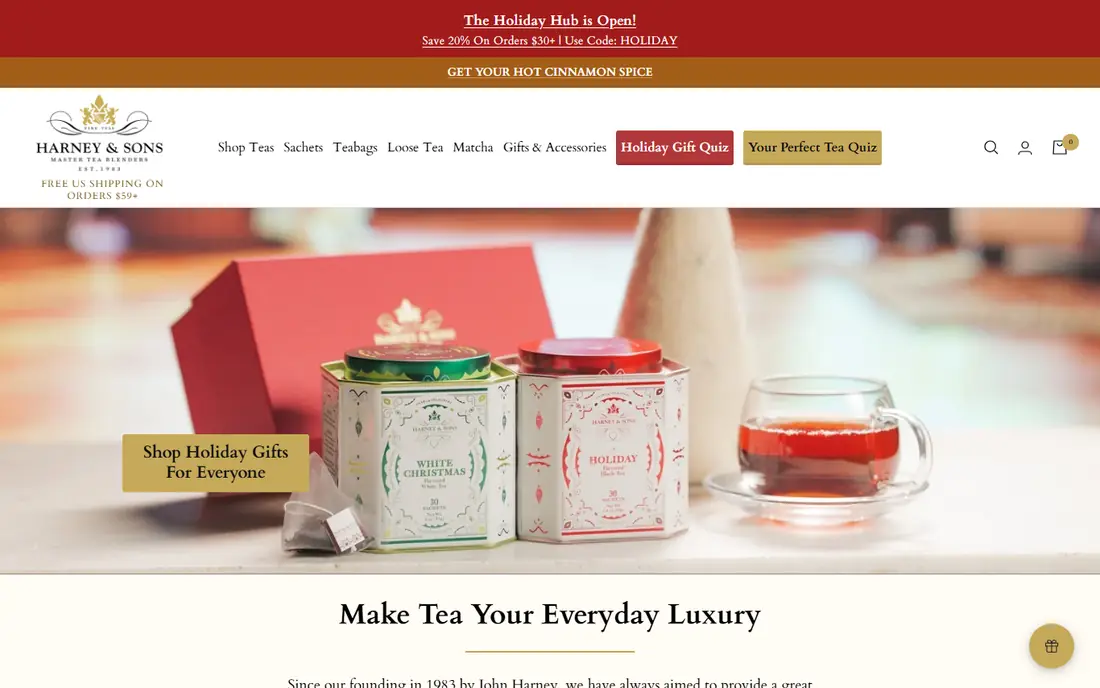
Harney and Sons is our pick for most tea drinkers, because it covers the basics and the interesting extras in one place. You can buy a familiar English Breakfast, a flavoured blend such as Paris, and a serious loose-leaf green tea without switching brands. Bags and sachets make it easy for a household with mixed tastes.
The size of the range is also the drawback. With so many blends, it is easy to buy on packaging rather than taste. Start with two or three styles you already like, then branch out, and check the format, since the same blend can taste different as a bag, a sachet, or loose leaf.
- Very wide range across styles
- Bags, sachets, and loose leaf
- Easy to buy in the US
- Range can overwhelm beginners
- Quality varies by blend
- Premium tins cost more
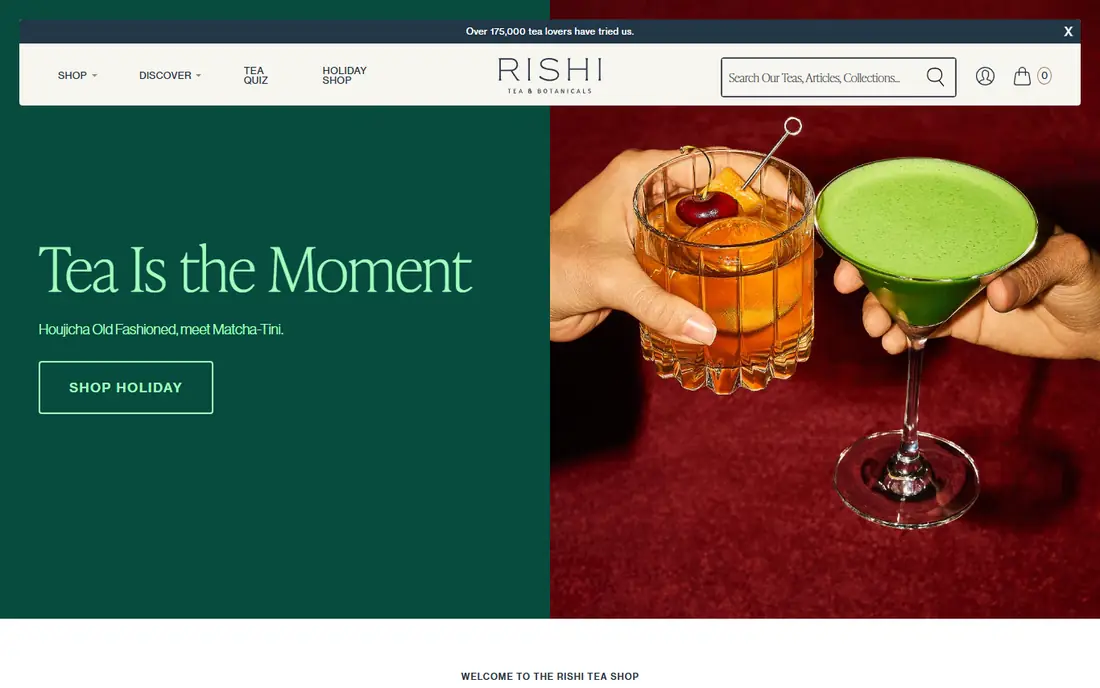
Rishi Tea suits drinkers who want to learn about origin and farming as well as flavour. Its range leans toward organic loose leaf, with clear sourcing notes and styles such as Jade Cloud green tea. For a drinker moving from bags to loose leaf, Rishi gives a clear step up without requiring expert knowledge.
Loose leaf does need a strainer or infuser, and the price per cup is higher than a mass-market bag. That cost is easier to justify when you reuse leaves for a second infusion, where the tea allows it. Buy a small size first if you are new to the style.
- Strong organic and direct-trade focus
- Good loose-leaf range
- Matcha and botanicals
- Higher prices than supermarket brands
- Fewer budget bags
- Loose leaf needs equipment
Smith Teamaker, founded by the late Steven Smith, focuses on small-batch blending with a polished finish. Its sachets hold larger leaves than a standard bag, which helps flavour, and the blends are composed rather than simply flavoured. That makes it a strong choice for gifts and for drinkers who want a refined daily cup.
The price reflects that care, so it is not the best value for a household that drinks many cups a day. Use Smith for a favourite morning or evening tea, and keep a cheaper everyday brand for high-volume drinking.
- Well-crafted blends
- Large-leaf sachets
- Good gift options
- Premium pricing
- Smaller range than Harney and Sons
- Sachets cost more per cup
Twinings is the safe everyday pick, because it is sold in most US supermarkets and its black teas are consistent. English Breakfast, Earl Grey, and Lady Grey are familiar for a reason, and the brand also offers green, herbal, and cold infusion options. For a household that wants tea without a special order, Twinings is hard to beat.
It will not satisfy a drinker looking for single-origin depth. Ingredient lists and origin detail are thinner than at Rishi or Art of Tea, and flavoured blends dominate part of the range. Treat Twinings as a reliable base, then add a specialist brand for exploration.
- Easy to find in stores
- Consistent quality
- Strong black tea range
- Less origin depth than specialists
- Many blends are flavoured
- Loose-leaf range is smaller
Bigelow is a classic American tea company, with a wide grocery range that covers black, green, herbal, and decaf teas. Its Constant Comment blend is a long-running favourite, and its herbal range suits evening drinking. For families and offices, the value and availability are strong points.
The bag format is the limit. Small-cut leaf brews fast and strong, but it rarely gives the nuance of a large-leaf loose tea. Bigelow is best for everyday cups and herbal blends, not for a deep tasting session.
- US-made bags
- Wide grocery range
- Good herbal and decaf options
- Bag format limits leaf size
- Less loose-leaf choice
- Flavour can be mild
The Republic of Tea is a good middle path between a supermarket brand and a loose-leaf specialist. Its round, unbleached bags are convenient, and the range covers black, green, white, oolong, herbal, and iced teas. Popular blends such as Ginger Peach make it easy for a new drinker to find a favourite quickly.
Bags still limit leaf expansion, and the price per bag is higher than a supermarket box. It suits drinkers who value variety and convenience over the lowest cost per cup, and who want one brand for the whole household.
- Very wide bag range
- Ginger peach and other popular blends
- Loose leaf and iced options
- Bag-first range
- Premium pricing for bags
- Origin detail varies by blend
Art of Tea is built for loose-leaf drinkers who care about leaf quality and blending care. Its range includes single-origin teas and composed blends, with a small-batch feel that sets it apart from mass-market brands. For a drinker ready to weigh leaf, control water temperature, and taste carefully, it is a rewarding choice.
That care comes with cost and effort. You will need an infuser or teapot, and the price per ounce is higher than a grocery bag. Start with a sampler if you are unsure which style suits you, and store the tea in a cool, airtight container.
- Small-batch focus
- Strong loose-leaf range
- Wholesale and retail options
- Higher prices
- Needs brewing equipment
- Less convenient for bag-only drinkers
Adagio Teas is the explorer's brand, with a very large catalogue and sampler sets that let you try many styles for a modest outlay. It also offers custom blends, which suit gifts and households with different tastes. For a beginner who does not yet know whether they prefer green, oolong, or black tea, a sampler is the smartest first order.
Variety has a cost in consistency. Not every tea in a huge catalogue will be a standout, so read the description and origin notes rather than buying on name alone. Keep notes on what you liked, since reordering from a large range is easier with a short list of favourites.
- Huge variety
- Sampler sets
- Custom blends and gifts
- Range can overwhelm
- Quality varies by tea
- Website-first buying
Numi Organic Tea is a strong organic choice for bag drinkers, with a focus on organic farming and fair sourcing. Its breakfast, green, and herbal blends are easy to find in US stores, and the brand is a good step up from a conventional supermarket bag. For households that want organic certification without moving to loose leaf, Numi fits well.
The bag format still limits flavour depth, and the price is higher than non-organic grocery tea. It is best for daily organic drinking, while a loose-leaf specialist remains better for tasting and origin exploration.
- Organic focus
- Good herbal and breakfast blends
- Widely sold in stores
- Bag format
- Premium grocery pricing
- Loose-leaf range is limited
VAHDAM India focuses on teas sourced in India and shipped directly, which suits drinkers who love Assam, Darjeeling, Nilgiri, and chai. Freshness is the selling point, since tea loses aroma over time, and the sampler sets help a buyer learn the difference between regions. Chai lovers in particular will find a strong range here.
The range is India-led, so it is less useful for Chinese greens, Japanese teas, or Western herbal blends. Buy a sampler first, check shipping costs, and store the tea well after opening, since freshness fades with air and heat exposure.
- Direct-from-India sourcing
- Fresh Assam, Darjeeling, and chai styles
- Sampler sets
- India-focused range
- Shipping and price vary
- Less Western herbal depth
How we picked these
We compared companies still selling tea in the United States in October 2026, with ranges that cover more than one tea style. We checked official product pages, formats, sourcing notes, and retail availability, and we favoured firms with clear ingredient and origin information. We left out brands that were hard to buy in the US and brands with only one narrow product line.
How to buy tea well
Start with the style you actually drink, not the style you think you should drink. If you drink black tea with milk in the morning, a strong Assam or breakfast blend matters more than a delicate white tea. If you drink herbal tea at night, check that the blend is caffeine free and read the ingredients for anything you want to avoid.
Next, match format to habit. Bags suit busy mornings, sachets suit larger leaves with convenience, and loose leaf suits slower brewing and repeated infusions. Buy a small size or a sampler for any new brand, and note the water temperature and steep time that worked, since the same tea can taste bitter if over-steeped.
Finally, store tea properly. Keep it in an airtight container away from heat, light, moisture, and strong kitchen smells. Buy smaller amounts more often rather than a large tin that sits open for a year, and check the harvest or packing date when the company provides it. Fresh tea, brewed with care, beats an expensive tea stored badly.
Frequently asked questions
What is the best tea company?
Harney and Sons is the best all-round pick for range and ease of buying, Rishi Tea suits organic loose-leaf drinkers, and Twinings or Bigelow suit everyday grocery buying. The best company for you depends on style, format, and budget.
Is loose-leaf tea better than tea bags?
Loose leaf usually offers larger leaves, more control over strength, and repeated infusions, while bags offer speed and consistency. Large-leaf sachets sit between the two, giving better leaf room than a standard bag with similar convenience.
Which tea company is best for beginners?
Adagio Teas samplers help beginners try many styles, while Twinings and Bigelow offer familiar, affordable starting points. Start with a sampler or a small box, then buy a larger size only of the teas you return to.
What should I look for on a tea label?
Check the tea type, ingredients, origin or region when given, format, and any organic or fair-trade certification. A clear ingredient list matters most for flavoured and herbal blends, where added flavouring can hide weak leaf.
How should I store tea at home?
Store tea in an airtight container in a cool, dark place, away from moisture and strong smells. Avoid the fridge for daily tea, since condensation harms flavour, and buy smaller amounts more often to keep the tea fresh.
Sources
See where you really rank - block by block
ProMapRanker scans Google Maps across a grid of your service area. Simple monthly plans from $19, white-label on every plan.
Start freeKeep reading
 zscaler alternatives
Best Zscaler Alternatives in 2026
Looking for zscaler alternatives? We compare 9 SASE and zero trust platforms on architecture, data protection, pricing, and fit for your network and team.
Read → zapier alternatives free
Best Zapier Alternatives Free in 2026
Nine automation tools for zapier alternatives free in 2026, all with genuinely free tiers, plus free plan limits, starting prices and upgrade paths explained.
Read → which platform is best for online reputation
Which Platform Is Best for Online Reputation in 2026
Wondering which platform is best for online reputation? We compare 8 review, listing, and response tools for small and multi-location businesses and agencies.
Read →