 ProMapRanker
Best Taxi Dispatch Software in 2026

Key takeaways
- TaxiCaller and Yelowsoft suit small fleets, while iCabbi and Autocab suit large UK fleets.
- Onde is the cheapest startup launch, but its share-of-bookings tiers can cost more at high volume.
- TaxiCloud stands out for published UK pricing, and Gazoop suits owner-drivers who want pay-per-job.
- Check local taxi licensing, insurance, and data rules before you launch, since dispatch software does not grant a license.
Quick comparison
| Pick | Great for | Pricing starts at | Free tier | |
|---|---|---|---|---|
 TaxiCaller | Small international taxi fleets | See website | Free trial | Visit |
 iCabbi | Large UK private hire fleets | See website | No | Visit |
 Autocab | UK fleets using network overflow | See website | No | Visit |
 Onde | Ride-hailing startups | $12 per month | Free trial | Visit |
 Yelowsoft | Budget startups and small fleets | $99 per month | No | Visit |
 TaxiCloud | UK fleets wanting published pricing | $49 per month | No | Visit |
 Limo Anywhere | US limo and chauffeur operators | See website | No | Visit |
 Gazoop | Owner-drivers and tiny fleets | See website | Yes | Visit |
The best Taxi Dispatch Software in 2026
We compared eight dispatch platforms on pricing model, fleet size fit, branding, and booking channels.
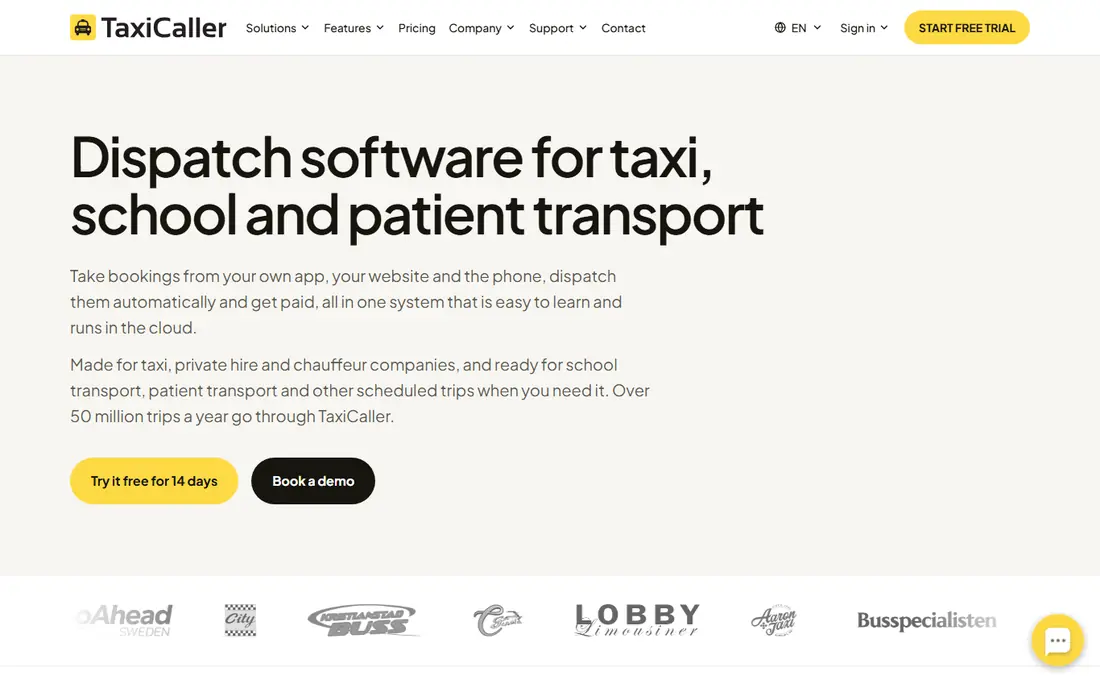
TaxiCaller is a practical pick for a small fleet that needs dispatch, driver apps, and passenger booking without enterprise cost. Its cloud setup avoids buying servers, and support is built for operators who run at night.
The trade-off is branding and pricing clarity, since plans vary and full white-label control is limited. For a small fleet that values stable daily dispatch over a fully custom brand, it is a solid start.
For a short trial, use TaxiCaller for a real week of normal use before you judge it, since first-day setup rarely shows daily friction.
- Cloud dispatch with driver and passenger apps
- Real-time tracking
- VoIP caller ID support
- Pricing varies by market and plan
- White-label branding is co-branded, not fully custom
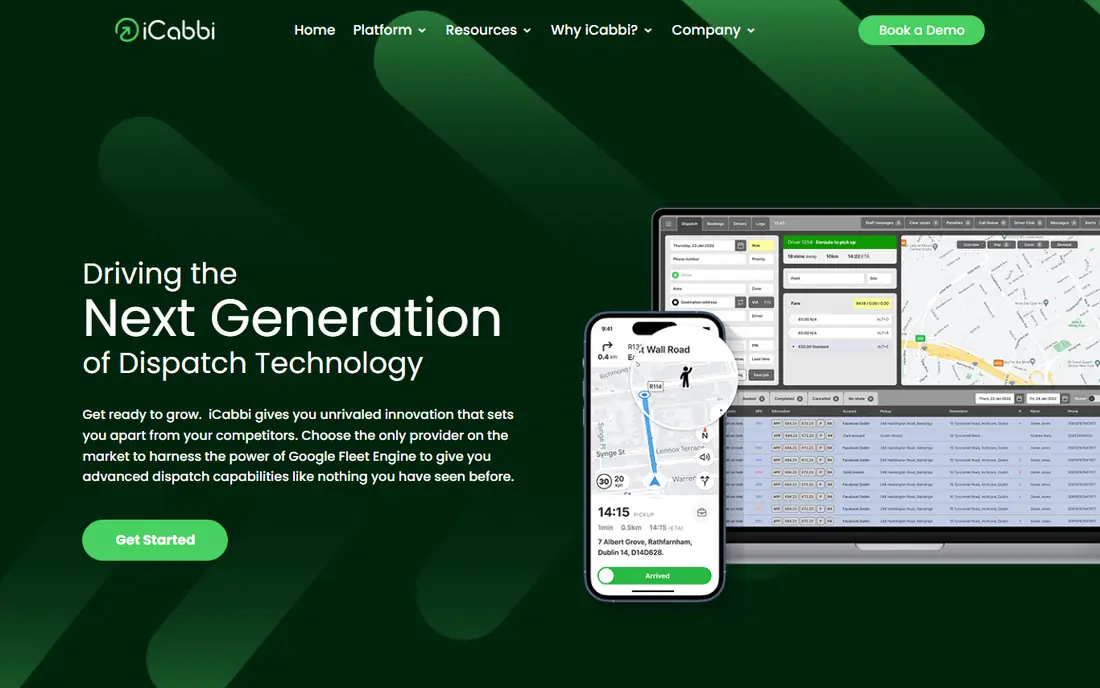
iCabbi is the incumbent for larger UK fleets that need telephony, partner networks, and multi-base control in one system. Its depth suits operators with complex dispatch rules and high job volumes.
That depth comes with enterprise pricing and contracts, so it is a poor fit for a startup fleet. It earns its place when scale and network links matter more than a low monthly entry cost.
Before you pay, check the free tier against the feature you will use most, because that one limit usually decides if iCabbi stays on your phone or desktop.
- Enterprise dispatch and telephony
- Partner and network integrations
- Multi-region fleet control
- Quote-only pricing on multi-year terms
- No public free trial
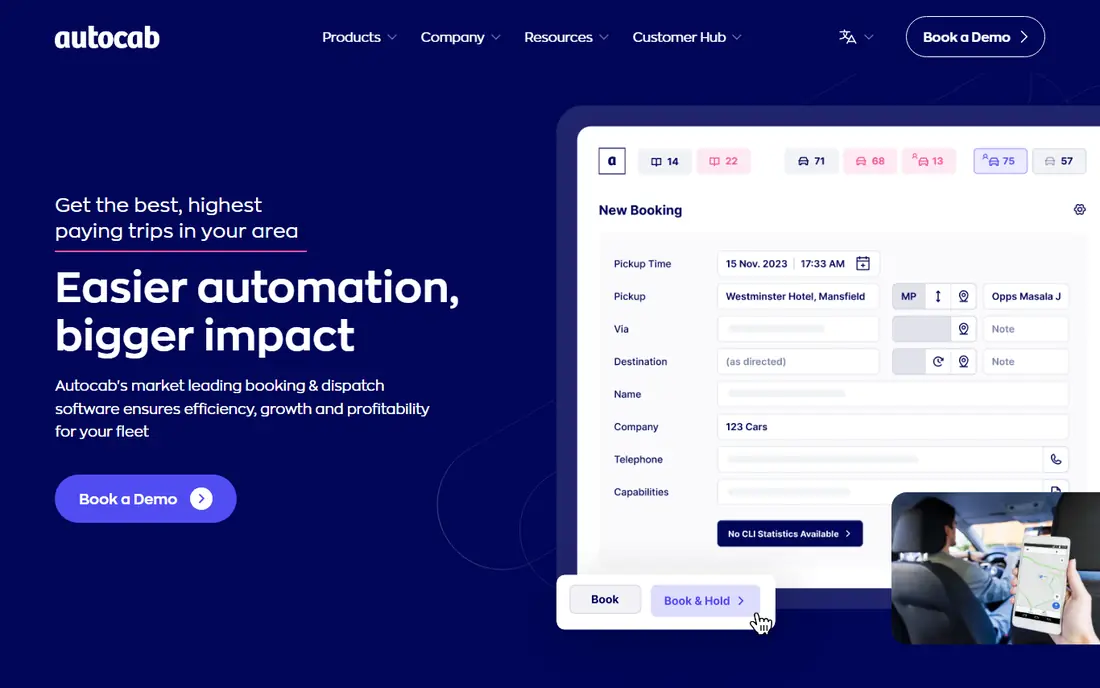
Autocab suits UK fleets that benefit from the iGo network, where overflow jobs can fill quiet periods. Its dispatch, apps, and telephony cover the core job, with network reach as the extra draw.
Operators should weigh the ownership and data questions that come with a large network parent, and confirm transaction fees before signing. If you have little iGo volume, a simpler platform may cost less.
A quick check helps here: open Autocab, search for your own neighborhood, class, or portfolio, and see if the results feel current and complete.
- Dispatch plus booking apps
- IGo network for overflow jobs
- Telephony and payment links
- Quote-only pricing
- Transaction fees may apply
- Network dependence for overflow value
Onde is built for startups that want to launch a branded ride-hailing service fast. Its entry plan is cheap, with the first trips free on some tiers, and higher plans add marketing help.
The cost model matters: as volume grows, a share of bookings can overtake a flat subscription. Model your cost at 500, 1,500, and 5,000 trips a month before you pick a tier.
If you are torn between two picks, run Onde beside the other option for a few days and keep the one that fits your routine with less effort.
- White-label passenger and driver apps
- Tiered plans for startups
- Marketing tools on higher plans
- Higher plans take a share of gross bookings
- Total cost rises with trip volume
Yelowsoft gives a startup a full dispatch desk, driver app, and passenger booking at a modest starting price. Its kiosk and queue tools also help at airports and ranks.
It is less polished than enterprise rivals, and full branding sits on higher tiers. For a budget launch that needs the core dispatch job done well, it is a strong value.
The practical test for Yelowsoft is simple: does it save time on a busy day, or does it add steps you will skip when you are tired?
- Dispatcher, driver, and passenger tools
- Kiosk and queue options
- API and payment links
- Demo rather than a public trial
- Higher tiers needed for full white-label apps
TaxiCloud appeals to operators who want to see the price before a sales call. Its plans scale from starter to a Pro Max tier for up to 100 drivers, with UK council-licensing reports included.
Its UK focus means operators elsewhere should check local payment, map, and compliance fit. For a UK fleet comparing iCabbi and Autocab, published pricing makes the comparison easier.
When you trial TaxiCloud, note what happens at the edge cases, such as a busy night, a large class set, or an unusual food or sound, since those moments reveal limits.
- Published starter to Pro Max plans
- AI copilot on higher plans
- UK compliance reports
- UK focus may limit fit elsewhere
- AI features need higher plans
Limo Anywhere remains the US incumbent for limo and chauffeur operators. Its reservation, dispatch, and billing flow fits corporate accounts and pre-booked work better than a taxi rank model.
Its per-user cost can rise fast for a large team, and its interface shows its age beside newer cloud rivals. For established chauffeur firms, its workflow depth still counts.
For most buyers, the decision on Limo Anywhere comes down to fit, not to a single feature, so weigh the daily workflow more than the feature list.
- Reservations, dispatch, and billing for chauffeur work
- Corporate account tools
- Long track record
- Per-user pricing can get costly at scale
- Interface feels older than newer rivals
Gazoop suits an owner-driver or a tiny fleet that wants to pay only when work comes in. With no setup cost on the core service, it is a low-risk way to test online booking.
At high volume, per-job fees can exceed a flat subscription, so track your monthly job count. For a handful of cars, though, paying per job keeps fixed costs near zero.
Keep Gazoop only if it still feels useful after the novelty fades, since a tool you stop opening cannot help, no matter how strong its list looks.
- Pay-per-job model
- No setup cost for the core service
- Simple booking and dispatch
- Limited white-label control
- Per-job fees add up at high volume
How we picked these
We checked each vendor site and published 2026 comparisons for current plans and pricing models, and we favored platforms that are still active, that state their dispatch, driver app, and passenger app clearly, and that fit a clear fleet size. Where pricing was quote-only or varied by market, we used See website rather than guess a figure that would mislead a buyer.
We also checked for gaps that matter in daily use, such as whether a free plan covers the core job, whether a paid plan is needed for a common feature, and whether the product is still maintained. Where a vendor page and a store listing disagreed, we favored the vendor page for price and the store listing for platform availability, and we used See website when the price could not be confirmed cleanly.
Choosing the right taxi dispatch software
Start with fleet size and job type. A rank or pre-booked taxi fleet needs dispatch and telephony. A ride-hailing startup needs branded apps and payment handling. A chauffeur firm needs reservations and corporate billing. Picking for the wrong job type wastes the first year.
Next, model total cost, not just the headline price. Per-vehicle, per-user, per-job, and share-of-bookings models behave very differently as you grow. Run your expected job count through each model, and add maps, SMS, payment fees, and app store accounts that vendors may not include.
Finally, trial the dispatcher view with your own team. A system that looks good in a demo can feel slow at peak times, so test peak dispatch, driver assignment, and passenger tracking together. Confirm support hours cover your operating hours before you sign.
Before you commit, read the current terms on the vendor site, check the cancellation steps, and confirm the price for your region and billing period. Prices and free tiers change, and a short trial with your real data will tell you more than any feature list. Keep a note of what you liked and what frustrated you during the trial, then choose the option that still feels easy after a full week.
Frequently asked questions
What is the best taxi dispatch app?
TaxiCaller is a strong small-fleet dispatch app, Yelowsoft is a good budget startup app, and iCabbi and Autocab lead for large UK fleets. The best app depends on fleet size and market.
What is the best taxi dispatch platform for a startup?
Onde is the cheapest startup platform, with a low entry plan and white-label apps. Yelowsoft is a good flat-priced alternative for startups that want predictable costs.
How much does taxi dispatch software cost?
Costs range from pay-per-job for tiny fleets to flat monthly plans from $12 to $99 and quote-only enterprise pricing for large fleets. Always add maps, SMS, and payment fees to the headline price.
Is TaxiCaller good for small fleets?
Yes, TaxiCaller suits small international fleets with cloud dispatch, driver and passenger apps, and real-time tracking. Larger fleets may want the network depth of iCabbi or Autocab.
Do I need a license to use dispatch software?
Yes, dispatch software does not grant a taxi or private hire license. Check your city and state licensing, insurance, and vehicle rules before you launch.
Sources
See where you really rank - block by block
ProMapRanker scans Google Maps across a grid of your service area. Simple monthly plans from $19, white-label on every plan.
Start freeKeep reading
 zscaler alternatives
Best Zscaler Alternatives in 2026
Looking for zscaler alternatives? We compare 9 SASE and zero trust platforms on architecture, data protection, pricing, and fit for your network and team.
Read → zapier alternatives free
Best Zapier Alternatives Free in 2026
Nine automation tools for zapier alternatives free in 2026, all with genuinely free tiers, plus free plan limits, starting prices and upgrade paths explained.
Read → which platform is best for online reputation
Which Platform Is Best for Online Reputation in 2026
Wondering which platform is best for online reputation? We compare 8 review, listing, and response tools for small and multi-location businesses and agencies.
Read →